
St. Joan
of Arc
A peasant girl from Lorraine who heard God's call, led armies, and died at nineteen for refusing to deny it.
If I am not in a state of grace, may God put me there; if I am, may God so keep me.
Trial of Condemnation, Rouen (1431) · court transcript, Session 7 Well-attested
The Life and Witness of Joan of Arc.
Joan of Arc was born around 1412 in Domrémy, a village in Lorraine on the edge of the Hundred Years' War. From her early teens, she reported hearing the voices of Saints Michael, Catherine, and Margaret, calling her to a specific mission: drive the English from France and bring the Dauphin to coronation at Reims.
What follows is one of the strangest stories in the history of the Church: a peasant girl, unlettered, without military training or social standing, presenting herself to the commander of a fortress and then to the Dauphin himself, persuading both of her mission through means the historical record does not fully explain. She led armies. She was wounded. She took Orléans. She stood beside Charles VII at his coronation in Reims Cathedral in 1429.
Captured by the Burgundians in 1430 and sold to the English, Joan underwent a lengthy trial at Rouen before an ecclesiastical court. The trial records have survived in full and are one of the most remarkable documents in medieval history. The judges aimed to convict her of heresy. Joan, unlettered and alone, defended herself with a precision and courage that astonished the notaries who recorded it. When asked whether she was in a state of grace, she replied: "If I am not, may God put me there; if I am, may God so keep me." The court found no answer to that.
She was burned at the stake in the Old Market Square of Rouen on May 30, 1431. She was nineteen. Twenty-five years later, a rehabilitation trial overturned every finding of the original condemnation. She was canonized in 1920. Her trial records remain the primary way to encounter her, not secondhand, but in her own words under the most severe pressure imaginable.
Joan is patron of France and of soldiers, captives, and those who face institutional power with no resources but conscience. The places of her mission, Domrémy, Orléans, Reims, Rouen, form one of the significant medieval pilgrimage circuits in France.
A life, in years and approximate ages.
-
c. 1412BirthBirth in DomrémyJoan is born into a farming family in Domrémy, a village on the border of Lorraine and Champagne, in the shadow of the Hundred Years' War.
-
c. 1425About 13The Voices BeginJoan reports hearing voices she identifies as Saints Michael, Catherine, and Margaret, calling her to a specific mission: drive the English from France and bring the Dauphin to coronation.
-
c. 1429About 17Convincing the Dauphin and Departure for OrléansAfter convincing the commander at Vaucouleurs and then the Dauphin himself of her mission, Joan is given armor and troops. She leads the relief of Orléans in a matter of days.
-
c. 1429About 17Coronation at ReimsCharles VII is crowned King of France at Reims Cathedral with Joan standing beside him, holding her banner. She had insisted this was the second part of her mission.
-
c. 1430About 18Capture at CompiègneJoan is captured by the Burgundians during a sortie at Compiègne and sold to the English. She is imprisoned and held for months before trial.
-
c. 1431About 19Trial at RouenOver several months, an ecclesiastical court interrogates Joan in an attempt to convict her of heresy. She defends herself alone, without counsel. The full trial record survives.
-
c. 1431About 19Martyrdom in the Old Market Square, RouenJoan is burned at the stake on May 30, 1431, in the Place du Vieux-Marché in Rouen. She asked for a cross to be held before her. She was nineteen years old.
-
1456After deathTrial of NullificationThe Church process of nullification overturns the condemnation from Rouen, clears Joan's name, and preserves testimony from those who knew her.
-
1920After deathCanonization by Pope Benedict XVPope Benedict XV canonizes Joan on May 16, 1920, confirming the Church's public veneration of the young martyr whose condemnation had already been overturned.
Dates are approximate where the surviving record is traditional or incomplete.
4 places where this witness remains visible.
Domrémy-la-Pucelle
The village of Joan's birth and baptism. Begin here with the scale of her first world: fields, parish church, family house, and the disputed borderlands of a kingdom at war.
Orléans
The city whose siege Joan helped lift in May 1429. The annual civic and liturgical memory here is one of the strongest public survivals of her mission.
Reims Cathedral
The cathedral where Charles VII was crowned with Joan present. The place matters because her military campaign was ordered toward a sacramental and political act: a king received in the old coronation church of France.
Place du Vieux-Marché
The old market square where Joan was burned on May 30, 1431. There is no tomb here. Pilgrims come to pray at the place of witness and at the modern church raised in her name.
Joan of Arc: from Domrémy to Rouen · 4 stops.
Joan's route is not a single walk. It is a chain of places where a hidden village life became a public mission, and where that mission was judged, killed, and later vindicated.
-
01 Birthplace
Domrémy-la-Pucelle
Lorraine, FranceThe village of Joan's birth and baptism. Begin here with the scale of her first world: fields, parish church, family house, and the disputed borderlands of a kingdom at war.
-
02 Ministry
Orléans
Loire Valley, FranceThe city whose siege Joan helped lift in May 1429. The annual civic and liturgical memory here is one of the strongest public survivals of her mission.
-
03 Visited
Reims Cathedral
Reims, FranceThe cathedral where Charles VII was crowned with Joan present. The place matters because her military campaign was ordered toward a sacramental and political act: a king received in the old coronation church of France.
-
04 Place of martyrdom
Place du Vieux-Marché
Rouen, Normandy, FranceThe old market square where Joan was burned on May 30, 1431. There is no tomb here. Pilgrims come to pray at the place of witness and at the modern church raised in her name.
These places are spread across France. Treat the sequence as a pilgrimage thread to plan carefully, not as a same-day itinerary.
How to encounter Joan.
Follow Joan through records and places together. The trial transcript gives her voice; the French sites give scale, distance, and consequence.
Read selections from the Rouen trial before visiting. Joan is often flattened into symbol. The transcript restores her as a young Catholic woman answering trained judges under pressure.
Rouen is a martyrdom site, not a burial place. Historical tradition holds that her body was burned and her remains were destroyed or scattered, so the pilgrimage is to witness, memory, and vindication.
Domrémy, Orléans, Reims, and Rouen belong to different regions and moods. Let each place stand in its own register: village, battle city, coronation church, trial city.
Her feast falls on the day of her death. In France, local ceremonies can be public and civic as well as liturgical; receive both without reducing her to either nationalism or private inspiration.
No tomb, and no bodily relics.
Joan was executed at Rouen and, according to the historical tradition, her body was burned and the remains destroyed or scattered so that no cult of relics could gather around them. She therefore has no tomb and no bodily relics; pilgrims honor her instead at the places of her life, mission, and death.
What remains is place, testimony, and Church judgment: Domrémy, the cities of her mission, the Rouen trial record, the Place du Vieux-Marché, the 1456 trial of nullification, and her canonization by Pope Benedict XV in 1920.
Saints Connected to Joan of Arc
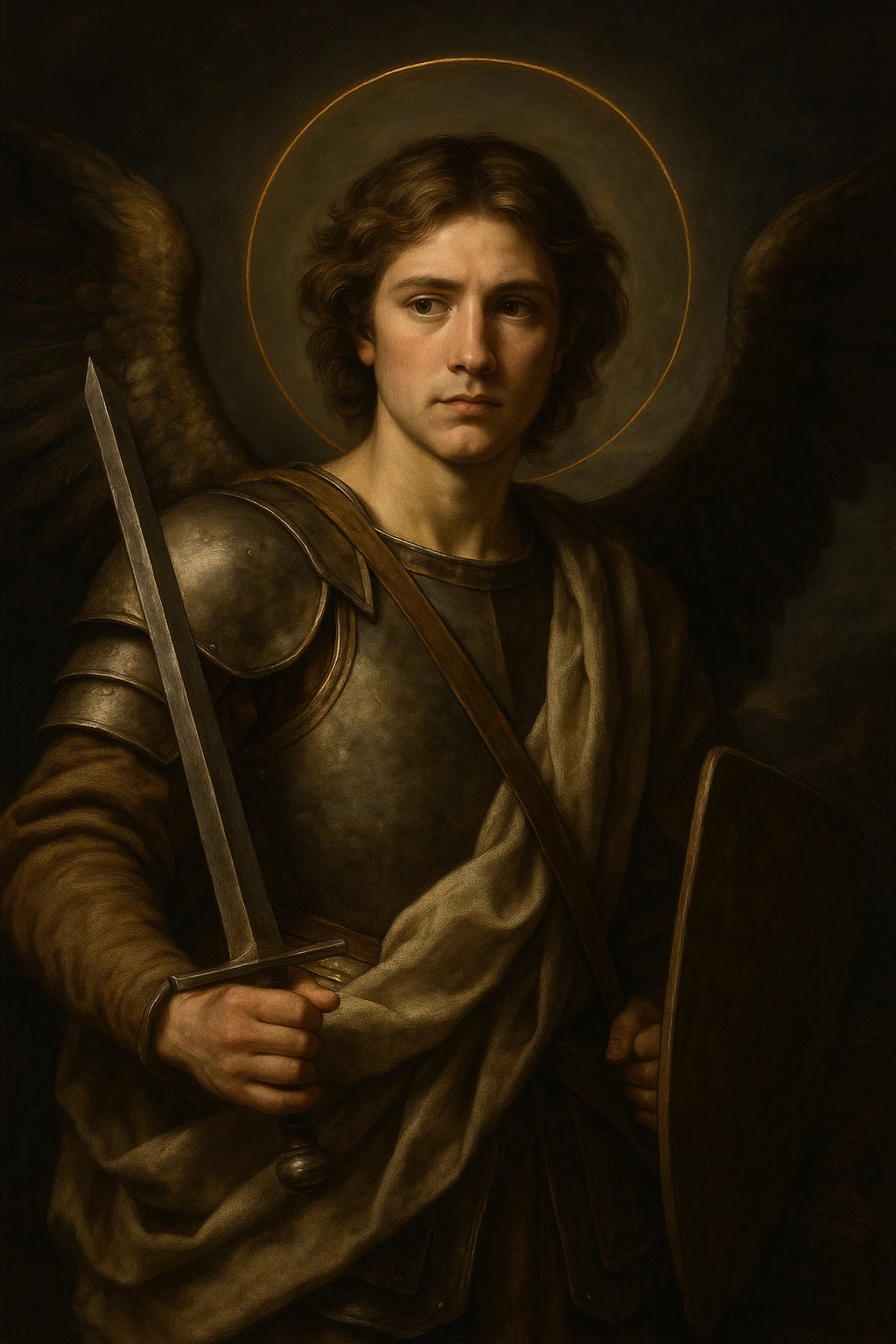
A life stretched across France.
Joan's geography is a movement from hidden country to public judgment. The places do not form a shrine complex. They form a path of vocation tested by distance, war, courts, and memory.
Domrémy gives the smallness of the beginning: a border village, a parish church, a family household, and the first reports of voices. The story begins where public power is far away.
Orléans and Reims make the mission visible. One city remembers deliverance from siege; the other holds the coronation that gave Joan's campaign its stated purpose.
Rouen gathers the end: prison, interrogation, execution, and later vindication. Pilgrims should come without looking for relics. The place is a wound in public memory, and the Church has named her witness holy.
Linked destination pages should be added only when Eternal Roam has public, sourced place records for these sites. This saint page names the places as context without creating new destination pages.