Crown of Thorns
Passion relic, traditional venerationOn dates and arrangements set by the cathedral
Notre-Dame de Paris official siteThe cathedral church of Paris, restored and returned to worship, centered on Marian dedication, the daily liturgy of the Archdiocese, and the Crown of Thorns veneration tradition.
Notre-Dame is the natural beginning of Catholic Paris. It is the seat of the Archbishop, the principal Marian dedication of the city, and the present cathedral home of the Crown of Thorns tradition.
Catholics enter Notre-Dame first as the cathedral church of Paris. The altar, the cathedra, the Marian dedication, the Mass, Confession, and the Crown of Thorns tradition are not additions to the visit. They are the order that makes the building intelligible.
Notre-Dame has shaped the religious life of Paris since the 12th century. Construction began under Bishop Maurice de Sully in 1163, and the cathedral became the city church through which Marian devotion, royal memory, civic grief, and public worship have passed. Saint Louis IX brought the Crown of Thorns to Paris in 1239; after the French Revolution, the Passion relics passed into the care of the Archbishop of Paris and were kept at Notre-Dame. The restored cathedral returned to worship on 7 and 8 December 2024.
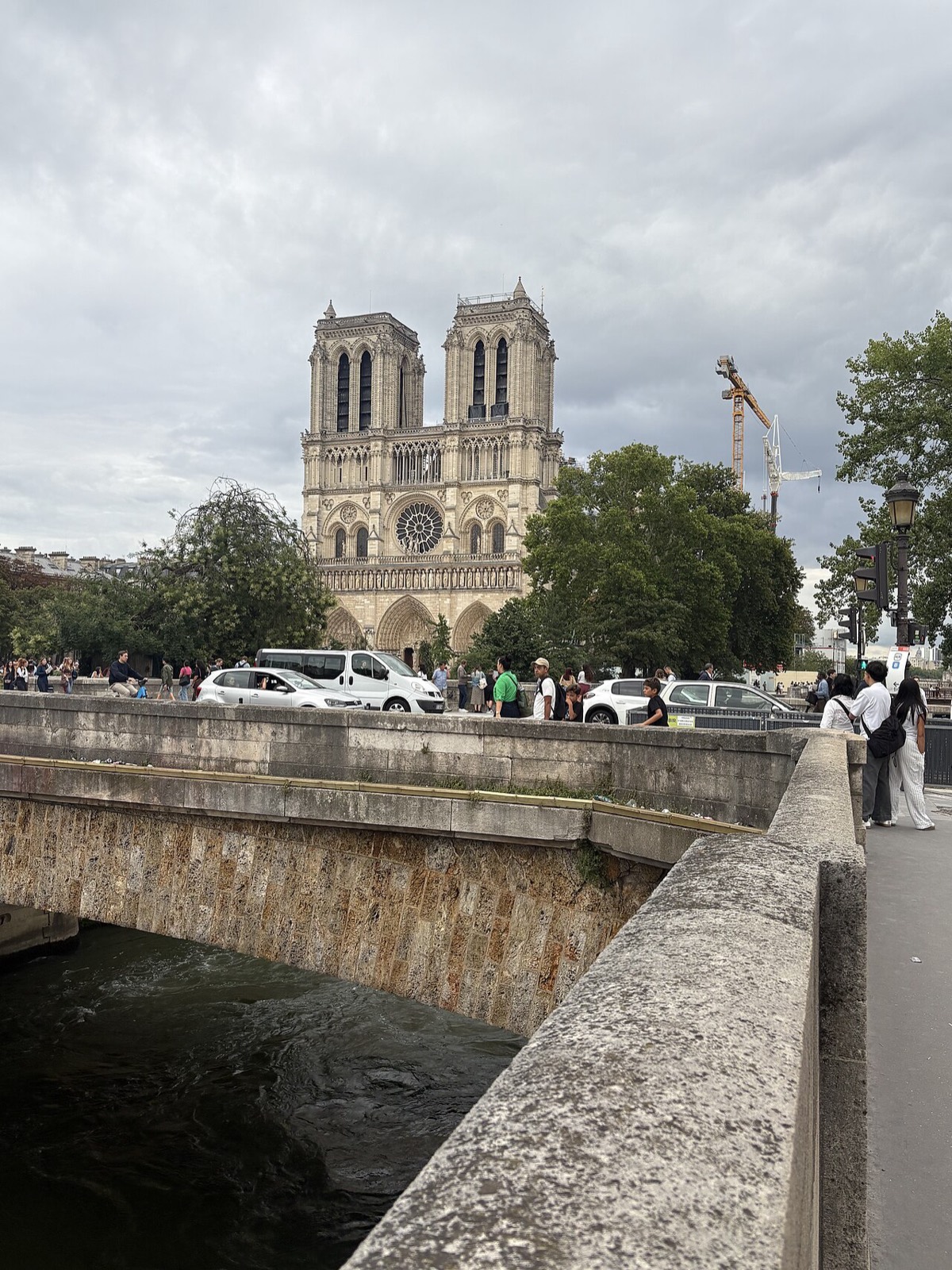
The west facade gathers judgment, Marian dedication, and local memory before the threshold. Inside, the long nave, choir, rose windows, and altar axis carry the Gothic vertical line the cathedral is known for. The post-2019 restoration cleaned the stonework and set new liturgical furnishings within the Gothic vessel.
Let the opening visit stay simple: facade, nave, altar, Marian image, relic memory.
The west facade, long nave, rose windows, and altar axis teach the cathedral as movement toward worship.
Notre-Dame stands at the civic center of Paris and remains the cathedral church of the Archdiocese.
After the 2019 fire, the nave, choir, and new liturgical furnishings were restored and reconsecrated for daily worship.
Read the restoration through prayer: altar, ambo, baptistery, cathedra, and nave returned for worship.
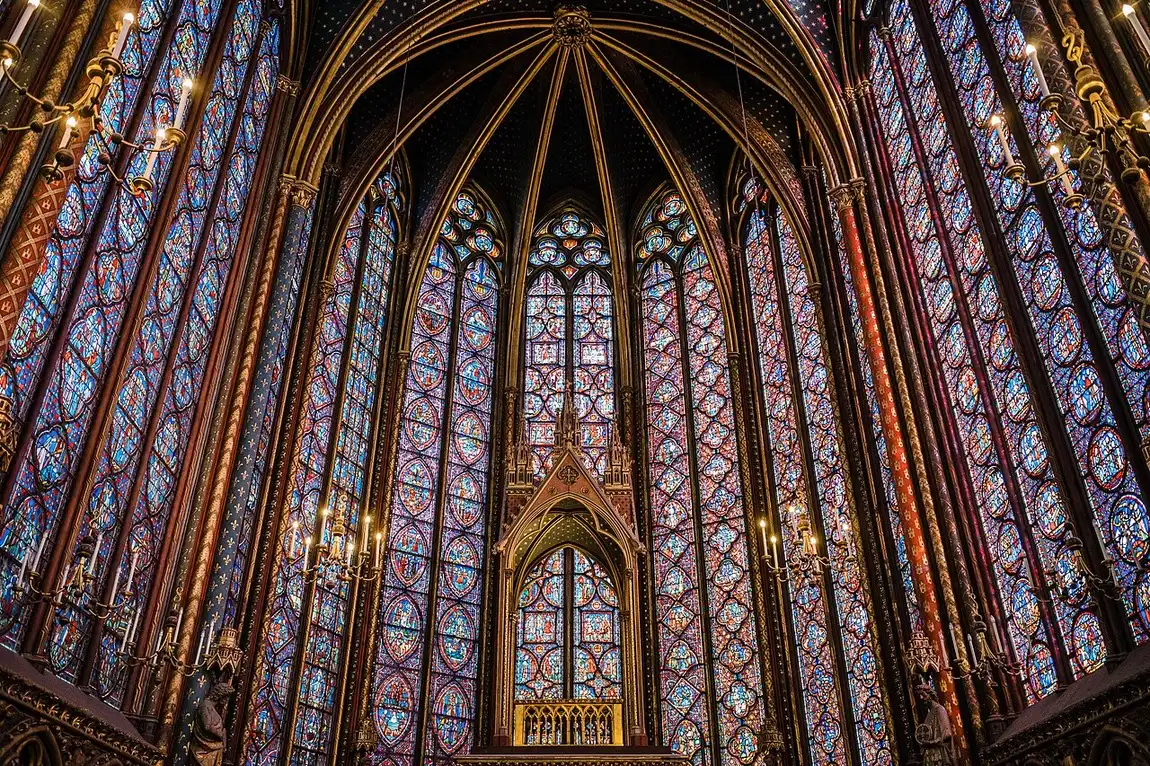
Hold Sainte-Chapelle and Notre-Dame together: royal relic chapel nearby, Notre-Dame's Passion relic tradition.
The fire of 15 April 2019 destroyed the spire and medieval timber roof, but the Gothic vaults, Marian statue, and Passion relics were spared.
Worship resumed on 7 and 8 December 2024 with the dedication of the new altar and the return of daily Mass.
The Crown of Thorns is kept in the cathedral's care and offered for veneration on dates set by Notre-Dame.
Notre-Dame's weight comes from Marian and liturgical life set within stone. Pilgrims pray before the 14th-century statue of Notre-Dame de Paris at the crossing, attend Mass at the altar, venerate the Crown of Thorns on the days the cathedral sets aside for it, and return to prayer in a building that has carried the Catholic memory of Paris for more than eight hundred years.
Read the three portals from the parvis before entering: Last Judgment at the centre, the Virgin to the north, Saint Anne to the south, beneath the Gallery of Kings and the central rose.
The north and south roses preserve much of their medieval glass. Read them from the crossing, where light, nave, and altar belong together.
The 14th-century Virgin and Child at the southeast pillar of the crossing is the cathedral's focal Marian image and survived the 2019 fire intact.
Traditionally venerated as one of the relics of the Passion. Public veneration is offered on dates set by the cathedral and should be confirmed in advance.
The Treasury preserves the Crown of Thorns and other liturgical and devotional objects of the cathedral. Access is ticketed and should be verified before arrival.
Best for a first visit inside the reopened cathedral. Keep the movement simple: exterior threshold, nave, altar, roses, Marian image, and one unhurried pause.
Use this only after checking the official schedule. Add Mass or Confession if available, then the Treasury if access is open, while keeping the Crown of Thorns tradition as veneration rather than display.
Best when the day can widen beyond the cathedral. Pair Notre-Dame with Sainte-Chapelle and the Seine-side walk so Passion relic memory, cathedral life, and medieval Paris read together.
Notre-Dame is best approached early in the day, before the visitor flow builds. Allow time to sit in the nave and to attend or pause for a Mass when the schedule allows.
Treat the practical visit in two layers. The timeless layer is simple: begin at the west facade, enter slowly, move through the nave toward the altar, pause at the Marian statue, and leave time for prayer. The current layer should be verified: Mass, Confession, Treasury access, timed reservations, and Crown of Thorns veneration follow the cathedral's official schedule.
On dates and arrangements set by the cathedral
Notre-Dame de Paris official siteTreasury access and display arrangements vary
Notre-Dame de Paris official sitePublic prayer in the cathedral
Cathedral tradition and Eternal Roam destination recordActive liturgical use
Notre-Dame de Paris official siteSource note Traditional attributions are presented as tradition, with documentation named where it exists.
Notre-Dame belongs to a wider Catholic Paris: Saint Louis and the Passion relics, Saint Geneviève and the city's protection, Saint Denis and the first memory of the local Church.
Where this church sits within the wider Catholic geography of Paris.
A short walk on the Île de la Cité. The royal chapel built by Saint Louis IX to house the Crown of Thorns and the other Passion relics that Notre-Dame now keeps.
About a fifteen minute walk across the Seine to the Latin Quarter. The shrine of Saint Geneviève, patroness of Paris, also keeping the tombs of Pascal and Racine.
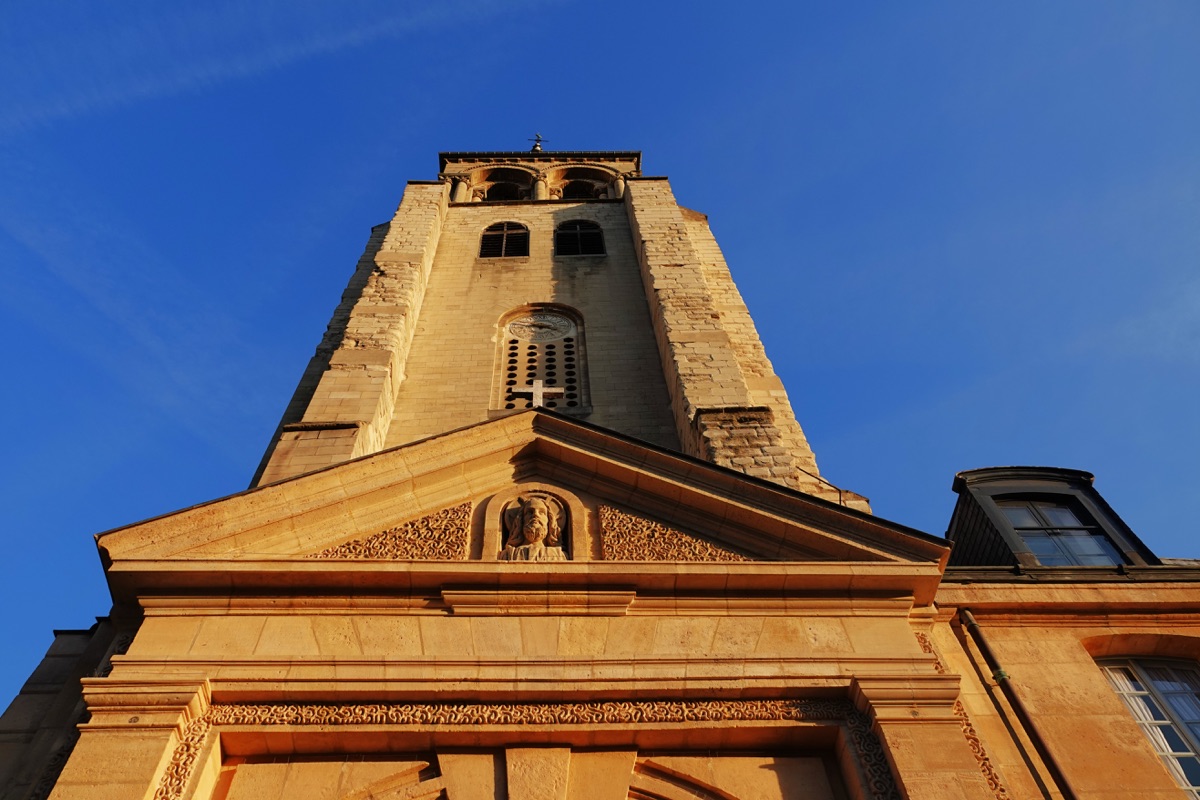
About a twenty minute walk across the Seine to the Left Bank. The ancient abbey church of Saint Germain of Paris and one of the oldest churches in the city.
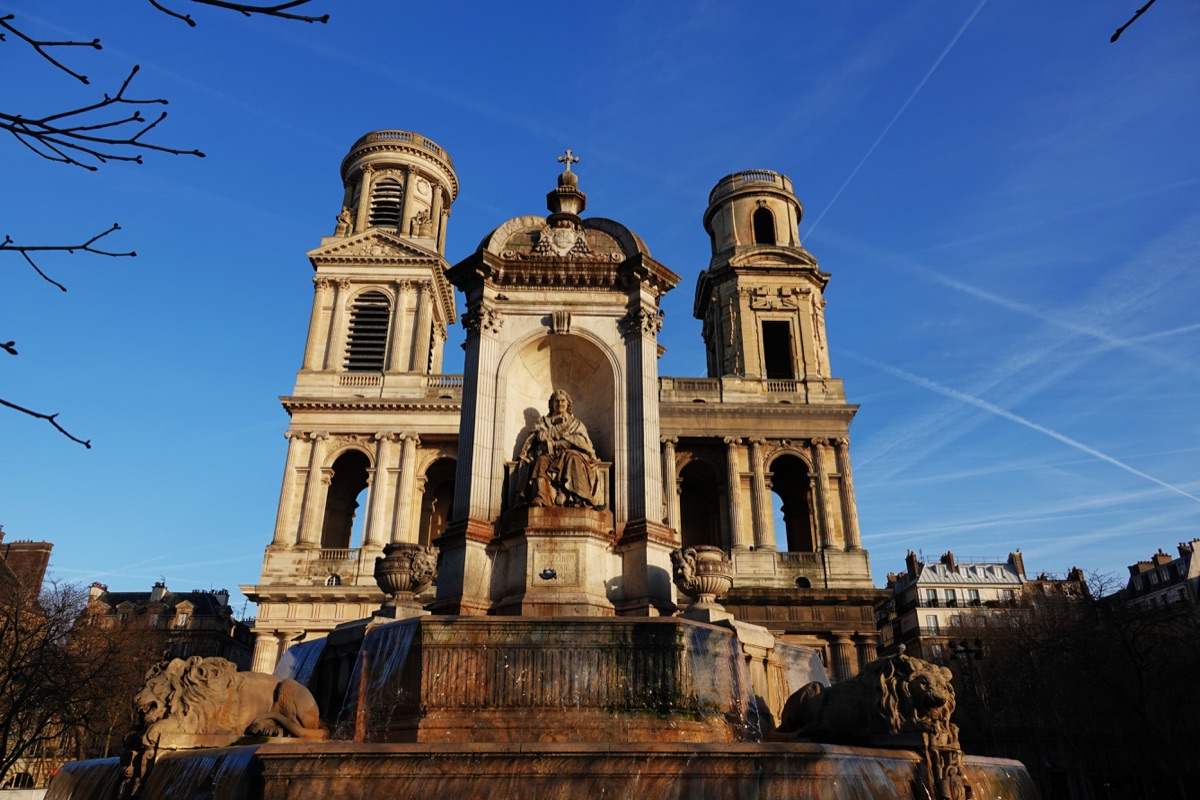
About a twenty-five minute walk across the Seine to the 6th arrondissement. A major Paris church for sacred art, music, and Left Bank Catholic culture.
A closing set of views of the cathedral and its setting on the Île de la Cité.
The restored south transept after the December 2024 reopening, its stone and glass returned to the cathedral's daily worship.
The Crown of Thorns is preserved at Notre-Dame and offered for public veneration on dates set by the cathedral. Pilgrims should confirm current arrangements for Mass times, Confession, Treasury access, visiting reservations, and relic veneration on the official cathedral site before planning around them; access details have continued to evolve since the December 2024 reopening.
June 28, 2026
Use this for corrections, broken links, missing places, and planning ideas.