
Body relics of Saint Cecilia
Tomb and body relicYes, beneath the high altar
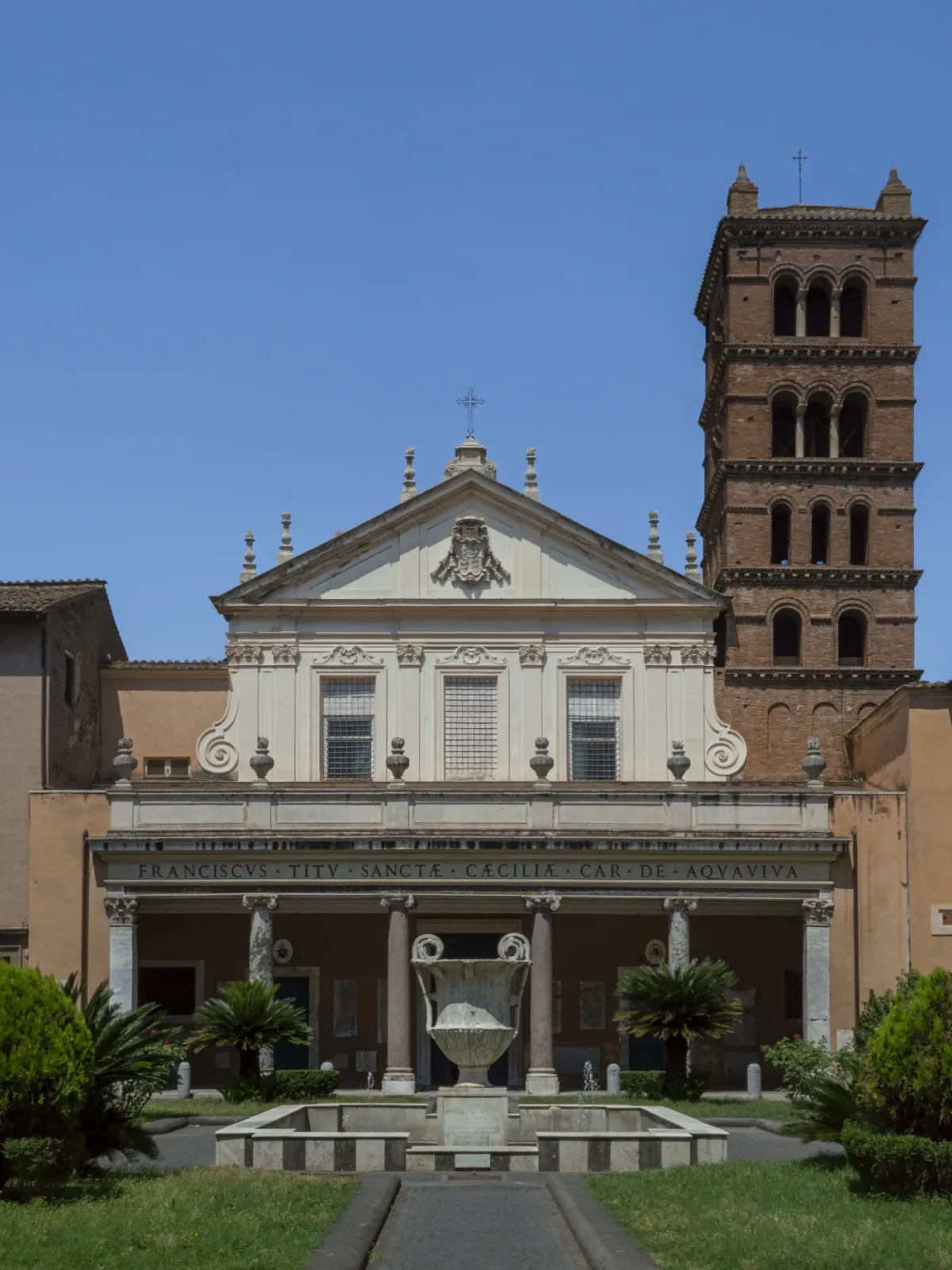
Basilica of Santa Cecilia in TrastevereSanta Cecilia in Trastevere is a Roman martyr basilica built over the traditional house and tomb of Saint Cecilia, with relics, mosaic, crypt, and excavations layered into one compact pilgrimage church.
Come here for one of Rome’s most intimate saint churches: Cecilia’s tomb, Maderno’s statue, the apse mosaic, the crypt, the excavations, and a quieter kind of Roman pilgrimage away from the biggest basilicas.
Christian tradition places the house and martyrdom of Cecilia, a Roman noblewoman and patron of music, on this ground in Trastevere. She was buried in the catacombs of San Callisto on the Via Appia; in the early ninth century Pope Paschal I rebuilt the basilica here and brought her relics, with those of her husband Valerian and his companions, to rest beneath the altar. In 1599, when the tomb was opened, the basilica records that her body was found incorrupt, lying on its side; Stefano Maderno carved the marble statue that still lies beneath the altar to show her as she was found. The church has kept her memory in unbroken prayer ever since, now in the care of a Benedictine monastic community.
The building carries many Rome layers at once: ancient domestic remains below, the ninth-century basilica plan and apse mosaic, Arnolfo di Cambio's ciborium of 1293 over the altar, Cavallini's Last Judgment in the nuns' choir, a Baroque forecourt and facade, and a living monastery. Its power is not size but density.
Santa Cecilia is one of Rome’s most evocative martyr churches because saint, house, tomb, art, and monastery overlap.
The basilica was rebuilt by Pope Paschal I in the early ninth century.
The 1599 discovery of Cecilia’s body inspired Maderno’s famous marble statue.
The excavations reveal Roman structures under the basilica, including spaces associated with the saint’s house tradition.
Opening times for the crypt and excavations can differ from the church, so check before going.
Santa Cecilia avoids the feeling of a giant monument. It is best approached slowly as a church where martyrdom, relics, art, and the hidden life of prayer sit close together.
Beneath the high altar, Stefano Maderno's marble of the saint as the basilica records her body was found in 1599, with her relics venerated below. The devotional heart of the visit.
Christ among the saints, with Pope Paschal I holding a model of the church he rebuilt. He brought Cecilia's relics here from the catacombs in the early ninth century.
The Gothic marble canopy of 1293 over the altar, signed by Arnolfo, framing the tomb beneath it.
In the nuns' choir above the nave, Pietro Cavallini's fresco of around 1290 is among the great works of medieval Roman painting. It is shown on limited days; ask before counting on it.
Below the basilica, the crypt and the remains of the ancient house traditionally identified as Cecilia's, where the church's memory of her martyrdom is rooted.
Enter through the walled forecourt, go to the high altar, and pray before Maderno's statue and the tomb of Saint Cecilia. Look up to the ninth-century apse mosaic before you leave.
Add Arnolfo di Cambio's ciborium over the altar and a slow turn through the nave, then descend, if open, to the crypt and the Roman house excavations beneath the church.
Begin at Santa Cecilia, then walk the older streets of Trastevere to Santa Maria in Trastevere, with its golden facade mosaics. A half day holds both churches and the neighbourhood between them without rushing.
Begin at the tomb, not the art. Maderno's statue and the relics beneath the altar are the reason the church exists; the mosaic, the ciborium, and the excavations deepen that, rather than competing with it.
Begin at the altar and Maderno statue, then look up to the apse mosaic. If open, visit the crypt and excavations beneath the church. Check current hours for the basilica and underground areas before planning around them.
Yes, beneath the high altar
Basilica of Santa Cecilia in TrastevereAssociated with the basilica
Basilica traditionBy visit to the excavations, hours permitting
Basilica excavationsSource note Traditional attributions are presented as tradition, with documentation named where it exists.
This basilica gathers the saints of Cecilia's martyrdom in one church, raised over the house that tradition remembers as hers, and sets her among the young martyrs of Rome.
A short walk across the neighbourhood, one of the oldest churches in Rome dedicated to the Virgin, with golden medieval mosaics on its facade and apse.
Cecilia's relics rest beneath this altar. Continue to the catacomb on the Via Appia that preserves the memory of her first burial.
Continue to the Via Appia catacomb that preserves Cecilia's first burial memory beside the Crypt of the Popes.
Agnes and Cecilia make the early Church visible across tombs, house-church memory, and the catacomb roads beyond the center.
Connections are curated from Eternal Roam's saint, place, relic, route, and Rome records. Traditional attributions are identified in context.
One marble, beneath the altar, holds the whole devotion of the basilica.
Maderno's marble lies beneath the high altar, the saint shown on her side as the basilica records her body was found when the tomb was opened in 1599. It is the still, restrained centre of the visit, and the reason many pilgrims come.
Edited from the basilica's Benedictine source, the Wikimedia image provenance in the credits, and Eternal Roam destination records. The 1599 discovery of the body and Maderno's statue are described as the basilica and tradition hold them, without asserting incorruptibility as established fact.
July 9, 2026
Use this for corrections, broken links, missing places, and planning ideas.
