
Melk Abbey
Melk Abbey is a living Benedictine monastery above the Danube, where Baroque beauty, monastic learning, school life, and liturgical prayer still belong to one place.
- Location
- Melk, Austria
- 48.2293° N · 15.3319° E
- Type
- Living Benedictine abbey
- Austrian Baroque abbey complex above the Danube
- Monastic Tradition
- Benedictine abbey
- Living abbey, school, library, church, and cultural landmark
- Time Needed
- 1 to 2 hours
Prayer, Study, and the Danube
Come for the combination of Benedictine continuity and Baroque splendor: a working abbey whose church, library, school, and terraces make monastic culture tangible.
A Monastery of Learning and Praise
Melk has long been associated with Benedictine life, education, manuscripts, and worship. Its present Baroque form gives that continuity a brilliant architectural language, but the deeper story is the abbey's ongoing rhythm of prayer and study. The visitor should not separate the library from the church or the school from the monastery; they are forms of the same Benedictine labor.
The abbey uses Baroque drama with discipline: grand approaches, a library of memory and scholarship, a richly ornamented church, and terraces that open the monastery toward the Danube valley. Its beauty is public, but the order beneath it is monastic and still visibly at work.
Baroque beauty in Benedictine order.
Melk is not only a grand abbey above the Danube. It is a Benedictine house where worship, study, school, and hospitality remain connected.
- 01 Begin with prayer The church is not ornamental excess. It is the liturgical heart that explains the rest of the abbey and gives the Baroque program its purpose.
- 02 Read the library seriously Melk's library makes study visible as a monastic work, not a cultural extra. Books, teaching, and prayer belong to the same Benedictine life.
- 03 Look out to the Danube The terraces show how monastery, school, river, and hospitality belong to one Benedictine landscape rather than separate museum stops.
Melk is a living Benedictine abbey, not only a museum monument.
The library is one of the great monastic library spaces of Europe.
The Baroque church can feel theatrical, but its purpose is liturgical and devotional.
The abbey's position above the Danube gives the visit a strong sense of place.
A monastery is best understood by the life it was built to sustain.
Melk is a good reminder that monastic life is not only hidden austerity. It can also produce schools, libraries, hospitality, music, preaching, and a public beauty meant to lift the mind toward God.
- Eternal Roam reads the Baroque church as a movement from abundance toward praise: ceiling paintings, side altars, and high altar gather the eye around the liturgical act.
- The library shelves have slightly curved fronts. This is not decorative: it is a solution to the problem of shelving in a room with concave walls. Notice how the books and the room are designed together.
- Melk is a working school as well as an abbey. You may encounter students alongside pilgrims. This is not a contradiction: Benedictine education has always been part of the charism.
- The Danube from the terrace changes with season, light, and weather. The river explains the abbey's location better than any text: trade route, defensive position, pilgrim path.
- The abbey church's organ is visible from below. Melk has a significant musical tradition: check whether any liturgical music is scheduled during your visit.
Five things, not fifty.
-
01
The abbey church
The Baroque interior gathers painting, sculpture, gilding, and light into a single act of liturgical praise. Overwhelming on first entry: allow the eye to settle and read the theological program before leaving.
-
02
The library
One of the great monastic library spaces in Europe. The link between prayer, learning, and manuscript culture that Benedictine monasticism preserved is visible in this single room.
-
03
The Marble Hall
The great formal hall of the abbey complex, with ceiling paintings by Paul Troger. Part of the museum route and worth finding.
-
04
The terraces over the Danube
The view of the river from the abbey balconies shows why the site was chosen. The abbey is not merely placed on a hill: it is a statement about the relationship between monastic life and the landscape it inhabits.
-
05
The current Benedictine community
Melk is a living abbey, not a monument. A school operates within it. Attend Mass if possible: the liturgy in the abbey church is the reason the building exists.
See all 5 · 2 more
- The terraces over the Danube The view of the river from the abbey balconies shows why the site was chosen. The abbey is not merely placed on a hill: it is a statement about the relationship between monastic life and the landscape it inhabits.
- The current Benedictine community Melk is a living abbey, not a monument. A school operates within it. Attend Mass if possible: the liturgy in the abbey church is the reason the building exists.
How much time, and what to do with it.
-
1 hr Short visit
Church and terraces
Enter the abbey church, walk to the terraces, and look at the Danube. The library requires the museum route, so check whether there is time.
- Abbey church
- Terraces over the Danube
- Exterior and approach
-
2 hr First-time visitors
Church, library, and Marble Hall
The full museum route at a reasonable pace: church, Marble Hall, library, and terraces. Attend Mass if one is available.
- Abbey church
- Marble Hall
- Abbey library
- Terraces
Begin with the church before the museum route. The church is the point: the Baroque program, the liturgy, the silence. The library and Marble Hall deepen the visit but should come second. End with the terraces and the Danube view. If you can attend Mass, the abbey's purpose becomes unmistakable.
How to visit without rushing.
-
Prayer in the abbey church
-
Visits to the library, museum route, Marble Hall, and terraces when open
-
Attention to the living Benedictine community and school life
-
Current liturgy, tours, and access should be checked before arrival
See all 4 · 1 more
- Current liturgy, tours, and access should be checked before arrival
What pilgrims come to notice and venerate.
Tomb and Burial
- Melk is tied above all to the Benedictine tradition of prayer, learning, stability, and hospitality.
Relics and Sacred Tradition
- The abbey church preserves a rich Catholic devotional setting shaped by Benedictine liturgy and Baroque sacred art.
Sacred Objects
- The abbey church gathers Baroque art, altar, choir, and liturgical space into a single overwhelming act of praise.
- The library embodies the Benedictine link between prayer, study, copying, teaching, and memory.
- The terraces over the Danube make the abbey feel both elevated and connected to the river landscape.
The lives remembered here.
-
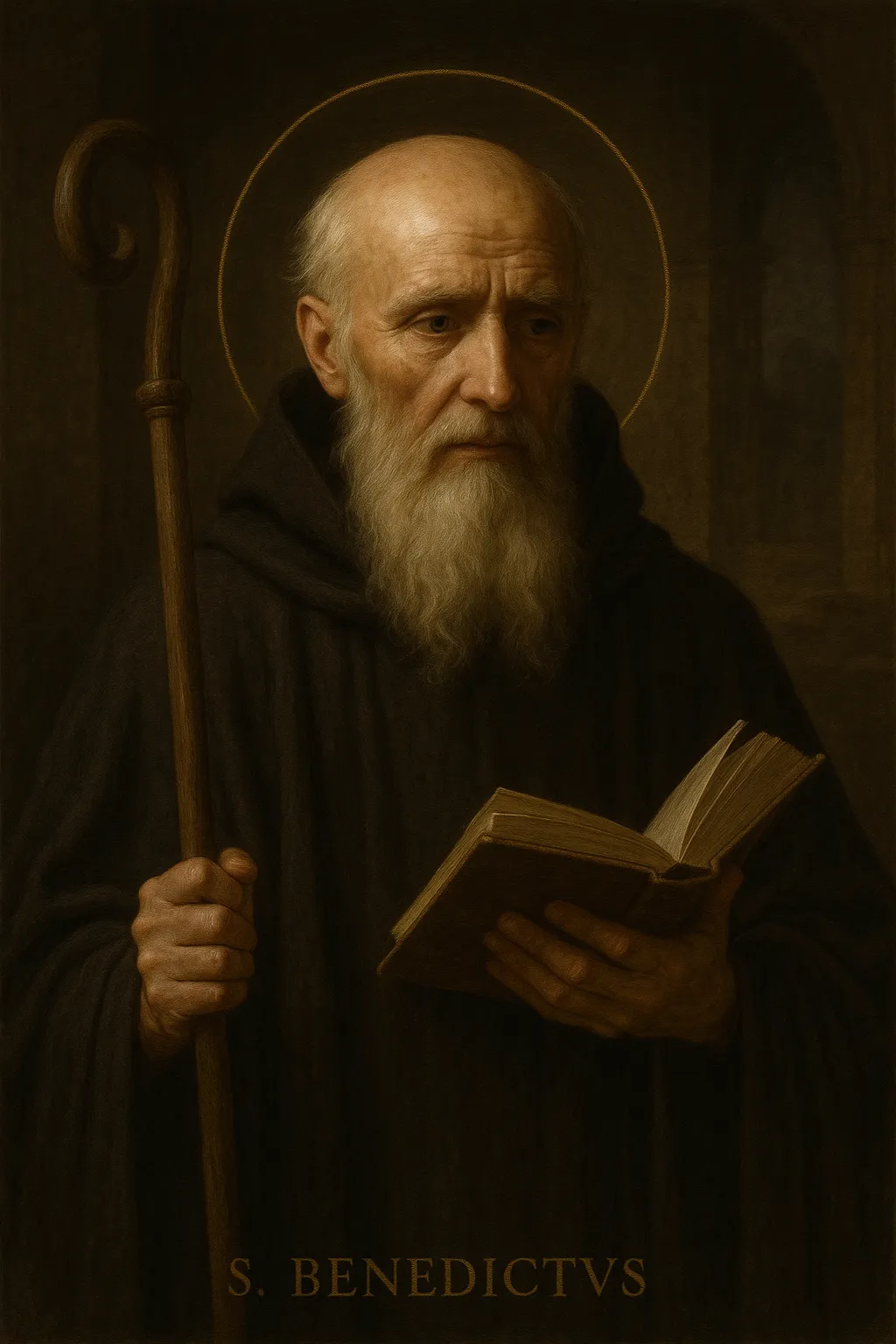
Saint Benedict Founder of the Benedictine tradition this abbey follows The Rule of Saint Benedict governs every aspect of Melk's monastic and school life. The abbey's library, its hospitality, its liturgical discipline, and its school all trace back to Benedict's vision of ora et labora, pray and work.
-
Saint Coloman of Stockerau Relics venerated here · patron of Austria An Irish or Scottish pilgrim killed near Stockerau around 1012, venerated as a martyr. His relics were brought to Melk in 1014 by the Babenberg Margrave Henry I and became the foundation of Melk's early devotional identity as a pilgrimage site.
Benedictine and Danube sacred geography around Melk.
-
Abbey church
Melk Abbey Church
The liturgical heart of the visit. The library and museum route should lead back to the church, not replace it.
-
Marian basilica
Maria Taferl Basilica
A major Lower Austrian pilgrimage church that pairs naturally with Melk for travelers following the sacred geography of the Danube.
-
Benedictine abbey
Göttweig Abbey
Another great Benedictine house in the Wachau landscape, useful for reading Melk within a living monastic region rather than as a single monument.
Plan around this place.
Credibility calibration reviewed 2026-07-14 against the official Melk Abbey source (https://www.stiftmelk.at/en/). It supports the living Benedictine community, library, school, and Baroque church; the movement from abundance to praise is identified as Eternal Roam's reading. Check current worship, ticketing, guided tour, and seasonal access details before travel.
July 14, 2026
Photo credits
- Hero. Vpa248, CC BY-SA 3.0, via Wikimedia Commons. Source. CC BY-SA 3.0.
- A Baroque Abbey Still at Work; The library. Emgonzalez, Public Domain, via Wikimedia Commons. Source. Public Domain.
- The abbey church. David Monniaux, CC BY-SA 3.0, via Wikimedia Commons. Source. CC BY-SA 3.0.
- The Marble Hall. Uoaei1, CC BY-SA 3.0, via Wikimedia Commons. Source. CC BY-SA 3.0.
- The terraces over the Danube. Dionysos1970, CC BY-SA 4.0, via Wikimedia Commons. Source. CC BY-SA 4.0.