
01
The church
The public heart of worship, often the most accessible part of an active monastery.
Most accessible
Destinations · An ordered world, not a directory
Places shaped by prayer, rule, silence, work, hospitality, and sacred architecture.
From Benedictine mountain abbeys to Cistercian ruins, island monasteries, desert communities, and living houses of prayer, these places reveal a different rhythm of sacred travel: slower, more attentive, and rooted in the daily life of the Church.
Why visit a monastery?
Many trips become a blur of churches, museums, squares, restaurants, and viewpoints. A monastery can slow the itinerary and give the traveler a way to read Christian life through space, where prayer, learning, labor, and hospitality were once ordered into a single rhythm.
A monastery is worth the time when it gives the day something the rest of the itinerary cannot: silence, a saint's landscape, a visible rule of life, or architecture ordered around prayer rather than spectacle. Not every monastery is essential. The page is built to help you decide which are worth making room for.
How to read a monastery
01
The public heart of worship, often the most accessible part of an active monastery.
Most accessible
02
A path of return: movement, silence, reading, and enclosure organized around a garden.
The center
03
Where the community listened, decided, corrected, and received the rule each day.
Governance
04
Common life made visible: meals taken in silence with reading, discipline, and hospitality.
Common table
05
The memory of learning: manuscripts, teaching, music, and the preservation of texts.
Scriptorium
06
Hospitality as part of the rule, not simply lodging. The threshold for the traveler.
The threshold
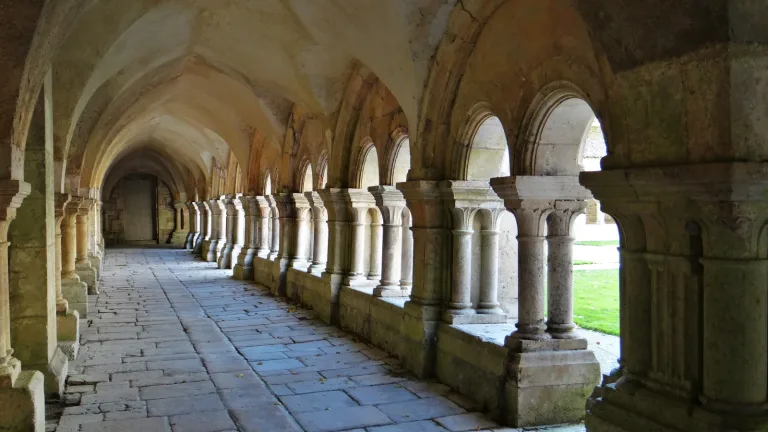
A cloister teaches you how the community moved, prayed, listened, and returned. The architecture has a rule behind it.
Ways into monastic places
I
Not as an aesthetic, but as a discipline of attention. In a working community, quiet is the condition of everything else, and it asks something of the visitor too.
II
How Benedictine, Cistercian, Carthusian, Franciscan, Orthodox, and other traditions shape the plan. The same parts are arranged differently because the lives lived in them differ.
III
The Divine Office, chant, bells, liturgy, processions, and the daily rhythm that turns a building into a horarium. The bell, not the clock, keeps the time.
IV
Gardens, libraries, schools, farms, guesthouses, manuscripts, medicine, brewing, teaching, and service. The best abbeys reveal how prayer shaped land, labor, learning, and beauty.
V
Cloister, refectory, chapter house, church, dormitory, scriptorium, guesthouse. A plan that put a way of life into stone, so the building still teaches it centuries later.
Kinds of monastic place
Living
Places where prayer and community life still order the day, and where the visitor is a guest of a working house.
Melk · Pannonhalma · Montserrat
Historic
Former or transformed houses where architecture, libraries, music, and regional memory remain central.
Cluny · Saint-Gall · Bath
Ruined
Cloisters and churches where absence itself tells the story, and the plan is read through what remains.
Fountains · Rievaulx · Whitby
Island & mountain
Places shaped by geography: ascent, tide, enclosure, and distance from the ordinary world.
Mont-Saint-Michel · Iona · Meteora
Route stops
Abbeys and priories that served roads, travelers, hospitality, and learning along the great ways.
Conques · Roncesvalles · Silos
Eastern & desert
The desert tradition and the Orthodox East, where monasticism began and where it endures.
Sinai · Mount Athos · Mar Saba
Where to start
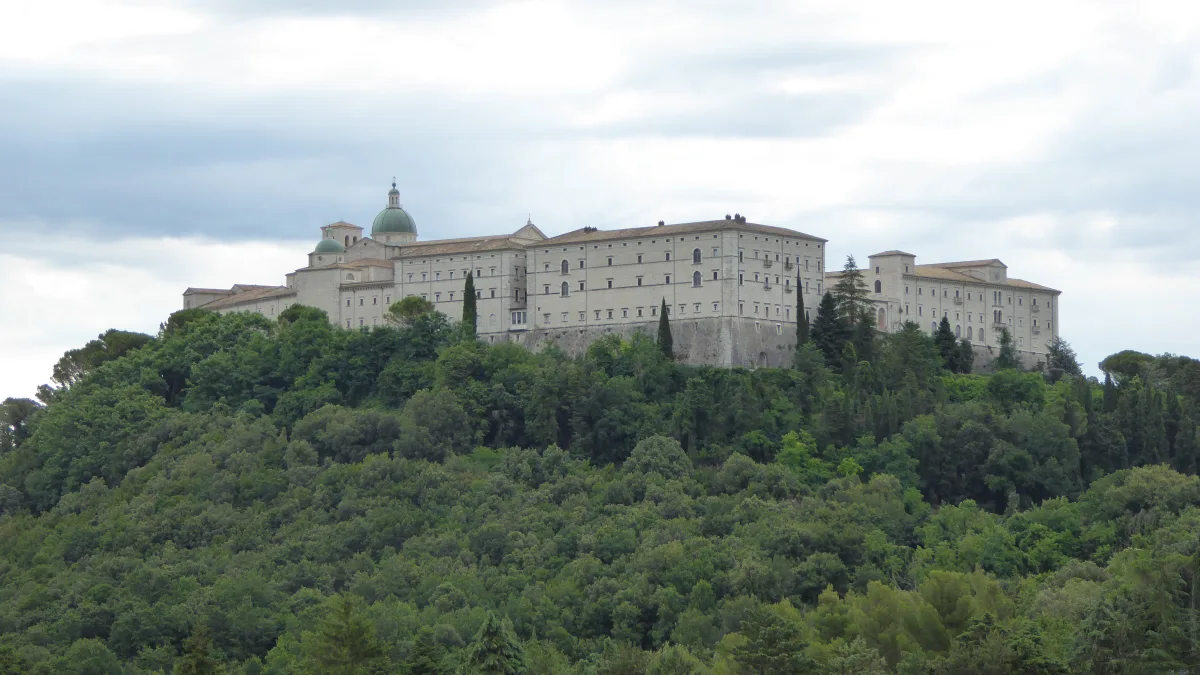
Benedictine
Lazio, Italy
Go forBenedict, wartime memory, reconstruction, and the origins of Western monastic life.
The motherhouse of the Benedictine order, destroyed in 1944 and rebuilt stone by stone. The rule of the West was written on this hill.
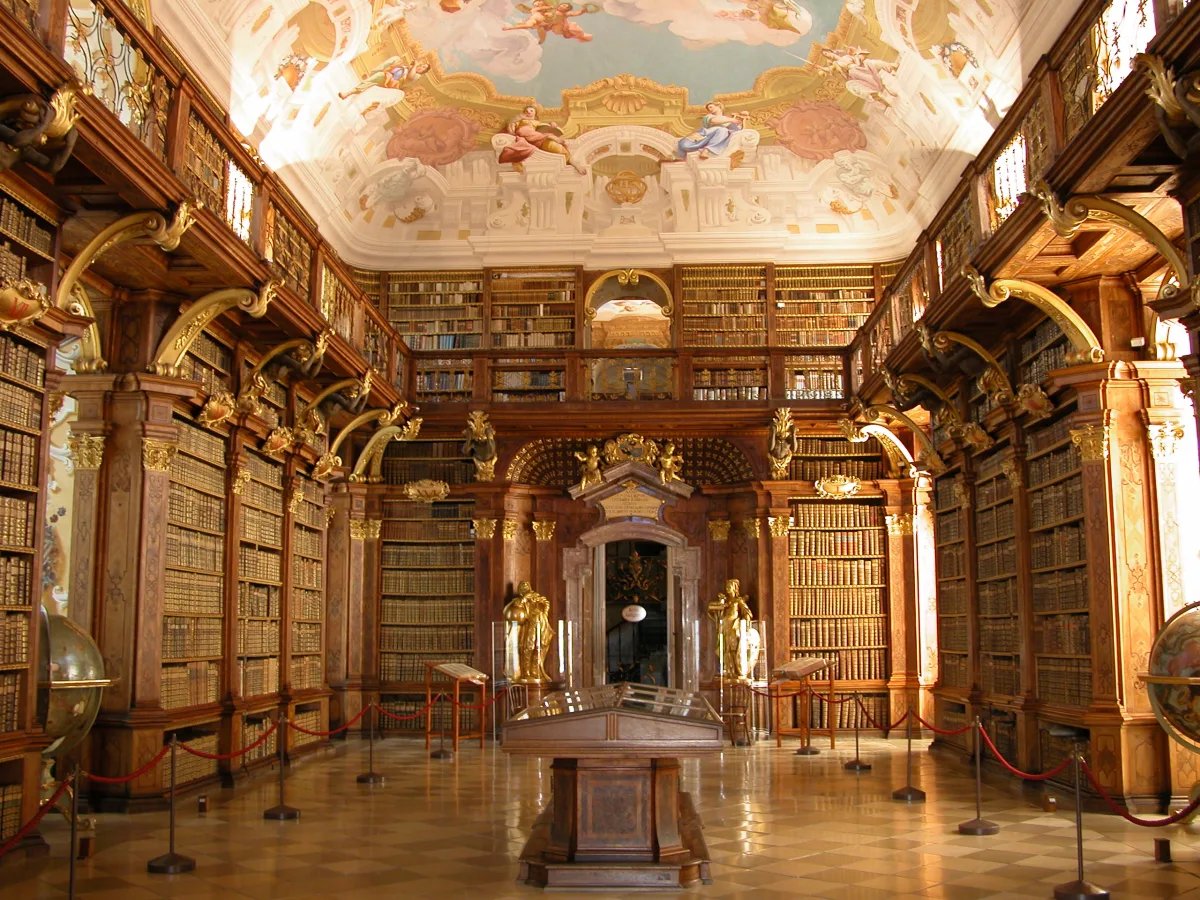
Benedictine
Lower Austria
Go forBaroque architecture, the library, Benedictine continuity, and the Danube setting.
A working abbey and school for over nine centuries, its library among the great rooms of European learning. Library and liturgy under one roof.
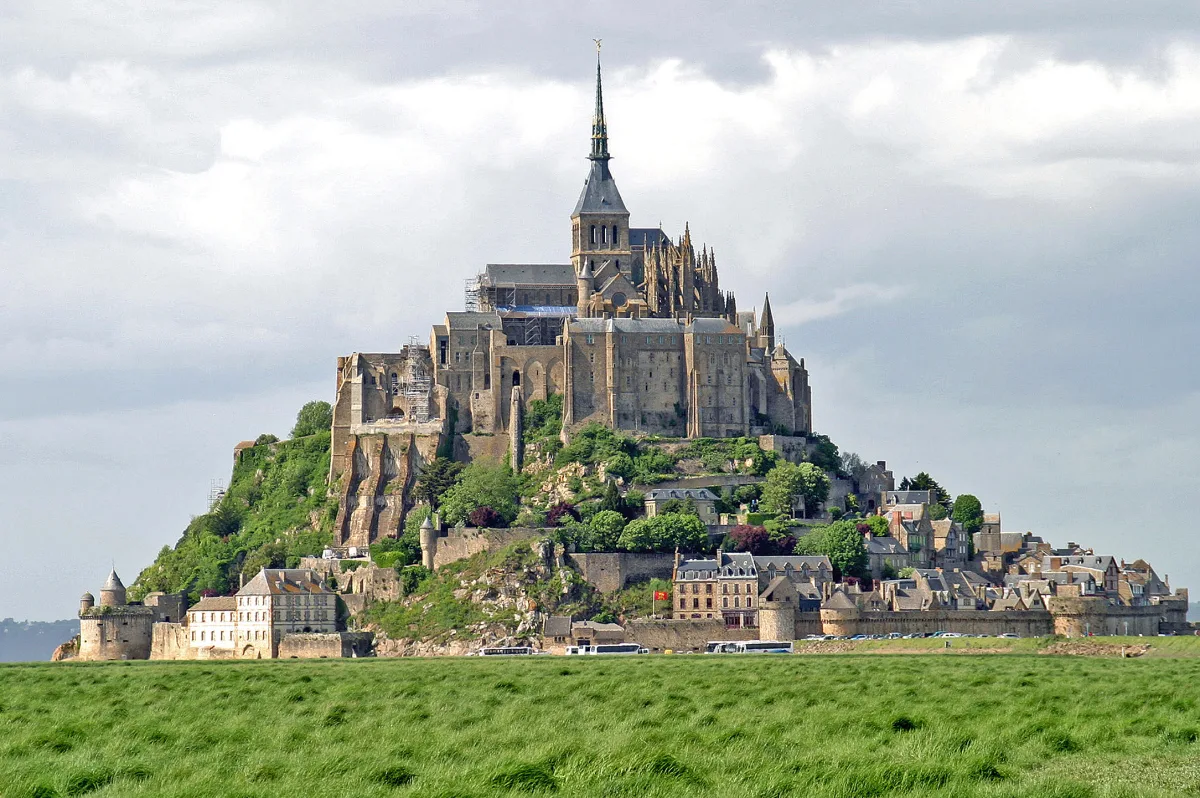
Benedictine
Normandy, France
Go forAscent, tide, medieval imagination, and the abbey as a sacred summit.
A church built at the top of a tidal rock, reached by a climb through the village below. The architecture is the argument for going on foot.
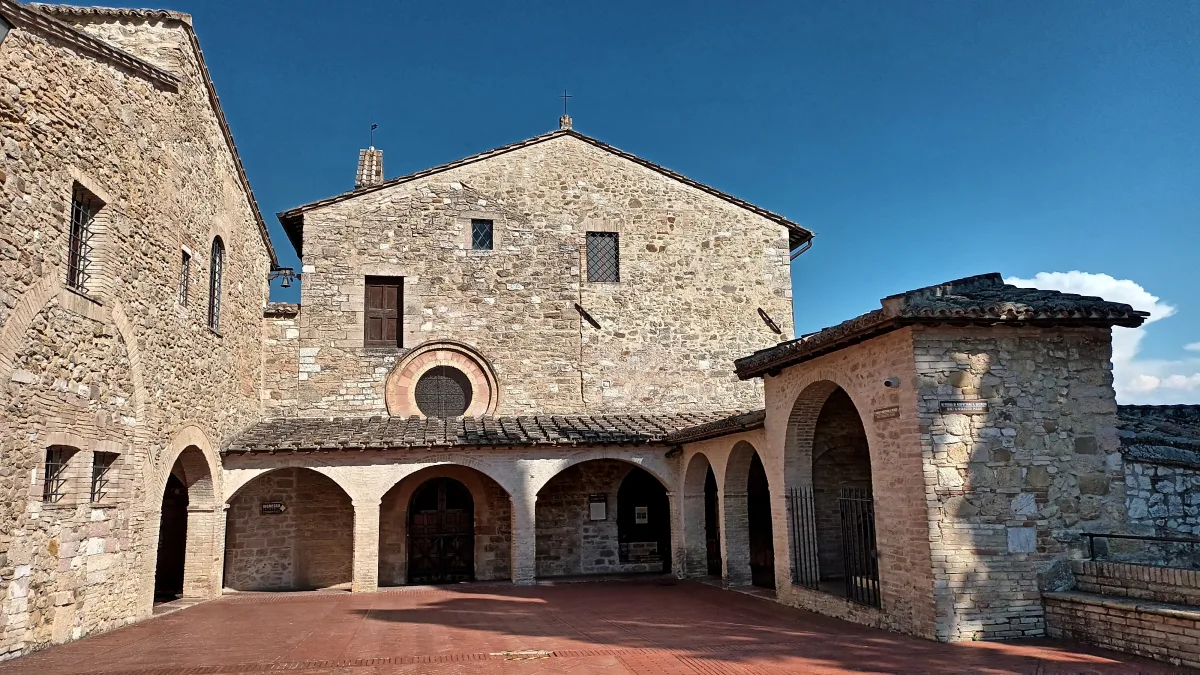
Franciscan
Assisi, Umbria
Go forFrancis, Clare, poverty, repair, and a quieter Assisi.
The chapel Francis was told to rebuild, and where Clare kept her enclosure. Low, agricultural, and reached on foot below the crowded town.
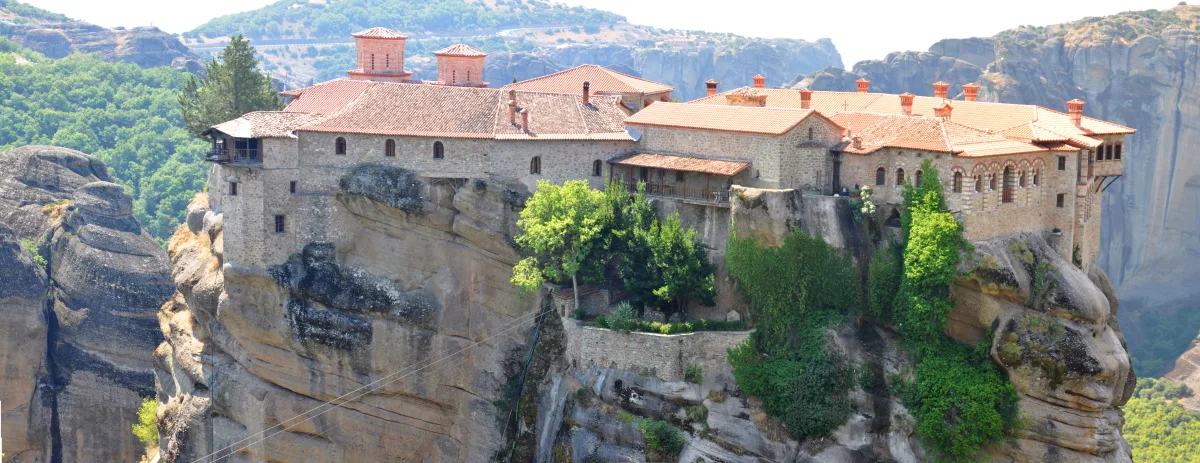
Greek Orthodox
Thessaly, Greece
Go forGreek Orthodox monasticism, cliffs, distance, and the drama of withdrawal.
Monasteries built on the tops of sandstone pillars, once reached only by rope and basket. Living communities keep rotating visiting days and dress rules.
Access & thresholds
In active communities, the monastery is not primarily a monument.
A monastery is not like a cathedral or shrine where the assumption is walk in and visit. Access varies widely, and it is part of the credibility of the page to say so. Some are fully visitable heritage sites; some have public churches but restricted cloisters; some allow prayer access but not tourism; some offer guesthouse or retreat access by arrangement; some are restricted, seasonal, cloistered, or by permission only.
Monasteries are living places, not only historic monuments. Access can change with community life, liturgical schedules, retreat seasons, restoration work, and local rules. Always check the monastery's official site before going.
Public church or site access is generally available, often with the cloister, library, or museum included.
Some areas are public; monastic or private areas are restricted to the community.
Visitors may attend Mass or the Divine Office, but tourism access is limited.
Overnight or retreat access may be possible by advance arrangement with the community.
Access is limited, seasonal, gender-specific, cloistered, or requires prior contact.
Where we have not confirmed access, we say so: check the official site before going. Never assume a monastery is open.
Saints, rules, and traditions
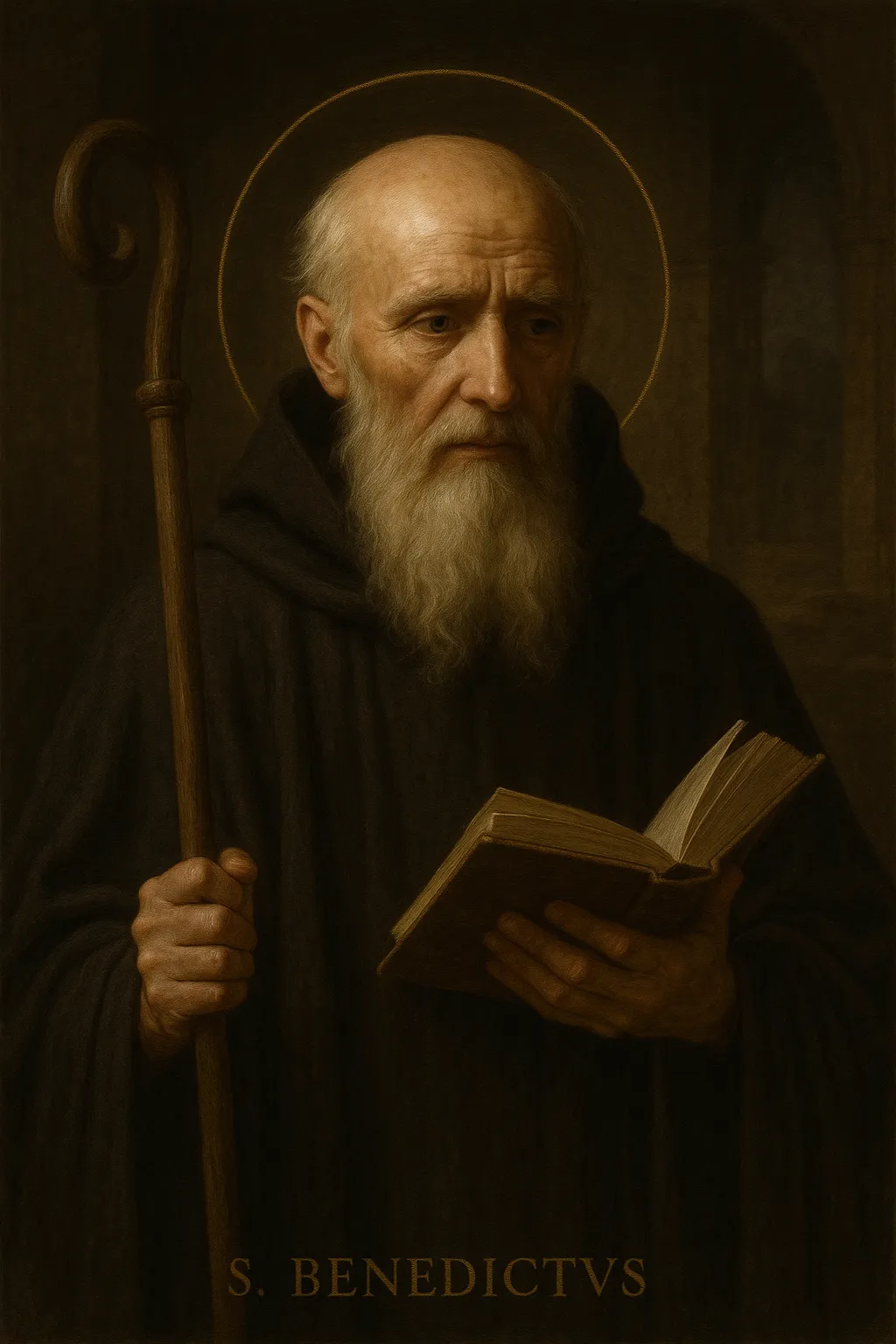
Rule of the West
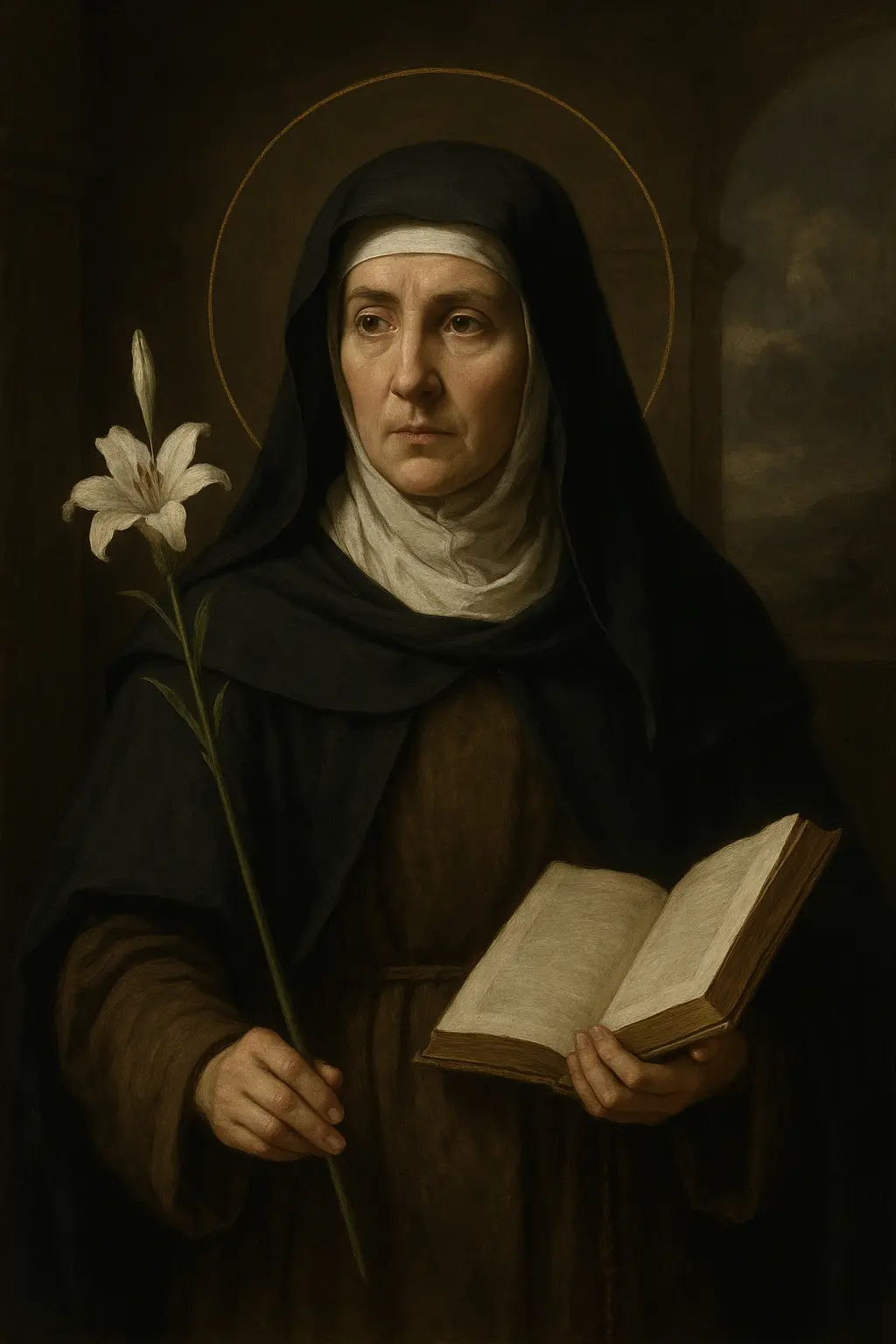
His sister · Subiaco
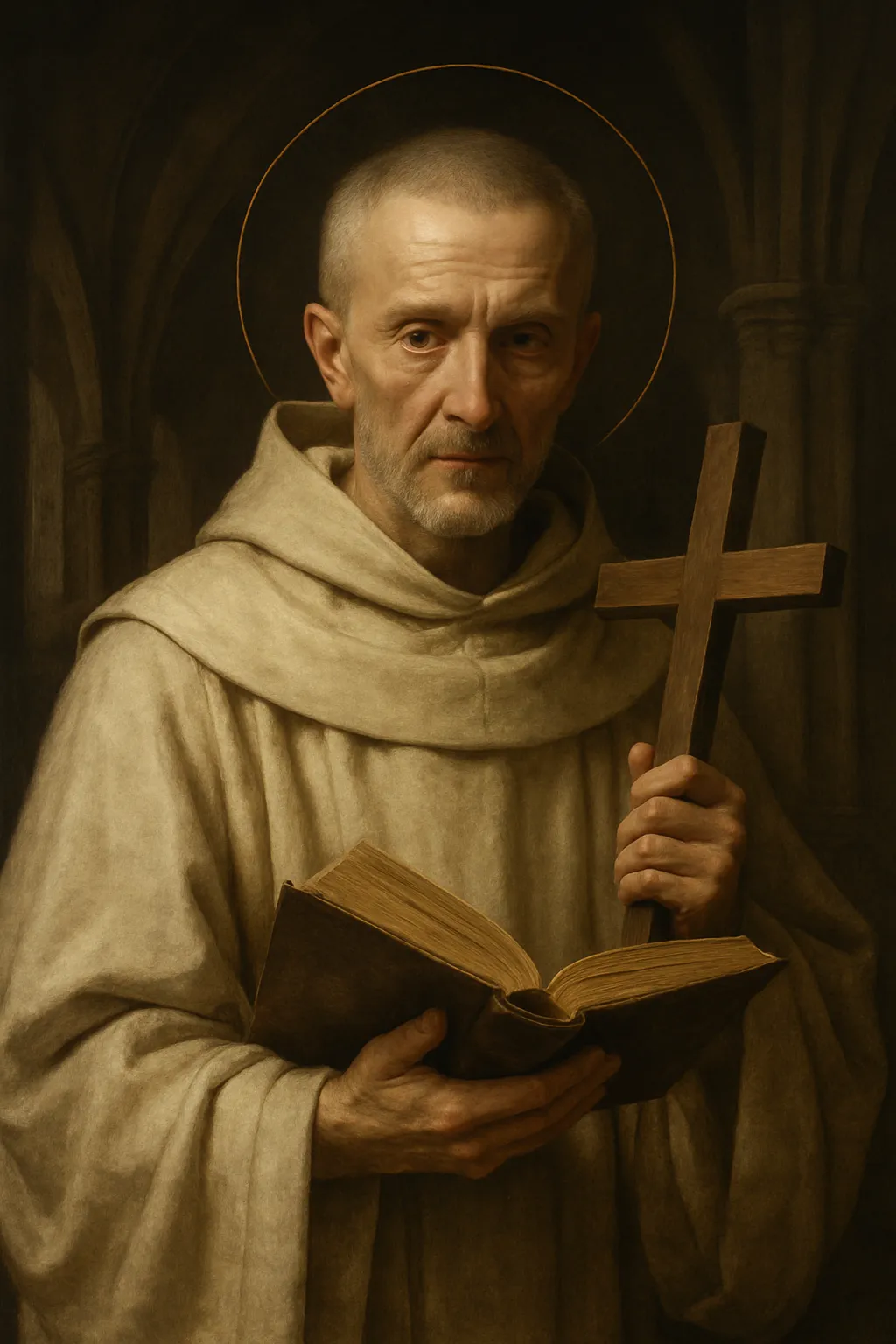
Clairvaux · Cistercian
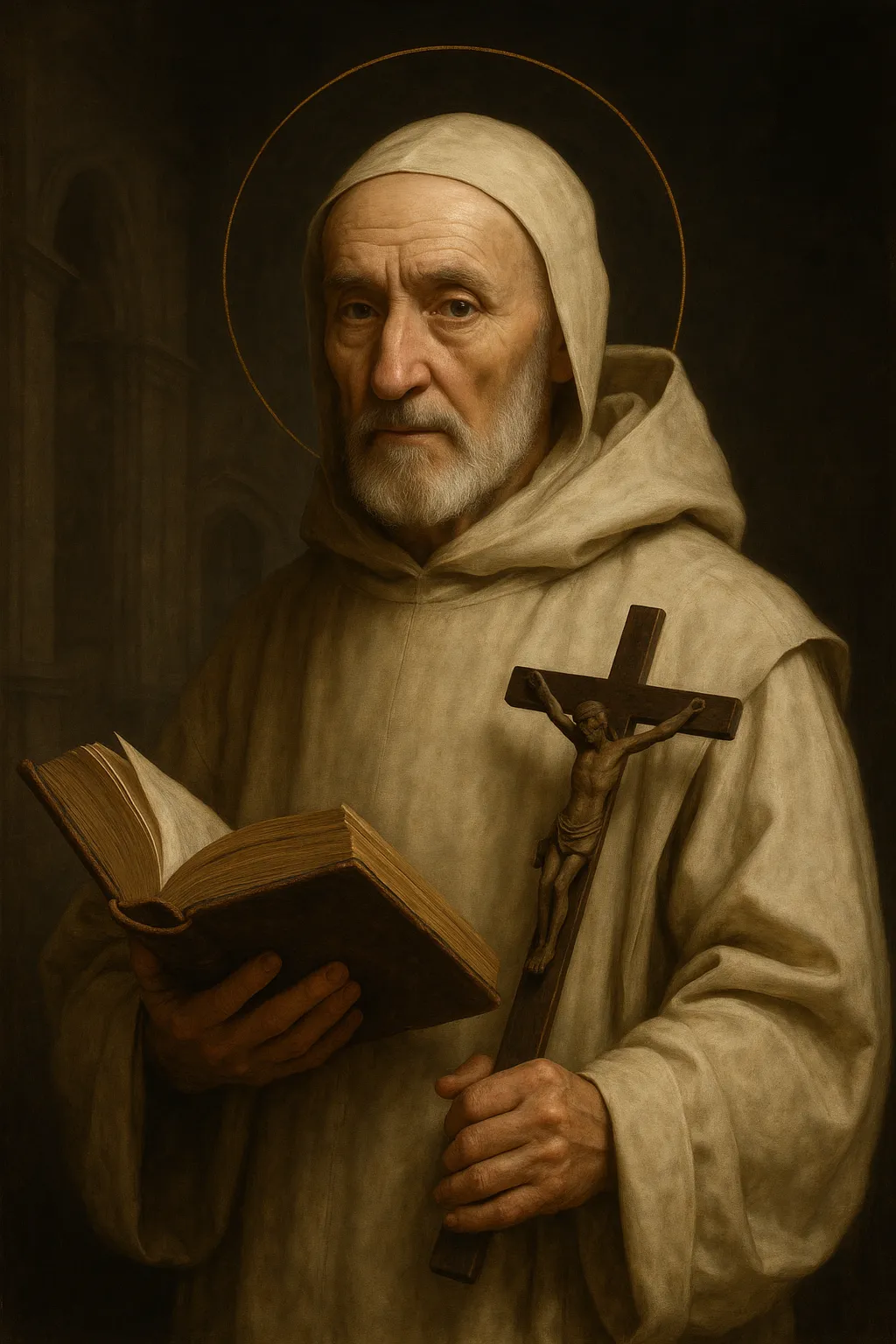
Carthusian silence
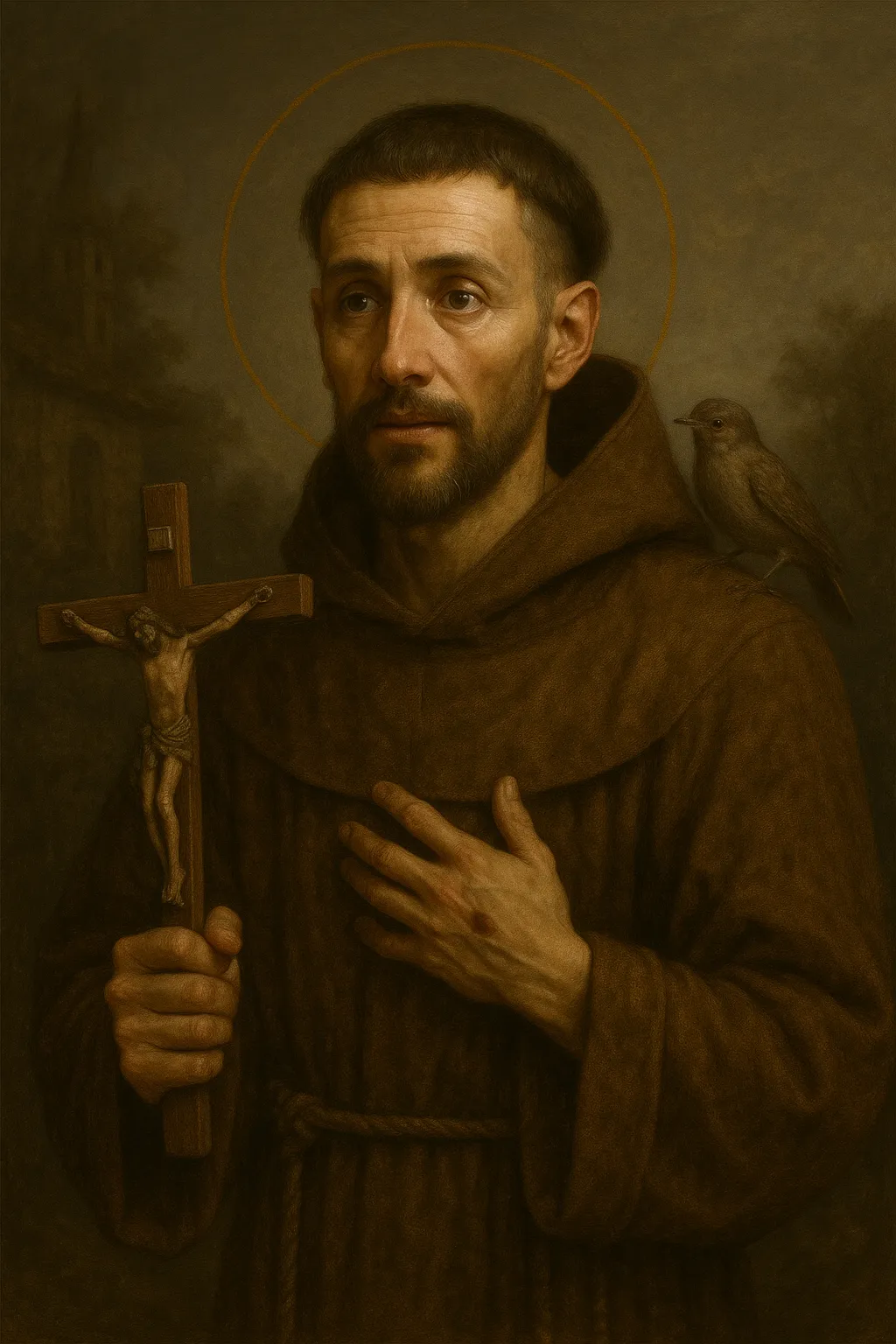
Assisi · poverty

The enclosure

Desert Fathers

Eastern rule
Before visiting a monastery or abbey
Check whether the church, cloister, library, museum, or gardens keep separate hours. They rarely open and close together.
Some communities welcome visitors to prayer; others restrict public access entirely. Assume nothing from the façade.
Silence, dress, photography, and group behavior matter more here than at ordinary tourist sites.
Guesthouses and retreats often require advance contact, sometimes weeks ahead and by letter or email.
Access may change during retreat seasons, restorations, feast days, or community events.
In active communities, the monastery is not primarily a monument. The visit is a guest's, not a tourist's.
By region
Benedictine · Lazio Official site
Benedictine · Normandy Official site
Benedictine · Austria Official site
Greek Orthodox · Greece Official site
Save monasteries, abbeys, and nearby sacred sites to a journey as you shape a visit around prayer, architecture, and place. The planning stays yours; the thread is the journey.
Use this for corrections, broken links, missing places, and planning ideas.