
Mont-Saint-Michel Abbey
Mont-Saint-Michel is a medieval abbey and pilgrimage island dedicated to Saint Michael, where stone, tide, village, and monastic prayer form one unforgettable sacred landscape.
- Location
- Le Mont-Saint-Michel, France
- 48.6361° N · -1.5115° E
- Type
- Former Benedictine abbey and pilgrimage island
- Romanesque and Gothic abbey architecture on a tidal island
- Monastic Tradition
- Benedictine abbey and pilgrimage site
- Medieval abbey church and monastic complex
- Time Needed
- 2 hours to half a day
A Pilgrimage Built Upward
Come for the climb from the tidal bay to the abbey church: a physical movement from noise and narrow lanes into height, silence, and the memory of centuries of pilgrims.
From Tidal Rock to Monastic Mountain
The mount became one of medieval Europe's great pilgrimage places, associated with devotion to Saint Michael and sustained by Benedictine monastic life. Its history includes prayer, learning, fortification, imprisonment, restoration, and modern pilgrimage. The dedication matters: Michael is read here through height, protection, spiritual combat, and the long discipline of ascent.
The abbey is remarkable because it solves an almost impossible site. Church, cloister, refectory, crypts, and terraces are stacked into the rock, making the building feel less placed on the island than grown from it. The architecture is the pilgrimage path in stone.
Let the ascent do its work.
Mont-Saint-Michel is best read as a climb before it is read as a monument: tide, island, village, abbey, cloister, and sky.
- 01 Begin below The bay, tide, and crowded lanes are not distractions from the abbey. They make the climb feel like pilgrimage, especially when the sea has changed the approach.
- 02 Read upward Village, walls, church, cloister, refectory, crypts, and terraces are stacked into one vertical monastic landscape, each level narrowing the visitor's attention.
- 03 Pause above the noise The cloister and terraces give the visit its necessary quiet after the pressure of the approach. Let that stillness be the point, not a pause between viewpoints.
The abbey stands on a tidal island where access and landscape change dramatically with the sea.
Its upper church and cloister reward a slow visit rather than a quick photo stop.
The ascent through the village into the abbey creates a natural pilgrimage rhythm.
The site is sacred, historic, military, and architectural all at once.
A monastery is best understood by the life it was built to sustain.
The deepest impression is ascent. Eternal Roam reads the climb toward the abbey church through Saint Michael's symbolism of spiritual combat, protection, and praise.
- Mont-Saint-Michel works vertically: tide, village, walls, abbey, sky. Read it from bottom to top as you climb rather than treating it as a destination at the end of a crowd.
- The village lanes are deliberately commercial: they were always the approach to a pilgrimage site, not the site itself. Pass through them without stopping at every shop.
- The abbey church sits directly on the top of the rock. The engineering problem of placing Romanesque columns on a pointed granite island produced some of the most remarkable crypts in medieval architecture.
- The Merveille, the triple-level monastic building, contains the cloister, refectory, and dormitory stacked on each other. Each level answers the same problem: how to build community on a needle of rock.
- Tides at Mont-Saint-Michel are extreme. If you are there at the right moment, watch the sea return across the bay: it moves at the speed of a person walking.
Five things, not fifty.
-
01
The abbey church
The goal of the climb. Simple, stripped, and Romanesque at its core, with Gothic additions. Pray here rather than only photographing.
-
02
The cloister
The quietest space on the mount. A place of order above the noise of the village and the tide, exactly what a cloister is supposed to be.
-
03
The approach across the tidal bay
The full view from the causeway or the bay is part of the pilgrimage. Let the island teach before you enter it.
-
04
The refectory
The monastic dining room is a remarkable interior: long, narrow, lit from above by hidden windows. Read the space as a place of communal life, not a ruin.
-
05
The terraces
From the highest points of the abbey, the bay and the landscape read differently. The island's isolation and exposure become visceral.
See all 5 · 2 more
- The refectory The monastic dining room is a remarkable interior: long, narrow, lit from above by hidden windows. Read the space as a place of communal life, not a ruin.
- The terraces From the highest points of the abbey, the bay and the landscape read differently. The island's isolation and exposure become visceral.
How much time, and what to do with it.
-
2 hr First-time visitors
Abbey ascent
Cross the approach, climb through the village to the abbey, pray in the abbey church, walk the cloister and refectory, and stand on the terraces before descending.
- Full view of the mount from the approach
- Village ascent
- Abbey church
- Cloister and refectory
- Terraces over the bay
-
Half day Unhurried pilgrims
Island and abbey
Give the ascent, abbey church, cloister, crypts, terraces, and descent enough space for the island to read as pilgrimage rather than a photo stop.
- Tidal bay approach
- Abbey church and cloister
- Crypts and refectory
- Terraces
- Quiet descent through the village
Begin with the view from the approach before entering the village. Climb deliberately, saving energy and attention for the abbey itself. Pray in the abbey church first, then explore the cloister, refectory, and crypts. The terraces should come near the end. Descend slowly. The island teaches the most in silence.
How to visit without rushing.
-
Pilgrim prayer in the abbey church
-
Visits through the cloister, refectory, crypts, and terraces
-
Silence and reflection around the island's monastic spaces
-
Attention to tide schedules, access, and current abbey visiting hours
See all 4 · 1 more
- Attention to tide schedules, access, and current abbey visiting hours
What pilgrims come to notice and venerate.
Tomb and Burial
- The abbey is dedicated to Saint Michael the Archangel rather than centered on a saint's tomb.
Relics and Sacred Tradition
- The site developed as a major medieval shrine of Saint Michael and a destination for pilgrims crossing the tidal flats.
Sacred Objects
- The abbey church crowns the mount and gives the whole island its vertical spiritual axis.
- The cloister gives a rare quiet center above the crowded lanes below.
- The refectory, crypts, and terraces show how monastic life adapted to a narrow rocky island.
The lives remembered here.
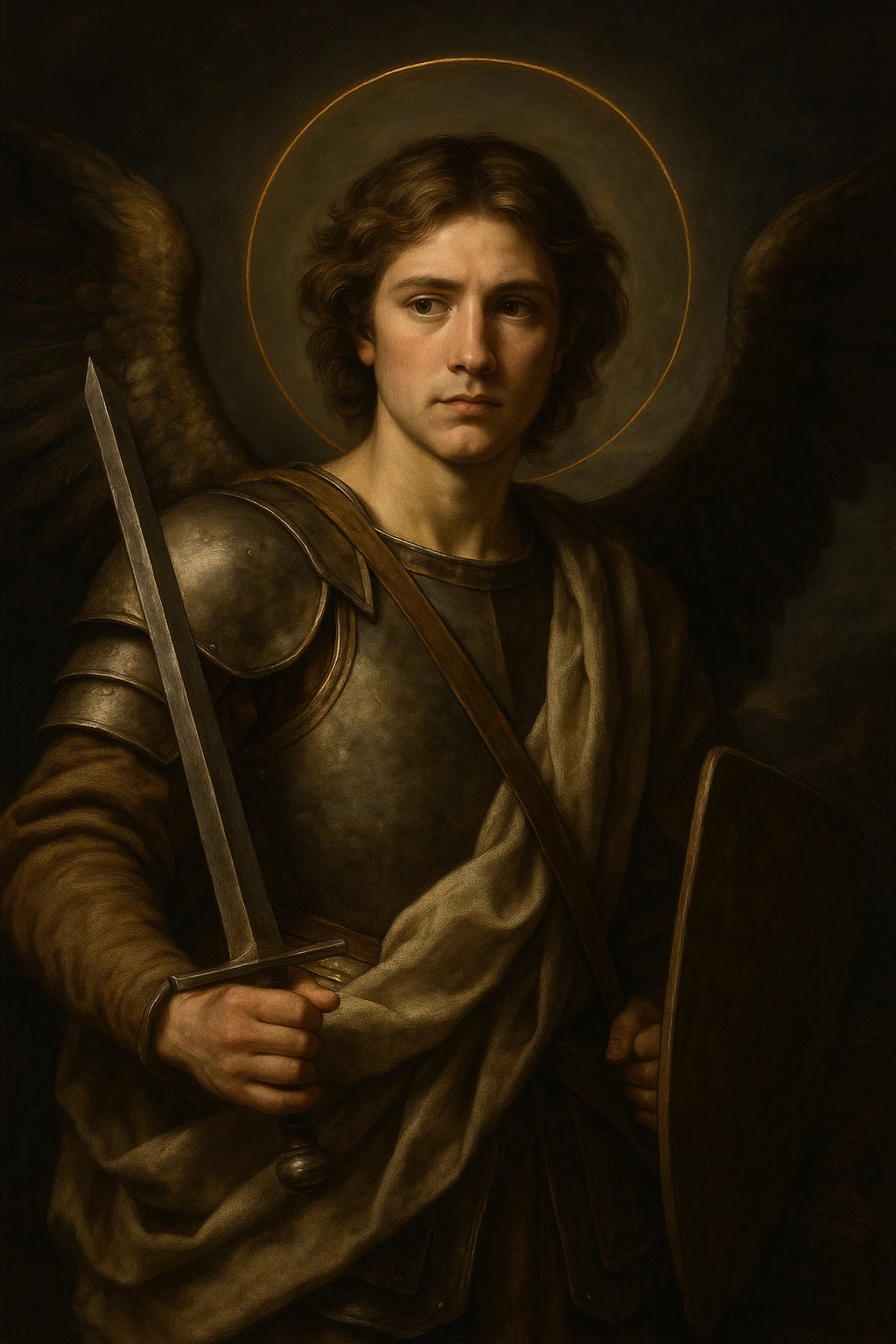
- Saint Michael the Archangel The great Norman island abbey and the foremost Michael pilgrimage shrine in the western Church.
-
Saint Michael the Archangel Dedicatee · abbey founded in honor of Saint Michael The abbey was traditionally founded following an apparition of Saint Michael to Bishop Aubert of Avranches in the early eighth century. The archangel's symbolism of combat, protection, and heavenly praise runs through the site's entire history.
-
Saint Aubert of Avranches Bishop · founder of the original oratory Bishop of Avranches who established the first oratory on the mount around 708, following what the tradition records as an apparition of Saint Michael. His skull, with what is traditionally described as the mark of the archangel's finger, is preserved in Avranches.
Around the mount and the wider Michael pilgrimage geography.
-
Parish church on the island
Saint-Pierre Parish Church
A small parish church along the climb through the village, useful as a quieter prayer stop before or after the abbey route.
-
Founder tradition
Avranches and Saint Aubert
The city associated with Saint Aubert, the bishop tied to the foundation tradition of the original oratory on the mount.
-
Michael shrine and abbey
Sacra di San Michele
Not nearby, but spiritually kindred: another high-place shrine of Saint Michael that helps read the mount within the wider medieval devotion to the archangel.
Plan around this place.
Credibility calibration reviewed 2026-07-14 against the official abbey monument source (https://www.abbaye-mont-saint-michel.fr/en/). It supports the dedication to Saint Michael and historic pilgrimage setting; the vertical ascent reading is identified as Eternal Roam's interpretation. Check current schedules, ticketing, access, and tide guidance before travel.
July 14, 2026
Photo credits
- Hero. W. Bulach / Wikimedia Commons (CC BY-SA 4.0). Source. CC BY-SA 4.0.
- The Cloister Above the Tide. Nono vlf / Wikimedia Commons (CC BY-SA 3.0). Source. CC BY-SA 3.0.