
St. Francis
of Assisi
A young man of Assisi whose conversion became a road through poverty, fraternity, repair, praise, and the wounds of Christ.
The Lord gave me, Brother Francis, thus to begin doing penance: for when I was in sin, it seemed too bitter for me to see lepers. And the Lord Himself led me among them and I showed mercy to them.
Testament of Saint Francis (1226) Documented
A merchant's son who walked out of possession and rebuilt by becoming poor.
Francis Bernardone did not become a saint by becoming softer. He broke open. The son of a prosperous cloth merchant, raised for comfort, song, and ambition, he passed through war, imprisonment, illness, and the humiliation of finding that the life he wanted could no longer hold him. His conversion took shape in the streets and slopes around Assisi: among lepers, before the crucifix of San Damiano, under the eyes of the bishop, and at the small chapel of the Porziuncola.
The decisive Franciscan gesture was renunciation. Francis returned his clothes to his father and stood with nothing, claiming God as Father with a literalness that still unsettles the Church. Poverty was not an aesthetic for him. It was a way to make the Gospel visible: no property, no armor of status, no distance from the poor, no life except the one received from God.
From that poverty came fraternity. Francis gathered brothers who preached penance, repaired churches, served lepers, and moved through the world without owning it. Clare joined the same fire from within Assisi and carried it into San Damiano, where the Poor Clares gave Franciscan poverty an enclosed and contemplative form.
Creation mattered to Francis because it praised the Creator. The Canticle of the Creatures, composed near the end of his life while he was ill and nearly blind, is not a sentimental nature poem. It is the praise of a man who had given away possession and learned to receive the world as gift: Brother Sun, Sister Moon, water, fire, earth, and even Sister Death.
At La Verna in 1224, Francis received the stigmata, the wounds of Christ in his body. The mountain is not a picturesque appendix to Assisi. It is the place where his poverty and his love were conformed to the Crucified. Two years later he died near the Porziuncola, asking to be laid on the bare ground.
Francis is venerated at the basilica built over his tomb on the western edge of Assisi. San Damiano, the Porziuncola, the Basilica of Saint Francis, the old city, and La Verna do not repeat the same story. Together they form a conversion map: call, renunciation, fraternity, memory, and conformity to Christ.
A life, in years and approximate ages.
-
1181BirthBirth in AssisiFrancis is born Giovanni di Pietro di Bernardone in Assisi, into the household of a prosperous cloth merchant. His father gives him the nickname Francesco.
-
c. 1202Early 20sWar, Captivity, and IllnessAfter fighting in the conflict between Assisi and Perugia, Francis is taken prisoner and later returns home ill. The ambitions of his youth begin to lose their force.
-
c. 1205About 24San Damiano and the Call to RepairFrancis prays before the crucifix at San Damiano and hears the call to repair the Lord's house. He begins by rebuilding ruined churches with his hands.
-
c. 1206About 25Renunciation Before the BishopBefore Bishop Guido and the people of Assisi, Francis returns his clothes to his father and renounces inheritance. The gesture makes his poverty public.
-
c. 1209About 28The First Brotherhood and Papal ApprovalFrancis and his first brothers take their Gospel form of life to Rome. Pope Innocent III gives verbal approval, and the Friars Minor begin to grow.
-
c. 1212About 30Clare Enters the Franciscan LifeClare leaves her family and receives the religious life through Francis at the Porziuncola. She soon settles at San Damiano, where the Poor Clares take root.
-
c. 1219About 37Meeting Sultan al-KamilDuring the Fifth Crusade, Francis crosses into the Muslim camp and meets Sultan al-Kamil. The encounter remains one of the most striking moments in Franciscan memory.
-
c. 1223About 41Greccio and the Christmas CribAt Greccio, Francis helps stage a living remembrance of the Nativity, drawing attention to the poverty of Christ's birth rather than ornament or spectacle.
-
c. 1224About 42The Stigmata at La VernaWhile in prayer on La Verna, Francis receives the wounds of Christ in his hands, feet, and side. The mountain becomes a place of conformity to the Crucified.
-
c. 1226About 44Death Near the PorziuncolaFrancis dies near the Porziuncola on October 3, asking to be laid on the bare ground. The Church keeps his feast on October 4.
-
1228After deathCanonization and the BasilicaPope Gregory IX canonizes Francis. The basilica over his tomb is begun soon after, fixing Assisi as the central place of Franciscan pilgrimage.
Dates are approximate where the surviving record is traditional or incomplete.
5 places where this witness remains visible.
Prefer a ready-made pilgrimage? See the Assisi Franciscan Route.

Assisi Old City
Begin with the city itself: the streets of Francis's youth, the cathedral tradition of his baptism, and the public square where renunciation became visible. Assisi is not only a backdrop. It is the first conversion landscape.
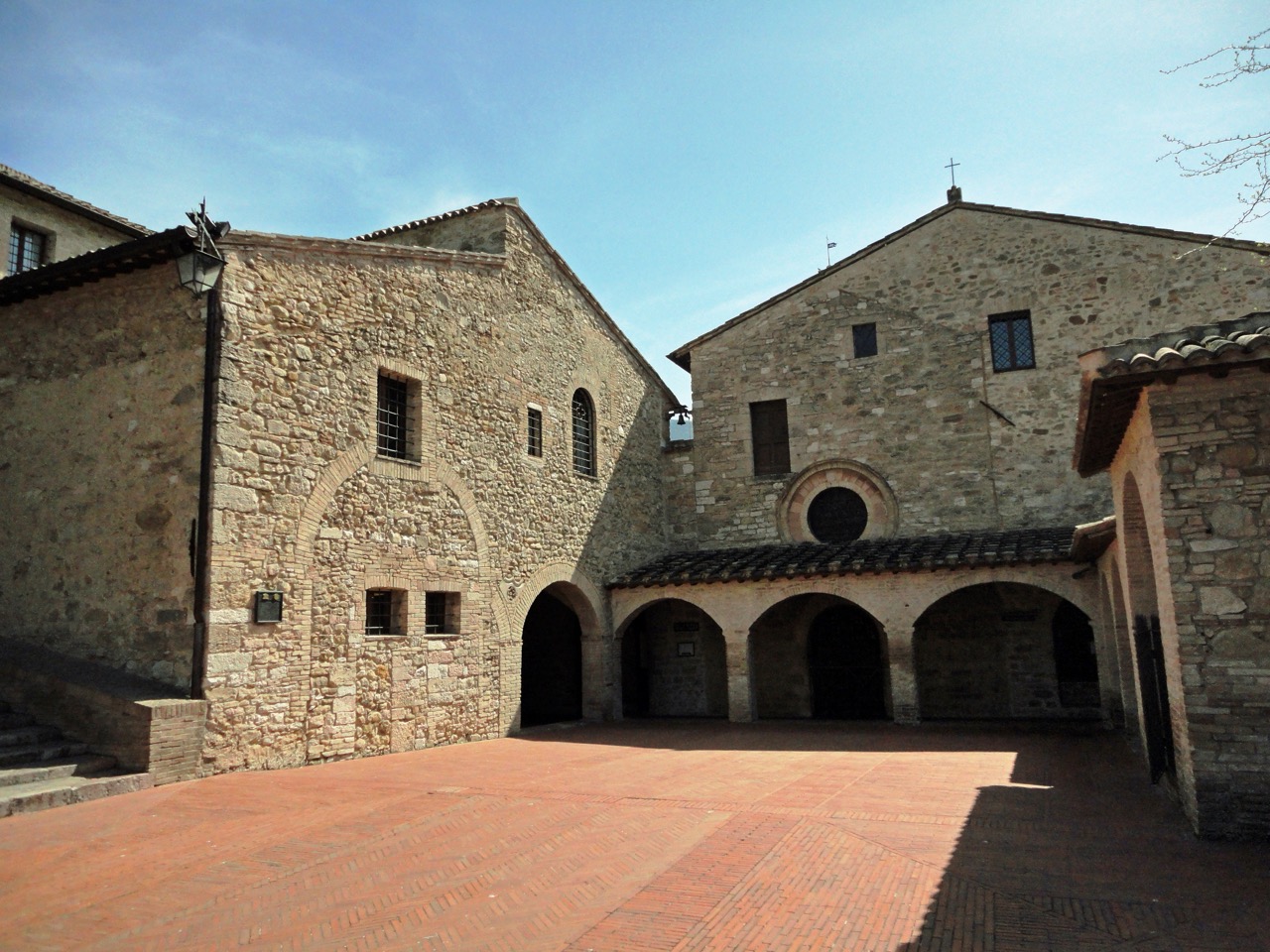
San Damiano
The church where Francis is traditionally said to have heard Christ tell him to repair the Church. Later it became Clare's home and the cradle of the Poor Clares. Walk down from Assisi if you can.
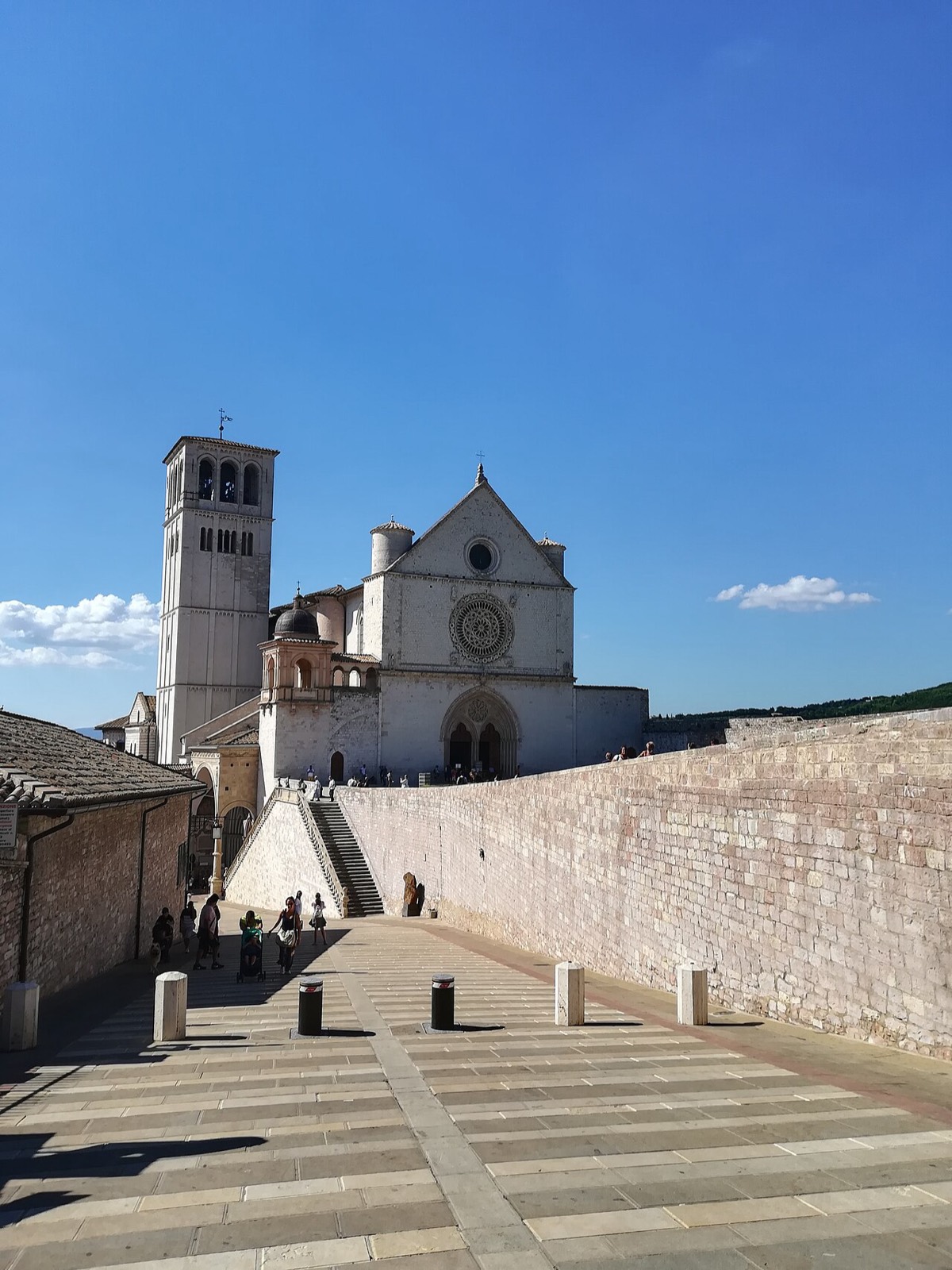
Basilica of Saint Francis
The basilica and crypt gather Francis's memory around his tomb. It is the place to pray before studying the frescoes or widening the visit to the rest of Assisi.
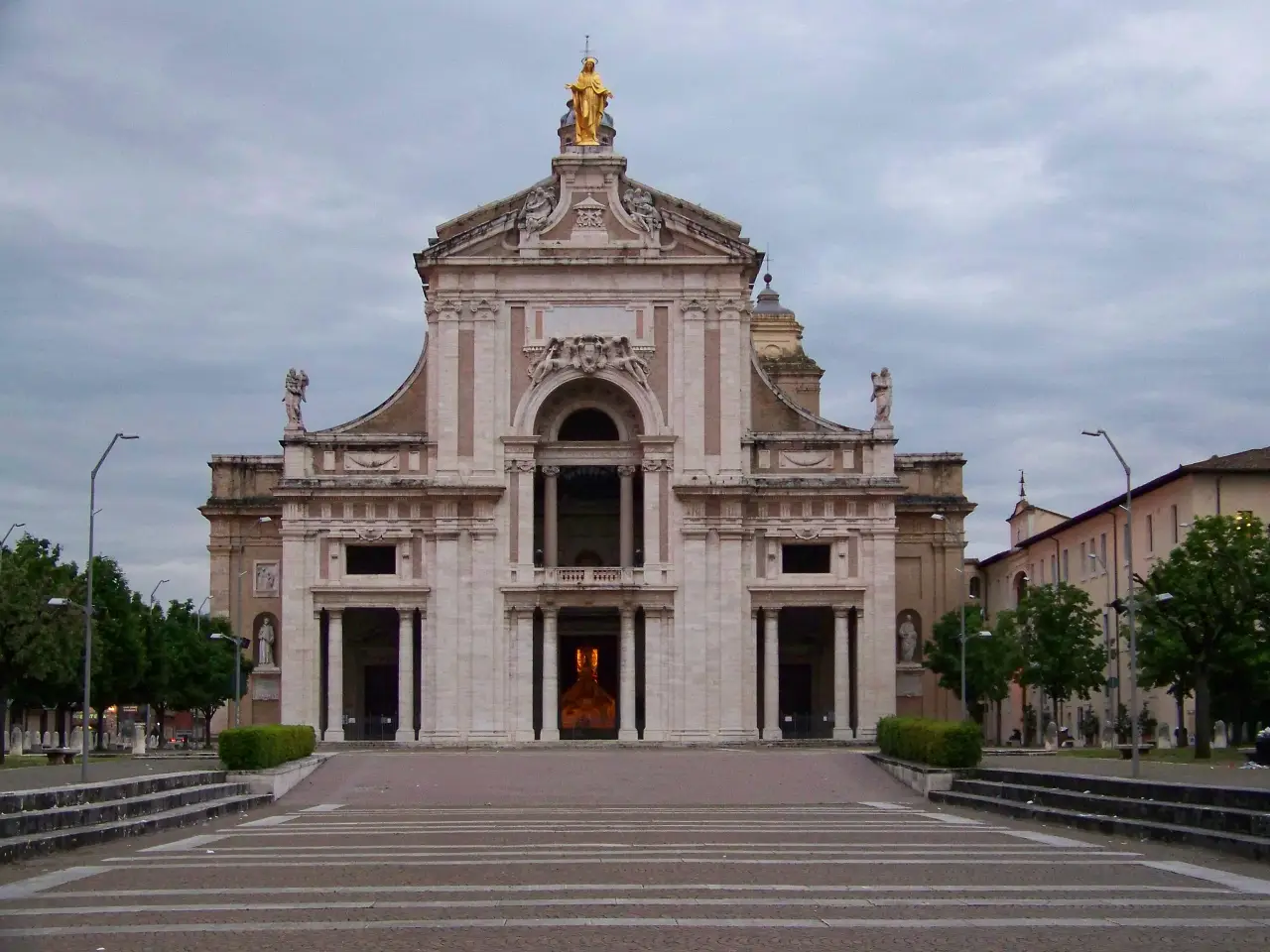
Porziuncola at Santa Maria degli Angeli
The small chapel of fraternity, mission, Clare's consecration, and Francis's death. The great basilica around it should not hide the smallness at the center.
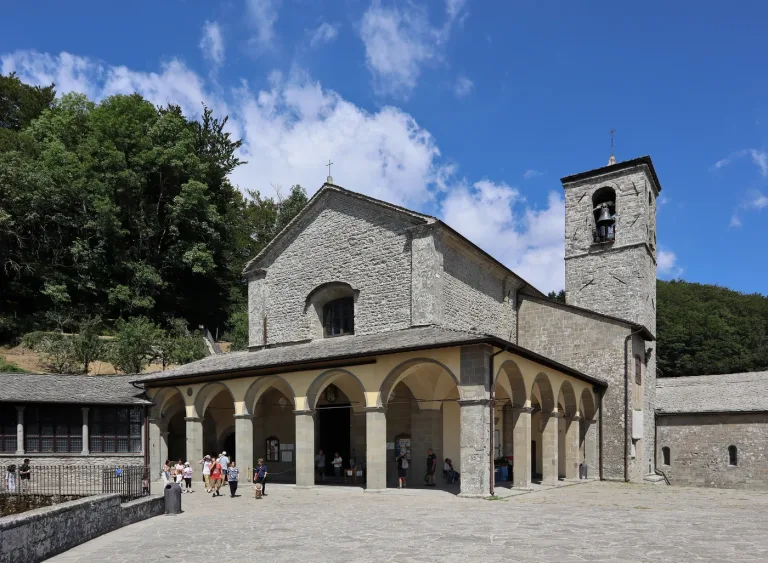
La Verna
The mountain where Francis received the stigmata. Treat it as an extension or separate journey, not a casual Assisi add-on. Its austerity belongs to the meaning of the place.
Where the body is venerated.
The principal public veneration of Saint Francis is at the Basilica of Saint Francis in Assisi. Pilgrims venerate his tomb in the crypt beneath the lower basilica. Claims about objects associated with Francis should be read through the language used by each shrine or basilica; the tomb in Assisi is the center of his bodily veneration.
The saint is publicly venerated at a named tomb.
Tomb of Saint Francis
The papal basilica built over Francis's tomb is the central place of Franciscan pilgrimage. The crypt beneath the lower basilica is where pilgrims venerate his body.
- Tomb of Saint Francis in the crypt beneath the lower basilica
- Early Franciscan companions venerated near the tomb
Enter the lower basilica and go first to the crypt. Let the tomb set the pace before moving into the art and the upper church.
Franciscan places ask for poverty of attention.
Assisi is beautiful enough to distract a pilgrim. Francis teaches another way to visit: receive less, possess less, move slower, and let each place disclose what part of conversion it carries.
Begin with the Testament, then the Canticle of the Creatures. The Testament gives Francis's own memory of conversion among lepers. The Canticle teaches creation as praise without reducing Francis to a nature symbol.
At San Damiano, stay with repair before moving to Clare's enclosure. At the Porziuncola, notice the small chapel inside the large basilica. At the tomb, let prayer come before art history. At La Verna, let the mountain remain austere.
Look for poverty, repair, fraternity, mercy, and praise. Francis is not asking the pilgrim to admire simplicity from a distance. He is asking what can be relinquished so Christ can be received.
Assisi reads as a conversion map: the city that formed him, the chapel that called him, the tomb that gathers him, the Porziuncola that sent the brothers out, and La Verna where love became wounds.
Kindred witnesses
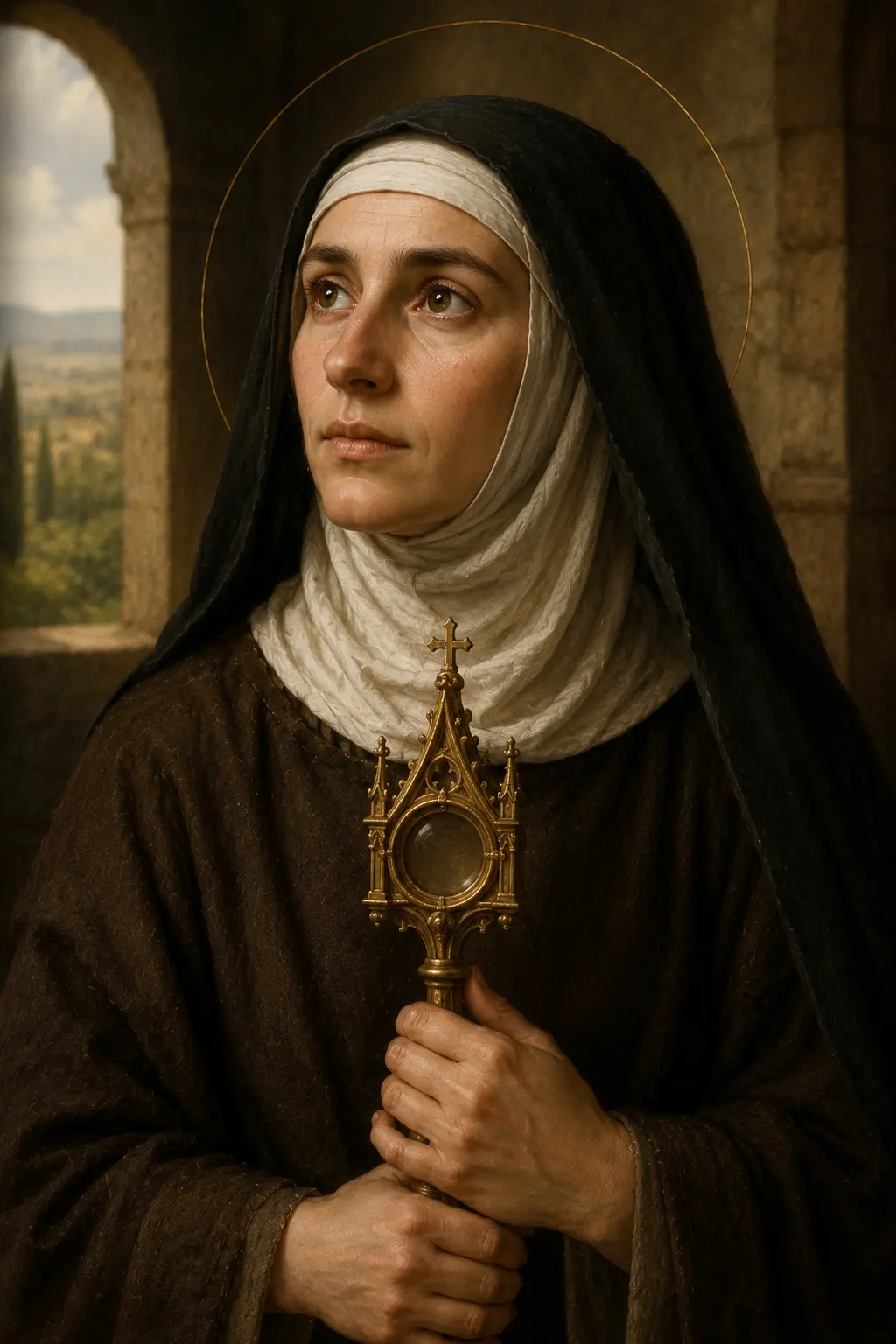
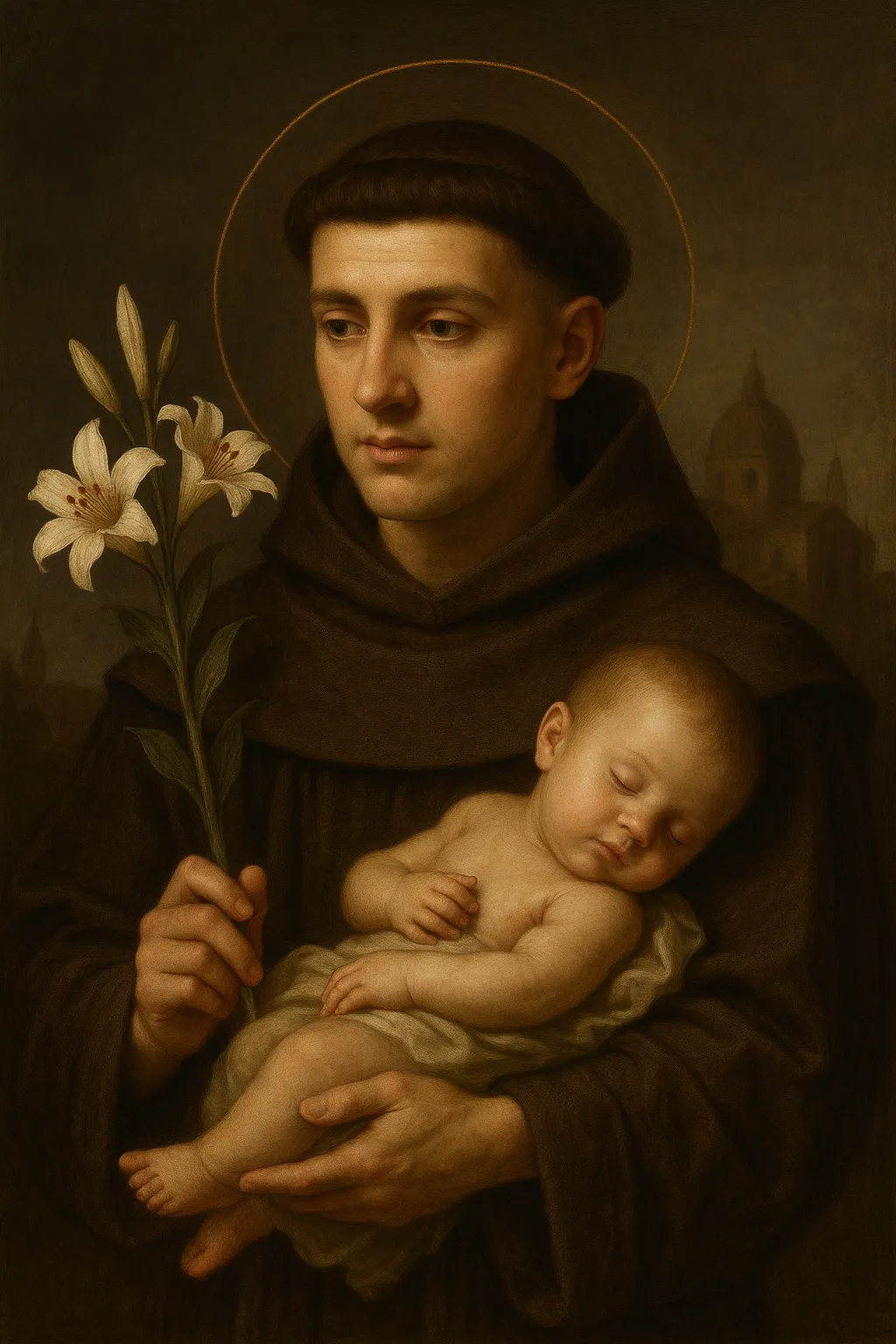
Assisi Franciscan Route · 5 stops.
Read Assisi as conversion, repair, tomb, and fraternity. La Verna belongs to the route, but it asks for a separate day or a deliberate extension.
-
01 Childhood home · Place of conversion
Assisi Old City
Assisi, Umbria, ItalyBegin with the city itself: the streets of Francis's youth, the cathedral tradition of his baptism, and the public square where renunciation became visible. Assisi is not only...
-
02 Where the call came
San Damiano
Below Assisi, Umbria, ItalyThe church where Francis is traditionally said to have heard Christ tell him to repair the Church. Later it became Clare's home and the cradle of the Poor...
-
03 Tomb
Basilica of Saint Francis
Assisi, Umbria, ItalyThe basilica and crypt gather Francis's memory around his tomb. It is the place to pray before studying the frescoes or widening the visit to the rest of...
-
04 Place of death · Founded here
Porziuncola at Santa Maria degli Angeli
Santa Maria degli Angeli, Assisi, ItalyThe small chapel of fraternity, mission, Clare's consecration, and Francis's death. The great basilica around it should not hide the smallness at the center.
-
05 Place of suffering
La Verna
Chiusi della Verna, Tuscany, ItalyThe mountain where Francis received the stigmata. Treat it as an extension or separate journey, not a casual Assisi add-on. Its austerity belongs to the meaning of the...
Kept on October 4.
October 4 is Francis's feast day. Churches often bless animals near the feast, but the deeper Franciscan center is praise of the Creator, poverty before God, and mercy toward the poor and sick.
In Assisi, begin with the tomb and the conversion places rather than treating the city as a museum circuit. San Damiano, the Porziuncola, and the basilica carry different parts of Francis's life.
How Assisi and the Franciscan world carry Francis
Francis is held by a small stretch of Umbria and by the movement that grew from it. The hill town of his birth and renunciation, the order that still bears his Rule, the basilica raised over his tomb, and the little Porziuncola where the brotherhood began all belong to the same sacred ground.
-
City
Assisi
The town of Francis's birth, his renunciation before the bishop, his preaching, and his burial; nearly the whole arc of his life is held within sight of its walls.
-
Tradition
The Franciscan family
The brotherhood he gathered in poverty became the Franciscan family of friars, Poor Clares, and lay penitents, now present across the Catholic world.
-
Basilica and tomb
Basilica of Saint Francis
The papal basilica raised over Francis's tomb soon after his canonization; pilgrims venerate his body in the crypt beneath the lower church.
DocumentedHis tomb, sealed and lost from view for centuries, was rediscovered beneath the basilica in 1818 and confirmed by the Holy See.
-
Where the order took shape
Porziuncola at Santa Maria degli Angeli
The small chapel on the plain below Assisi that Francis repaired and made the cradle of the brotherhood, and near which he died in 1226; the great basilica of Santa Maria degli Angeli now shelters it.
Francis is among the most securely documented of the medieval saints, through his own writings and the early Franciscan sources written within living memory of his companions. His tomb, hidden for centuries beneath the lower basilica, was rediscovered in 1818 and confirmed by the Holy See.
Photo credits
- Assisi Old City. Stifone, Wikimedia Commons (CC BY-SA 4.0). Source. CC BY-SA 4.0.
- La Verna. Terragio67, CC BY-SA 4.0, via Wikimedia Commons. Source. CC BY-SA 4.0.
- San Damiano. Laurajsi / Wikimedia Commons (CC BY-SA 3.0). Source. CC BY-SA 3.0.
- Basilica of Saint Francis. Fabriziogitto / Wikimedia Commons (CC BY-SA 4.0). Source. CC BY-SA 4.0.
- Porziuncola at Santa Maria degli Angeli. Einaz80 / Wikimedia Commons (CC BY-SA 4.0). Source. CC BY-SA 4.0.