
Saint-Étienne-du-Mont
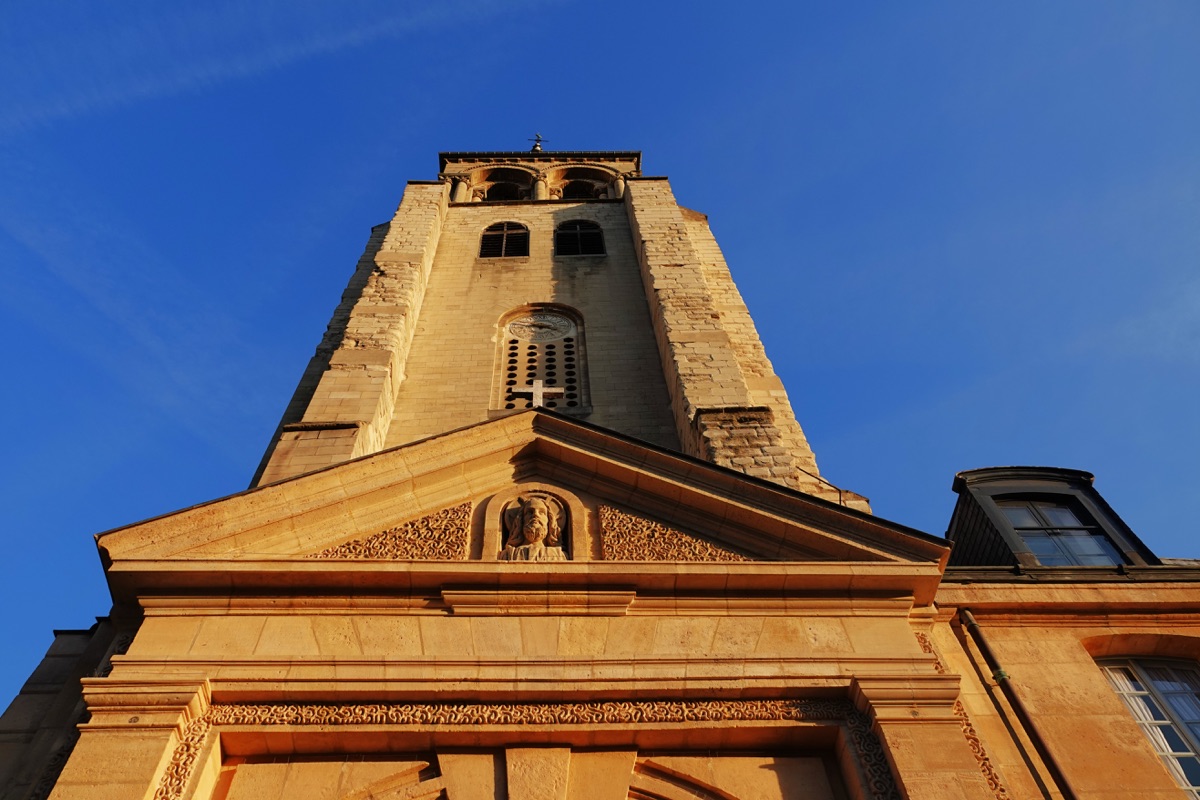
A Latin Quarter parish-sanctuary where Paris still venerates Saint Geneviève beside the Panthéon, beneath a rare rood screen and within the layered memory of Catholic France.
FRANCE · PARIS
48.8464° N · 2.3481° E
- Location
- Paris, France 48.8464° N · 2.3481° E
- Type
- Parish church / patron saint shrine Late Gothic and French Renaissance church with a rare surviving rood screen
- Dedication
- Saint Stephen Surviving veneration of Saint Geneviève and the parish life of the Montagne Sainte-Geneviève
- Time Needed
- 30 minutes to 1 hour
Why Go
The Patron Saint of Paris Remembered
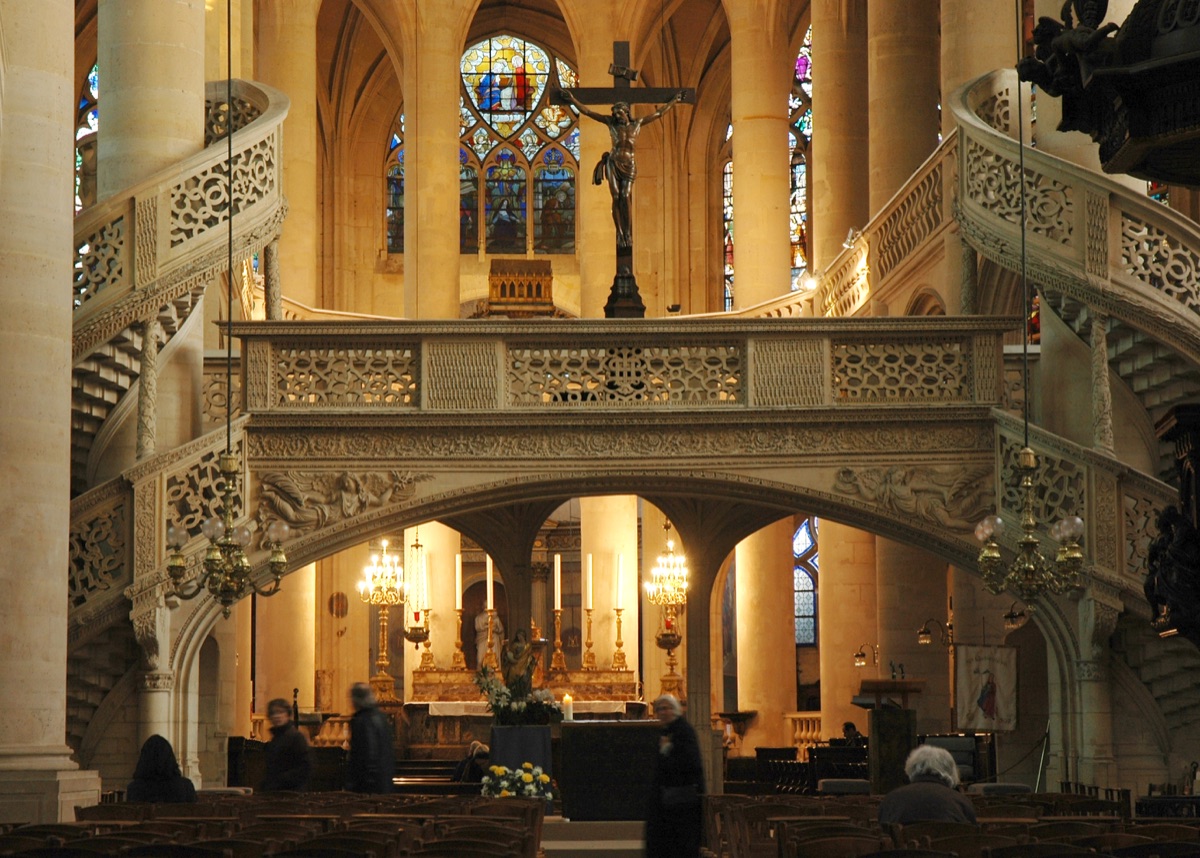
Saint-Étienne-du-Mont is one of the best places to understand how Catholic Paris remembers its patron saint. The church stands beside the Panthéon, where national memory is carved in stone, but inside Saint-Étienne the older memory is quieter and more immediate: Saint Geneviève, the parish altar, the rood screen, Pascal and Racine, and a living community still praying on the hill.
Catholic Memory Beside the Panthéon
The church grew on the Montagne Sainte-Geneviève, where the memory of the patroness of Paris had already shaped Christian life for centuries. Its present fabric rose slowly between the late 15th and early 17th centuries, gathering late Gothic height and Renaissance ornament into one interior. After the Revolution damaged the relic tradition of Saint Geneviève, the church remained a place where her memory could be venerated with care. That is why the visit should begin as a Catholic one, not only an architectural one.
The interior turns the visitor toward the rood screen before anything else. Its carved bridge crosses the nave like a threshold inside the church, delicate and weight-bearing at once. Around it, the nave, chapels, pulpit, organ case, and shrine make a church of unusual density. Saint-Étienne rewards a slower visit than many travelers give it.
This is one of the clearest places to understand how Paris remembers its patron saint.
Its location beside the Panthéon makes the survival of Catholic memory especially vivid.
The parish remains active; visitors are asked to move in silence and to respect prayer, especially during liturgy.
Spiritual Significance
The church matters because Paris has not forgotten Saint Geneviève here. Catholics have long venerated her as patroness of the city, and this parish-sanctuary keeps that devotion beside the secular monument of the Panthéon. The contrast is not merely scenic. It is a lesson in Catholic memory after rupture: relics wounded, devotion surviving, prayer continuing.
What to notice.
-
The rood screen
Begin in the nave and let the screen do its work. It is not decoration first; it is a carved threshold that shows how this church gathers liturgy, Scripture, and architecture in one line of sight.
-
The shrine of Saint Geneviève
Pray here as Paris has prayed here. The relic history is complicated by the Revolution, but the veneration of the city's patroness remains the spiritual center of the visit.
-
Pascal and Racine
Pause for the church's French Catholic intellectual memory. Blaise Pascal and Jean Racine belong here not as museum labels, but as witnesses to a culture formed close to prayer.
-
The organ and parish sound
Look west before leaving. The organ case belongs to the living musical memory of the parish, including the long service of Maurice Duruflé in the 20th century.
-
The Panthéon context outside
Step back into the square and read the contrast. Saint-Étienne keeps Catholic memory alive on the same hill where France built a monument to national memory.
What to notice
- How Catholic memory survives beside a national monument.
- The care required when speaking about Saint Geneviève's relic history.
- The church's unusual blend of sacred art, patronage, literature, music, and local devotion.
- That this is still a parish church. The most important thing happening here is prayer.
How much time, and what to do with it.
-
Rood screen and Saint Geneviève
4 ordered stopsEnter quietly, read the rood screen from the nave, pray at the shrine of Saint Geneviève, then step outside to understand the Panthéon context without letting it dominate the visit.
- Enter from Place Sainte-Geneviève and pause in the nave.
- Read the rood screen before moving into the side spaces.
- Pray at the shrine of Saint Geneviève.
- Step outside and read the Panthéon as context, not as the final word.
-
Patron saints and sacred memory
4 ordered stopsUse Saint-Étienne as the hinge between the Île de la Cité and the Left Bank: Notre-Dame and Sainte-Chapelle for Passion and cathedral memory, Saint-Étienne for Saint Geneviève, and Saint-Germain-des-Prés for the older abbey world.
- Begin at Notre-Dame de Paris.
- Walk to Sainte-Chapelle if tickets and time allow.
- Cross to Saint-Étienne-du-Mont for Saint Geneviève.
- Continue toward Saint-Germain-des-Prés.
Do not make this a quick detour from the Panthéon. Let the church set the order: threshold, rood screen, shrine, side memory, then the square outside.
How to Visit
Enter quietly, and let the parish set the pace.
Use the official parish site before planning around a Mass, Confession, guided visit, or seasonal opening pattern. Enter quietly, especially during weekday Masses, and give the church enough time for the rood screen, the shrine of Saint Geneviève, the Pascal and Racine memory, and the exterior context beside the Panthéon.
- Check the parish first Use the official parish site for opening patterns, Masses, Confession, guided visits, and seasonal notices before planning around a specific time.
- Keep liturgy primary The parish asks visitors to move in silence, and weekday Masses limit circulation so worship is not disturbed.
- Read the place in order Start with the nave and rood screen, then the shrine of Saint Geneviève, then Pascal, Racine, the organ, and the Panthéon context outside.
- Pair it carefully Notre-Dame, Sainte-Chapelle, Saint-Germain-des-Prés, and Rue du Bac all make more sense when Saint Geneviève's hill is included.
Verify parish life before planning around it.
Saint-Étienne-du-Mont is a living parish-sanctuary. Use the parish site before relying on opening hours, Masses, Confession, adoration, guided visits, or seasonal notices.
- Church visits
- The parish publishes visit guidance and asks visitors to keep silence, with circulation limited during weekday Masses. Parish visit page
- Mass and Confession
- The parish publishes school-year Mass and Confession patterns, but pilgrims should verify the current week before relying on them. Parish prayer and celebration page
- Seasonal schedules
- The parish posts seasonal schedule notices, including a July 2026 notice; check current announcements before arranging the day. Parish home page
- Guided visits
- Art, Culture et Foi guided visits are listed by the parish when scheduled; verify dates and meeting details before going. Parish visit page
This section records official-source categories and planning discipline, not a guaranteed schedule. Times can change for school holidays, liturgies, feast days, concerts, and parish events.
What pilgrims come to venerate here.
Relics and Sacred Tradition
- Saint Geneviève's relic history was deeply wounded during the French Revolution. The church should be read as a place of surviving Catholic memory and veneration, not as a simple intact-body shrine.
- The parish identifies Saint-Étienne-du-Mont as the place where Saint Geneviève, patroness of Paris, is venerated today.
Sacred Objects
- The carved rood screen, made in the early 16th century, is one of the most distinctive sacred interiors in Paris and the only surviving rood screen of its kind in the city.
- The shrine of Saint Geneviève keeps the patroness of Paris visibly present beside the Panthéon and the secular memory of the hill.
- The tombs and memorials of Blaise Pascal and Jean Racine connect the church to French Catholic intellectual and literary memory.
A patroness remembered, a martyr named.
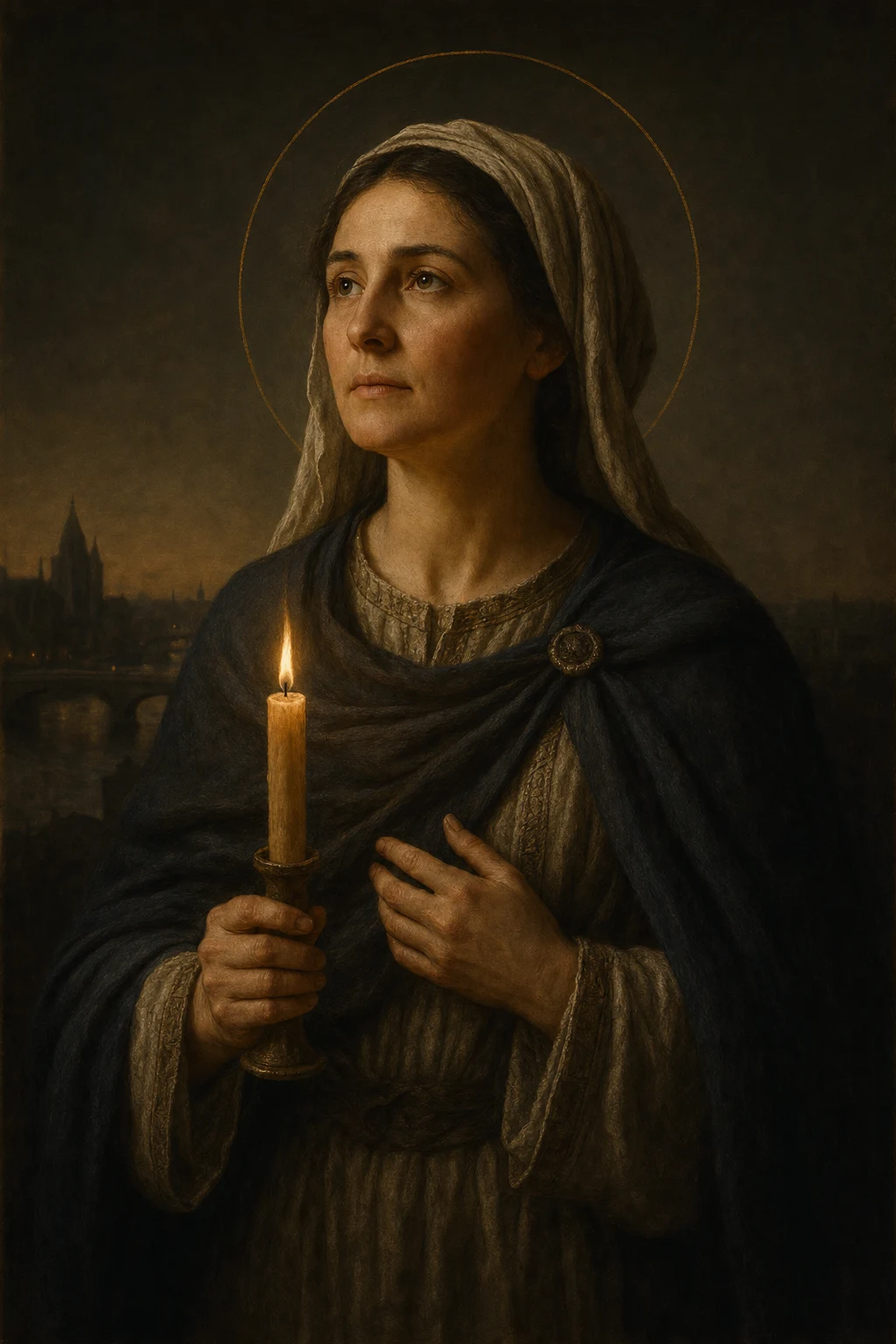
This is not a dense portrait-row page. The stronger treatment is compact context: Saint Geneviève as patroness of Paris, and Saint Stephen as the dedication carried by the parish.
Saint Geneviève of Paris
Saint-Étienne-du-Mont
The principal living Paris shrine of Saint Geneviève, preserving surviving relics and her annual novena after the revolutionary destruction.
Saint Stephen
Dedication of the parish church
The church is dedicated to the first martyr, whose witness gives the parish its name even as Saint Geneviève gives the place its Parisian devotion.
Within walking distance.
-
City hub
Paris
Where this church sits within the wider Catholic geography of Paris.
-
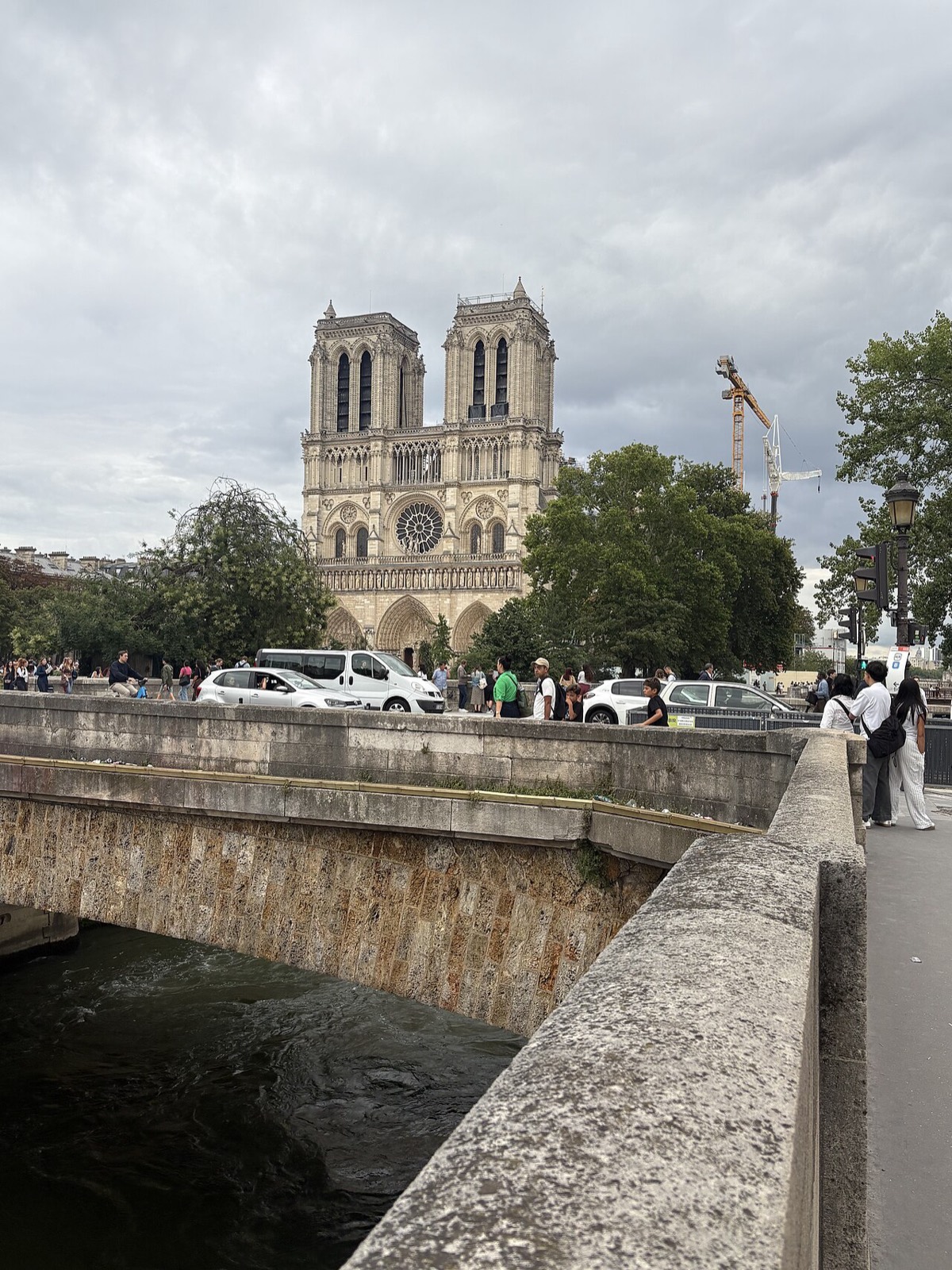
Cathedral
Notre-Dame de Paris
About a fifteen minute walk across the Seine. The cathedral anchors Catholic Paris and is the natural counterpoint to Saint Geneviève's hill.
-
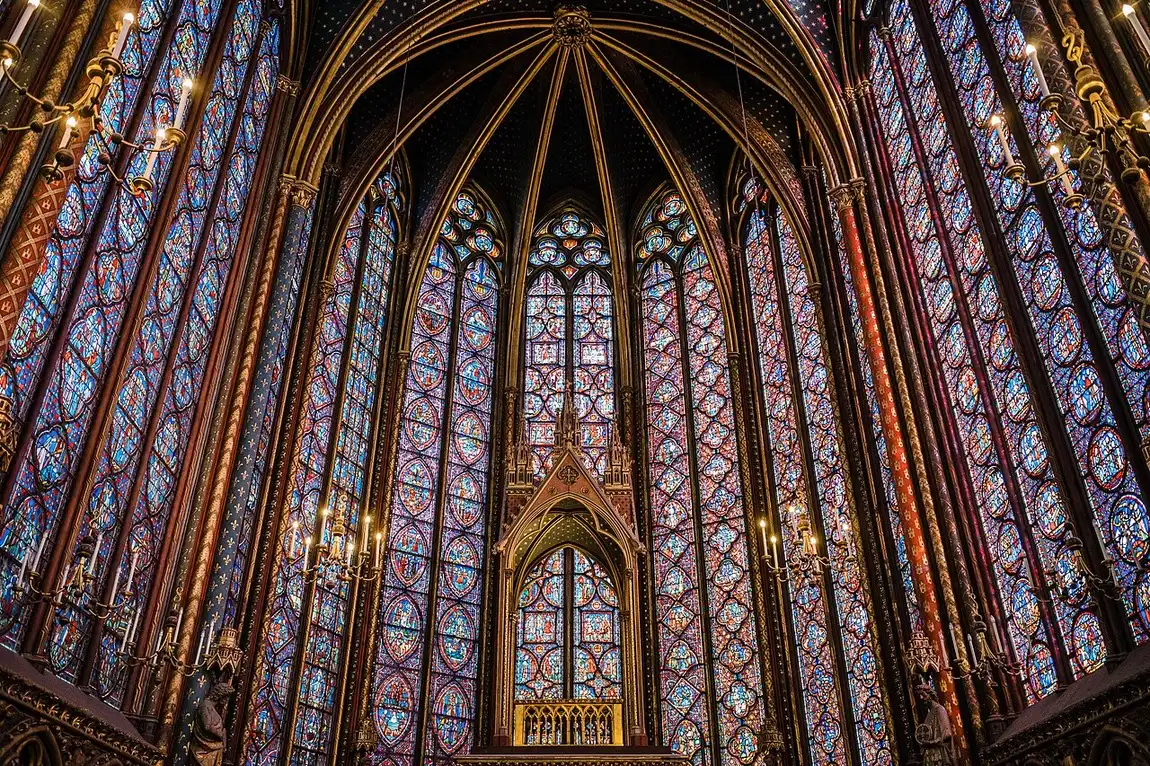
Former royal chapel
Sainte-Chapelle
On the Île de la Cité, the chapel of Saint Louis and the Passion relics gives the same day a medieval royal and relic context.
-
Former Abbey Church
Saint-Germain-des-Prés
A Left Bank continuation into the older Benedictine and episcopal memory of Paris.
Sacred Geography
Patroness and city
How Saint Geneviève's hill gathers Paris
Saint-Étienne-du-Mont belongs to the Catholic geography of Paris because it keeps Saint Geneviève's memory on the hill beside the Panthéon, while Notre-Dame, Sainte-Chapelle, and the older Left Bank churches complete the walk around it.
-
City
Paris
Paris keeps one of its clearest patron-saint memories on the Montagne Sainte-Geneviève, beside the Panthéon.
-
Connected saint
Saint Geneviève
Saint Geneviève, patroness of Paris, is venerated here by the parish that keeps her memory on the hill.
-
Tomb tradition
Shrine of Saint Geneviève
Pilgrims come here to pray before the shrine and the surviving memory of Saint Geneviève's veneration.
TraditionalThe Revolution gravely damaged the relic tradition of Saint Geneviève. The church is presented as a place of surviving veneration and Catholic memory, not as a simple intact-relic claim.
-
Across the Seine
Notre-Dame de Paris
The cathedral anchors the wider Catholic geography of Paris and pairs naturally with Saint Geneviève's hill.
-
Passion relic memory
Sainte-Chapelle
Sainte-Chapelle gives the day its medieval royal and Passion-relic context before or after the Latin Quarter.
-
Left Bank continuation
Saint-Germain-des-Prés
Saint-Germain-des-Prés continues the walk through the older abbey and episcopal memory of the Left Bank.
-
Official source
saintetiennedumont.fr
The official parish site is the source for current access, liturgy, Confession, guided visits, and seasonal notices.
Saint Geneviève's relic history was deeply affected by the French Revolution. This graph treats the church as a place of surviving veneration and Catholic memory, with current parish information verified through the official site.
Plan your visit.
Gallery
The church on the hill.
A last look into the side chapels, where the density of the nave, the rood screen, and the shrine finally opens out.
The side chapels give the dense interior room to breathe after the rood screen, shrine, and nave.
Editorial sources
Saint-Étienne-du-Mont is a living parish church and the parish-sanctuary of Saint Geneviève. Current access, Mass, Confession, adoration, and guided-visit claims should be verified on the official parish site before a pilgrim plans around them. Saint Geneviève's relic history was deeply affected by the French Revolution, so this page treats the church as a place of surviving veneration and Catholic memory rather than making an intact-body claim.
Official
Last reviewed
June 28, 2026
Photo credits
- Hero. Jastrow / Wikimedia Commons (Public domain). Source. Public Domain.
- The Patroness of Paris. Diego Delso / Wikimedia Commons (CC BY-SA 4.0). Source. CC BY-SA 4.0.
- The rood screen. Diego Delso / Wikimedia Commons (CC BY-SA 4.0). Source. CC BY-SA 4.0.
- The shrine of Saint Geneviève. Jebulon / Wikimedia Commons (CC0). Source. CC0.
- Pascal and Racine. Jebulon / Wikimedia Commons (CC0). Source. CC0.
- The organ and parish sound. Diliff / Wikimedia Commons (CC BY-SA 3.0). Source. CC BY-SA 3.0.
- The side chapels. Diliff / Wikimedia Commons (CC BY-SA 3.0). Source. CC BY-SA 3.0.