The Crown of Thorns
Passion relic, now at Notre-Dame de ParisNo longer here; venerated at Notre-Dame de Paris
Centre des monuments nationaux and Notre-Dame de ParisThe royal palace chapel built by Saint Louis IX on the Île de la Cité to house the Crown of Thorns and the relics of the Passion, with a Rayonnant upper chapel ringed by one of the most complete Gothic stained-glass cycles in Europe.
Sainte-Chapelle is best understood as a reliquary in the form of a building. Saint Louis IX built it not as a parish church but as a chapel to enshrine the Crown of Thorns and the other relics of the Passion he had brought to France. Read it that way, and the architecture, the walls of glass, and the smallness of the room all come into focus.
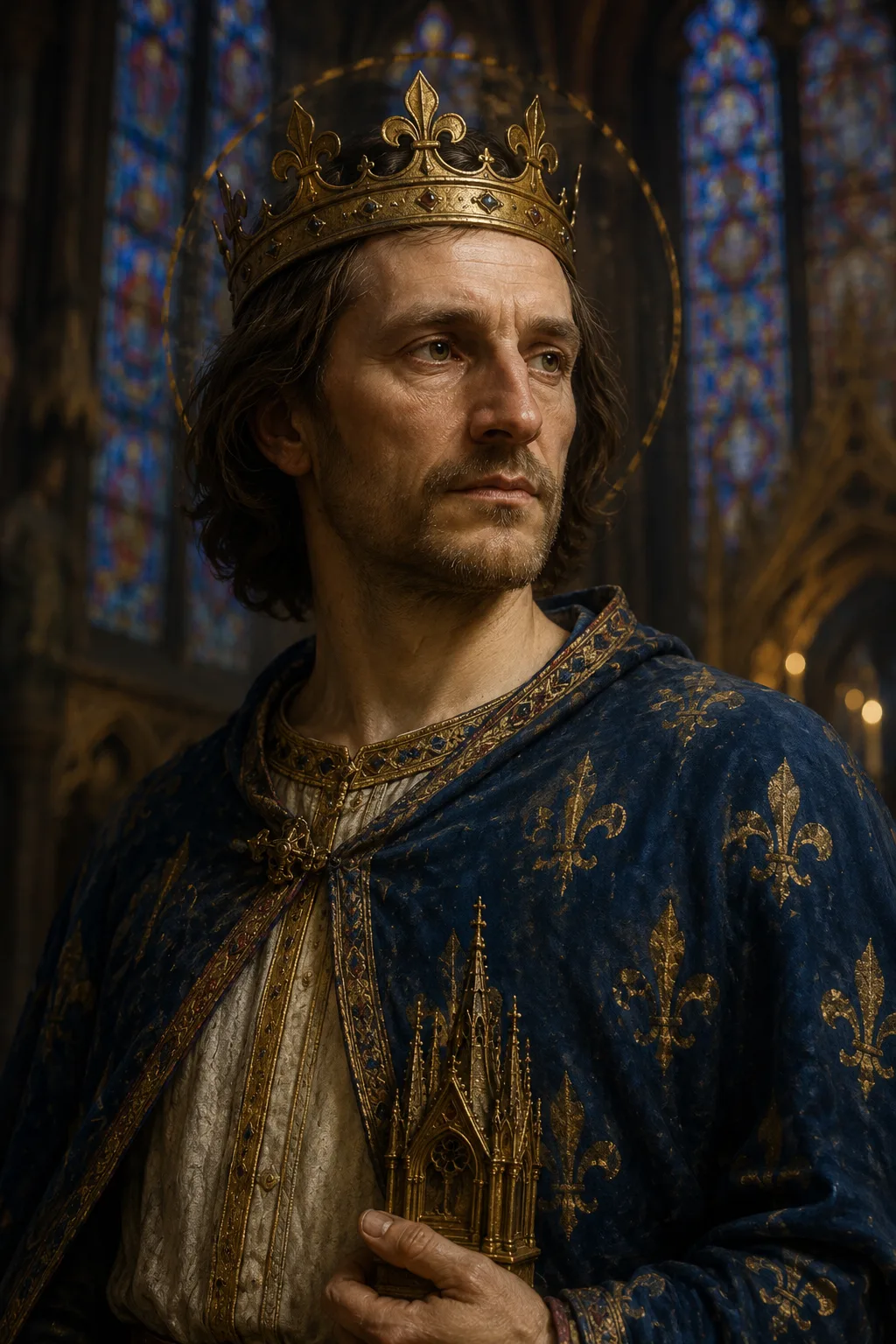
In 1239 Louis IX received the Crown of Thorns, carrying it into Paris in solemn procession, and soon added a fragment of the True Cross and other relics of the Passion. To house them he built Sainte-Chapelle inside the royal palace, consecrated in 1248. The relics stayed here until the Revolution, when the chapel was deconsecrated; the survivors passed to the Archbishop of Paris and are now kept at Notre-Dame.
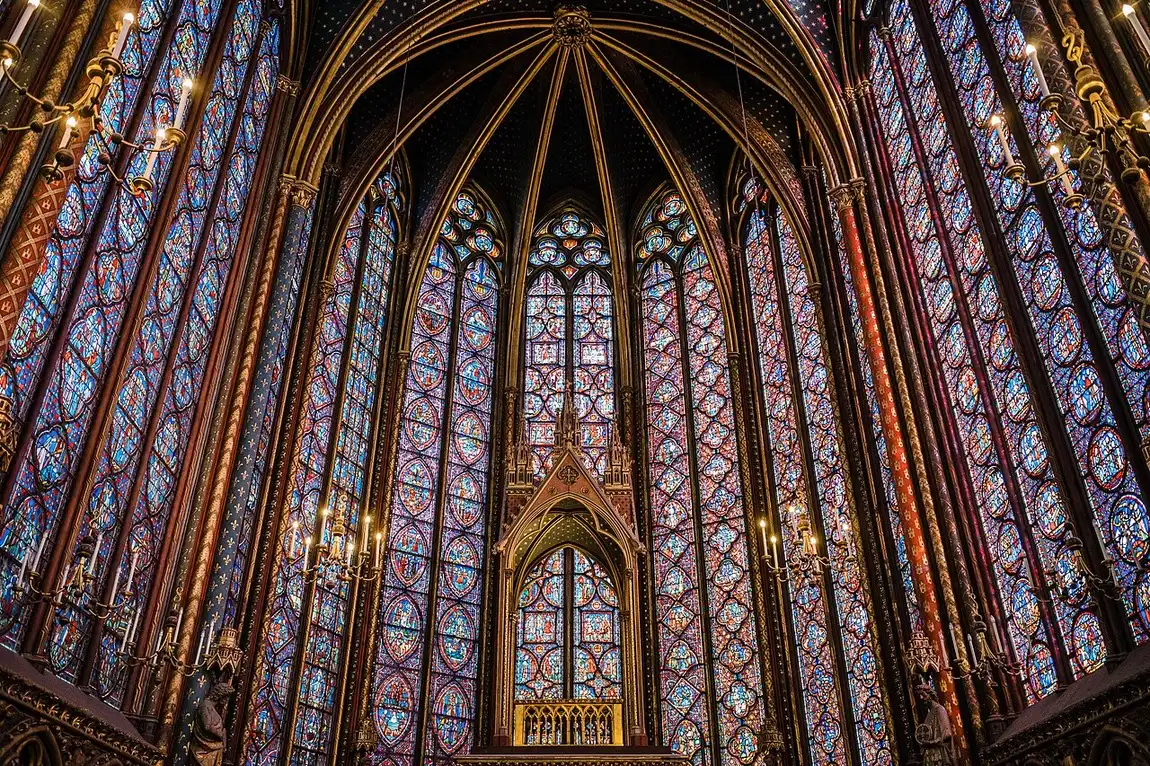
The plan is a two-level palace chapel. The lower chapel of the Virgin served the household. The upper chapel, reached by stair, is the relic chamber: a single Rayonnant Gothic room where fifteen tall lancet windows rise to the vault, so that glass, not stone, becomes the surface of the room. The west rose, added around 1500, shows the Apocalypse.
It is a single idea built in two storeys. Read it in order.
The darker, lower chapel of the Virgin was the household's church and the threshold to the relic chamber above.
Climb the stair into a single room of glass, built to enshrine the Passion relics, not to seat a congregation.
Fifteen lancet windows carry the Bible from Genesis to the finding of the True Cross, read around the room.
Sainte-Chapelle was built as a reliquary in architectural form, designed around the relics of the Passion.
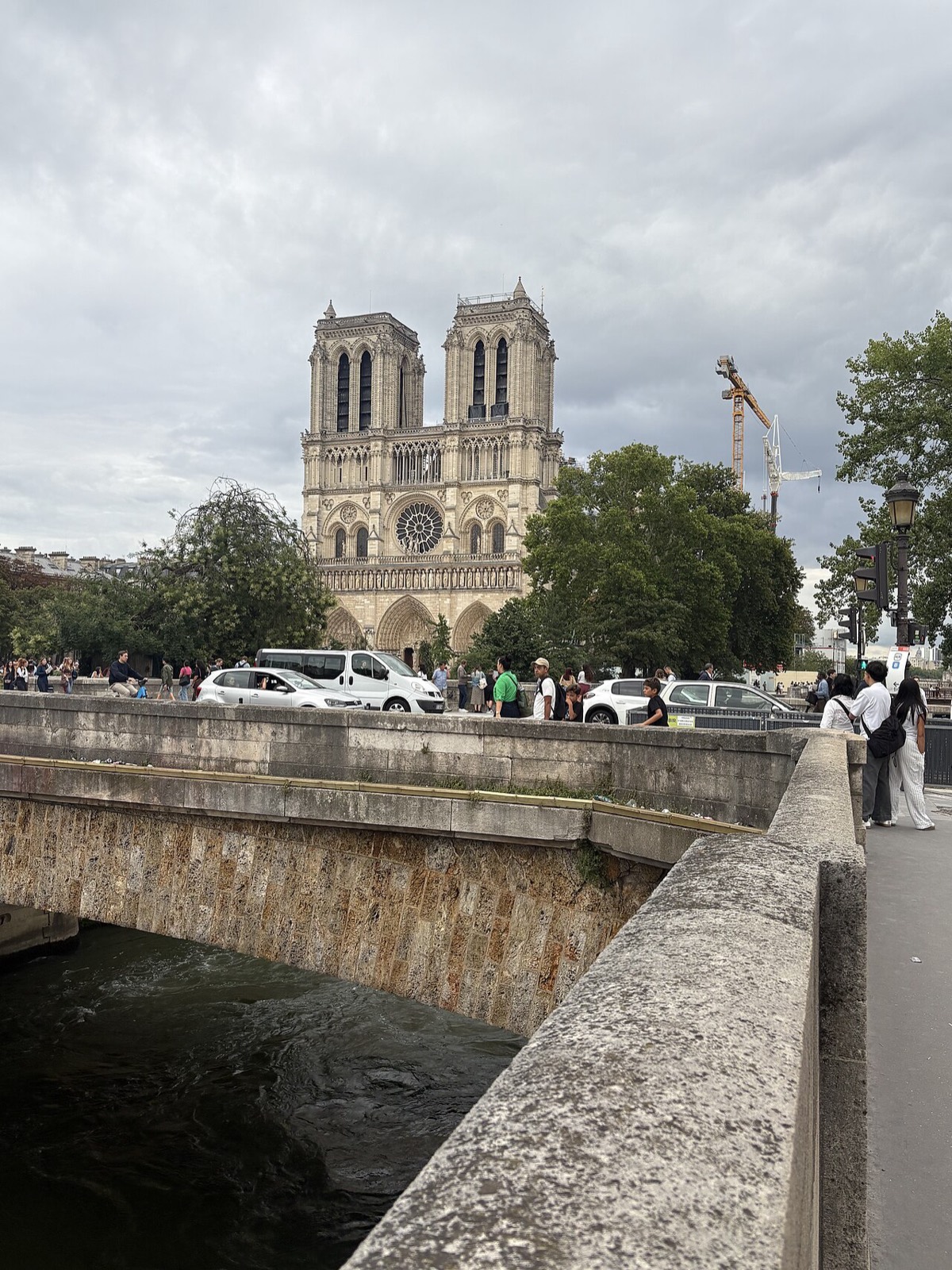
The Crown of Thorns is now kept at Notre-Dame de Paris, not here; pilgrims who wish to venerate it should go to the cathedral.
What makes Sainte-Chapelle a Catholic place and not only a Gothic landmark is the way it reads Scripture and devotion together. The lancet windows narrate the Bible from Genesis to the finding of the True Cross, with the relics of the Passion once at the centre. The chapel no longer holds the Mass or the relics, but the program is still legible to a visitor who knows what it was built for.
Enter the upper chapel and stop near the door before walking forward. The room was designed to be read as one luminous space, ringed by Scripture in glass.
Begin the cycle in the lancet to the north of the apse: Genesis, Exodus, and Numbers set the scriptural foundation for everything that follows.
The windows behind and around the apse hold the life of Christ and the relics' theological focus; this is where the reliquary chasse once stood.
The Helena window narrates the finding of the True Cross and connects the program to the relics for which the chapel was built.
The 15th-century Flamboyant rose at the west end completes the cycle with scenes from the Book of Revelation; best read from the centre of the chapel looking back.
Do not skip the lower chapel. Its quieter Marian dedication frames the upper relic chamber and was the worship space of the palace household.
Enough to read the chapel in the right order: the lower chapel of the Virgin, the climb, and a first reading of the upper-chapel windows.
Take the windows in their narrative order around the room, end at the west rose, and look back across the chapel from each side.
Enter through the lower chapel and pause for its Marian dedication before climbing to the upper chapel. In the upper chapel, take the windows in their narrative order beginning at the lancet to the north of the apse, walk slowly around the room, and end at the west rose. Leave time to look back across the chapel from each side rather than reading the glass only from the centre.
Sainte-Chapelle is operated by the Centre des Monuments Nationaux. Entry is ticketed, and visitors pass through the security screening of the Palais de Justice that surrounds the chapel. Confirm current opening hours, ticket arrangements, and any concert schedules on the official monument site before visiting. The chapel is not a parish church, and regular Mass is not celebrated here.
No longer here; venerated at Notre-Dame de Paris
Centre des monuments nationaux and Notre-Dame de ParisNo longer here
Centre des monuments nationauxThe surviving program for which the chapel is famous
Centre des monuments nationauxSource note Traditional attributions are presented as tradition, with documentation named where it exists.
Where this church sits within the wider Catholic geography of Paris.
A short walk on the Île de la Cité. The cathedral of the Archdiocese, the present home of the Crown of Thorns, and the natural counterpart to Sainte-Chapelle in the Passion relic tradition.
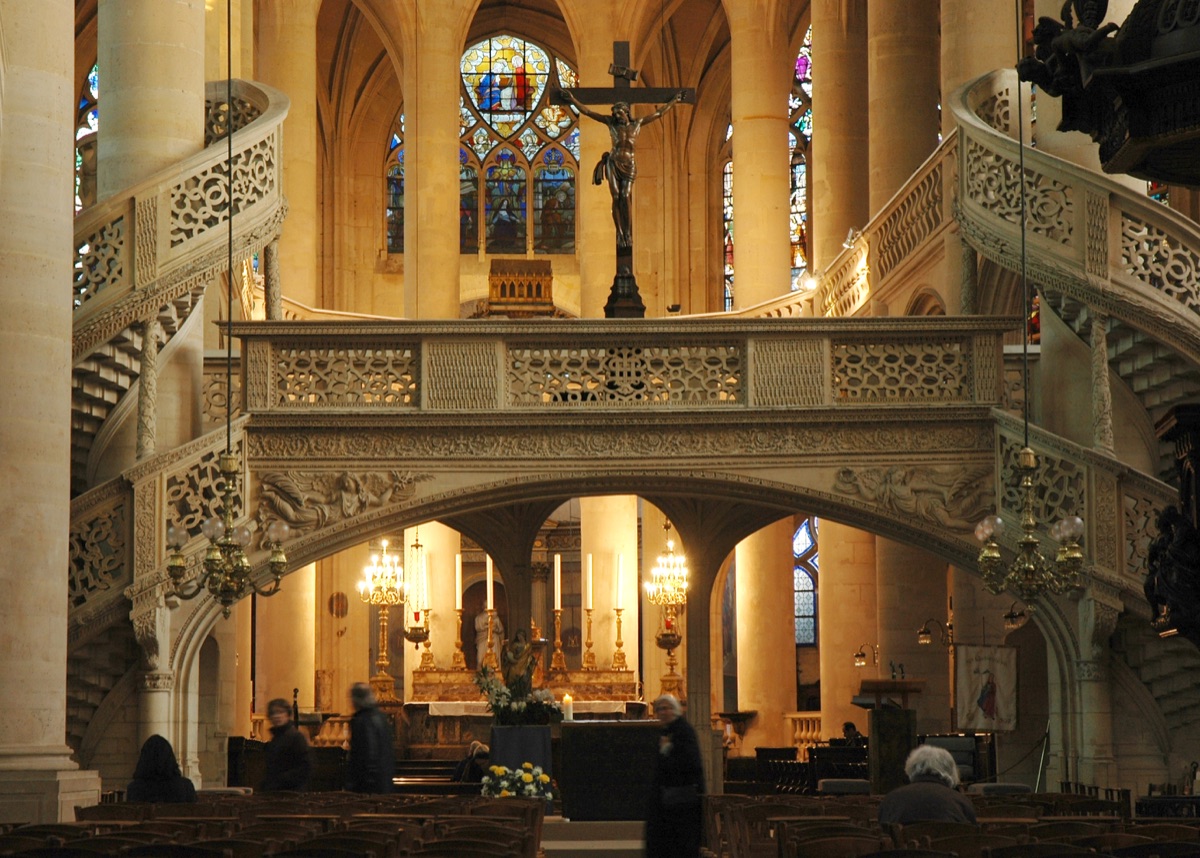
About a fifteen minute walk across the Seine to the Latin Quarter. The shrine of Saint Geneviève, patroness of Paris.
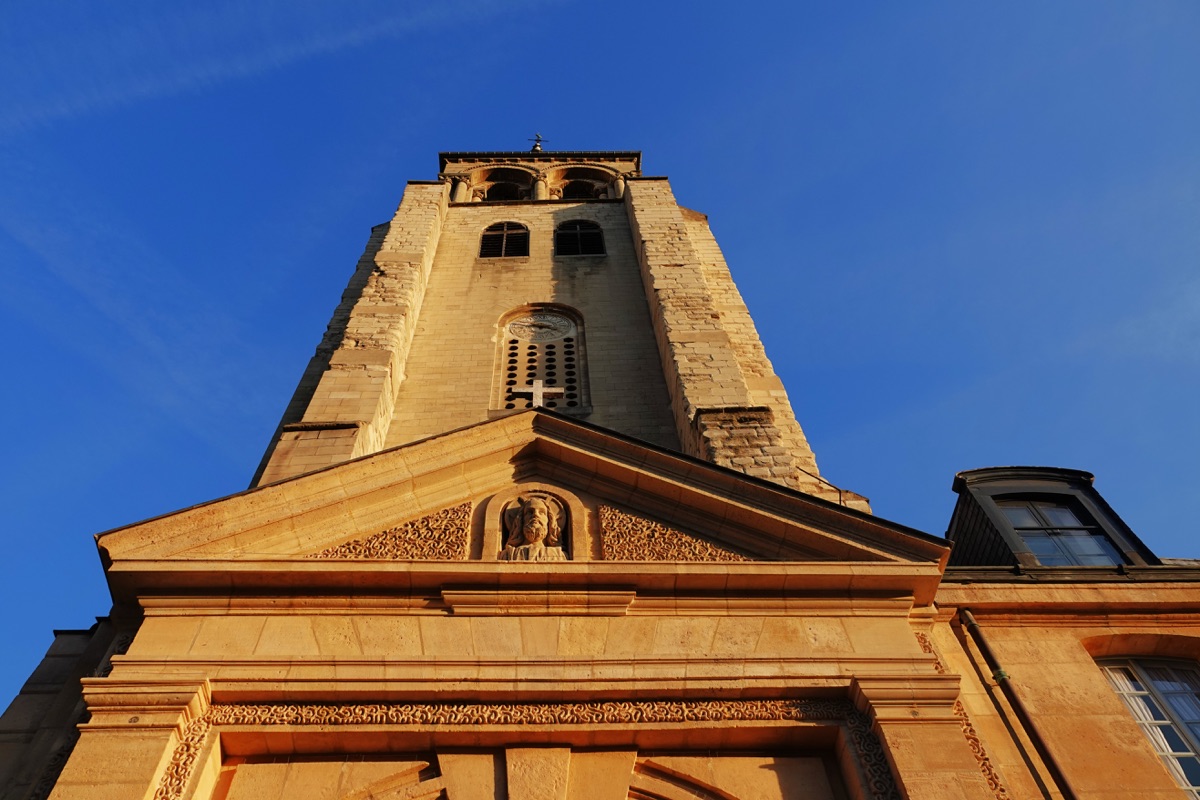
About a twenty minute walk across the Seine to the Left Bank. The ancient abbey church of Saint Germain of Paris.
Sainte-Chapelle is operated today by the Centre des Monuments Nationaux as a ticketed monument and is not a parish church; regular Mass is not celebrated here. The Crown of Thorns and the surviving relics of the Passion that the chapel was built to house are now kept at Notre-Dame de Paris, where the cathedral organises public veneration. Pilgrims should treat Sainte-Chapelle as the historic shrine that received the relics in the 13th century, and Notre-Dame as their present pastoral home.
June 30, 2026
Use this for corrections, broken links, missing places, and planning ideas.