
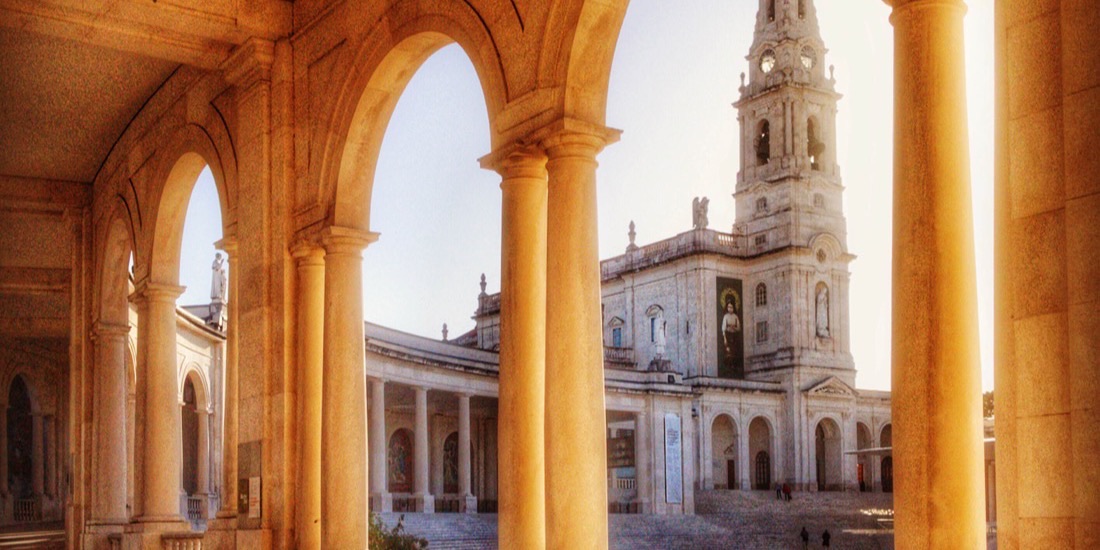
Basilica of Our Lady of the Rosary
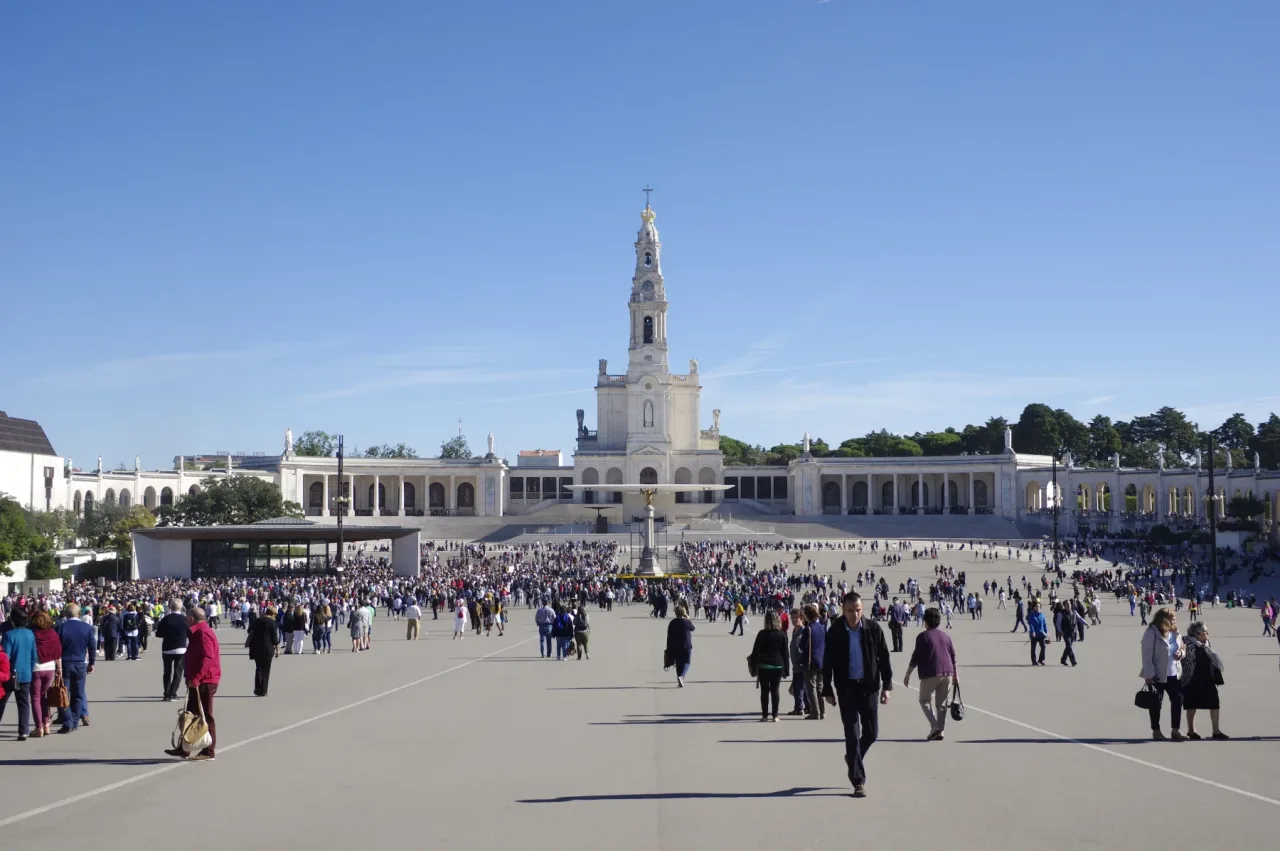
The first basilica of Fatima, with the tombs of the shepherd children and the resting place of Sister Lucia at the eastern head of the sanctuary esplanade.
PORTUGAL · FATIMA
39.6325° N · 8.6718° W
- Location
- Fatima, Portugal 39.6325° N · 8.6718° W
- Type
- Minor basilica within an active Marian sanctuary
- Time Needed
- 30 minutes to half a day
Why Go
The Basilica at the Head of the Cova
The Lady of the 1917 apparitions asked at the Cova da Iria that a chapel be built in her honor. The small Chapel of the Apparitions answered that request first, in 1919. The Basilica of Our Lady of the Rosary was conceived in the years after the apparitions as a larger church for pilgrim Masses, set at the eastern head of the new esplanade. The bishop of Leiria laid the foundation stone on May 13, 1928, the eleventh anniversary of the first apparition. The basilica was consecrated by Cardinal Manuel Goncalves Cerejeira, Patriarch of Lisbon, on October 7, 1953, the feast of Our Lady of the Rosary, and was raised to the dignity of a minor basilica by Pope Pius XII on November 11, 1954. Jacinta Marto's body was transferred here in 1951 and Francisco's in 1952, and the tomb of Sister Lucia was added on February 19, 2006, a year after her death at the Carmel of Coimbra. The basilica was the principal church of the sanctuary until the Basilica of the Most Holy Trinity, at the western end of the esplanade, was completed in 2007.
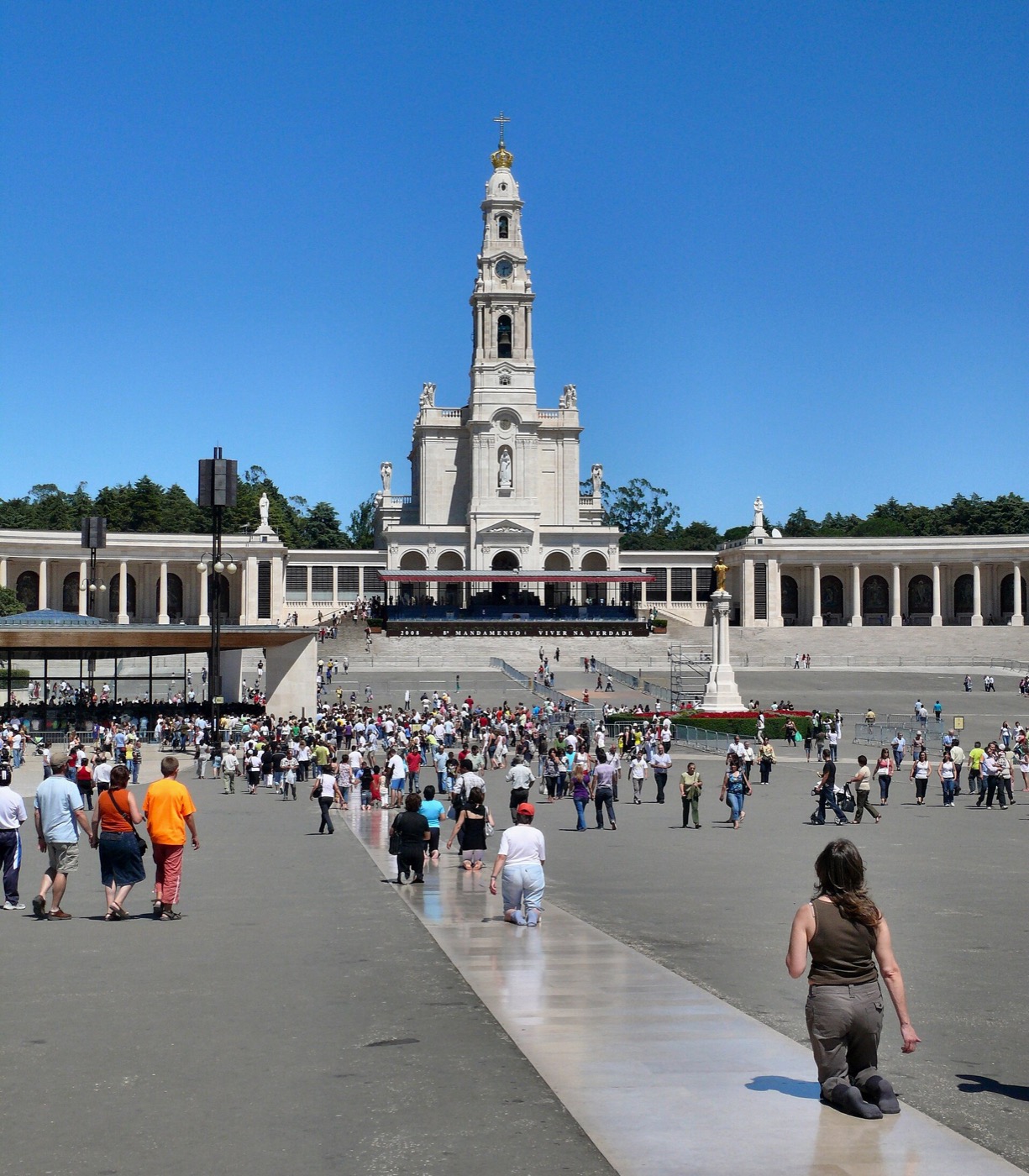
The basilica was designed in a neoclassical style by the Dutch architect Gerardus Samuel van Krieken and continued after his death by Joao Antunes. A single bell tower rises 65 meters above the facade, topped by a great bronze crown and a crystal cross that is lit at night. A statue of the Immaculate Heart of Mary stands above the entrance, with statues of the four great Doctors of the Western Church and other patrons of Portugal arranged in niches across the facade. The interior holds a single long nave with side aisles, finished in marble and lined with fifteen altars dedicated to the joyful, sorrowful, and glorious mysteries of the Rosary. The long, curved colonnade that flanks the basilica on both sides was added in stages between 1953 and 1958 and encloses the esplanade on the eastern half of the Cova da Iria.
Read the Place
How to read the basilica.
The basilica is meant to be read together with the small Chapel of the Apparitions across the esplanade. Where the chapel is open and exposed at the place of the apparitions, this church is enclosed and ordered toward Mass, confession, and the tombs. Read it from the facade inward.
The facade and its statues
A statue of the Immaculate Heart of Mary stands above the entrance, with the four great Doctors of the Western Church and patrons of Portugal set in niches across the front.
The bell tower
A single tower rises 65 meters above the facade, crowned with a great bronze crown and a crystal cross that is lit at night.
The nave and the Rosary altars
One long marble nave runs to the high altar, lined with fifteen side altars for the joyful, sorrowful, and glorious mysteries of the Rosary.
The tombs in the aisles
Saints Francisco and Jacinta Marto rest in the side aisles, and Sister Lucia dos Santos nearby. The church is read around its witnesses.
The colonnade
The long curved arcades added after 1953 reach out from the basilica to enclose the eastern half of the esplanade.
What to notice.
-
The tomb of Saint Jacinta Marto
In the left aisle of the nave. Jacinta died in Lisbon in 1920 at the age of nine, after a long illness she offered for the conversion of sinners and for the Holy Father.
-
The tomb of Saint Francisco Marto
In the right aisle of the nave, opposite his sister. Francisco died at Aljustrel in 1919 at the age of ten, offering his sufferings for sinners as Our Lady had asked.
-
The tomb of Sister Lucia dos Santos
Transferred from the Carmel of Coimbra to the basilica on February 19, 2006, a year after her death. Her cause for canonization is open and she has been declared Venerable; she is not yet canonized.
-
The high altar and the Rosary mystery altars
Fifteen side altars line the nave, dedicated to the joyful, sorrowful, and glorious mysteries of the Rosary.
-
The colonnade enclosing the esplanade
Long curved arcades flank the basilica on both sides. Walk a part of one on the way back to the Chapel of the Apparitions to see how the sanctuary is gathered.
What to notice
- The basilica and the Chapel of the Apparitions stand at opposite ends of the same praying place. Read them together: the chapel marks the message given, the basilica receives the witnesses who lived it.
- Francisco and Jacinta Marto are buried inside this basilica. They were beatified in 2000 by Saint John Paul II and canonized by Pope Francis on the centenary of the apparitions, May 13, 2017.
- Sister Lucia's tomb is treated with care in the sanctuary's language. Her cause for canonization is open; she is Venerable, not yet canonized, and the inscription reflects that.
- The facade carries statues of the four great Doctors of the Western Church and of patrons of Portugal. The bell tower is topped by a bronze crown and a crystal cross that is lit at night.
- The colonnade is unusually long for a single sanctuary church. It was added in the years just after the basilica's consecration and is part of what makes the Cova da Iria a single liturgical space.
How much time, and what to do with it.
-
A First Visit to the Basilica
5 ordered stopsA focused visit to the nave, the three tombs, and the high altar, ending with a slow walk along the colonnade.
- Climb the steps from the esplanade and enter the basilica through the central doors.
- Walk up the nave and pause at the tomb of Saint Jacinta Marto in the left aisle.
- Cross the nave to the tomb of Saint Francisco Marto in the right aisle, and to the tomb of Sister Lucia nearby.
- Pray a decade of the Rosary in the nave between the tombs.
- Leave through the side door and walk a part of the colonnade back toward the Chapel of the Apparitions.
-
The Basilica with the Chapel of the Apparitions
5 ordered stopsWalk the esplanade from the chapel to the basilica, pray at the tombs, attend Mass if available, and return to the chapel for the evening Rosary.
- Begin at the Chapel of the Apparitions with the Rosary and a candle for a named intention.
- Walk east across the esplanade and climb the steps to the Basilica of Our Lady of the Rosary.
- Pray at the tombs of Saints Francisco and Jacinta Marto and at the tomb of Sister Lucia.
- Attend Mass at the high altar or in a side altar if it falls within your visit.
- Return across the esplanade to the chapel for the evening Rosary, and to the candlelight procession during the pilgrimage season.
-
Pilgrim Mass on the Thirteenth
5 ordered stopsPlan the visit around the pilgrim Mass at the basilica, paired with the evening Rosary and candlelight procession at the Chapel of the Apparitions.
- Arrive at the sanctuary early in the morning and visit the Chapel of the Apparitions.
- Move to the Basilica of Our Lady of the Rosary in time for the pilgrim Mass.
- Pray at the tombs of Saints Francisco and Jacinta Marto and of Sister Lucia after Mass.
- Rest in the town in the afternoon and return for the evening Rosary at the chapel.
- Join the candlelight procession that ends in front of the chapel.
Read the basilica together with the Chapel of the Apparitions at the other end of the esplanade. Begin or end at the tombs, attend Mass if it falls within your visit, and let the long nave between the tombs and the high altar give the Fatima visit its liturgical center. The colonnade outside is part of the praying place rather than only an architectural feature.
How this place gathers the saints.
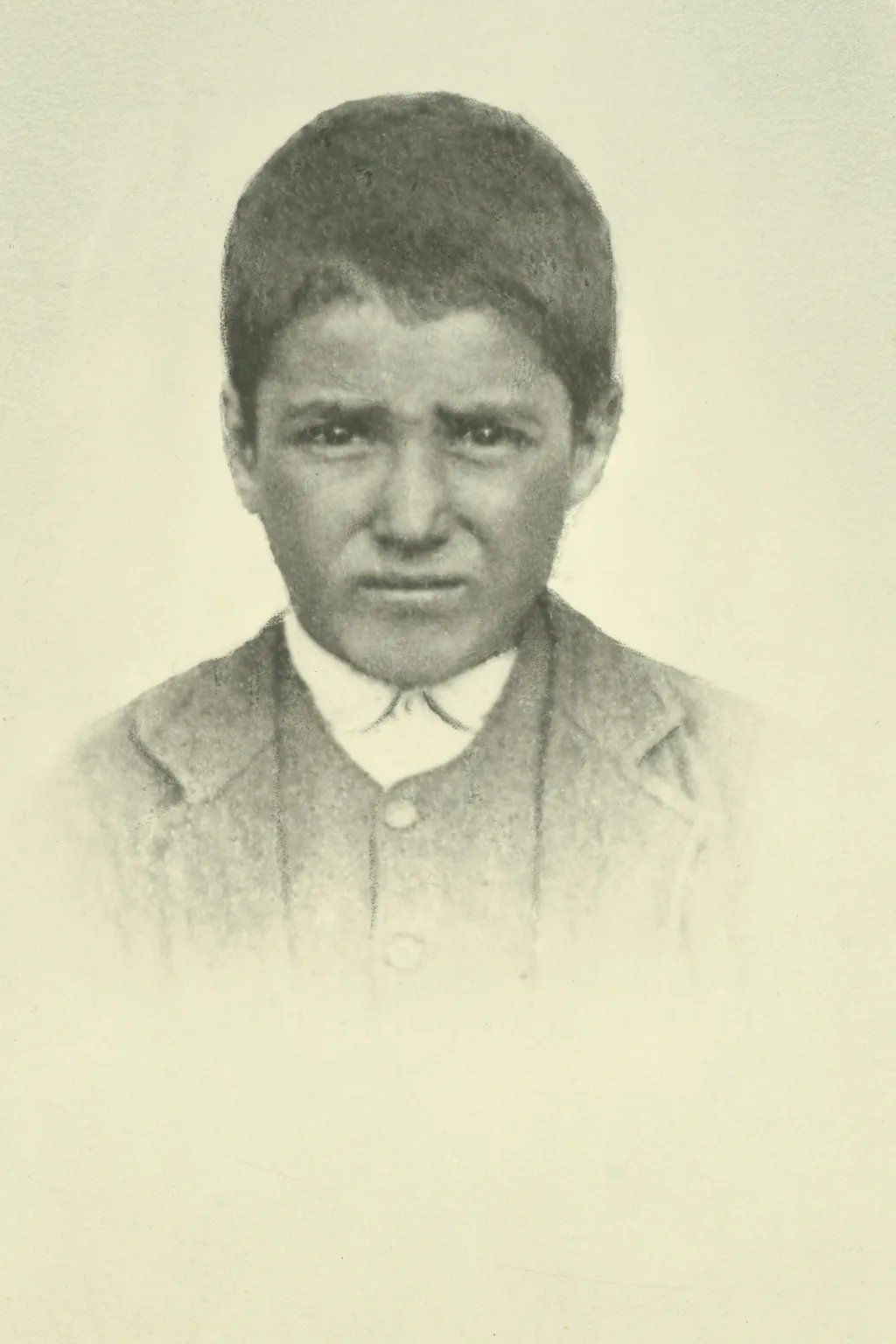
Saint Francisco Marto
The basilica at the head of the esplanade, where Francisco has been buried since 1952, opposite his sister.
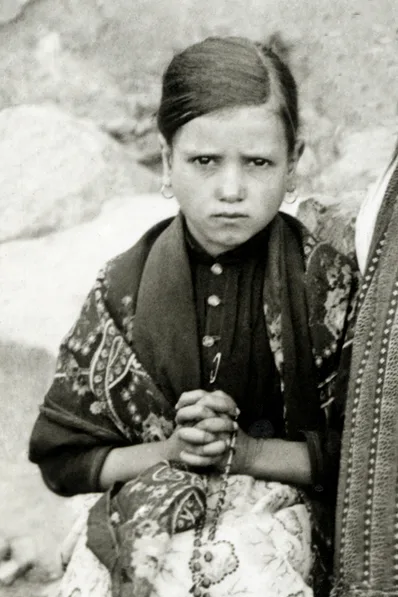
Saint Jacinta Marto
The basilica at the head of the esplanade, where Jacinta has been buried since 1951, opposite her brother.
Venerable Lucia dos Santos
Eldest of the three children; her tomb was transferred from Coimbra to the basilica in 2006
Born in Aljustrel in 1907, Lucia was ten years old at the time of the apparitions and the eldest of the three children. She entered the Sisters of Saint Dorothy and later transferred to the Discalced Carmelites at Coimbra, where she lived from 1948 until her death in 2005. Her cause for canonization is open and she has been declared Venerable. She is not yet canonized.
Within walking distance.
-
City hub
Fátima
Where this church sits within the wider Catholic geography of Fátima.
-
shrine
Chapel of the Apparitions
The small open chapel at the spot of the 1917 apparitions, across the esplanade from the basilica.
-
shrine
Sanctuary of Our Lady of Fátima
The enclosed sanctuary that gathers the chapel, the two basilicas, the chaplaincy, and the colonnade into a single praying place.
-
city_hub
Catholic Fatima
The city hub for Fatima, with the sanctuary, the homes of the shepherd children at Aljustrel, and the secondary apparition sites at Valinhos and Loca do Cabeco.
-
church
Basilica of the Most Holy Trinity
The large modern basilica at the western end of the esplanade, completed in 2007 for the largest pilgrim gatherings.
-
destination
Aljustrel
The hamlet two kilometers south of the sanctuary where the three shepherd children were born and raised.
Plan your visit.
Gallery
The basilica and its tombs
The church at the head of the Cova da Iria and the tombs of the shepherd children in its aisles.
The first basilica of the sanctuary, at the eastern head of the esplanade.
Editorial sources
The basilica's tombs are described here according to the current status of each person in the life of the Church. Francisco and Jacinta Marto were beatified in 2000 and canonized in 2017. Sister Lucia dos Santos, the eldest of the three children, was declared Venerable in 2023 by Pope Francis. Her cause for canonization is open and she is not yet canonized; the basilica's signage and the sanctuary's liturgical references reflect that distinction.
Official
Last reviewed
Pending review.
Photo credits
- Hero. PauloGarciaMartins / Wikimedia Commons (CC BY-SA 4.0). Source. CC BY-SA 4.0.
- The Basilica and the Colonnade. Reis Quarteu / Wikimedia Commons (CC BY-SA 4.0). Source. CC BY-SA 4.0.
- The Basilica of Our Lady of the Rosary. Einaz80 / Wikimedia Commons (CC BY-SA 4.0). Source. CC BY-SA 4.0.
- The tomb of Saint Francisco Marto. Vitor Oliveira / Wikimedia Commons (CC BY-SA 2.0). Source. CC BY-SA 2.0.