
St. Padre Pio
of Pietrelcina
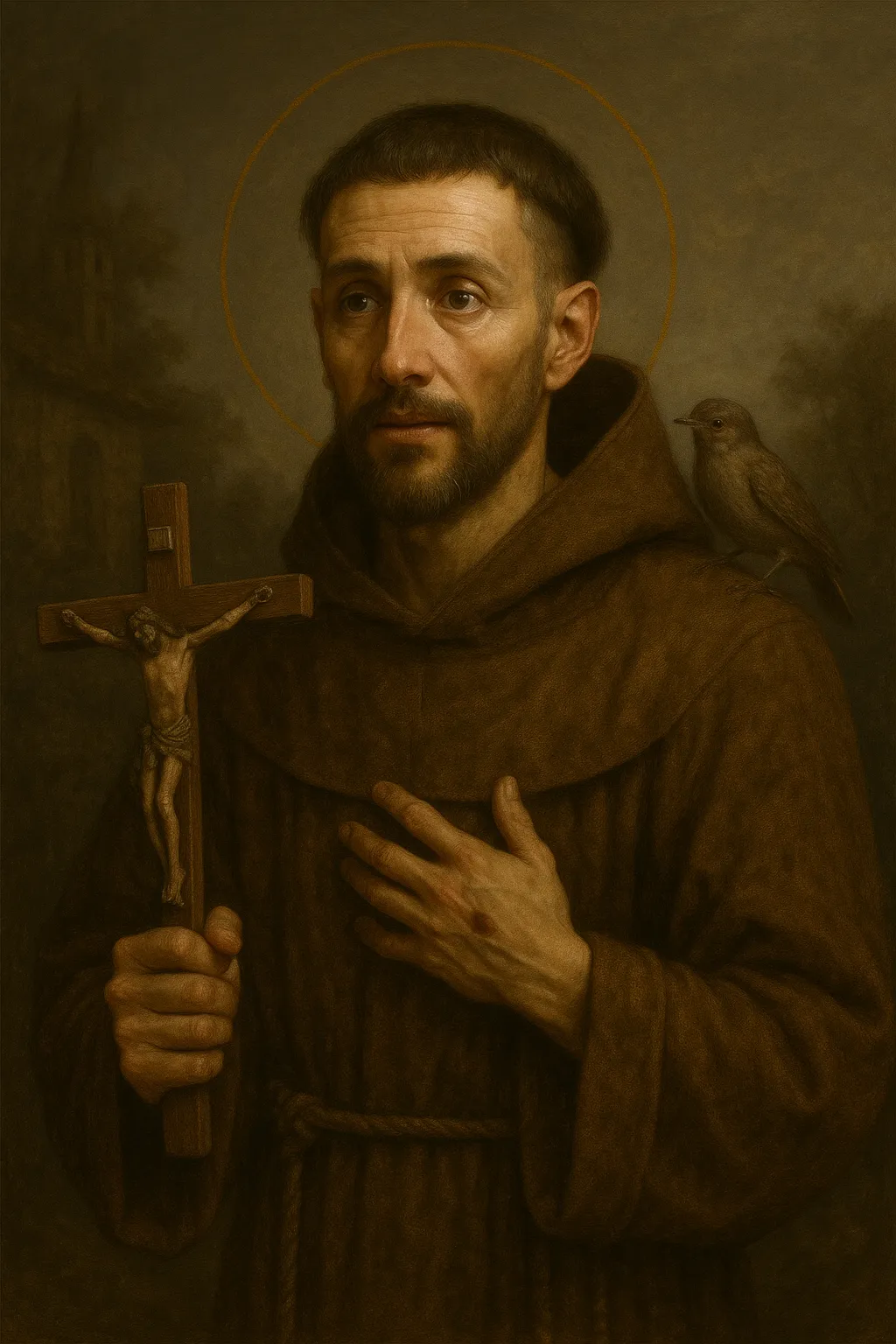
A Capuchin priest marked with the wounds of Christ, remembered above all for the hours he gave to hearing confessions.
Pray, hope, and don't worry.
Padre Pio, in his letters of spiritual direction (Epistolario) Well-attested
The Capuchin friar who bore the stigmata for fifty years and spent his life in the confessional
Francesco Forgione was born to a farming family in Pietrelcina, in southern Italy, and entered the Capuchin Franciscans as a young man. Ordained a priest in 1910, he spent most of his religious life at the friary of Our Lady of Grace in San Giovanni Rotondo, where in 1918 the wounds of Christ's Passion appeared visibly on his body and remained for the rest of his life. Padre Pio became known above all as a confessor, giving hours each day to the sacrament, and as the founder of a major hospital for the region's poor. Pope John Paul II, who had visited him as a young priest, canonized him in 2002.
Francesco Forgione was born on May 25, 1887, in Pietrelcina, a small farming town in the province of Benevento in southern Italy, the son of Grazio Forgione and Maria Giuseppa De Nunzio. Both parents were devout, and his father twice worked abroad in the United States to support the family.
Francesco entered the Capuchin novitiate at Morcone in 1903, taking the religious name Pio in honor of Pope Pius I, and was ordained a priest on August 10, 1910, at Benevento.
Poor health kept the young Padre Pio largely at his family home in Pietrelcina for several years after ordination, and it was there, in 1910, that he first reported experiencing the wounds of Christ's Passion, though only briefly and privately. He was assigned in 1916 to the friary of Our Lady of Grace at San Giovanni Rotondo, in the Gargano region of Apulia, which remained his home for the rest of his life. On September 20, 1918, praying before a crucifix in the friary choir, he received the stigmata visibly and permanently: wounds in his hands, feet, and side that bled and were medically examined many times over the following fifty years, and that closed only after his death.
From the 1920s onward, Padre Pio's reputation drew growing numbers of the faithful to San Giovanni Rotondo, and with that attention came both devotion and scrutiny. The Holy See, cautious about the phenomena surrounding him, placed restrictions on his public ministry for periods between 1923 and the early 1930s, at times limiting his celebration of Mass in public or his correspondence with the faithful. The restrictions were gradually lifted as further inquiries proceeded, and Padre Pio's own obedience through this period became, for many who study his life, as much a part of his witness as the stigmata themselves.
What occupied most of Padre Pio's days, for decades, was the confessional. Penitents came from across Italy and eventually from around the world, and he is remembered as spending eight, ten, or more hours a day hearing confessions, often with long waiting times that pilgrims accepted as part of the visit. Alongside this sacramental ministry, he pursued a practical work of mercy: in 1940 he began raising funds for a hospital to serve the poor of the Gargano, and the Casa Sollievo della Sofferenza, the House for the Relief of Suffering, opened at San Giovanni Rotondo in 1956 and remains a major hospital today.
Padre Pio died at San Giovanni Rotondo on September 23, 1968, and was buried in the crypt of the friary church. Pope John Paul II, who as a young priest had visited him in 1947, beatified him in 1999 and canonized him on June 16, 2002. In 2008, on the fortieth anniversary of his death, his body was exhumed for examination and later placed on public display in the crypt of the new church built in his honor at San Giovanni Rotondo, where pilgrims continue to venerate him today.
Padre Pio's legacy sits less in any single teaching than in a life given to the confessional and to the sick: the Casa Sollievo della Sofferenza continues to serve patients at San Giovanni Rotondo, and the friary he called home for over fifty years remains one of the most visited pilgrimage sites in Italy. Catholics keep his feast on September 23, the day of his death.
A life, in years and approximate ages.
-
c. 1887BirthBirth at PietrelcinaFrancesco Forgione is born to a farming family at Pietrelcina, in the province of Benevento, southern Italy.
-
c. 190316Enters the Capuchin NovitiateFrancesco enters the Capuchin Franciscan novitiate at Morcone, taking the religious name Fra Pio in honor of Pope Pius I.
-
c. 191023Ordination to the PriesthoodFra Pio is ordained a priest at Benevento. Poor health keeps him largely at his family home in Pietrelcina for several years afterward.
-
c. 191831The Permanent StigmataPraying before a crucifix in the friary choir at San Giovanni Rotondo, Padre Pio receives the wounds of Christ's Passion visibly and permanently, in his hands, feet, and side.
-
c. 1931About 36-46Holy See Restrictions on His Public MinistryCautious of the phenomena surrounding him, the Holy See restricts aspects of Padre Pio's public ministry for periods across these years, restrictions gradually lifted as further inquiries proceeded.
-
c. 195669Casa Sollievo della Sofferenza OpensThe hospital Padre Pio spent over a decade raising funds for, the Casa Sollievo della Sofferenza, opens at San Giovanni Rotondo to serve the poor of the Gargano region.
-
c. 196881Death at San Giovanni RotondoPadre Pio dies at the friary of San Giovanni Rotondo and is buried in the crypt of the church, fifty years after receiving the stigmata.
-
2002After deathCanonization by Pope John Paul IIPope John Paul II canonizes Padre Pio, three years after beatifying him, recognizing in the universal Church the friar he had visited as a young priest in 1947.
-
2008After deathExhumation and Public VenerationOn the fortieth anniversary of his death, Padre Pio's body is exhumed for examination and later placed on public display for veneration in the crypt of the new church at San Giovanni Rotondo.
Dates are approximate where the surviving record is traditional or incomplete.
One place where this witness remains visible.
Sanctuary of Our Lady of Grace, San Giovanni Rotondo
The friary where Padre Pio lived for over fifty years, received the stigmata, and heard confessions for decades, now joined by the crypt where pilgrims venerate his tomb.
Where the body is venerated.
Padre Pio is venerated at San Giovanni Rotondo, where his body rests in the crypt of the church built in his honor beside the older friary of Our Lady of Grace. Following the fortieth anniversary of his death in 2008, his body was exhumed for examination and placed on public display for veneration; Church authorities described the body as well preserved though not fully incorrupt, and a silicone mask was used for the face. Eternal Roam presents this as a documented, shrine-custody tradition of recent date, held under the ordinary oversight of the Capuchin friary rather than as a claim of full incorruption.
The saint is publicly venerated at a named tomb.
Sanctuary of Our Lady of Grace, San Giovanni Rotondo
The friary where Padre Pio lived for over fifty years, received the stigmata, and heard confessions for decades, now joined by the crypt where pilgrims venerate his tomb.
- The tomb of Padre Pio, venerated in the crypt of the church built in his honor
- The older friary church of Our Lady of Grace, where he received the stigmata in 1918
- The confessional and choir associated with his decades of sacramental ministry
Give San Giovanni Rotondo unhurried time. Begin at the older friary church where Padre Pio prayed and heard confessions, then move to the crypt for the tomb. The place rewards a quiet pace more than a checklist.
Kindred witnesses
Kept on September 23.
Padre Pio's feast falls on September 23, the anniversary of his death, and is kept with particular devotion at San Giovanni Rotondo, where pilgrims gather at his tomb in the crypt of the church built in his honor.
San Giovanni Rotondo rewards unhurried time more than a single stop: the older friary church where Padre Pio prayed and heard confessions for decades sits beside the newer church built to hold the crowds who now come to venerate him. Give the visit an afternoon rather than an hour, and let the confessional and the crypt, not only the architecture, set the pace.