The Atlas Destinations Pilgrim Roads Canterbury Pilgrims' Way

Shrine route
Shrine route Medieval road Revived & waymarked

Canterbury Pilgrims' Way

Historic English pilgrimage roads toward Canterbury and the memory of St. Thomas Becket.

Open My Journey
Destination
Canterbury Cathedral Canterbury, Kent
Shrine memory
St. Thomas Becket Martyr of Canterbury
Historic approaches
Winchester and Southwark Modern route traditions differ
Route reality
Historic corridor, modern paths Representative map, not a GPS track
Related road
Via Francigena Canterbury is also the northern threshold toward Rome
<
Warning: Undefined variable $lightbox_attrs in /home/eternalr/public_html/wp-content/themes/bricks-child-two/templates/route-detail-v1.php on line 117
span class="er-rd-media__lightbox
Warning: Undefined variable $lightbox_attrs in /home/eternalr/public_html/wp-content/themes/bricks-child-two/templates/route-detail-v1.php on line 117
"
Warning: Undefined variable $lightbox_attrs in /home/eternalr/public_html/wp-content/themes/bricks-child-two/templates/route-detail-v1.php on line 117
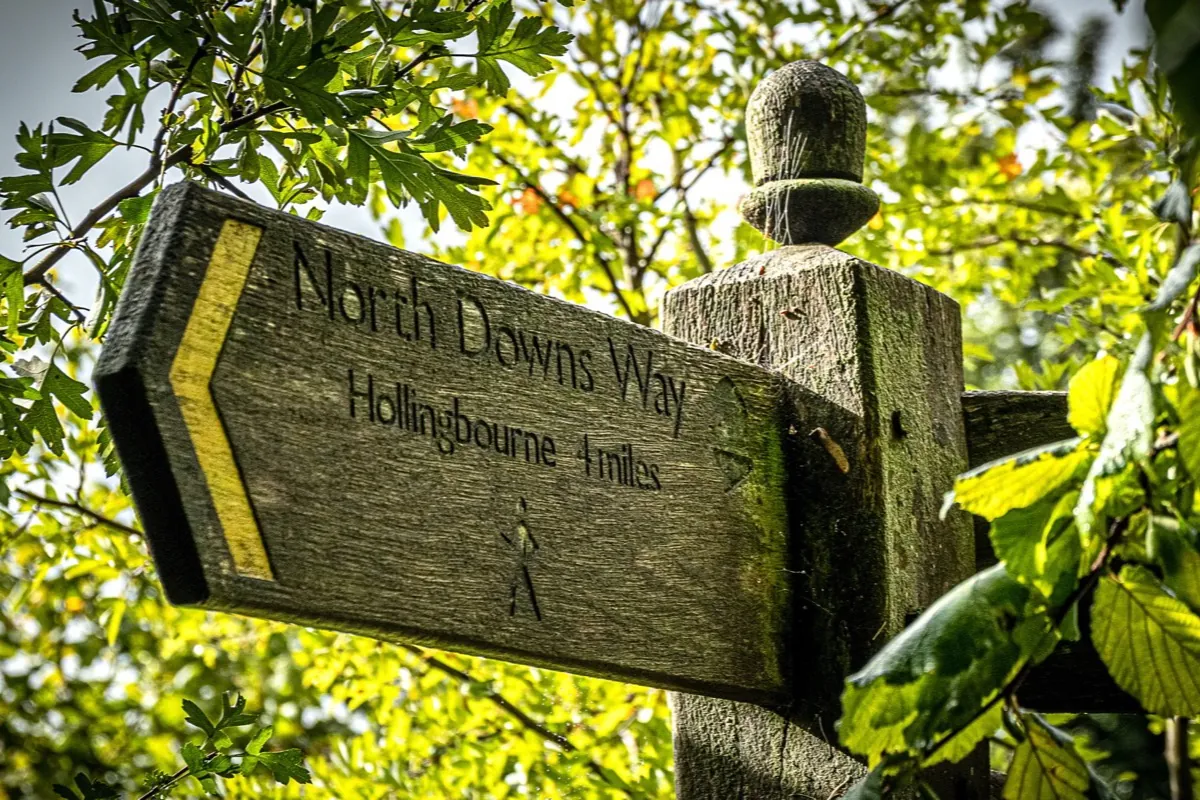
> A weathered North Downs Way fingerpost with a walker symbol on the old pilgrims route to Canterbury. Warning: Undefined variable $lightbox_attrs in /home/eternalr/public_html/wp-content/themes/bricks-child-two/templates/route-detail-v1.php on line 119
span>

Route facts · At a glance

The route at a glance.

Canterbury is a pilgrimage destination with more than one modern approach. This guide treats the Pilgrims' Way as a focused Canterbury pilgrimage corridor, not as a single exact medieval GPS line.

Route type Historic shrine route Several approaches toward Canterbury
Destination Canterbury Cathedral Cathedral and Becket shrine memory
Associated saint St. Thomas Becket Martyr of Canterbury
Primary approaches Winchester and Southwark / London Modern route traditions and waymarking vary
Countries / regions England London, Surrey, Kent, North Downs
Typical duration Several days to two weeks Depends on approach and section
Difficulty Moderate Chalk ridges, lanes, towns, weather, and road crossings
Waymarking Mixed modern route support Use current route notes before walking
Route relationship Canterbury and Rome The Via Francigena begins here for pilgrims going south

01 · Route overview

Several English roads gather at Canterbury.

Representative pilgrimage corridor, not a navigation map.

Select an approach or stop to trace it.

The approaches

Winchester approach from Winchester
Southwark approach from London / Southwark

Sacred stops on the way

  1. Winchester
  2. Southwark
  3. Rochester
  4. Aylesford
  5. Chilham
  6. Canterbury Cathedral Destination

Regions crossed: Winchester and Hampshire · London and Southwark · Surrey and the North Downs · Rochester and the Medway · Kentish villages · Canterbury

02 · The walk in practice · Time, terrain, and difficulty

An English shrine route best walked as a historic corridor toward Canterbury.

The Winchester and Southwark traditions differ. Treat this page as orientation before using current route notes.

Overall difficulty Moderate Long days, chalk ridges, lanes, towns
Daily range Stage-based Depends on route notes and lodging
Walked in sections Yes Many pilgrims choose the North Downs or final Kent approach
Arrival focus Canterbury Cathedral The Becket shrine memory gives the road its pull

Difficulty by route

Winchester to Canterbury Moderate
Often walked in stages

A western approach through old roads, chalk country, and Kentish villages.

Southwark / London to Canterbury Moderate
Shorter eastern approach

The Chaucer memory keeps this London departure vivid, though modern routing needs care.

Final Kent approach Easy to moderate
A shorter pilgrimage section

Useful for pilgrims who want Canterbury to be the clear arrival without committing to the full corridor.

Terrain

Chalk ridges, villages, lanes, woodland, river crossings, towns, and the final approach into Canterbury.

Elevation

The North Downs give the route its repeated rise and fall rather than one dramatic mountain crossing.

Waymarking

Modern waymarking and route descriptions vary. The North Downs Way overlaps some remembered pilgrimage ground, but does not settle every historical question.

This is a representative pilgrimage corridor. Use official and local route notes for the route actually walked.

Begin this route

Begin with the Canterbury approach that fits your time.

The route is a pilgrimage corridor, not one exact medieval line. Choose the approach before choosing daily stages.

Best first section

Southwark / London to Canterbury, or a shorter Kent approach if time is limited.

Best one-week version

A London or Kent approach toward Canterbury Cathedral.

Best final approach

Rochester, Aylesford, Chilham, and the final movement into Canterbury.

Best for limited time

Begin in Kent and make the last approach to the cathedral rather than forcing the full western route.

When to plan carefully

Plan carefully where modern roads, rights of way, and route variants diverge from older pilgrimage memory.

Verify before walking

Verify route files, public access, closures, accommodation, and current pilgrimage resources before walking.

One week

Southwark / London to Canterbury

A shorter Canterbury pilgrimage shaped by the London departure and the final road through Kent.

Distance
Shorter approach
Typical
Several days to a week
Difficulty
Moderate
Sacred focus
St. Thomas Becket and Canterbury

Verify current route files and access.

Historically curious traveler

Winchester Pilgrims' Way

The longer western memory of the road through chalk country and Kent toward Canterbury.

Distance
Walked in stages
Typical
Often one to two weeks
Difficulty
Moderate
Sacred focus
English shrine route

Do not treat the medieval road as one perfectly fixed line.

Limited time

Kent final approach

A limited-time route that keeps the arrival at Canterbury clear.

Distance
Varies by start
Typical
Several days
Difficulty
Moderate
Sacred focus
The martyr shrine and cathedral precinct

Verify rights of way and modern route guidance.

03 · Historical context

A road shaped by martyrdom, medieval devotion, literary memory, and a cathedral that still receives pilgrims.

Canterbury became one of medieval England's great pilgrimage destinations after the martyrdom of Thomas Becket in 1170. Pilgrims came toward the cathedral and the shrine that grew around his memory, carrying prayer, petition, penance, and the rough sociability of the road.

The modern pilgrim must be careful with the word route. Medieval travelers did not all keep to one precise line. Today Canterbury Cathedral names the Pilgrims' Way from Winchester and from Southwark / London, alongside the Augustine Camino and the Via Francigena connection toward Rome.

After the Reformation, Becket's shrine was destroyed and England's pilgrimage world changed. The road now carries memory as much as continuity: Catholic memory, Anglican cathedral life, medieval literature, and the stubborn instinct to walk toward a holy place.

04 · Why this route matters

Why Canterbury Pilgrims' Way matters.

A road where English sacred memory survives through cathedral stone, martyrdom, literature, and the act of walking east.

01

The road remembers Becket

The pilgrimage is ordered toward the memory of St. Thomas Becket, not toward countryside alone. The cathedral gives the walk its final seriousness.

02

England changed, but memory remains

The Reformation broke the medieval shrine world. A modern pilgrimage to Canterbury should name that honestly without reducing the place to a historical exhibit.

03

The approaches differ

Winchester, Southwark, Rochester, and the Kentish roads carry overlapping but not identical traditions. The route is stronger when those differences are respected.

04

Arrival is quiet now

Canterbury is not medieval Canterbury. That is part of the pilgrimage. The pilgrim arrives at a cathedral where older Catholic memory and present Christian worship meet uneasily, and still meaningfully.

05 · The ways within the route · Several established routes

The ways within the route.

Canterbury route traditions include several approaches. These rows name the main orientations without pretending that one line exhausts the medieval road.

Pilgrims' Way from Winchester

Winchester toward Canterbury

Guide available

The western approach follows the remembered road across chalk country and Kent toward the cathedral city.

Distance Walked in stages
Typical Often one to two weeks
Difficulty Moderate
Terrain Ridge, lane, village, town

Southwark / London approach

Southwark toward Canterbury

Guide available

The Chaucer road keeps the London departure alive, with a shorter urban-to-Kent pilgrimage shape.

Distance Shorter approach
Typical Several days to a week
Difficulty Moderate
Terrain Urban edge, river country, lanes

Canterbury and the Via Francigena

Canterbury toward Rome

Guide available

For pilgrims going south, Canterbury becomes a beginning rather than an ending.

Distance Continental long route
Typical Many weeks end to end
Difficulty Moderate to demanding
Terrain Channel, France, Alps, Italy

The Augustine Camino and other local Canterbury routes deserve separate treatment rather than being folded into this Becket-focused page.

06 · Sacred stops along the way · Churches, shrines, and holy places

Selected sacred stops.

Selected route anchors and cathedral approaches.

Cathedral city

Winchester

Hampshire, England

One recognized modern start for the Pilgrims' Way toward Canterbury.

Western approach

London threshold

Southwark

London, England

The literary and devotional memory of the London departure remains tied to Canterbury pilgrimage.

Chaucer road memory

Cathedral city

Rochester

Kent, England

A historic Kentish threshold before the last eastward movement toward Canterbury.

Kent approach

Pilgrimage village

Aylesford

Kent, England

A remembered stop on the road through Kent, near older Christian and Carmelite associations.

Kentish route memory

Village approach

Chilham

Kent, England

A quiet final-stage village before the road draws close to Canterbury.

Final approach
Destination shrine

Cathedral · pilgrimage destination

Canterbury Cathedral

Canterbury, England

The destination of the pilgrimage, associated with the memory of St. Thomas Becket and centuries of prayerful arrival.

Becket shrine memory

07 · Associated saints · Saints connected to the route

Saints connected to the route.

The route is centered on the memory of Thomas Becket, with Canterbury's wider Christian history around him.

St. Thomas Becket

Martyr of Canterbury · route saint · Feast 29 December

The pilgrimage to Canterbury is inseparable from Becket's martyrdom and the shrine memory that drew medieval England eastward.

Primary route saint

St. Augustine of Canterbury

Missionary bishop · Feast 27 May

Canterbury also carries the memory of Augustine's mission and the older Christian founding of the English Church.

Canterbury context

A public rich page for Thomas Becket is not yet part of this sprint, so the route keeps him as route context rather than linking to unfinished saint content.

08 · How to walk it · Practical notes

How to walk it.

Choose the approach first

Decide whether you are walking the Winchester route, the Southwark / London route, or a shorter final approach.

Do not treat the map as exact

The route shown here is an orientation corridor. Use current route files, maps, and local guidance for walking.

Make Canterbury the point

Leave enough time for prayer, worship, and the Becket memory at the cathedral rather than arriving only to finish a mileage target.

Hold the complexity honestly

This is a Catholic memory inside a cathedral now shaped by Anglican worship and English history after the Reformation.

Canterbury Cathedral, the Pilgrims' Ways to Canterbury, and British Pilgrimage Trust resources publish current pilgrimage and route information.

Route reality

A shrine corridor, not one perfectly fixed line.

Eternal Roam provides sacred context and planning orientation, not turn-by-turn trail navigation.

Historic basis

Canterbury was one of medieval England's great pilgrimage destinations after the martyrdom of St. Thomas Becket.

Modern waymarking

Modern approaches are supported by route bodies, pilgrimage groups, and local walking resources, but the medieval road should not be flattened to one exact line.

Infrastructure

Moderate. Public access, roads, route variants, and accommodation need current checking.

What ER provides

A Becket-focused pilgrimage corridor with selected Kent and Canterbury anchors.

Before walking

Before walking, verify route files, rights of way, closures, accommodation, and current official or route-body guidance.

Last reviewed: 2026-07-05

09 · Approaching the route · Prayer and intention

Approaching the route.

Canterbury asks the pilgrim to walk with memory: Catholic, English, wounded, and still alive.

Walk toward a martyr

Let Becket's death give the road weight. This is not a countryside escape with a cathedral appended at the end.

Accept the broken continuity

The shrine is no longer what medieval pilgrims knew. The absence is part of the prayer.

Let the road become English slowly

Chalk, rain, hedgerow, village church, river, and cathedral precinct are the route's grammar.

Arrive without hurry

Canterbury should not be consumed quickly. Let the precinct, the stones, and the memory of prayer slow the final hour.

10 · Sources and route notes · History, revival, and practical details

Historical and practical notes.

Historic shrine route Several modern approaches Official cathedral source available

Historically documented

Canterbury Cathedral names Canterbury as a major pilgrimage destination and identifies modern pilgrimage routes including Winchester, Southwark / London, Augustine Camino, and the Via Francigena connection.

Revived and modern

Modern route bodies and pilgrimage groups support route descriptions, waymarking, and walking resources, but the medieval road should not be reduced to one exact line.

Details still being verified

Current route files, access, closures, and accommodation should be checked against active route sources before walking.

Cathedral source Canterbury Cathedral pilgrimage resources
Route support British Pilgrimage Trust and Pilgrims' Ways to Canterbury resources
Editorial notes Focused on the Becket pilgrimage corridor, with other Canterbury route families deferred

My Journey

Save this route and its sacred stops.

Save Canterbury Pilgrims' Way to My Journey, then gather the churches, shrines, saints, and sacred stops connected to it. My Journey keeps those places together while you plan.

Open My Journey

Image credits