The Atlas Destinations Pilgrim Roads Saint Olav Ways

Revived waymarked route
Revived medieval Saint-associated Long-distance

Saint Olav Ways

Historic northern pilgrim paths toward Nidaros Cathedral in Trondheim.

Open My Journey
Destination
Nidaros Cathedral Trondheim, Norway
Associated saint
St. Olav King and martyr in Norwegian Christian memory
Primary corridor
Gudbrandsdalsleden Oslo to Trondheim
Other major way
St. Olavsleden Selanger to Trondheim through Sweden and Norway
Route reality
Network of historic pilgrim paths Representative map, not every variant
<
Warning: Undefined variable $lightbox_attrs in /home/eternalr/public_html/wp-content/themes/bricks-child-two/templates/route-detail-v1.php on line 117
span class="er-rd-media__lightbox
Warning: Undefined variable $lightbox_attrs in /home/eternalr/public_html/wp-content/themes/bricks-child-two/templates/route-detail-v1.php on line 117
"
Warning: Undefined variable $lightbox_attrs in /home/eternalr/public_html/wp-content/themes/bricks-child-two/templates/route-detail-v1.php on line 117
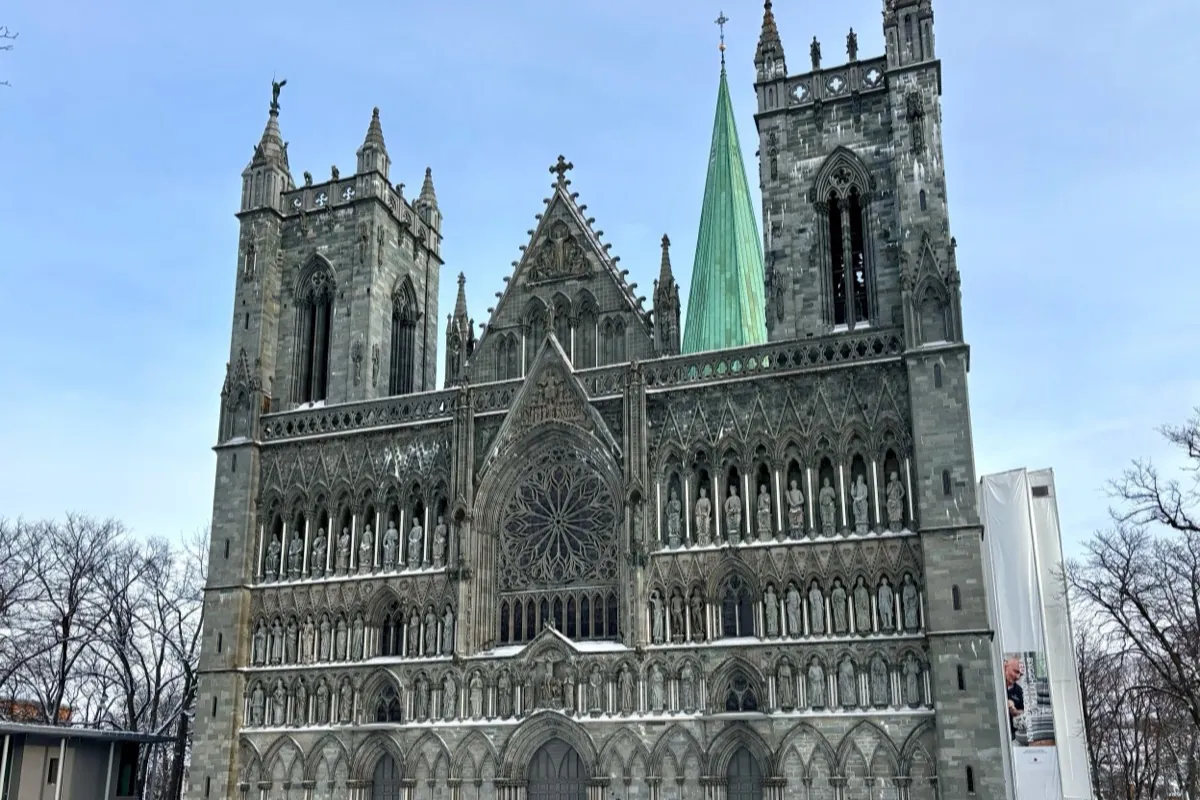
> The Gothic west front of Nidaros Cathedral in Trondheim, goal of the Saint Olav Ways. Warning: Undefined variable $lightbox_attrs in /home/eternalr/public_html/wp-content/themes/bricks-child-two/templates/route-detail-v1.php on line 119
span>

Route facts · At a glance

The route at a glance.

The Saint Olav Ways are a network. This page uses the Oslo-to-Trondheim and Selanger-to-Trondheim corridors to orient the tradition without flattening every variant into one route.

Route type Historic northern pilgrim network Revived and waymarked
Destination Nidaros Cathedral Trondheim, Norway
Associated saint St. Olav Olav Haraldsson, king and martyr
Countries / regions Norway · Sweden Gudbrandsdal, Dovrefjell, Trondelag, Jamtland
Gudbrandsdalsleden Oslo to Trondheim Officially listed at 643 km and 32 days
St. Olavsleden Selanger to Trondheim Officially listed at 580 km and about 30 days
Difficulty Moderate to demanding Long northern distances, weather, mountain plateau, rural stages
Waymarking Official pilgrim paths Use current maps and regional pilgrim centers
Main season Summer Snow and closed accommodation affect shoulder seasons

01 · Route overview

Many northern paths gather at Nidaros.

Representative route corridor, not every recognized St. Olav variant.

Select an approach or stop to trace it.

The approaches

Gudbrandsdalsleden from Oslo
St. Olavsleden from Selanger

Sacred stops on the way

  1. Oslo
  2. Hamar
  3. Dovrefjell
  4. Stiklestad
  5. Nidaros Cathedral Destination

Regions crossed: Oslo and Lake Mjosa · Gudbrandsdal · Dovrefjell · Trondelag · Jamtland and the Swedish approach · Trondheim

02 · The walk in practice · Time, terrain, and difficulty

A northern long-distance pilgrimage shaped by weather, distance, and arrival at Nidaros.

The main official corridors can be walked end to end, but shorter sections are normal and often wiser for first-time pilgrims.

Overall difficulty Moderate to demanding Weather, distance, and rural logistics
Daily range Often around 20 km Official stage plans vary
Walked in sections Yes Many start from shorter access points
Arrival focus Nidaros Cathedral The medieval shrine destination of St. Olav

Difficulty by route

Gudbrandsdalsleden Moderate to demanding
643 km · officially 32 days

The main Oslo-to-Trondheim way, through Lake Mjosa country, Gudbrandsdal, Dovrefjell, and Trondelag.

St. Olavsleden Moderate
580 km · about 30 days

A coast-to-coast route from Selanger through Sweden and Norway, entering the Stiklestad memory before Trondheim.

Shorter St. Olav sections Easy to moderate
A few days to a week

Official route suggestions and regional pilgrim centers support shorter walks.

Terrain

Forests, farm country, valleys, towns, roads, wetland sections, mountain plateau, and the final approach into Trondheim.

Elevation

Gudbrandsdalsleden crosses Dovrefjell; snow and mountain weather make season choice important.

Waymarking

Official St. Olav paths are marked, with digital maps and regional pilgrim centers supporting planning.

The map is representative. The Saint Olav network includes more recognized paths than are drawn here.

Begin this route

Begin by choosing the northern corridor.

The St. Olav Ways ask for season-aware planning. Choose the corridor, then verify stages and lodging before walking.

Best first section

Gudbrandsdalsleden toward Trondheim, especially a manageable section with regional pilgrim support.

Best one-week version

A selected Gudbrandsdalsleden or St. Olavsleden section near pilgrim centers.

Best final approach

The last approach into Trondheim and Nidaros Cathedral.

Best for limited time

Choose a shorter officially supported section rather than improvising remote stages.

When to plan carefully

Plan carefully outside the main summer season, around Dovrefjell, and wherever accommodation is sparse.

Verify before walking

Verify season, snow, accommodation, maps, and local pilgrim-center guidance with Pilegrimsleden.

Check official route source

Longer pilgrimage

Gudbrandsdalsleden to Trondheim

The main Oslo-to-Trondheim corridor through lake country, valley, mountain plateau, and cathedral arrival.

Distance
Approx. 643 km end to end
Typical
Officially about 32 days
Difficulty
Moderate to demanding
Sacred focus
St. Olav and Nidaros

Verify official stages and season.

Limited time

Final approach to Nidaros

A limited-time way to keep the pilgrimage focused on arrival at the cathedral.

Distance
Varies by chosen start
Typical
Several days to one week+
Difficulty
Moderate
Sacred focus
Cathedral arrival

Check current local stages and lodging.

Quieter road

St. Olavsleden section

A coast-to-coast route from Sweden into Norway for pilgrims ready for a quieter northern road.

Distance
Approx. 580 km end to end
Typical
About 30 days end to end
Difficulty
Moderate
Sacred focus
Stiklestad and Nidaros

Verify official maps, lodging, and border-region guidance.

03 · Historical context

A medieval northern pilgrimage tradition revived around the shrine memory of St. Olav at Nidaros.

The Saint Olav Ways lead toward Nidaros Cathedral in Trondheim, the northern medieval destination associated with St. Olav. In Catholic memory, Olav Haraldsson is remembered as king, martyr, and a decisive figure in Norway's Christian history.

The old pilgrimage to Nidaros was disrupted by the Reformation and later revived through marked pilgrim paths, regional centers, and renewed public attention to the medieval roads. The cathedral is now a Lutheran cathedral, but the medieval shrine memory still gives the pilgrimage its shape.

This is not one single path. Gudbrandsdalsleden, St. Olavsleden, coastal and regional ways, and other marked routes gather toward Trondheim. The pilgrim should read the map as convergence, not as a claim that every variant is rendered.

04 · Why this route matters

Why Saint Olav Ways matters.

A pilgrimage to the North, where distance, weather, and cathedral memory gather around St. Olav.

01

Northern Christendom has a road

The Saint Olav Ways keep alive a pilgrimage geography often left out of warmer Mediterranean Catholic imagination.

02

St. Olav gives the road its center

The routes are not generic Nordic hiking trails. They lead toward the memory of the king and martyr associated with Nidaros.

03

The landscape teaches patience

Forest, valley, plateau, rain, summer light, and long rural distances make this a road of discipline rather than spectacle.

04

Arrival is architectural and historical

Nidaros Cathedral gathers medieval craft, royal memory, liturgical continuity, and the tradition of pilgrimage into one final approach.

05 · The ways within the route · Several established routes

The ways within the route.

The St. Olav tradition is a network. These two official corridors are enough to orient the page without pretending to cover every recognized path.

Gudbrandsdalsleden

Oslo to Trondheim

Guide available

The main route through Lake Mjosa country, Gudbrandsdal, Dovrefjell, and the final descent toward Trondheim.

Distance 643 km
Typical Officially 32 days
Difficulty Moderate to demanding
Terrain Valleys, forests, mountain plateau

St. Olavsleden

Selanger to Trondheim

Guide available

A coast-to-coast way from Sweden into Norway, passing through Stiklestad before the final approach.

Distance 580 km
Typical About 30 days
Difficulty Moderate
Terrain Lakes, forest, road sections, rural landscapes

Other St. Olav paths

Coastal and regional starts

Guide available

Additional recognized ways also gather toward Trondheim, each requiring its own official map and planning notes.

Distance Varies by path
Typical Varies by section
Difficulty Moderate
Terrain Coast, valleys, roads, rural paths

A future guide can treat each official St. Olav path separately. This page is the network overview.

06 · Sacred stops along the way · Churches, shrines, and holy places

Selected sacred stops.

Selected stops and sacred-historical anchors on the representative corridors.

Pilgrim start

Oslo

Norway

The main Gudbrandsdalsleden corridor begins in Oslo and moves north toward Lake Mjosa and Gudbrandsdal.

Gudbrandsdalsleden start

Historic lake country

Hamar and Lake Mjosa

Norway

The route follows the settled lake landscape before the valleys and higher country begin.

Cultural landscape

Mountain plateau

Dovrefjell

Norway

The mountain crossing is one of the decisive practical and symbolic thresholds on the Oslo-to-Trondheim way.

Mountain crossing

Historical battlefield and church

Stiklestad

Trondelag, Norway

Associated with Olav Haraldsson's death in 1030 and central to the memory that shaped devotion to St. Olav.

St. Olav memory
Destination shrine

Cathedral · pilgrimage destination

Nidaros Cathedral

Trondheim, Norway

The northern destination of the pilgrimage, traditionally associated with St. Olav and the medieval shrine of Nidaros.

Pilgrim destination

07 · Associated saints · Saints connected to the route

Saints connected to the route.

The route is centered on the memory of St. Olav.

St. Olav

King and martyr · route saint · Feast 29 July

The ways lead toward Nidaros and the memory of Olav Haraldsson, whose death at Stiklestad and later veneration shaped medieval Norwegian pilgrimage.

Primary route saint

A full saint page for St. Olav is not yet part of the public rich-saint set; this route keeps the connection as route context rather than forcing an unfinished page.

08 · How to walk it · Practical notes

How to walk it.

Choose the corridor first

Gudbrandsdalsleden and St. Olavsleden are different pilgrimages. Pick the landscape and logistics that fit the time you have.

Respect the season

Official guidance emphasizes summer walking, especially around Dovrefjell and other areas affected by snow and meltwater.

Use regional pilgrim centers

Local centers are part of the practical infrastructure and can help with conditions, accommodation, and route choices.

Plan lodging carefully

Accommodation can close outside season. Rural stretches require more forethought than major urban pilgrimage routes.

Arrive slowly at Nidaros

The cathedral is the point of convergence. Let the final walk into Trondheim have space.

Pilegrimsleden and Norwegian regional pilgrim centers publish current maps, stage notes, accommodation, and seasonal guidance.

Route reality

A northern network where season matters.

Eternal Roam provides sacred context and planning orientation, not turn-by-turn trail navigation.

Historic basis

Medieval pilgrimage memory associated with St. Olav, Stiklestad, and Nidaros.

Modern waymarking

Official pilgrim paths and regional centers support the modern network.

Infrastructure

Requires planning. Accommodation, weather, distance, and mountain conditions can define the route.

What ER provides

Network orientation, representative corridors, selected sacred-historical anchors, and route-saint context.

Before walking

Before walking, verify season, snow, accommodation, local stages, maps, and official guidance.

Check official route source Last reviewed: 2026-07-05

09 · Approaching the route · Prayer and intention

Approaching the route.

A northern pilgrimage asks for patience, weather sense, and a quiet fidelity.

Let the landscape be spare

The road does not need constant explanation. Forest, rain, farms, and long light can carry prayer without ornament.

Walk with the older Church in mind

Nidaros remembers a medieval Catholic pilgrimage before the later confessional history of Norway changed the cathedral's life.

Treat difficulty plainly

Weather, distance, and closed lodging are not interruptions to pilgrimage. They are part of its discipline.

Approach the cathedral reverently

The old pilgrimage instinct was to slow down near the destination. Keep that rhythm if you can.

10 · Sources and route notes · History, revival, and practical details

Historical and practical notes.

Revived medieval route Saint-associated route Official source available

Historically documented

The Nidaros pilgrimage belongs to medieval northern Christian memory and the veneration of St. Olav.

Revived and modern

The present St. Olav paths are officially marked and supported by pilgrim centers, digital maps, and route planning resources.

Details still being verified

Season, snow, accommodation, and exact stage details should be checked against Pilegrimsleden before walking.

Official route source Pilegrimsleden / National Pilgrim Center
Primary corridor Gudbrandsdalsleden, Oslo to Trondheim
Representative corridor St. Olavsleden, Selanger to Trondheim through Sweden and Norway

My Journey

Save this route and its sacred stops.

Save Saint Olav Ways to My Journey, then gather the churches, shrines, saints, and sacred stops connected to it. My Journey keeps those places together while you plan.

Open My Journey

Image credits