The Atlas Destinations Pilgrim Roads Ignatian Way

Saint-associated route
Saint-associated Modern waymarked Long-distance

Ignatian Way

The Camino Ignaciano, following the 1522 conversion journey of St. Ignatius of Loyola.

Open My Journey
Spanish name
Camino Ignaciano The Ignatian Way
Historic journey
Loyola to Manresa Ignatius in 1522
Associated saint
St. Ignatius of Loyola Conversion, discernment, and the Exercises
Key thresholds
Montserrat and Manresa Vigil, surrender, prayer, and writing
Route reality
Modern commemorative route Representative corridor, not a GPX track
<
Warning: Undefined variable $lightbox_attrs in /home/eternalr/public_html/wp-content/themes/bricks-child-two/templates/route-detail-v1.php on line 117
span class="er-rd-media__lightbox
Warning: Undefined variable $lightbox_attrs in /home/eternalr/public_html/wp-content/themes/bricks-child-two/templates/route-detail-v1.php on line 117
"
Warning: Undefined variable $lightbox_attrs in /home/eternalr/public_html/wp-content/themes/bricks-child-two/templates/route-detail-v1.php on line 117
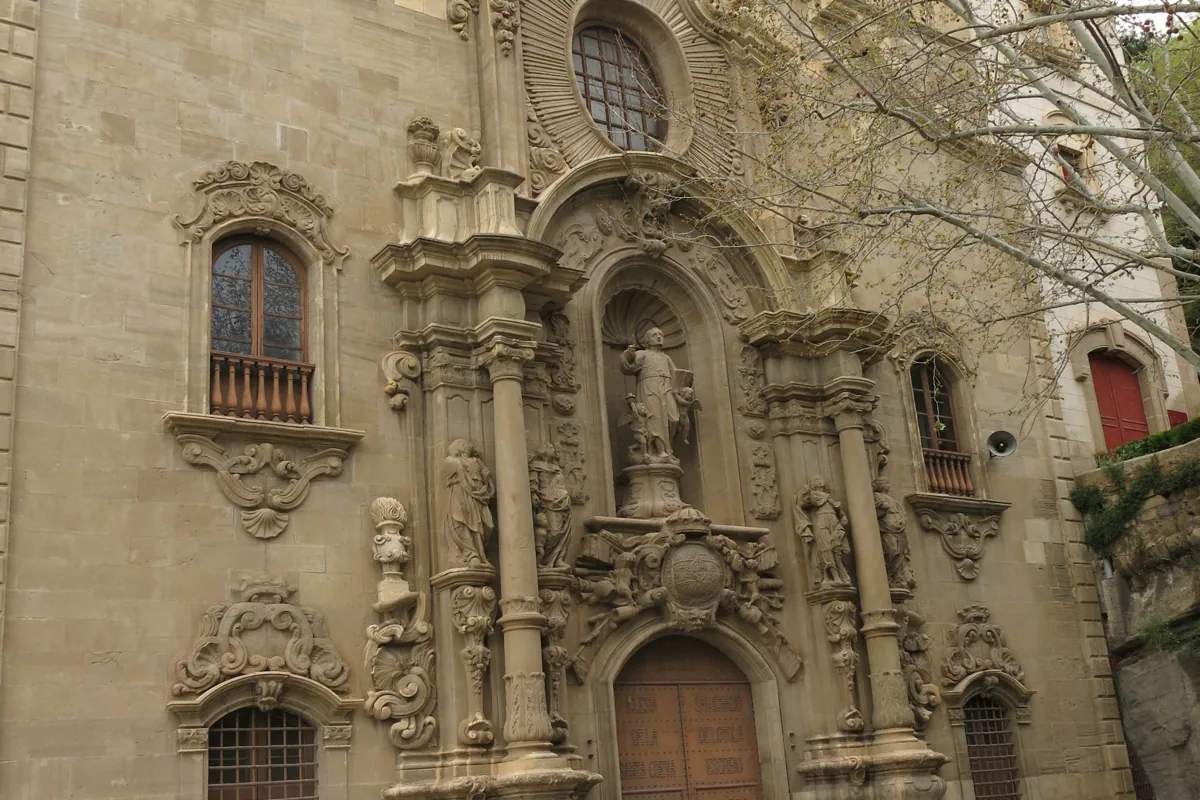
> The Baroque facade of the Cova de Sant Ignasi sanctuary at Manresa, with the statue of Saint Ignatius. Warning: Undefined variable $lightbox_attrs in /home/eternalr/public_html/wp-content/themes/bricks-child-two/templates/route-detail-v1.php on line 119
span>

Route facts · At a glance

The route at a glance.

The Ignatian Way is a distinct Ignatian pilgrimage, not a Camino de Santiago variant. It follows the conversion road of Ignatius toward Montserrat and Manresa.

Route type Saint-associated pilgrim route Modern Camino Ignaciano
Historical anchor Ignatius's 1522 journey Loyola toward Montserrat and Manresa
Start Loyola / Azpeitia Basque Country
Destination Manresa Cave of St. Ignatius and the roots of the Spiritual Exercises
Major threshold Montserrat Vigil and surrender before the Black Madonna
Countries / regions Spain Basque Country, Rioja, Aragon, Catalonia
Typical duration Often planned over several weeks Official stage material should be checked
Difficulty Moderate to demanding Long inland stages, heat, exposed ground, lodging gaps
Waymarking Official modern route Use current maps and stage notes

01 · Route overview

A conversion road toward Montserrat and Manresa.

Representative pilgrimage corridor, not a navigation map.

Select an approach or stop to trace it.

The road

Camino Ignaciano from Loyola

Sacred stops on the way

  1. Loyola
  2. Arantzazu
  3. Logrono
  4. Zaragoza
  5. Montserrat
  6. Manresa Destination

Regions crossed: Basque Country · Rioja · Ebro corridor · Aragon · Catalonia · Montserrat and Manresa

02 · The walk in practice · Time, terrain, and difficulty

A long inland Spanish pilgrimage shaped by conversion rather than arrival at an apostolic tomb.

The route is usually planned by official stages. Heat, exposed ground, and lodging require more attention than the major Camino de Santiago corridors.

Overall difficulty Moderate to demanding Long stages, heat, exposed inland country
Daily range Stage-based Use official maps and current accommodation notes
Walked in sections Yes Montserrat and Manresa can shape a shorter final pilgrimage
Arrival focus Manresa The cave and the early formation of Ignatian spirituality

Difficulty by route

Loyola to Rioja Moderate to demanding
Early mountain and inland stages

The road leaves Ignatius's homeland and passes through the Basque interior toward the Ebro corridor.

Rioja and Aragon corridor Moderate
Long inland passage

The road opens into wider, drier country, where planning and season matter.

Montserrat to Manresa Moderate
Final spiritual threshold

The route reaches the Marian vigil of Montserrat before the descent into Manresa.

Terrain

Mountain foothills, inland tracks, towns, river corridor, exposed plains, Catalan hills, and the final approach to Manresa.

Elevation

The early Basque stages and the Montserrat area are the most legible thresholds. Heat and exposure may matter as much as ascent.

Waymarking

The modern Camino Ignaciano is mapped and staged, with official route materials and daily maps available.

The route line is representative. Pilgrims should use official daily maps and current lodging guidance before walking.

Begin this route

Begin where discernment becomes geography.

The Ignatian Way can be walked as a full staged route or as a focused final pilgrimage around Montserrat and Manresa.

Best first section

Montserrat to Manresa for limited time, or Loyola to Manresa for the full conversion road.

Best one-week version

A focused final section around Montserrat and Manresa, with time for prayer at both places.

Best final approach

Montserrat to Manresa.

Best for limited time

Do not rush the whole route. Walk the final threshold and give Manresa time.

When to plan carefully

Plan carefully in heat, on exposed inland stages, and where lodging depends on official stage resources.

Verify before walking

Verify daily maps, lodging, credential, water, season, and official route notes before walking.

Check official route source

Limited time

Montserrat to Manresa

The focused final threshold from Marian surrender to the cave and city of Ignatian formation.

Distance
Final stages
Typical
Short section
Difficulty
Moderate
Sacred focus
Vigil, surrender, and Ignatian prayer

Use official maps for current route details.

Longer discernment road

Loyola to Manresa

The full Camino Ignaciano, following the saint's conversion journey across northern Spain.

Distance
Approx. 650 km end to end
Typical
Often around four weeks
Difficulty
Moderate to demanding
Sacred focus
Conversion and discernment

Verify daily stages and lodging with official route resources.

Staged return pilgrimage

Basque, Rioja, Aragon, Catalonia stages

A staged way to approach the route by region when the whole road must be divided over time.

Distance
Varies by section
Typical
Several days to weeks
Difficulty
Moderate to demanding
Sacred focus
The gradual conversion road

Use official stage divisions rather than improvising regional cuts.

03 · Historical context

A modern pilgrim route built around the 1522 journey that marked Ignatius of Loyola's conversion.

The Ignatian Way follows the memory of Ignatius after injury, convalescence, and conversion began to reorder his life. In 1522 he left Loyola and moved toward Montserrat and Manresa, no longer the courtly soldier he had imagined himself to be.

This is not a road to Santiago. Its direction is Ignatian: from Loyola through Spain toward the vigil at Montserrat, then to Manresa, where prayer, penance, and interior struggle helped form the roots of the Spiritual Exercises.

The present Camino Ignaciano is a modern re-creation and waymarked pilgrim route. Its historical force comes from the saint's journey and from the spiritual geography of surrender, discernment, and formation.

04 · Why this route matters

Why Ignatian Way matters.

A road where conversion becomes geography: leaving Loyola, crossing Spain, surrendering at Montserrat, and learning prayer at Manresa.

01

It is a conversion road

The Ignatian Way is ordered by a life being remade. The outer road matters because it gives shape to the interior turning of Ignatius.

02

Montserrat is a threshold

Before the Black Madonna at Montserrat, Ignatius's old ambitions are remembered as being laid down. The road should slow there.

03

Manresa gives the route its depth

The cave at Manresa is not only an ending. It is where prayer, discernment, and the beginnings of the Spiritual Exercises come into focus.

04

Discernment is not abstraction

The route lets Ignatian language recover physical weight: fatigue, silence, decision, poverty, and the discipline of one more day.

05 · The ways within the route · Several established routes

Walked in major sections.

The Camino Ignaciano is usually treated as one route in staged sections. Eternal Roam names the spiritual thresholds rather than publishing exact daily logistics here.

Loyola and the Basque beginning

Loyola / Azpeitia

Guide available

The road begins in Ignatius's homeland, where injury and convalescence had already begun to turn him toward God.

Distance Several stages
Typical Stage-based
Difficulty Moderate to demanding
Terrain Hills, towns, inland roads

Rioja, Ebro, and Aragon

Logrono toward Zaragoza

Guide available

The middle route opens into long inland country, where repetition, heat, and exposure become part of the discipline.

Distance Many stages
Typical Several days to weeks
Difficulty Moderate
Terrain River corridor, plains, towns

Montserrat to Manresa

Montserrat toward Manresa

Guide available

The final section carries the route from Marian surrender into the city where Ignatian prayer deepened.

Distance Final stages
Typical Short section
Difficulty Moderate
Terrain Montserrat hills, Catalan towns, city approach

Official route materials provide daily maps and stage details. This page keeps the public guide at the pilgrimage-corridor level.

06 · Sacred stops along the way · Churches, shrines, and holy places

Selected sacred stops.

Selected spiritual and geographic anchors, not every stage town.

Birthplace and sanctuary

Loyola

Azpeitia, Basque Country

The beginning of the route and the place where Ignatius's earlier life and conversion memory are physically gathered.

Ignatian beginning

Marian sanctuary region

Arantzazu

Basque Country

A Basque sacred threshold on the early route, useful for reading the road as prayer rather than simple transit.

Marian threshold

Rioja city

Logrono

La Rioja, Spain

A major city in the Ebro corridor, marking the movement out of the Basque beginning into broader Spain.

Inland corridor

Cathedral and Marian city

Zaragoza

Aragon, Spain

A major city on the route, close to the Marian devotion of El Pilar and the long eastward passage.

Aragon threshold

Marian monastery and shrine

Montserrat

Catalonia, Spain

A decisive Ignatian threshold, associated with his vigil and surrender before the Black Madonna.

Vigil and surrender
Destination shrine

Ignatian destination

Manresa

Catalonia, Spain

The route arrives at the city and cave associated with Ignatius's months of prayer and the roots of the Spiritual Exercises.

Ignatian formation

07 · Associated saints · Saints connected to the route

Saints connected to the route.

This is a route around one saint's conversion, with later Jesuit memory flowing from it.

St. Ignatius of Loyola

Founder · route saint · Feast 31 July

The route follows the conversion journey that carried Ignatius from Loyola toward Montserrat and Manresa.

Primary route saint Open saint

This page keeps the route centered on Ignatius rather than turning it into a general Jesuit history.

08 · How to walk it · Practical notes

How to walk it.

Do not confuse it with Santiago

The Camino Ignaciano is its own route, with its own destination and spiritual grammar.

Use the official daily maps

Official route material gives the day-by-day maps and stage details. This page is an editorial overview.

Respect heat and distance

The inland sections can be exposed. Season, water, and lodging need careful planning.

Give time to Montserrat and Manresa

The route's deepest meaning gathers at these places. Do not make them mere endpoints on a schedule.

Pray with discernment, not efficiency

Ignatian pilgrimage is not about covering ground quickly. It asks what desire is being purified on the road.

The official Camino Ignaciano publishes route, preparation, credential, lodging, and stage-map resources.

Route reality

A modern route following a historic conversion journey.

Eternal Roam provides sacred context and planning orientation, not turn-by-turn trail navigation.

Historic basis

Anchored in Ignatius's 1522 journey from Loyola toward Montserrat and Manresa.

Modern waymarking

A modern Camino Ignaciano with official staged route material.

Infrastructure

Moderate, but heat, exposed inland stages, water, and lodging require care.

What ER provides

Spiritual thresholds, representative route corridor, selected stops, and Ignatian route context.

Before walking

Before walking, verify daily maps, lodging, credential, weather, water, and official route guidance.

Check official route source Last reviewed: 2026-07-05

09 · Approaching the route · Prayer and intention

Approaching the route.

The Ignatian Way is a road of decision, surrender, and attention to the movements of grace.

Begin with the wound

Ignatius did not begin as a finished saint. Let the road remember injury, ambition, and mercy.

Let Montserrat interrupt you

The vigil is a threshold. Carry less of the old self beyond it.

Listen for desire

Discernment begins when the pilgrim notices what pulls the heart and what leaves it empty.

Arrive at Manresa slowly

The cave is not a monument to productivity. It is a place where prayer ripened through struggle.

10 · Sources and route notes · History, revival, and practical details

Historical and practical notes.

Saint-associated route Modern waymarked route Official source available

Historically documented

The route is anchored in Ignatius's 1522 journey from Loyola toward Montserrat and Manresa.

Revived and modern

The present Camino Ignaciano is a modern re-created and staged pilgrim route supported by official route material.

Details still being verified

Daily maps, lodging, season, and stage details should be checked against the official Camino Ignaciano resources before walking.

Official route source Camino Ignaciano
Route frame Loyola / Azpeitia to Manresa, through Montserrat
Editorial notes Distinct Ignatian route, not a Camino de Santiago variant

My Journey

Save this route and its sacred stops.

Save Ignatian Way to My Journey, then gather the churches, shrines, saints, and sacred stops connected to it. My Journey keeps those places together while you plan.

Open My Journey

Image credits