03 · Historical context
Modern in route form, Franciscan in memory, and rooted in places where the saint prayed, walked, and returned.
The Assisi Way follows the Franciscan landscape rather than one ancient road. Its force comes from place: La Verna, Gubbio, Assisi, the Porziuncola, San Damiano, the Umbrian valley, and the ways that lead onward toward Rome.
Francis is not a decorative theme here. The route is built around places where his conversion, preaching, poverty, fraternity, and prayer become visible in stone, hills, chapels, and roads. Clare belongs to the same geography differently, through enclosure, fidelity, and the crucifix of San Damiano.
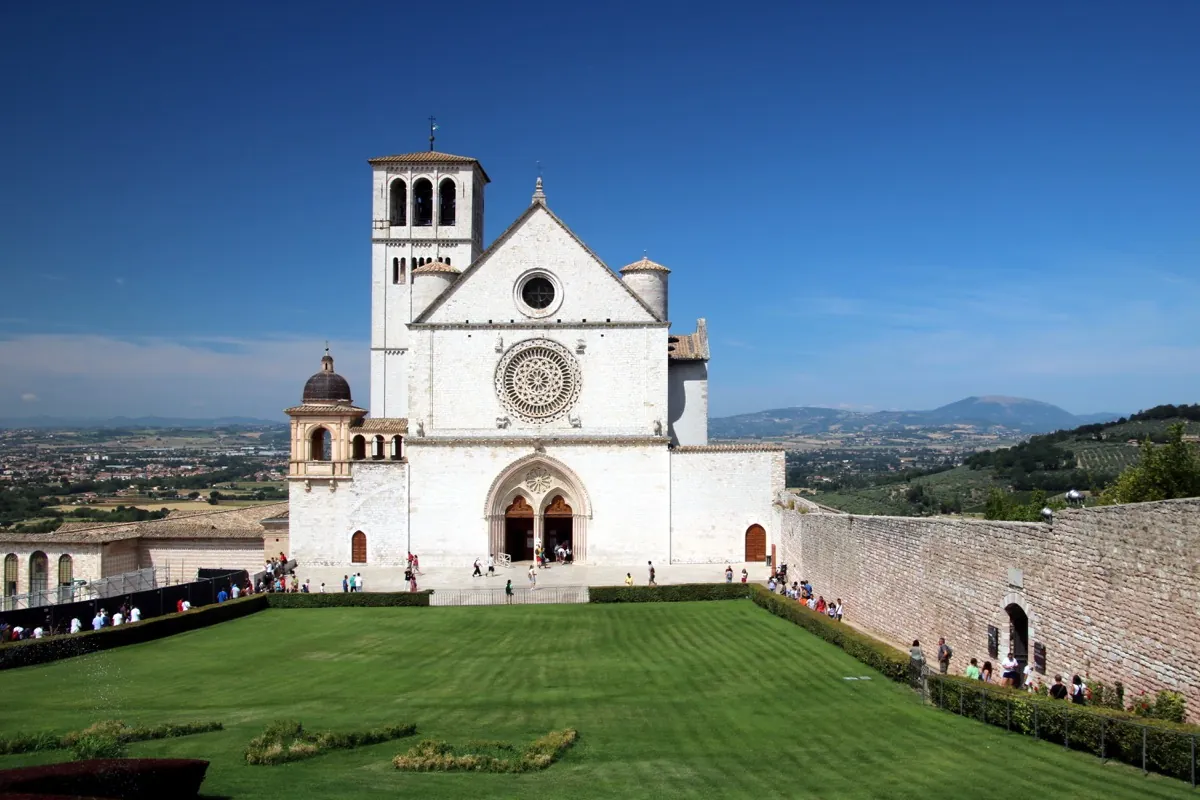
Assisi is therefore not only a waypoint. It is the spiritual hinge. The basilica, the tomb, the lower town, the Porziuncola in the plain, and San Damiano below the walls teach the route how to be read.

 Warning: Undefined variable $lightbox_attrs in /home/eternalr/public_html/wp-content/themes/bricks-child-two/templates/route-detail-v1.php on line 119