
Apostle · 1st century · Rome
St. Paul the Apostle
A Pharisee turned apostle whose letters shaped the faith and whose tomb still anchors one of Rome's great basilicas.
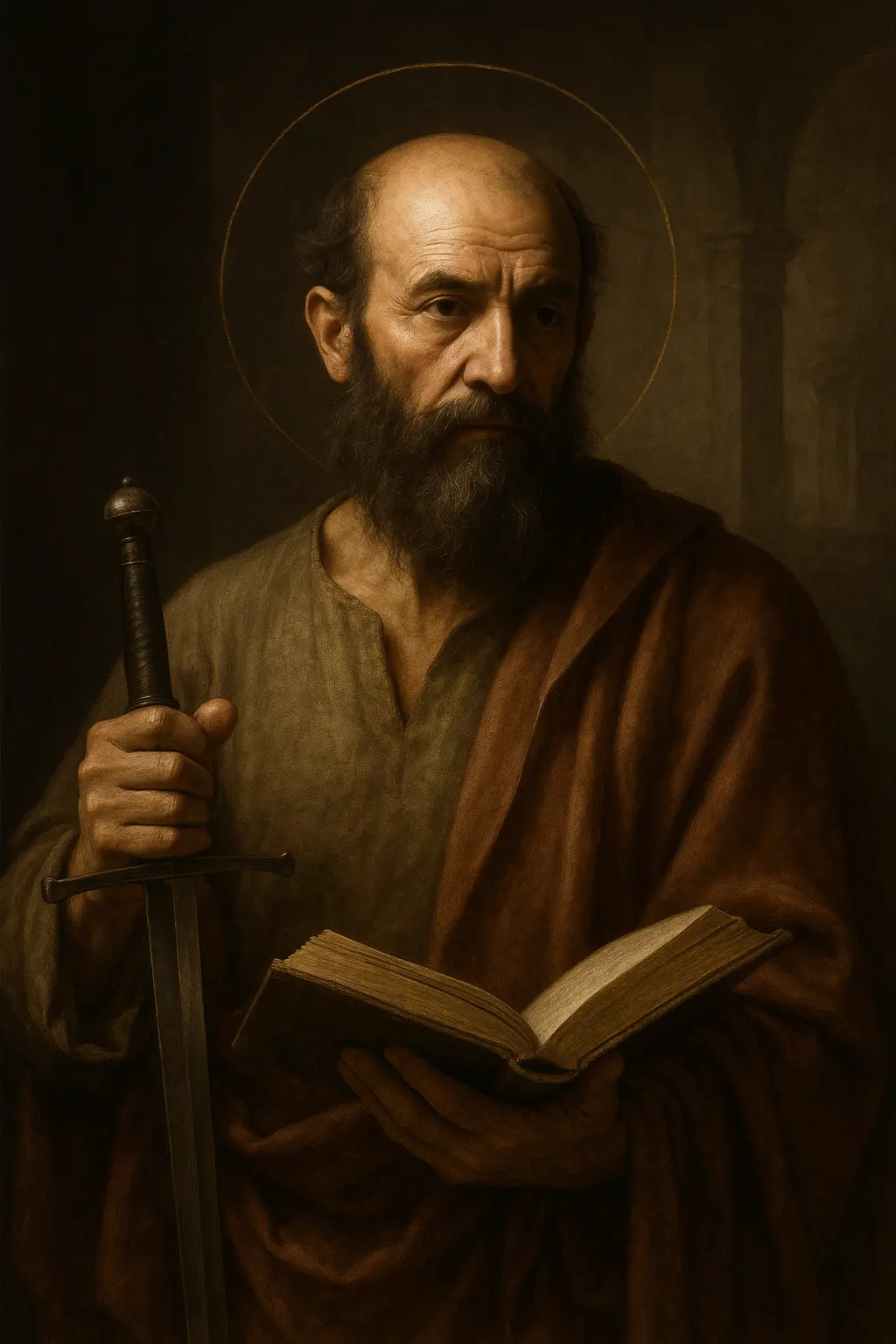
For to me, to live is Christ, and to die is gain.
Source: Philippians 1:21
The persecutor who became the apostle to the Gentiles, and a martyr at Rome
Paul began as Saul of Tarsus, a Pharisee zealous enough to hunt down the first Christians. On the road to Damascus that zeal was turned inside out, and the persecutor became the Church's most relentless missionary. His journeys carried the Gospel across the Roman Mediterranean, his letters became Scripture, and Rome received him at the last not only as a writer and apostle but as a martyr buried on the Ostian Way.
Saul was a Jew of the diaspora, born at Tarsus in Cilicia and raised a Pharisee. Acts remembers him as a Roman citizen formed in the Law, traditionally as a student of the rabbi Gamaliel in Jerusalem. He first appears in the New Testament not as a believer but as a persecutor, approving the stoning of the deacon Stephen and pursuing the followers of Jesus with conviction.
Near Damascus that conviction broke open. The risen Christ confronted him on the road, and the man who had set out to arrest Christians was baptized as one of them. Paul spent years in relative obscurity afterward, in Damascus and Arabia and his home region, before Barnabas drew him into the mission of the Church at Antioch, where the disciples were first called Christians.
From Antioch he set out on the journeys that defined his life. Across Cyprus, Asia Minor, Greece, and the islands of the Aegean he founded and corrected small Christian communities, and to those communities he wrote the letters that the Church still reads as Scripture: to the Romans, the Corinthians, the Galatians, the Philippians, and others. His argument for grace, his vision of the Church as one body, and his language of faith working through love reshaped Christian theology at its source.
His preaching also made enemies. Arrested in Jerusalem and held for years, Paul exercised his right as a Roman citizen and appealed to Caesar, and so was sent under guard to Rome, shipwrecked on Malta along the way. Tradition holds that he was martyred there during the persecution under Nero, beheaded as a citizen rather than crucified, and buried in a cemetery on the road to Ostia.
To follow Paul is to follow the roads. Rome venerates him at the basilica raised over his traditional tomb outside the ancient walls, where his memory is held with that of Peter as the two apostles of the city. Beyond Rome, his letters and his journeys opened the wider map of the early Church, from Antioch and Ephesus to Corinth and the sea.
Paul left the Church both a body of letters and a pattern of mission. Half the New Testament is traditionally ascribed to him, and the language of grace, justification, and the Body of Christ that runs through Christian worship is largely his. Pilgrims still meet him at Saint Paul Outside the Walls and along the routes his journeys first opened. Rome keeps his memory with Peter on June 29, the Solemnity of Saints Peter and Paul, and marks the Conversion of Saint Paul on January 25, the close of the Week of Prayer for Christian Unity.
A life, in years and approximate ages.
-
5 ADBirthBirth at TarsusSaul is born at Tarsus in Cilicia, a Jew of the diaspora and, according to Acts, a Roman citizen by birth.
-
34 ADAbout 30Zeal Against the ChurchFormed as a Pharisee in Jerusalem, Saul persecutes the first Christians and stands approving at the stoning of the deacon Stephen.
-
36 ADAbout 30Conversion on the Road to DamascusThe risen Christ confronts Saul on the road to Damascus. The persecutor is baptized and begins his life as a follower of Jesus.
-
40 ADAbout 35Damascus, Arabia, and AntiochAfter years in Damascus, Arabia, and his home region, Paul is drawn by Barnabas into the mission of the Church at Antioch, where the disciples are first called Christians.
-
46 ADAbout 41The First Missionary JourneyPaul and Barnabas set out from Antioch through Cyprus and the cities of Asia Minor, founding small Christian communities along the way.
-
49 ADAbout 44The Council of JerusalemThe apostles meet at Jerusalem and affirm that Gentile believers need not first take on the full observance of the Law, opening the mission Paul will carry westward.
-
50 ADAbout 50The Later Journeys and the LettersOn further journeys through Greece, Macedonia, and Ephesus, Paul founds and corrects communities and writes many of the letters that the Church keeps as Scripture.
-
57 ADAbout 52Arrest in JerusalemPaul is arrested in Jerusalem and held in custody at Caesarea. As a Roman citizen, he appeals to Caesar and is sent under guard toward Rome.
-
60 ADAbout 55Shipwreck and Arrival in RomeShipwrecked on Malta along the way, Paul reaches Rome and is held under guard, still preaching and writing during his Roman imprisonment.
-
67 ADAbout 60Martyrdom Under NeroTradition holds that Paul was martyred at Rome during the persecution under Nero, beheaded as a Roman citizen, and buried in a cemetery on the road to Ostia.
-
390After deathThe Basilica on the Ostian WayA great basilica rises over the Apostle's traditional tomb outside the walls, giving pilgrims a permanent place to pray at his grave. It remains one of the four papal basilicas of Rome.
Dates are approximate where the surviving record is traditional or incomplete.
3 places where this witness remains visible.
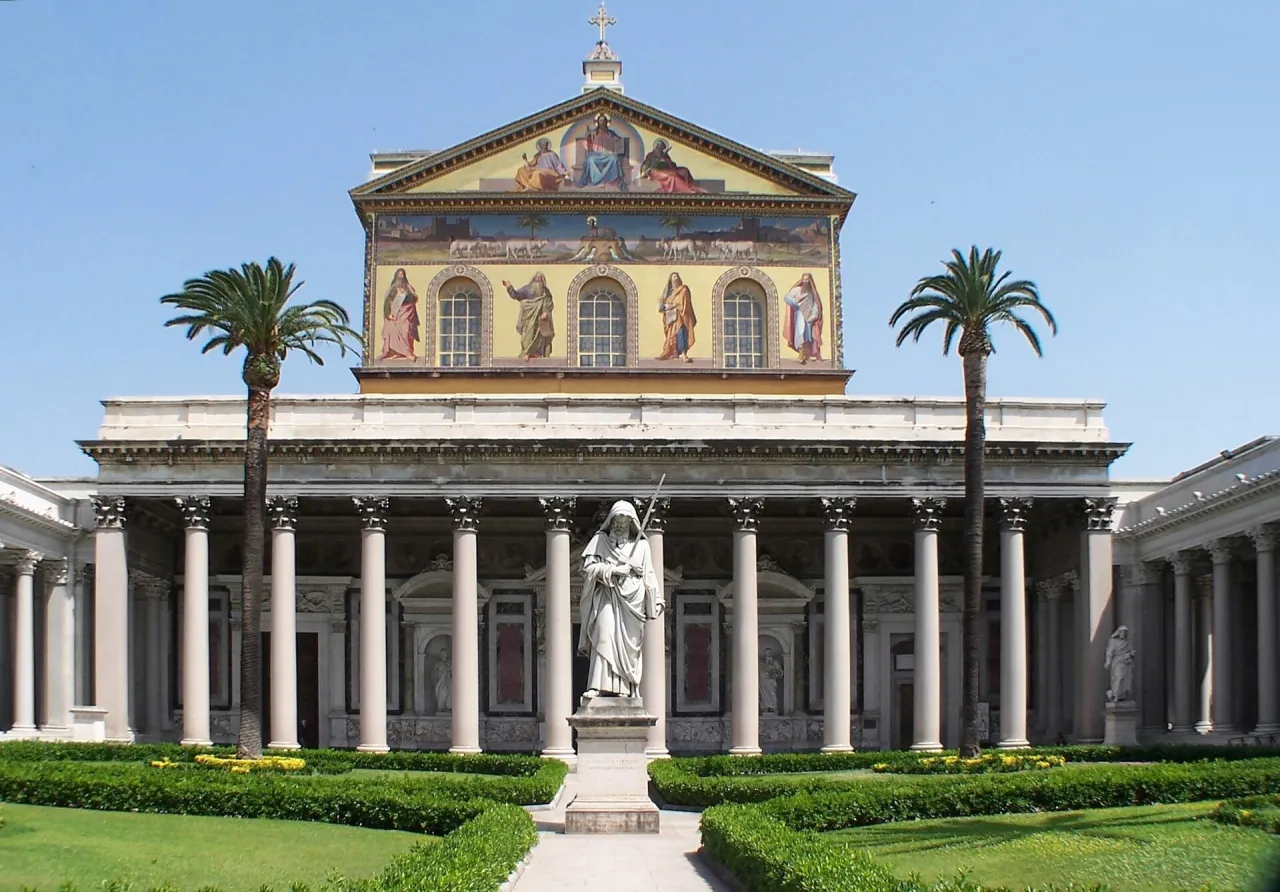
Basilica of St. Paul Outside the Walls
The essential Paul pilgrimage stop: a papal basilica on the Ostian Way raised over the place traditionally venerated as the Apostle's tomb.
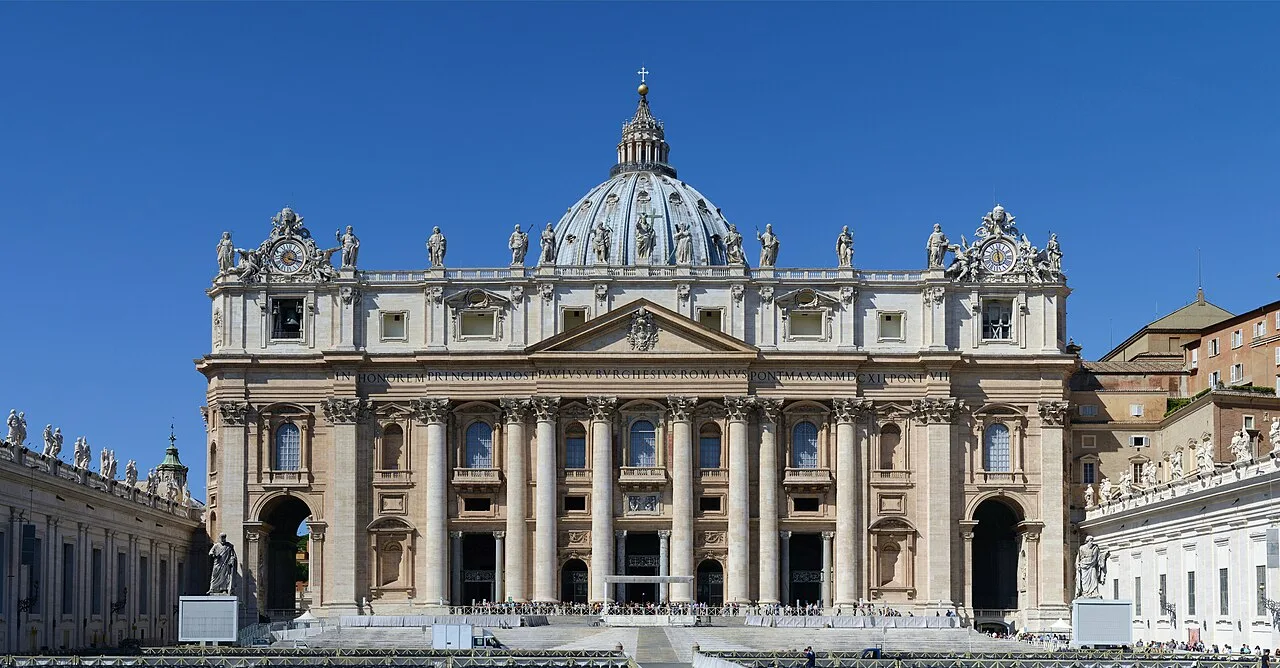
St. Peter's Basilica
The basilica over Peter's tomb completes the apostolic pairing Rome keeps between its two founding apostles, joined in the feast of June 29.
Basilica of St. John Lateran
Traditionally associated with the veneration of the heads of Peter and Paul together at the cathedral of Rome.
Where the body and relics are venerated.
Rome venerates Paul at the basilica raised over the place traditionally held as his burial on the Ostian Way. Beneath the papal altar a marble sarcophagus bears the ancient inscription PAULO APOSTOLO MART, "to Paul, apostle and martyr." An excavation of the sarcophagus completed in 2009 found bone fragments that the Holy See described as consistent with the long tradition. Eternal Roam presents this as an ancient and enduring apostolic tradition, not as a modern proof claim. A separate tradition venerates the heads of Peter and Paul together at the Basilica of St. John Lateran.
A principal relic site is named, with other fragments or reliquaries noted separately.
Basilica of St. Paul Outside the Walls
The essential Paul pilgrimage stop: a papal basilica on the Ostian Way raised over the place traditionally venerated as the Apostle's tomb.
- Tomb traditionally venerated as Saint Paul's burial place, beneath the papal altar
- The ancient sarcophagus inscribed PAULO APOSTOLO MART, visible at the confessio
- The 13th-century apse mosaic and the Series Pontificum papal portraits along the nave
Begin here. Pray at the confessio over the tomb before walking the long nave, and let the visit be slow. This is the quiet heart of Paul's Roman devotion.
St. Peter's Basilica
The basilica over Peter's tomb completes the apostolic pairing Rome keeps between its two founding apostles, joined in the feast of June 29.
- Tomb of Saint Peter beneath the high altar, the counterpart to Paul's tomb on the Ostian Way
- A traditional veneration of the heads of Peter and Paul together at St. John Lateran
Pair this with Saint Paul Outside the Walls to honor both apostles of Rome, each at his own resting place.
Saints connected to Paul the Apostle
-
Fellow apostle of Rome
Saint Peter the Apostle
The other apostle of Rome, joined with Paul in the city's memory and in the feast of June 29. -
Missionary companion
Saint Barnabas
The companion who drew Paul into the mission at Antioch and traveled with him on the first journey. -
Companion & evangelist
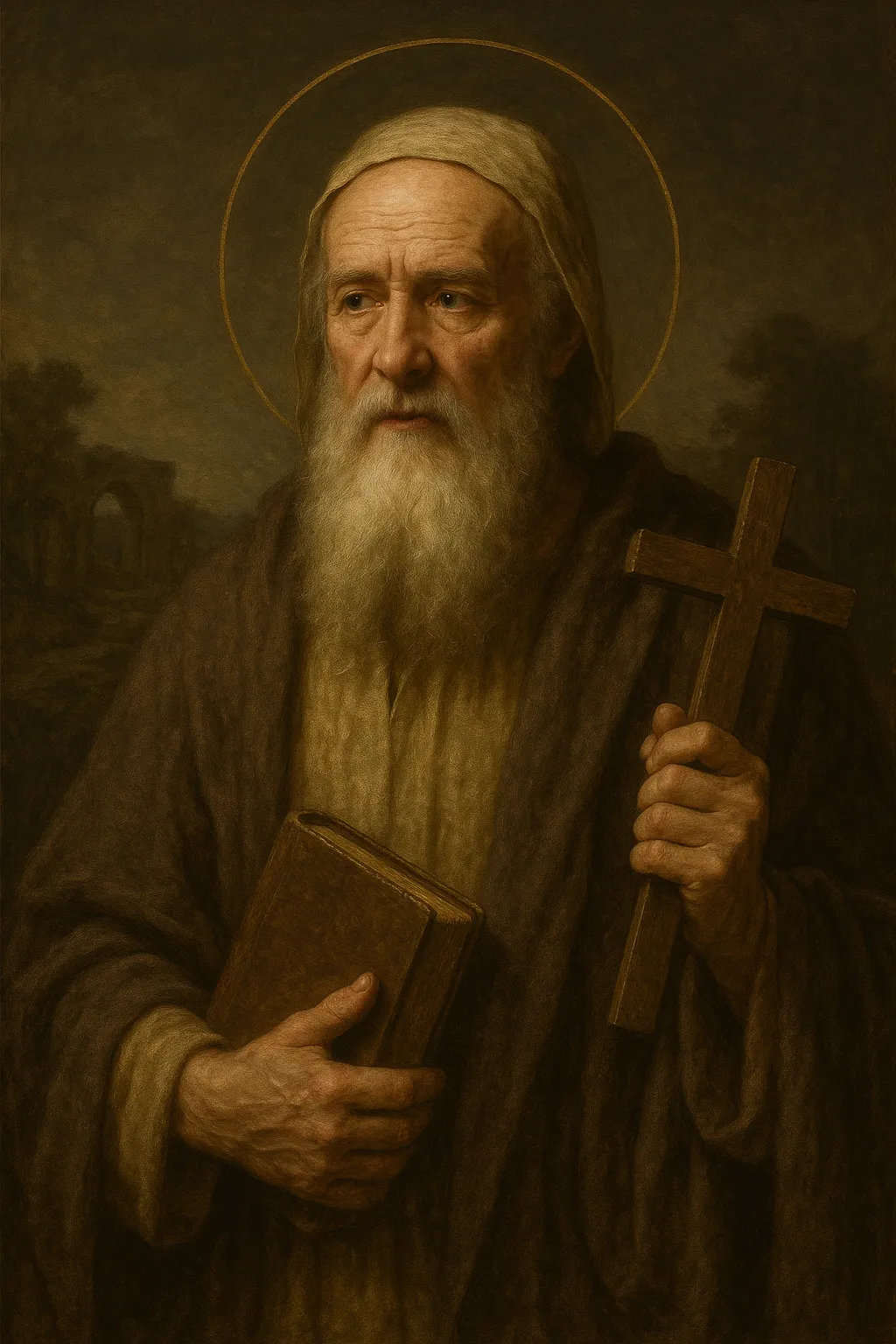
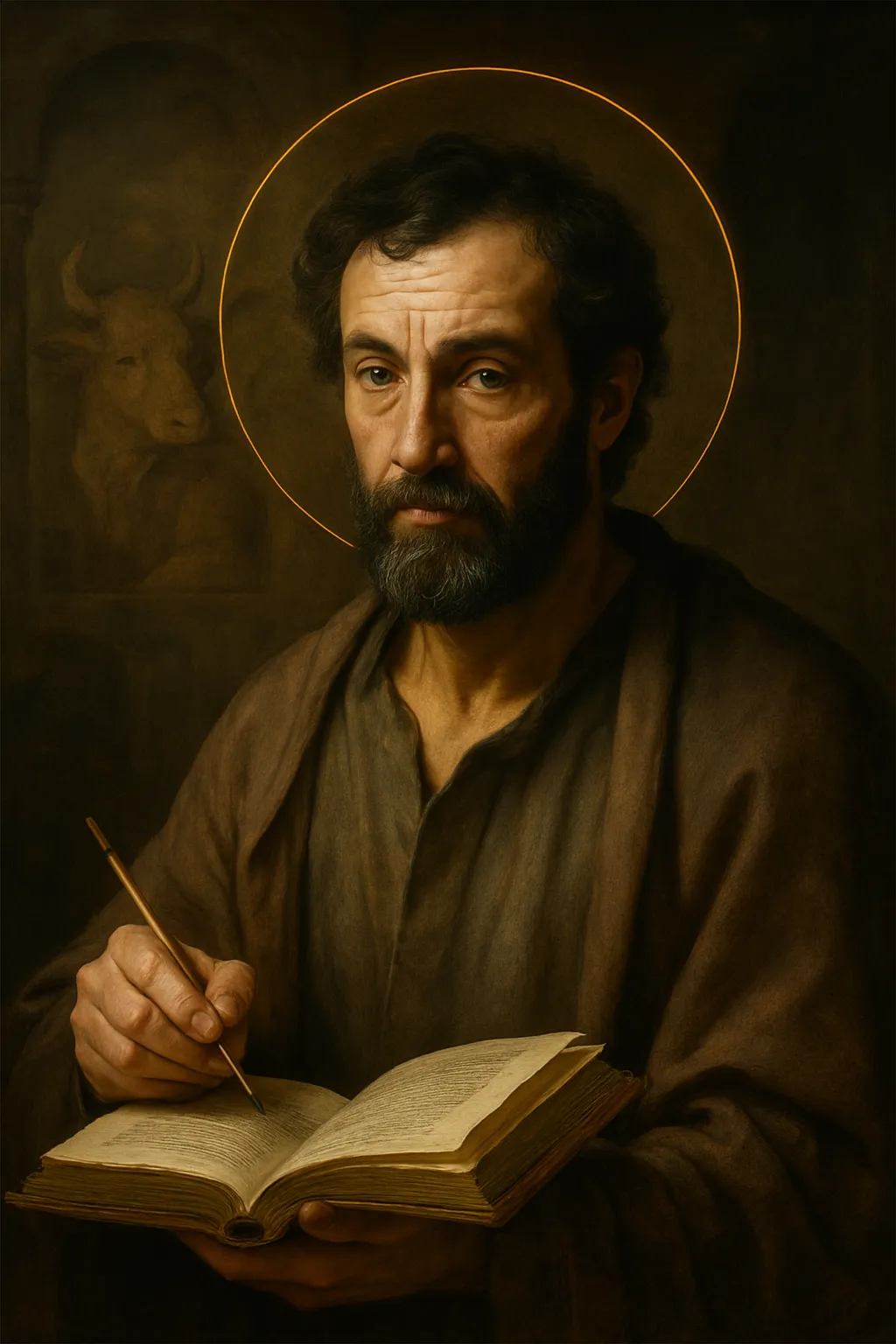
Saint Luke
The evangelist and physician who recorded much of Paul's mission in the Acts of the Apostles. -
Disciple & co-worker
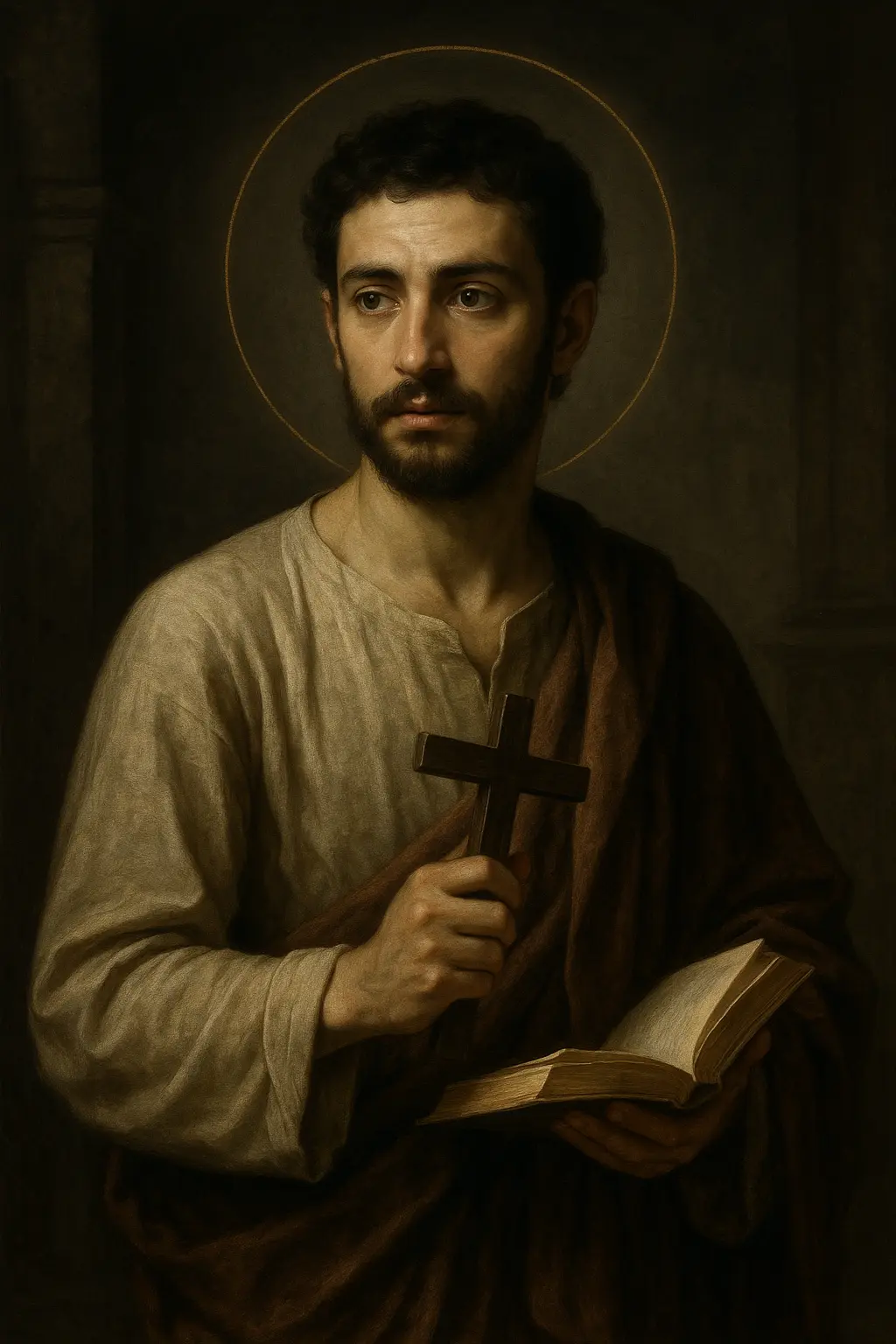
Saint Timothy
Paul's closest disciple and co-worker, addressed in two of the pastoral letters.
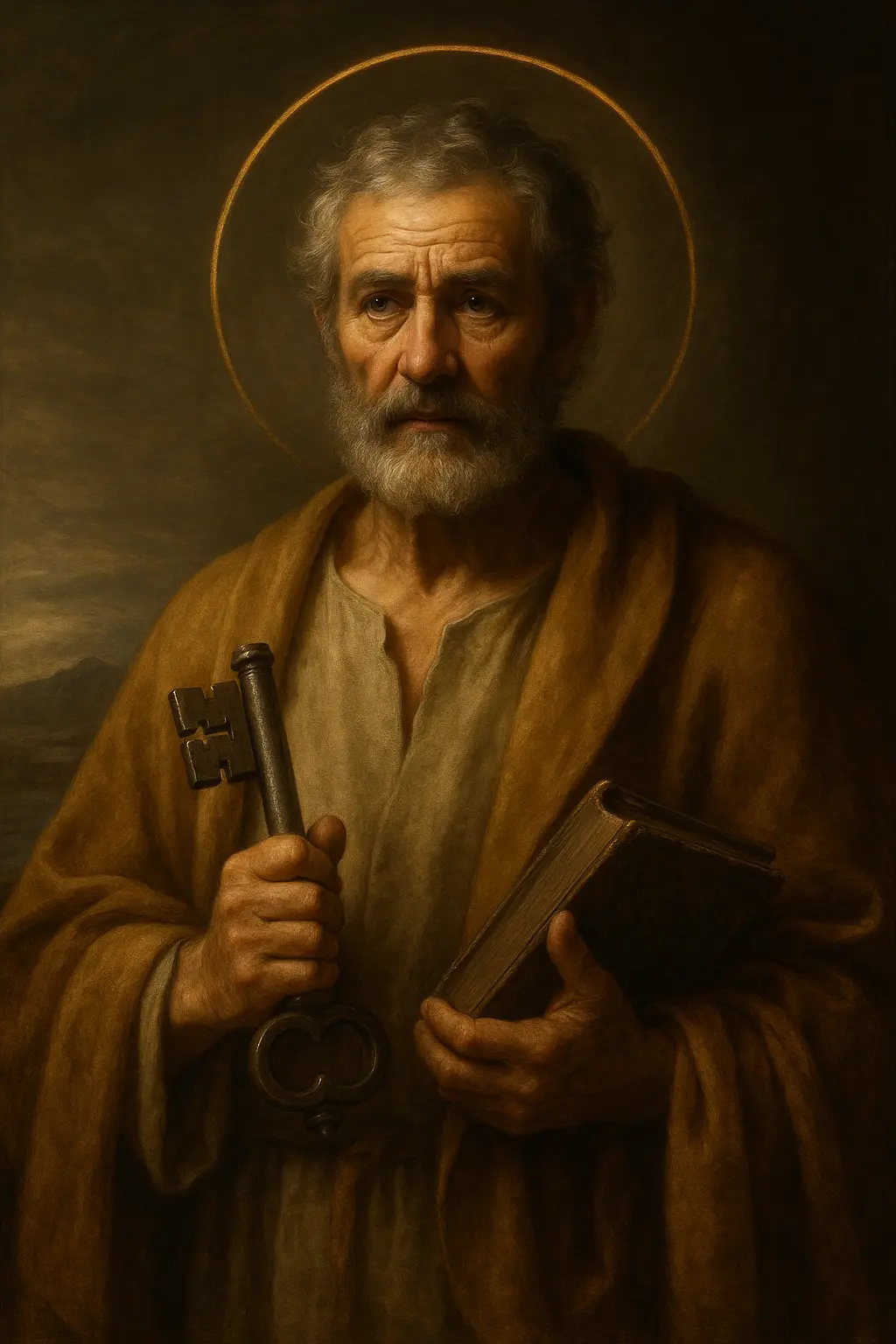
Kept on June 29.
Paul shares his principal feast, June 29, with Saint Peter as the Solemnity of Saints Peter and Paul, the two apostles Rome honors as its founders. A second observance, the Conversion of Saint Paul on January 25, closes the Week of Prayer for Christian Unity and is kept with particular solemnity at Saint Paul Outside the Walls.
June 29 is the great day to be in Rome for Paul, when the city keeps its two apostles together. For a quieter visit centered on Paul alone, January 25 at Saint Paul Outside the Walls marks his conversion and the close of the unity octave.
How Rome keeps the memory of Paul
Rome keeps Paul at the basilica on the Ostian Way, where the road once ran out from the city toward the place of his martyrdom. The Apostle who reached Rome as a prisoner is remembered here beside Peter, the two of them held together as the founders of the Roman Church.
-
City
Rome
The city of Paul's final imprisonment and martyrdom under Nero, where his tomb on the Ostian Way drew pilgrims from the earliest centuries.
-
Basilica and tomb
Basilica of St. Paul Outside the Walls
The papal basilica raised over the place traditionally venerated as the Apostle's grave, beside the ancient road that led toward the site of his martyrdom at the Tre Fontane.
TraditionalAn ancient tradition, with the sarcophagus beneath the confessio examined in 2006 to 2009 and reported as consistent with the burial held here for centuries.
Beneath the papal altar a marble sarcophagus bears the ancient inscription PAULO APOSTOLO MART, to Paul, apostle and martyr. An examination of the sarcophagus reported in 2009 found bone fragments the Holy See described as consistent with the long tradition of the Apostle's burial here. Rome remembers Peter and Paul together, joined in the solemnity of 29 June.