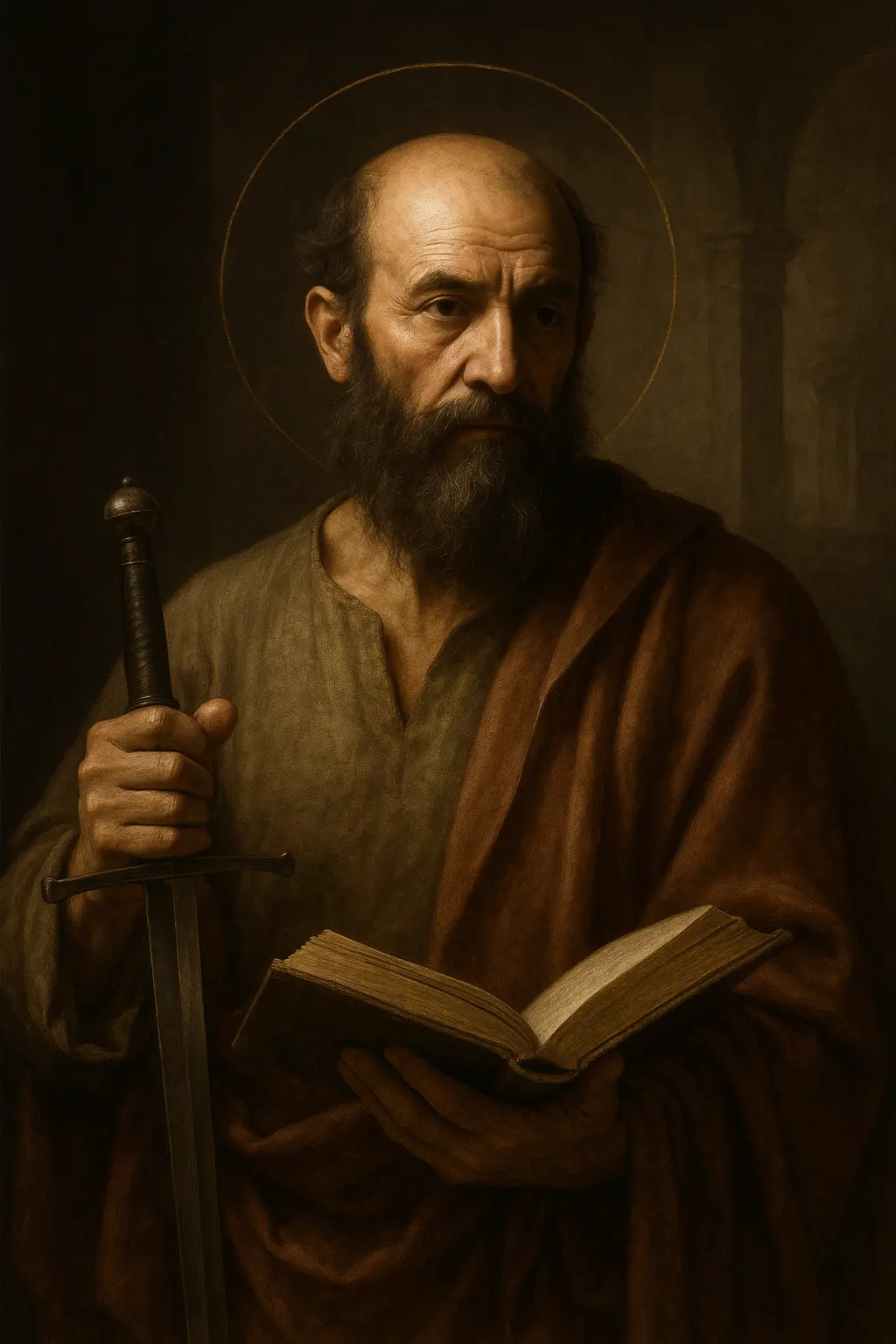
Tomb of Saint Paul
Apostolic burial siteYes, at the confessio over the tomb
Basilica of Saint Paul · Pontifical Commission for the Holy SeeThe papal basilica raised over the tomb traditionally venerated as the burial place of the Apostle Paul, on the ancient Ostian Way south of the Aurelian Walls. One of the four major basilicas of Rome and the apostolic counterpart to Saint Peter's.
Come here for the apostolic counterpart to Saint Peter's. The basilica is built over the tomb traditionally venerated as the burial place of the Apostle Paul, with the marble sarcophagus beneath the confessio bearing the ancient inscription PAULO APOSTOLO MART. It is one of the four papal basilicas of Rome and one of the seven traditional pilgrim churches of the city. A serious Roman pilgrimage reads Peter and Paul together, and Saint Paul Outside the Walls gives the basilica over the Apostle's tomb a quieter, more spacious counterpoint to the crowds of the Vatican.
Catholics have long venerated the burial place of the Apostle Paul beside the Ostian Way, near the road to the traditional site of his martyrdom at the Tre Fontane. Constantine's first basilica was enlarged in the late fourth century into a great Theodosian church with five aisles and a transept set across the tomb. The Benedictines were established at the adjoining abbey in the 10th century. After the fire of 1823, the basilica was rebuilt on the same plan and reconsecrated by Pope Pius IX in 1854.
The building holds ancient memory inside a 19th-century rebuilding. The confessio, triumphal arch, apse mosaic, Arnolfo di Cambio's ciborium, and the orientation of the nave keep the Theodosian plan legible. The rebuilt five-aisle basilica restores the long procession toward the Apostle's tomb, while the Cosmati cloister preserves a major medieval space beside it.
Saint Paul is traditionally venerated beneath the papal altar, where the basilica has gathered pilgrimage since late antiquity.
The fire of 1823 destroyed much of the ancient basilica, but the rebuilt church preserves the Theodosian plan around the Apostle's tomb.
The Series Pontificum along the nave reads the basilica as a visible memory of apostolic succession.
What gives the basilica its weight is the tomb of the Apostle at its center. The five-aisle plan, the long transept, and the great triumphal arch all open toward the confessio, and the Series Pontificum reads the whole nave as the visible memory of the apostolic succession that follows from Paul's witness. A Catholic visit reads the basilica inward: from the quadriportico and the colossal statue of Saint Paul, through the nave under the gaze of the popes, to the papal altar and the marble grille over the Apostle's sarcophagus. The basilica is also a serious place of liturgy. The Benedictine community keeps daily Mass and the Liturgy of the Hours, the chapter of the basilica celebrates the great feasts of Saint Paul, and the closing liturgy of the Week of Prayer for Christian Unity each January is celebrated here in the presence of representatives of other Christian communions.
Approach the marble grille over the sarcophagus beneath the papal altar. The grille shows the ancient inscription PAULO APOSTOLO MART and the chains traditionally associated with the imprisonment of Saint Paul. This is the spiritual center of the basilica.
Completed in 1285 and signed by the sculptor, the Gothic baldachin over the papal altar is one of the few medieval works to survive the fire of 1823. Read it as the canopy that has framed the Apostle's tomb for more than seven centuries.
Commissioned by Pope Honorius III in 1220, with Christ enthroned between Saints Peter, Paul, Andrew, and Luke and the small figure of the pope at the Lord's feet. The mosaic survived the fire and was restored in the 19th-century rebuilding.
The continuous frieze of mosaic portrait medallions along the nave gathers every bishop of Rome from Saint Peter to the present. Walk the nave slowly and read the basilica as the visible memory of apostolic succession around the Apostle's tomb.
The cloister of the adjoining Benedictine abbey is one of the most refined examples of the Cosmati style in Rome, with paired colonettes, mosaic inlay, and a surrounding lapidarium of inscriptions from the older basilica. Reached through the ticketed entrance.
Saint Ignatius of Loyola and his first companions pronounced their vows in this chapel on April 22, 1541, before the foundation of the Society of Jesus. A small inscription marks the place.
The quadriportico and the statue of Saint Paul, the nave under the Series Pontificum, the confessio at the papal altar, and a first reading of the apse mosaic.
As above, plus the Chapel of the Crucifix, the transept chapels, and an unhurried turn through the medieval Cosmati cloister and its lapidarium.
Pair the basilica with the Ostiense neighborhood, or read it together with Saint Peter's as the two apostolic shrines of the Church of Rome.
Saint Paul Outside the Walls rewards a slower visit than the Vatican basilica. Enter through the quadriportico, walk the nave under the gaze of the Series Pontificum, and approach the confessio at the papal altar. Pause at the grille over the Apostle's sarcophagus before moving to the apse mosaic and the throne of Honorius III. Visit the Chapel of the Crucifix and the transept chapels, then end in the medieval Cosmati cloister of the adjoining abbey. If a Mass is offered while you are there, join it; the liturgy celebrated at the papal altar over the Apostle's tomb is itself the reason the basilica exists.
Entry to the basilica is free for prayer year-round, and pilgrim access to the confessio is open during normal opening hours. The cloister, archaeological area, and pinacoteca require a ticket and are administered through the Pontifical Commission for the Holy See in Rome. Confirm current opening days, ticket arrangements, Mass times, and liturgical schedule on the official basilica site before planning around the visit. The basilica is reached from central Rome by Metro Line B (Basilica San Paolo station, a short walk from the entrance) and combines naturally with a wider Ostiense or Garbatella walk.
Yes, at the confessio over the tomb
Basilica of Saint Paul · Pontifical Commission for the Holy SeeVisible through the confessio grille
Pontifical Commission · basilica documentationYes, the focus of pilgrim prayer at the tomb
Basilica traditionYes, in a reliquary at the confessio
Basilica traditionWithin the basilica
Basilica traditionSource note Traditional attributions are presented as tradition, with documentation named where it exists.
Paul's tomb completes the apostolic pilgrimage begun at Peter's tomb on the Vatican hill.
Continue to the Vatican hill, where Peter's tomb forms the other pole of Rome's apostolic pilgrimage.
Peter and Paul give Rome its apostolic axis: two tomb basilicas, one shared feast, and the cathedral of the bishop whose office the Church traces to Peter.
Connections are curated from Eternal Roam's saint, place, relic, route, and Rome records. Traditional attributions are identified in context.
Saint Paul Outside the Walls is a papal basilica administered through the Pontifical Commission for the Holy See in Rome, with the adjoining Benedictine community serving the daily liturgical life of the basilica. The basilica is open for prayer year-round and entry is free; the cloister, archaeological area, and pinacoteca are ticketed and have separate opening arrangements. The tomb beneath the papal altar is venerated by long-standing Catholic tradition as the burial place of the Apostle Paul, and the investigations announced for the Pauline Year of 2008 to 2009 reported bone fragments within the sarcophagus carbon-dated to the first or second century, consistent with the tradition. The basilica suffered a substantial fire on the night of July 15 to 16, 1823 and was rebuilt on the same Theodosian plan, preserving the ciborium of Arnolfo di Cambio, the 13th-century apse mosaic, the triumphal arch, and the Cosmati cloister; the present nave was reconsecrated by Pope Pius IX in 1854.
July 9, 2026
Use this for corrections, broken links, missing places, and planning ideas.