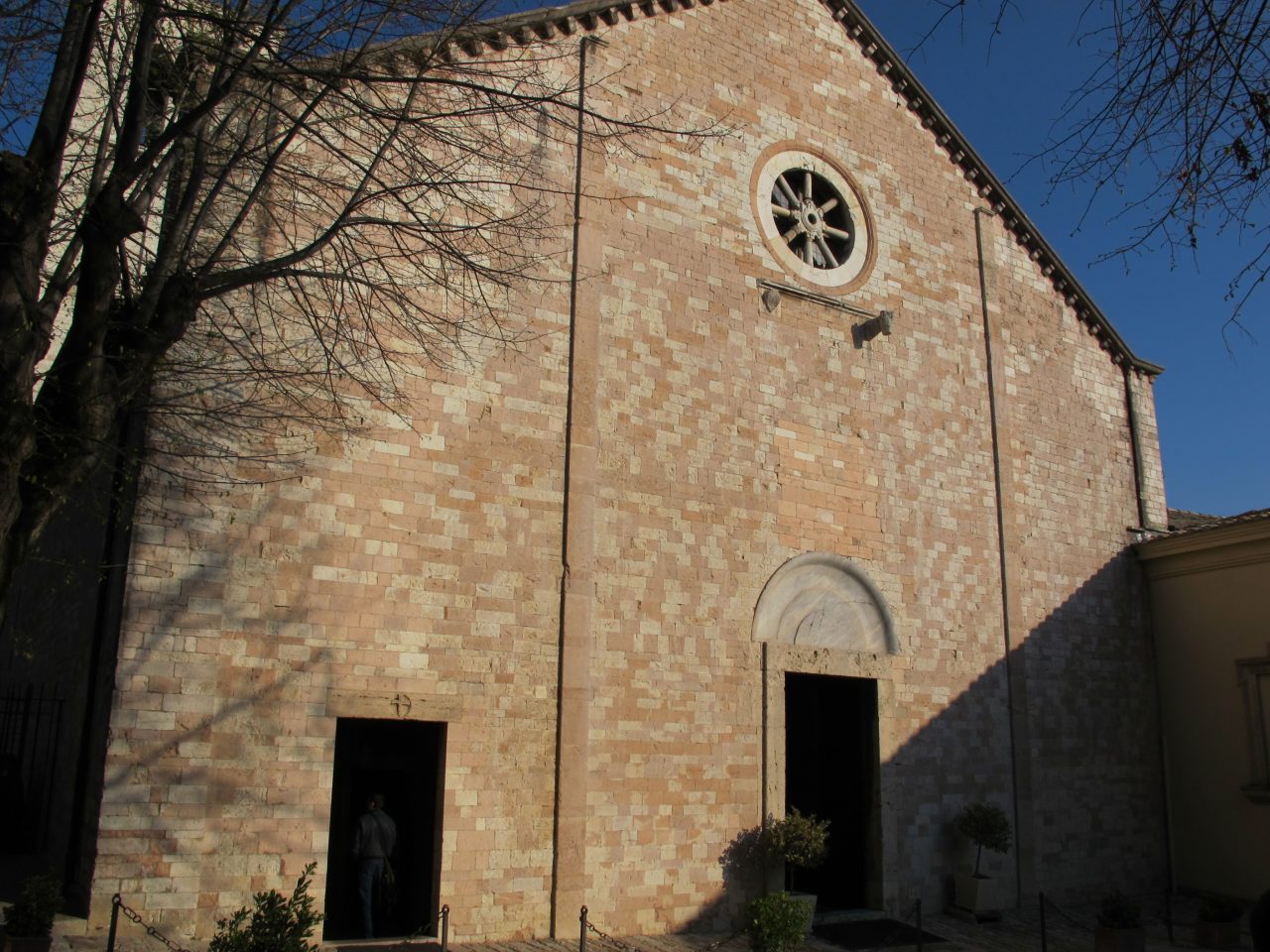
Tomb of Saint Carlo Acutis
Saint's tomb
Diocese of Assisi and the official sanctuary
A sanctuary of Francis's renunciation and the tomb of Saint Carlo Acutis, in the church of Santa Maria Maggiore beside the old episcopal complex of Assisi.
Come here to stand where Assisi remembers Francis giving everything back, and to pray at the tomb of Saint Carlo Acutis. The two witnesses belong to different centuries and are not the same story. Francis's renunciation names a freedom from possession for the sake of Christ. Carlo's tomb gives that freedom a modern face: a young layman whose Eucharistic devotion led him to choose Assisi as his resting place.
Santa Maria Maggiore stands beside the former episcopal complex of Assisi. Early Franciscan sources preserve the conflict between Francis and his father during the years of his conversion. Assisi's devotional tradition receives the bishop's setting as the place of the renunciation, when Francis gave back what his father claimed and placed himself under God's fatherhood. Archaeological work has brought attention to the old doorway beside the episcopal residence, but the sanctuary does not turn a received memory into a certainty it cannot bear. In 2019 the church became the place of Saint Carlo Acutis's tomb, adding a new pilgrim devotion to a place already marked by Franciscan poverty.
This is not a grand basilica competing with the major churches of Assisi. Its weight comes from location: an old church, an episcopal threshold, and a sanctuary whose present life gathers prayer around a remembered act of conversion and a saint's tomb.
The sanctuary stands in Santa Maria Maggiore beside the former episcopal complex of Assisi.
The local Franciscan memory places Francis's renunciation before Bishop Guido in this episcopal setting; the sanctuary carefully receives that memory rather than claiming a preserved courtroom scene.
Saint Carlo Acutis's body was brought to Assisi in 2019 and is venerated here.
The sanctuary asks for a double attention. First read Francis's renunciation as a turning from inherited status toward Christ. Then approach Carlo's tomb without making the modern devotion a decorative addition to Francis. Both witnesses call the pilgrim to a more concrete love of God.
Approach it as a place of prayer, not a queue to complete.
Notice how close the church stands to the old bishop's residence; this geography is the heart of the Franciscan memory.
Begin with the episcopal setting and the tradition of Francis's renunciation, then make one unhurried prayer at Carlo's tomb.
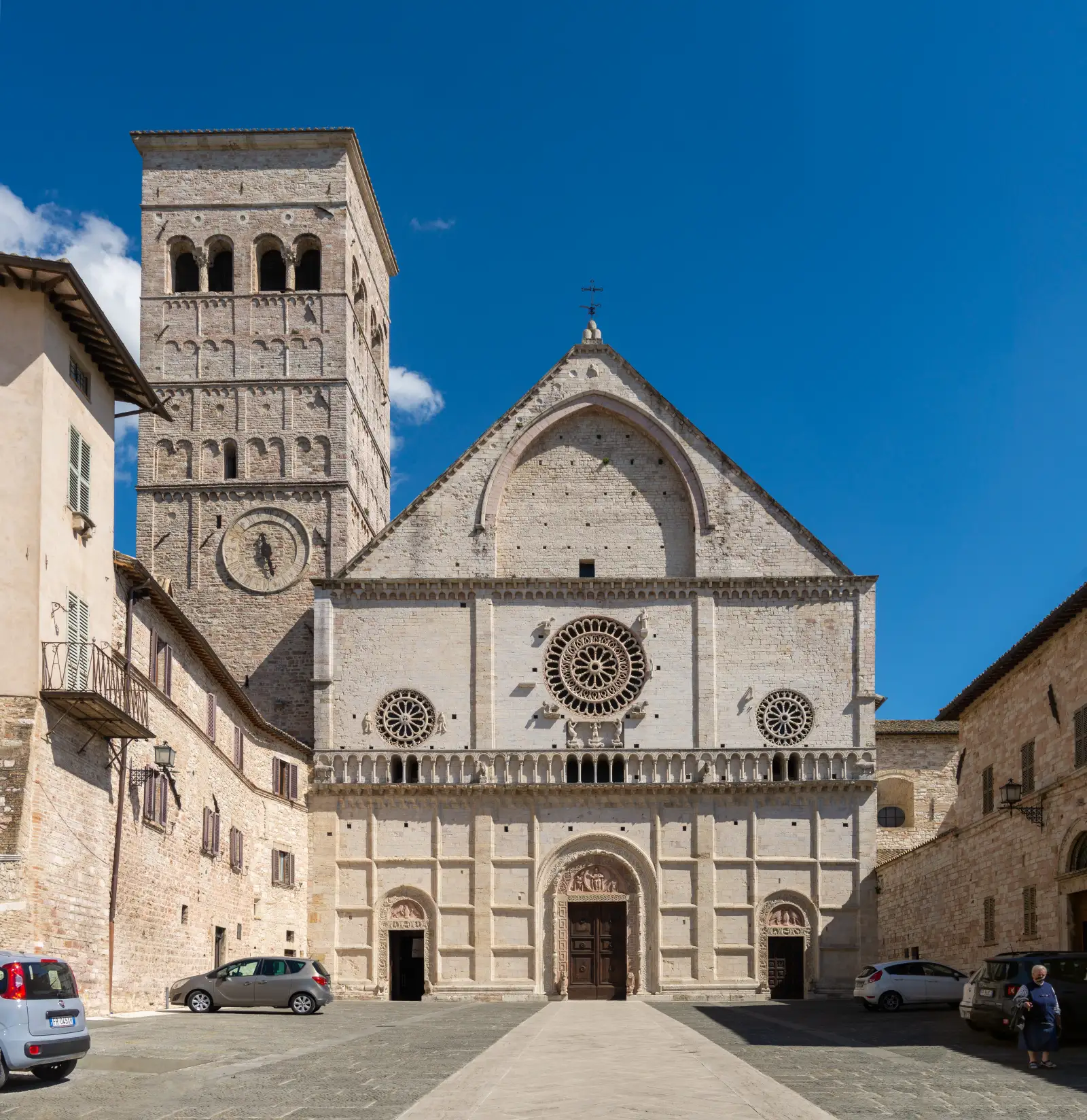
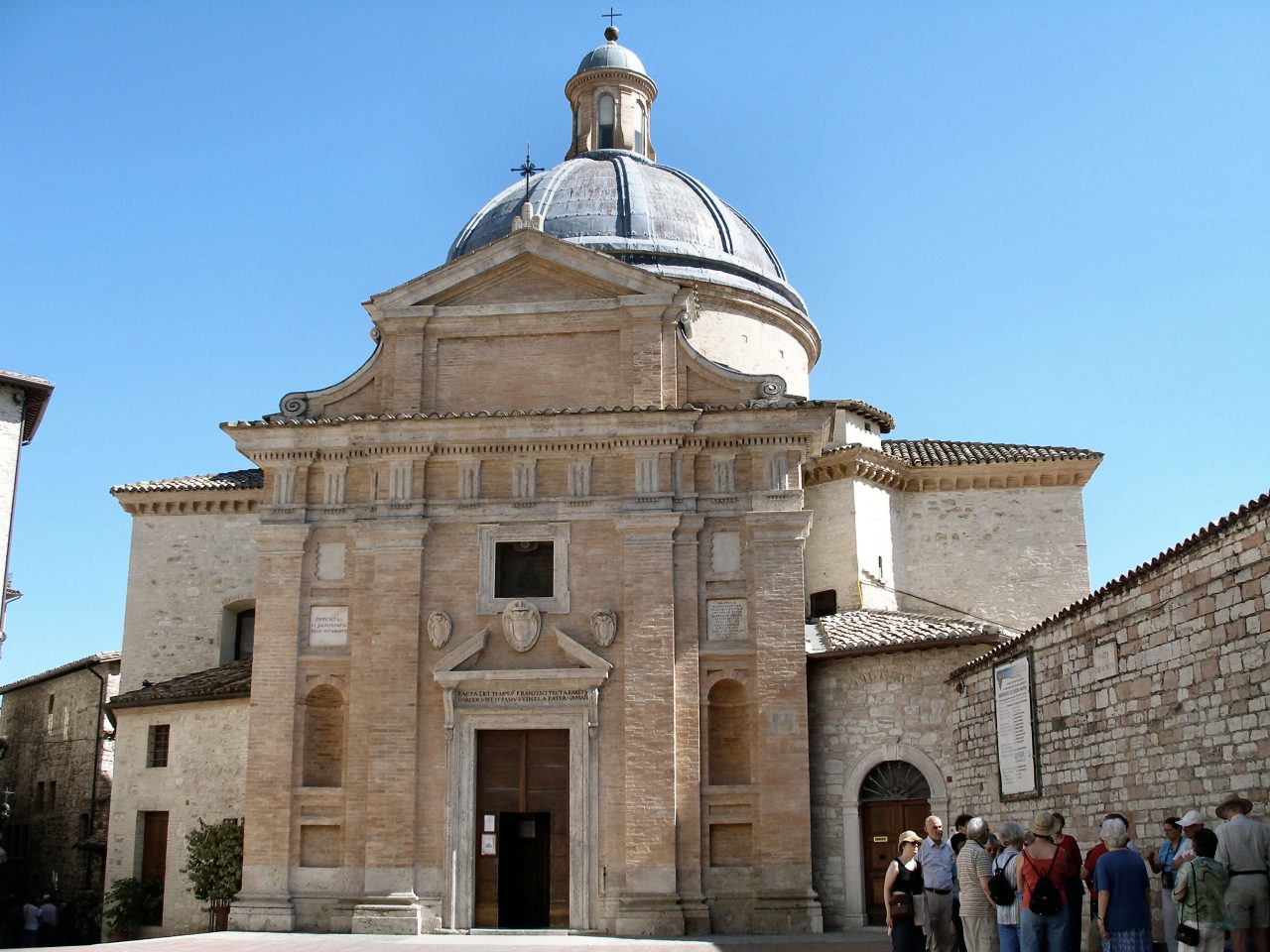
Keep the three small places distinct: baptismal Assisi at San Rufino, the renunciation tradition here, and the household tradition at Chiesa Nuova.
Make this a quiet old-town visit, not a rapid stop between major basilicas. It is especially fitting after San Rufino, where the sacramental life of the city gives Francis's renunciation its proper setting.
Enter quietly and orient yourself to Santa Maria Maggiore and the old episcopal setting. Read the renunciation tradition before approaching Carlo's tomb, so the sanctuary does not become only a stop for one devotion. Pray at the tomb, then continue uphill to San Rufino or across the center to Chiesa Nuova, keeping the next visit small enough to remain prayerful.
Source note Traditional attributions are presented as tradition, with documentation named where it exists.
Where this church sits within the wider Catholic geography of Assisi.
The cathedral of Assisi and the church of the baptismal tradition of Francis and Clare.
The church built over the place long held by local tradition to be Francis's family house.
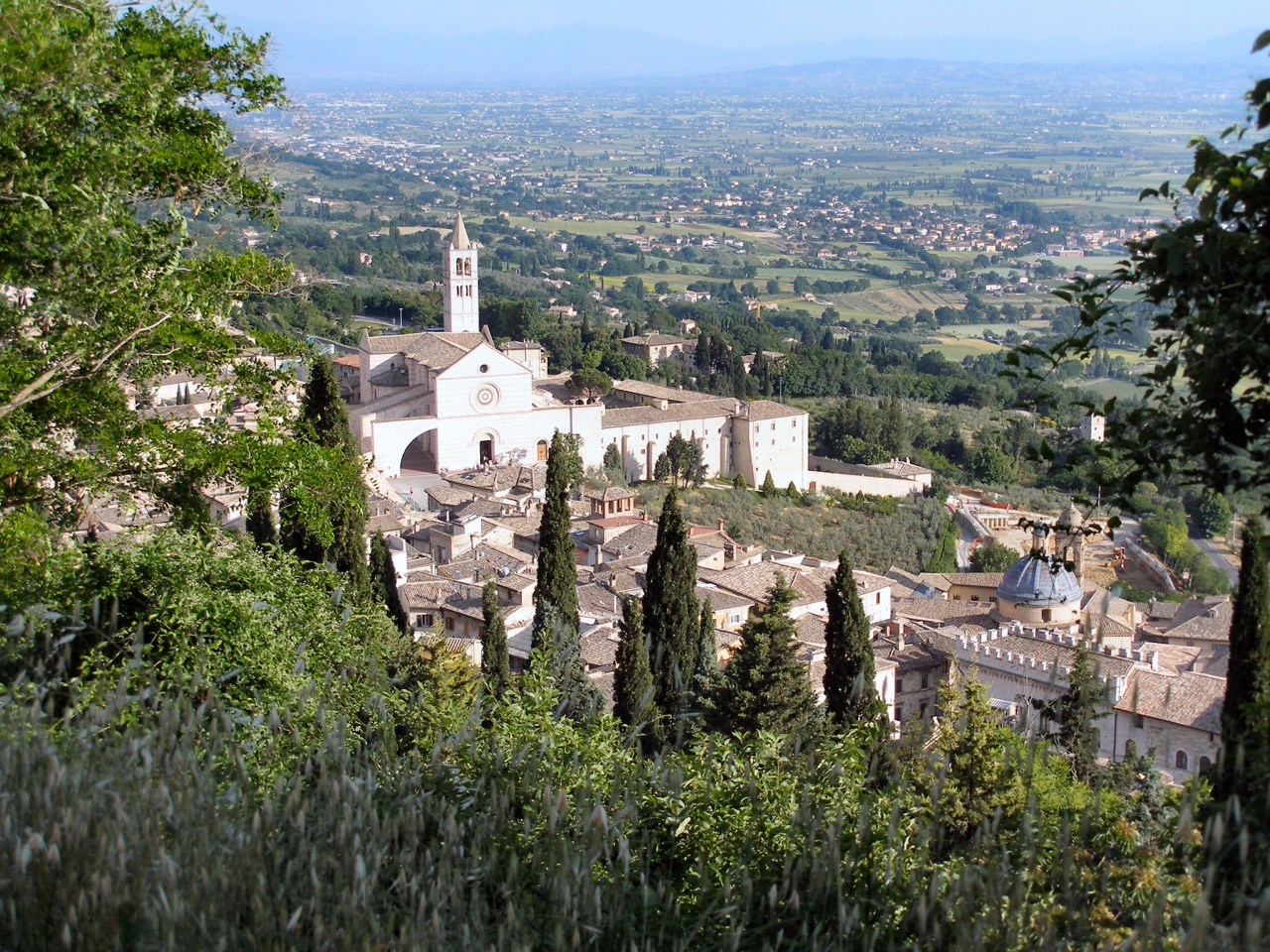
The basilica of Clare's tomb and the original San Damiano Crucifix on the southern side of the old town.
Santa Maria Maggiore is held by its episcopal setting, the renunciation tradition of Francis, and the tomb of Saint Carlo Acutis. These are related, but they are not interchangeable memories.
The sanctuary stands in Santa Maria Maggiore beside the former episcopal complex in the historic center of Assisi.
Assisi receives this episcopal setting as the place of Francis's renunciation before his father; the tradition should not be turned into a claim of a preserved courtroom scene.
Saint Carlo Acutis is venerated in the sanctuary church, where his body was brought to Assisi in 2019.
The Diocese of Assisi and the official sanctuary identify this church as the place of Carlo Acutis's tomb and present it for public veneration.
A short old-town continuation to the church built over the site long held in Assisi's tradition to be Francis's family home.
Official sanctuary guidance for current prayer, liturgy, and tomb-access arrangements.
The sanctuary and the Diocese of Assisi distinguish the long-held Franciscan renunciation tradition from archaeological certainty. Carlo Acutis's tomb is a documented, living place of veneration in the church.
The official sanctuary and the Diocese of Assisi distinguish the received memory of Francis's renunciation from archaeological and documentary certainty. Confirm current liturgical and tomb-access arrangements directly with the sanctuary.
July 18, 2026
Use this for corrections, broken links, missing places, and planning ideas.