The hill of Tepeyac in Mexico City, where the tilma of Guadalupe, the two basilicas, and the chapels of the apparition tradition form one sanctuary.
Orientation at Tepeyac, the tilma in the modern basilica, the historic Old Basilica, the Cerrito chapel on the hill, the Pocito by the spring, and the December 12 pilgrimage.
Guadalupe is the heart of Catholic devotion in Mexico and across the Americas. The image on the tilma, the account of the apparitions to Juan Diego carried in the seventeenth-century Nican Mopohua, and the vast December 12 pilgrimage have shaped the faith of a continent. Tepeyac is not a single church but a sanctuary of several buildings on and around a hill: the modern basilica where the tilma is kept and seen from moving walkways, the Old Basilica that held it for centuries, and the chapels that mark the apparition tradition. This hub carries the shape of the whole sanctuary; the destination and saint pages carry the tilma, the basilicas, and Juan Diego on their own terms.
Almost everything a pilgrim visits at Tepeyac sits within the sanctuary grounds at the foot of the hill and on its slope. The modern basilica and the Old Basilica stand together on the plaza below; the chapels of the Cerrito and the Pocito are reached by climbing the hill behind them.
The plaza and the two basilicas
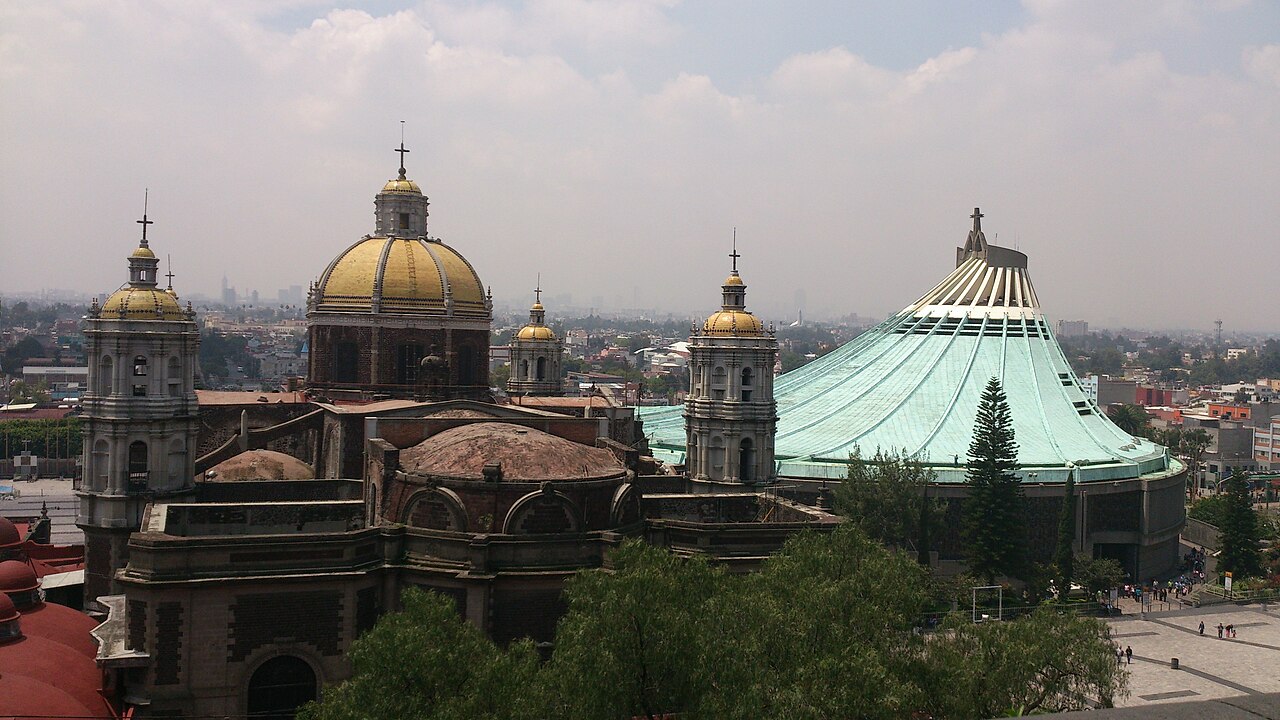
The great walled plaza at the foot of Tepeyac, where the round modern basilica holding the tilma stands beside the leaning baroque Old Basilica and the older chapels and museum.
On the ground
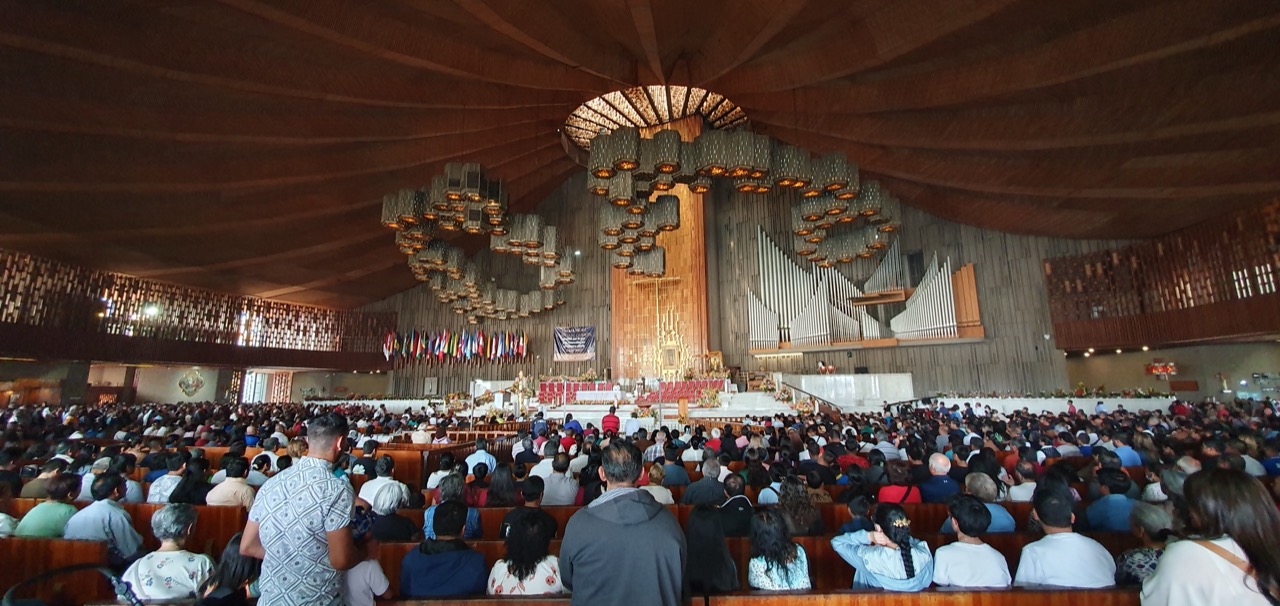
Level and walkable across the plaza. Inside the modern basilica, moving walkways carry pilgrims beneath the tilma so the crowd keeps moving; you can ride them more than once.
The hill and the Cerrito
The slope of Tepeyac behind the plaza, climbing past gardens to the Capilla del Cerrito, which marks the place of the apparition tradition at the top of the hill.
Capilla del Cerrito
The garden slopes of Tepeyac
On the ground
A climb by stepped paths from the plaza to the summit chapel, exposed to sun and at high altitude; take it slowly and allow time.
The Pocito and the Capuchinas
The lower slope and the eastern side of the sanctuary, with the small circular Capilla del Pocito over the spring of the tradition and the former Capuchinas convent church nearby.
Capilla del Pocito
Templo de las Capuchinas
On the ground
A short walk around the base of the hill; the Pocito is a small baroque chapel and the Capuchinas church a quieter corner of the complex.
The plaza and the two basilicas fill a first visit; the climb to the Cerrito and the walk to the Pocito complete the sanctuary. December 12 changes the scale of everything.
Sanctuary and town
Begin with the sanctuary as a sacred landscape
Begin with orientation: the sanctuary at the center, the town and grounds around it, the places of the founding story, and the rhythm of arrival, prayer, and return. Open the Sanctuary guide→
The round modern basilica, completed in 1976, holds the tilma bearing the image now venerated as Our Lady of Guadalupe above its altar. Pilgrims pass beneath it on moving walkways so that the crowd keeps flowing; the basilica is the Eucharistic and devotional center of the whole sanctuary.
Continue through the sanctuary
Beyond the tilma: the historic Old Basilica that held it for centuries, the Cerrito chapel on the hill of the apparition tradition, and the small baroque Pocito by the spring.
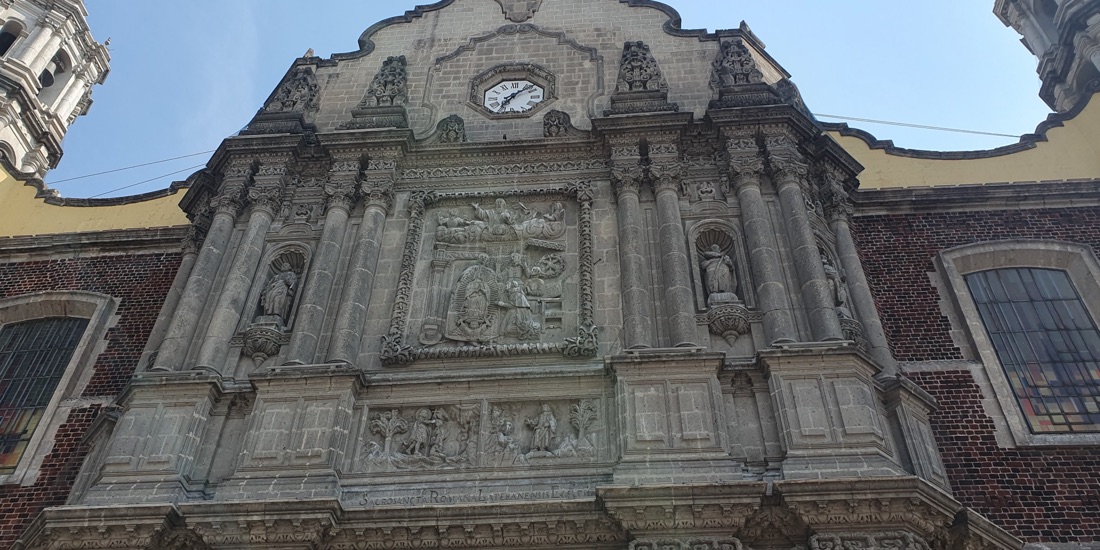
The eighteenth-century baroque basilica that held the tilma for more than two and a half centuries, until the image was moved to the modern basilica in 1976. Its facade leans visibly where the heavy building settled into the soft former lakebed.
Chapel
Capilla del Cerrito
THE SUMMIT OF TEPEYAC
The chapel at the summit of Tepeyac, reached by a climb from the plaza, marking the place where the Guadalupan tradition sets the apparition to Juan Diego. Its gardens and terraces look out over the sanctuary and the city.
Chapel
Capilla del Pocito
THE LOWER SLOPE OF TEPEYAC
A small circular baroque chapel of the late eighteenth century, built over the spring of the Guadalupan tradition at the foot of the hill. Its domes and tiled surfaces make it one of the most admired small buildings of the sanctuary.
Convent Church
Templo de las Capuchinas
THE EASTERN SIDE OF THE SANCTUARY
The church of the former Capuchin convent on the eastern side of the sanctuary, a quieter corner of the Tepeyac complex with its own baroque character, part of the wider history of the shrine.
Each entry named and sourced
Tombs, relics & sacred objects
Tepeyac is not a sanctuary of body relics. Its veneration is gathered around the tilma bearing the image of Our Lady of Guadalupe, the hill of the apparition tradition, and the spring of the Pocito.
Venerated at
BASILICA OF OUR LADY OF GUADALUPE
The Tilma of Guadalupe
Sacred image venerated in the Guadalupan tradition
The cloak, or tilma, bearing the image now venerated as Our Lady of Guadalupe, kept above the altar of the modern basilica and central to the Guadalupan tradition and to Catholic devotion across the Americas.
Site of the apparition traditionThe Hill of TepeyacCapilla del Cerrito
Associated with the Guadalupan traditionThe Spring of the PocitoCapilla del Pocito
Visit rhythm
Plan the sanctuary and town rhythm
Plan 1
A Few Hours
Begin in the modern basilica and pray before the tilma, riding the moving walkways beneath it as often as you need. If time allows, step across to the Old Basilica to see where the image hung before 1976. Leave the hill for a longer visit.
Basilica of Our Lady of Guadalupe
Old Basilica of Guadalupe
Plan 2
A Day
Give the morning to the two basilicas: the tilma in the modern basilica and the baroque Old Basilica beside it. After midday, climb the hill to the Capilla del Cerrito that marks the apparition tradition, then come down to the Capilla del Pocito by the spring. Keep the pace gentle at this altitude.
Basilica of Our Lady of Guadalupe
Old Basilica of Guadalupe
Capilla del Cerrito
Capilla del Pocito
Plan 3
Around the feast
Near December 12 the sanctuary fills with millions of pilgrims and the ordinary shape of a visit changes entirely. If you come for the feast, plan for crowds, altered access, and long waits, and let the pilgrimage itself, rather than a tidy itinerary, carry the days.
The December 12 pilgrimage to Tepeyac
Vigil and Masses across the sanctuary
Practical, not booking
Before you go
Liturgy
The modern basilica keeps a full daily schedule of Mass, confession, and Rosary, with the tilma seen from the moving walkways beneath it. The rhythm intensifies enormously around December 12, the feast of Our Lady of Guadalupe, one of the largest pilgrimages in the world. Confirm current times and feast arrangements on the sanctuary's official site.
Dress code
Modest dress is appropriate throughout the sanctuary. Bring sun protection and water for the climb to the Cerrito.
Walkability
The plaza and the two basilicas are level and walkable. The climb to the Capilla del Cerrito is by stepped paths, exposed to sun and at high altitude, around 2,240 metres; take it slowly.
Transit
The sanctuary is in northern Mexico City, reached by the metro (La Villa-Basilica station on Line 6) and by road. Allow for city traffic and crowds near the feast.
Accessibility
The plaza and modern basilica are largely accessible, with the moving walkways carrying pilgrims beneath the tilma. The climb to the Cerrito is demanding and not step-free; the altitude affects some visitors.
Tepeyac has one saint at its human center: Juan Diego, the Indigenous Christian layman remembered in the Guadalupan tradition as the one to whom Our Lady appeared and on whose tilma her image remains.