The shrine of Saint Denis, the royal necropolis of France, and the abbey church where Abbot Suger raised the first major Gothic interior in the 1140s, kept today as both a diocesan cathedral and a national monument.
FRANCE · PARIS48.9356° N · 2.3595° E
Location
Paris, France 48.9356° N · 2.3595° E
Type
Cathedral church and former royal abbey; national monument Carolingian foundations beneath an early Gothic abbey church, with the west facade and ambulatory choir of Abbot Suger (1135 to 1144), the Rayonnant rebuilding of the nave and transepts under Pierre de Montreuil from the 1230s, and the 19th-century restoration under François Debret and then Eugène Viollet-le-Duc
Dedication
Saint Denis, first bishop and martyr of Paris, with his companions Rusticus and Eleutherius A living cathedral built around the martyr's shrine, with the royal necropolis and Gothic choir held within the same church
Time Needed
1 hour to half a day
Why Go
Shrine, Abbey, and Royal Necropolis
Saint-Denis belongs to Catholic Paris even though it sits a short distance outside the central city. The basilica is first of all the shrine of the first bishop and martyr of Paris. Around that shrine grew a royal abbey, the burial church of the kings of France, and the Gothic choir of Abbot Suger that set the architectural language of Catholic Europe for the next four centuries. A serious visit reads the church through that order: martyr, abbey, kings, architecture.
From the Martyr's Tomb to the Cathedral of a Diocese
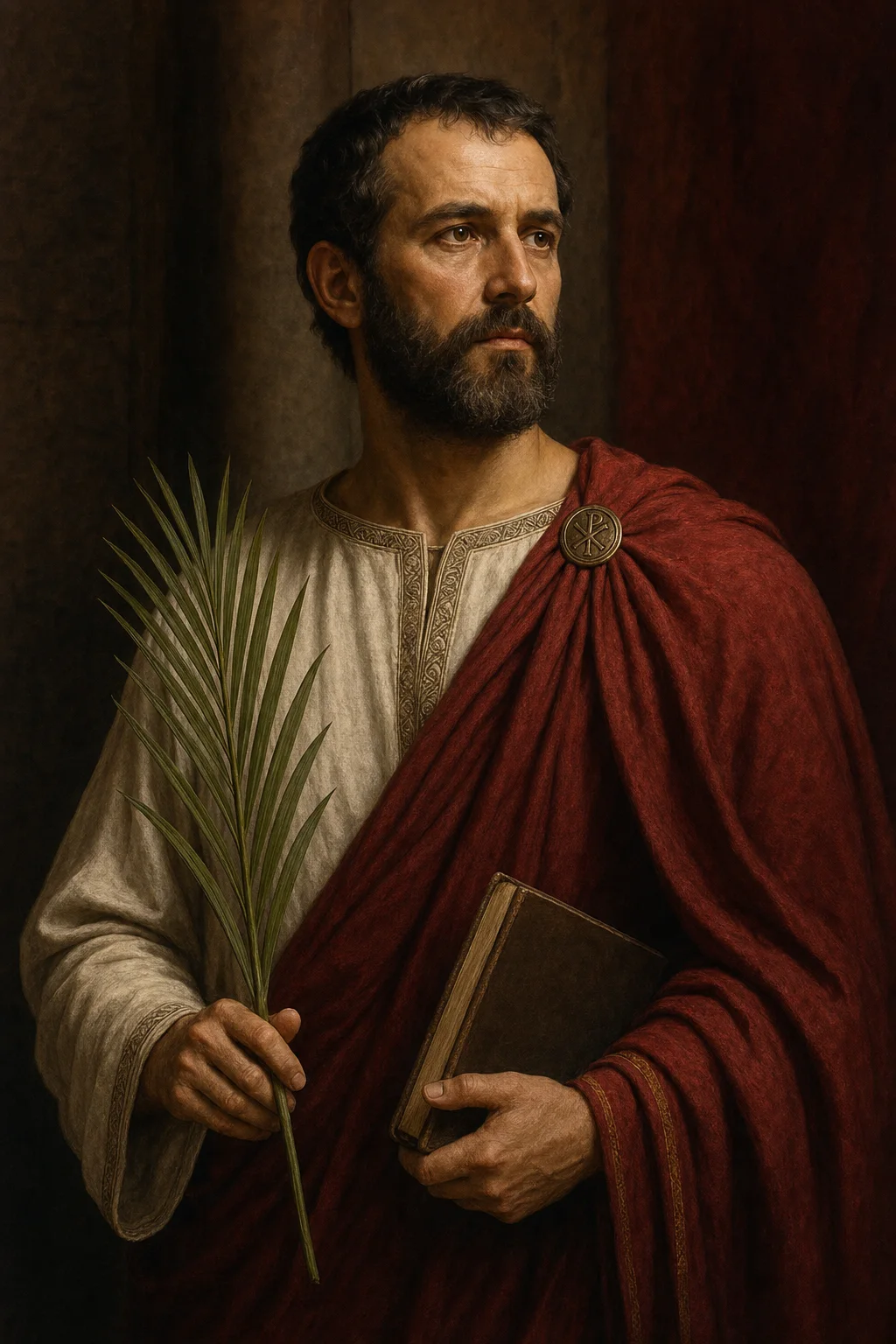
Saint Denis is traditionally venerated as the first bishop of Paris, sent from Rome in the 3rd century with his companions Rusticus and Eleutherius and martyred at Montmartre, the Mount of Martyrs north of the ancient city. Catholics have long venerated this site as the place where his body was buried. According to long-standing local tradition, Saint Geneviève helped build a chapel on the tomb in the late 5th century. King Dagobert I founded a royal abbey on the site around 639 and chose to be buried beside the saint; the abbey grew across the Carolingian period under Pepin the Short, who was anointed king at Saint-Denis in 754, and under Charlemagne, who confirmed and enriched its privileges. Abbot Suger, who governed the abbey from 1122 to 1151, rebuilt the church in two campaigns. He completed the new west facade and the lower west bays around 1140, then raised a new ambulatory choir over the saint's tomb that was dedicated on 11 June 1144 in the presence of Louis VII and most of the bishops of northern France. That choir, with its radiating chapels and the new use of stained glass to flood the sanctuary with light, is widely received as the birth of Gothic architecture. In the 13th century, Pierre de Montreuil rebuilt the nave and transepts in the Rayonnant style, with the two great rose windows that the basilica still keeps. Around 1260, Saint Louis IX commissioned a new program of recumbent tombs for the earlier kings of France in the choir, sealing Saint-Denis as the royal necropolis of the kingdom. From Hugh Capet in 996 through Louis XVIII in 1824, almost every reigning king of France was buried here. In 1793, during the Terror, the tombs were opened, the remains thrown into a common pit, and many of the metalwork reliquaries melted down; in 1817, under the Bourbon Restoration, what could be recovered was gathered into the ossuary that is still kept in the crypt. The 19th century saw a long restoration campaign under François Debret and then Eugène Viollet-le-Duc, who dismantled the damaged north tower and reset much of the choir and stained glass. In 1966, Saint-Denis was raised from a parish to a diocesan cathedral, and the basilica became the seat of the new Diocese of Saint-Denis.
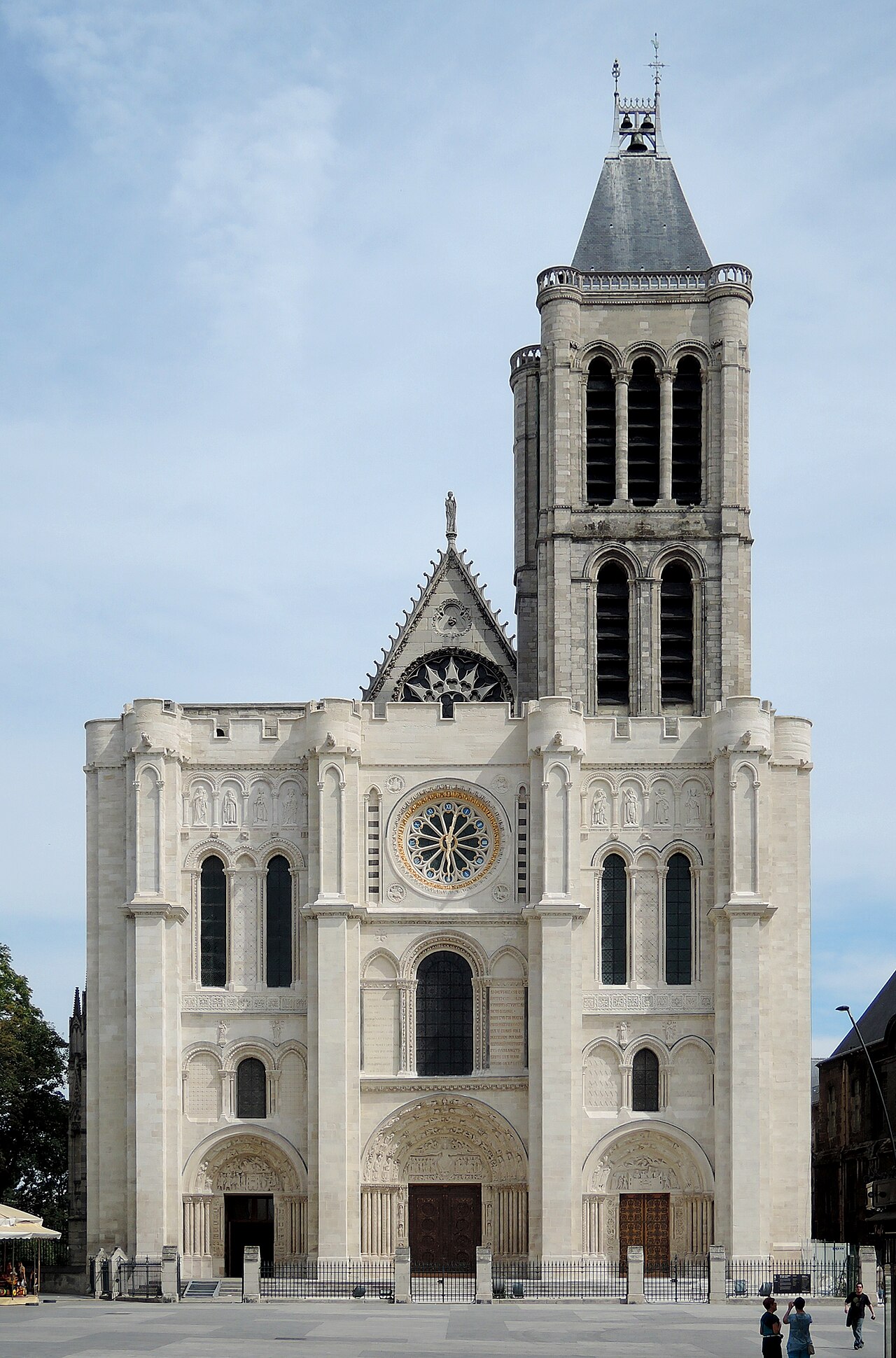
Saint-Denis was the first major Gothic church and remained an architectural standard for centuries. The west facade of around 1140 is one of the earliest Gothic west fronts, with its three portals beneath a central rose; the original north tower was dismantled in the 19th century after storm damage. Inside, Abbot Suger's ambulatory choir of 1140 to 1144 set the template that the Gothic cathedrals would follow: a chevet ringed by radiating chapels, slender stone shafts replacing heavy walls, and the new use of stained glass to make the wall itself a screen of light. The nave and transepts, rebuilt by Pierre de Montreuil from the 1230s, raise the elevation to the full three-storey Rayonnant pattern and frame the choir with the great north and south roses. The crypt beneath the choir preserves the Carolingian and earlier foundations and holds the Hilduin chapel and the royal ossuary.
InsideThe First Gothic InteriorLook down the nave toward the choir of Abbot Suger. The ring of light around the apse, the slender shafts, and the unbroken vertical pull are why Saint-Denis is read as the threshold of Gothic architecture in Catholic Europe.
Saint-Denis is the patronal shrine of the first bishop of Paris before it is anything else. The abbey grew up around his tomb, and the royal necropolis was placed beside the saint deliberately.
The choir dedicated in 1144 is widely received as the birthplace of the Gothic. Abbot Suger wanted a luminous sanctuary worthy of the martyr's shrine, and the radiating chapels and stained glass that he raised changed how Catholic churches were built across Europe.
From Dagobert I in 639 through to the early 19th century, most of the kings of France were buried at Saint-Denis; the abbey is the royal necropolis of Catholic France.
The tombs were desecrated in 1793 and the remains thrown into a common pit; the Bourbon Restoration recovered what could be recovered and re-interred them in the crypt, where the ossuary is still kept.
Saint-Denis was raised to a diocesan cathedral in 1966 and is today both an active parish and cathedral church and a ticketed national monument; pilgrims should expect the two layers to coexist.
Spiritual Significance
What gives Saint-Denis its weight is the way the four layers hold together: the shrine of the martyr at the heart of the church, the abbey memory that grew up around it, the royal necropolis placed deliberately beside the saint, and the Gothic architecture raised to honour all three. The royal tombs are not relics, and the basilica does not treat them as such; they are sacred-historical burials, central to the memory of Catholic France, set beside the patronal shrine they were meant to honour. A Catholic visit reads the building inward: from the kings to the abbey to the shrine of the saint at its centre.
LightThe Rayonnant North RoseThe north transept rose belongs to the 13th-century rebuilding of the nave and transepts under Pierre de Montreuil. Saint-Denis began the Gothic in the 12th century and then helped shape its mature Rayonnant phase a century later.
Do Not Miss · 6 stops
What to notice.
The west facade of Abbot Suger
Read the three portals of the 1140 facade before entering. This is one of the earliest Gothic west fronts; the original north tower was dismantled in the 19th century after storm damage.
The choir and ambulatory of 1144
Enter the choir from the crossing and walk the ring of radiating chapels. This is the interior whose dedication on 11 June 1144 is widely received as the birth of Gothic architecture.
The recumbent royal tombs of the medieval kings
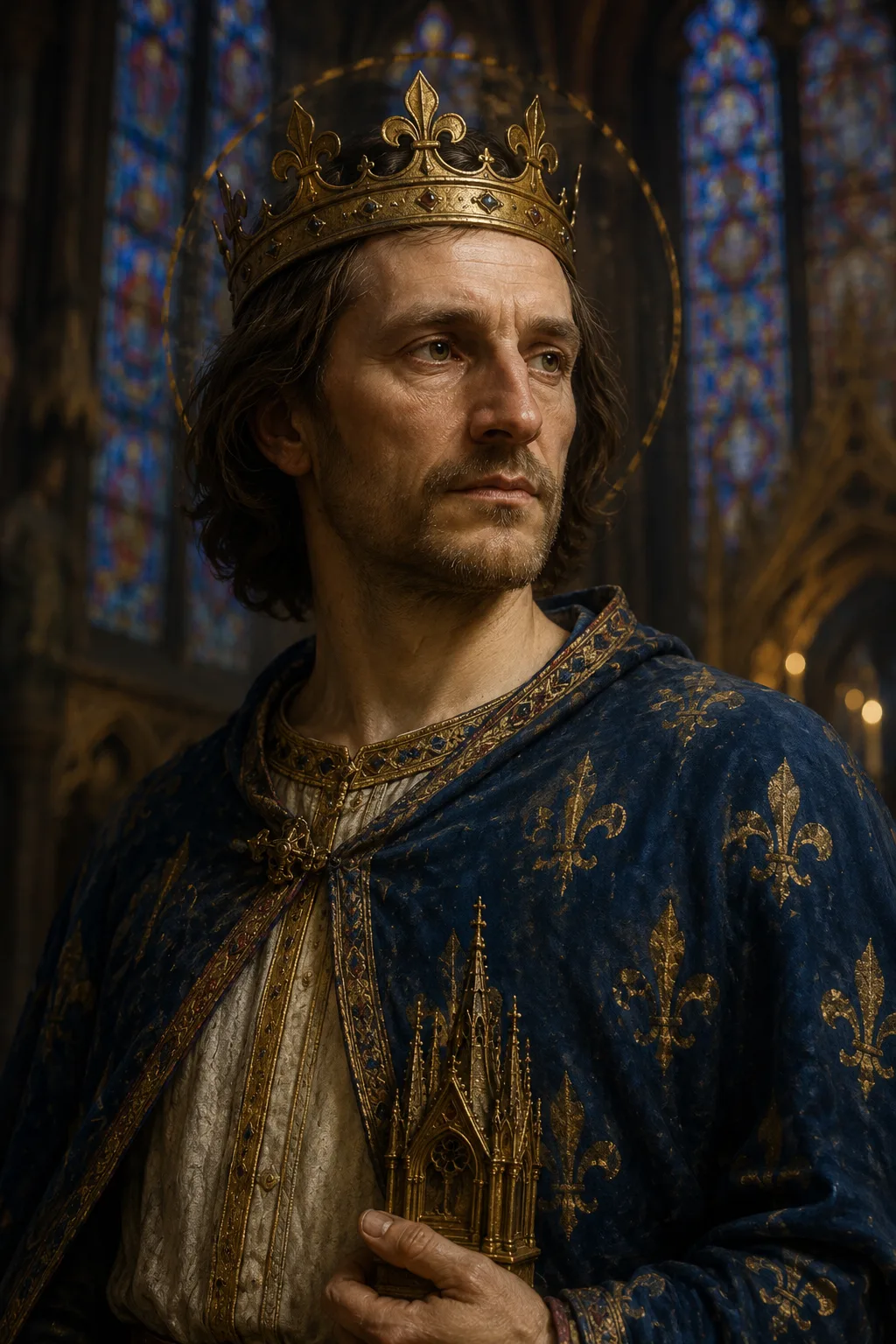
Saint Louis IX commissioned new tombs for the earlier kings of France around 1260; read them as devotional sculpture set beside the saint, not only as portraits.
The Renaissance funerary monuments
The tombs of Louis XII and Anne of Brittany, Francis I and Claude, and Henri II and Catherine de Medici belong to a different sculptural language and mark the late royal program at Saint-Denis.
The crypt and ossuary
The crypt preserves the Carolingian and earlier foundations of the church and holds the ossuary of the royal remains gathered after the Bourbon Restoration. Treat it as sacred-historical burial memory, not as saint relic veneration.
The shrine memory of Saint Denis at the heart of the choir
The choir was raised over the saint's tomb. Pause here before leaving and read the royal necropolis as set beside the patronal shrine it was meant to honour.
What to notice
That Saint-Denis is a patronal shrine before it is a royal necropolis. The abbey grew around the saint's tomb, and the kings were buried beside him.
How Suger's choir of 1144 lets light into the sanctuary in a way no Romanesque church had managed, replacing wall with stained glass and opening the chevet with radiating chapels.
The careful order of the royal necropolis: medieval recumbent tombs in one register, Renaissance funerary monuments in another, with the saint's shrine at the centre.
That the relics and tombs were profoundly disturbed during the Revolution; what is kept here today is the surviving witness of an unbroken local devotion, not an intact medieval treasury.
How the basilica functions today as both an active diocesan cathedral and a ticketed national monument; the nave is free for prayer, while the choir and necropolis require a ticket.
Visit Plans · 3 plans
How much time, and what to do with it.
Duration1 Hour
Enough for the west facade, the nave, the recumbent royal tombs in the crossing, and a first look at the choir of 1144.
Duration2 Hours
Add the ambulatory, the Renaissance funerary monuments, the rose windows, and the crypt with the royal ossuary.
DurationHalf Day
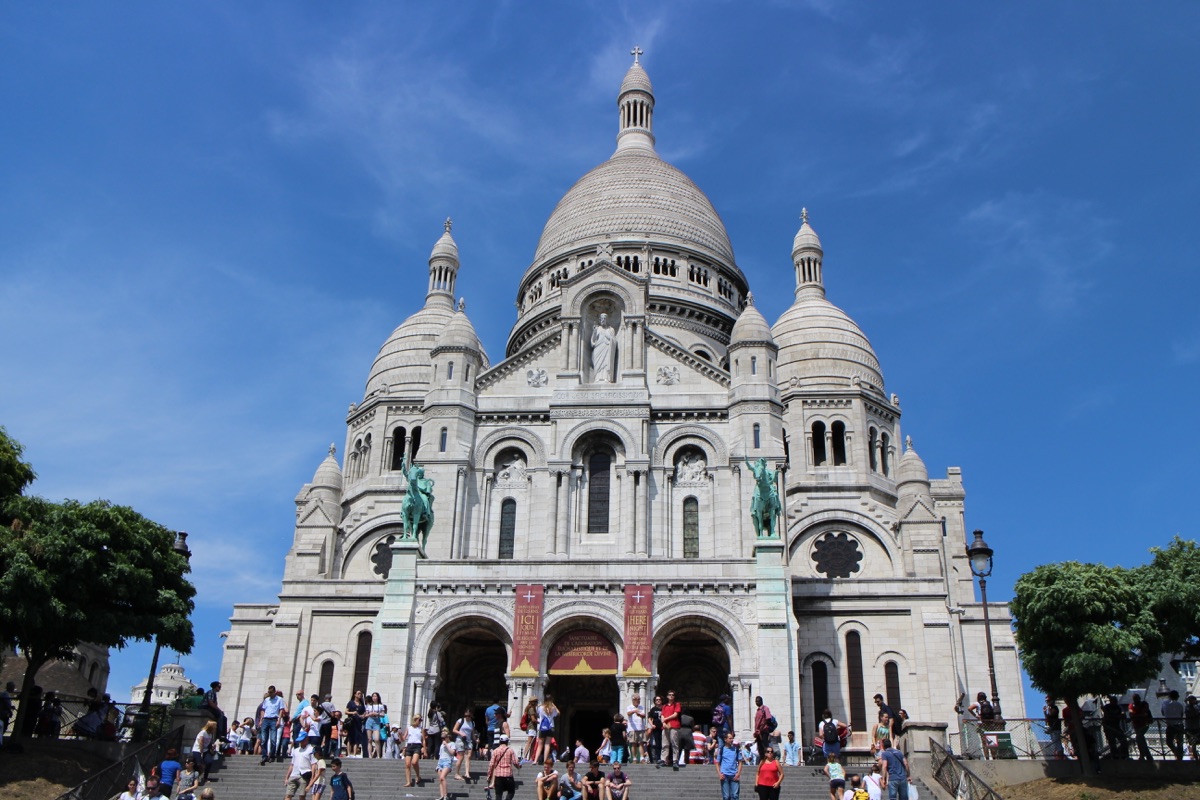
Pair Saint-Denis with a stop at Sacré-Cœur on Montmartre, the traditional place of the martyrdom of Saint Denis, to read the saint's story from the place of his death to the place of his burial.
Saint-Denis deserves a dedicated trip. Begin at the west facade, walk the nave toward the choir, pass into the ticketed area for the royal necropolis and the ambulatory of 1144, and end in the crypt with the royal ossuary and the earliest foundations of the church. Leave time for prayer in the nave before or after the ticketed visit so the day does not read as a museum hour.
How to Visit
How to visit well.
Saint-Denis is best treated as a dedicated half-day extension rather than a quick stop between central Paris churches. The nave is open free of charge for prayer and parish liturgies kept by the cathedral chapter; the choir, ambulatory, royal necropolis, and crypt are operated as a national monument by the Centre des Monuments Nationaux and require a ticket. Confirm current opening hours, ticket arrangements, and Mass times on the official basilica site before planning around them.
Daily Mass and the Liturgy of the Hours kept by the cathedral chapter
Sacrament of Reconciliation according to the cathedral schedule
Solemn liturgies for diocesan and patronal feasts
Free entry to the nave for prayer and parish life
Ticketed access to the choir, ambulatory, royal necropolis, and crypt through the Centre des Monuments Nationaux
Current Practical Information · reviewed July 12, 2026
Separate cathedral prayer from the monument visit.
Saint-Denis remains a church used for worship while the royal necropolis is operated as a national monument. Access to the monument area changes by season and can close for services.
Cathedral
Living diocesan church and place of worship
Necropolis
Ticketed national-monument area
Opening pattern
The monument publishes separate summer and winter hours; Sundays begin later. Check the official page for the date of your visit.
Exceptional closures
The royal necropolis can close for religious services, concerts, rehearsals, and special events.
Construction context
The north tower and spire reconstruction is an active heritage project and may affect the visit experience.
Relics, Tombs, Sacred Objects
What pilgrims come to venerate here.
Tomb and Burial
Saint Denis, first bishop and martyr of Paris, traditionally venerated as buried at this site from the time of his martyrdom in the 3rd century. The basilica preserves the long shrine memory of Saint Denis and his companions Rusticus and Eleutherius.
According to long-standing local tradition, Saint Geneviève helped build a chapel on the tomb of Saint Denis in the late 5th century, before the royal abbey was founded.
Several abbots and bishops of Saint-Denis are commemorated in the church, alongside the kings and queens of France whose tombs make up the royal necropolis.
Relics and Sacred Tradition
The basilica preserves the shrine memory of Saint Denis and his companions, traditionally venerated at this site from the time of their martyrdom. The relics suffered greatly during the French Revolution, and what remains today is kept and venerated as the surviving witness of an unbroken local devotion.
Pilgrims come to Saint-Denis as the long-standing shrine of the first bishop of Paris, rather than to see an intact body relic of the kind found in less disturbed shrines.
Sacred Objects
The west facade of Abbot Suger, with its three portals, completed around 1140 and one of the earliest examples of a Gothic west front.
The ambulatory and chevet of Suger, dedicated on 11 June 1144, with its ring of radiating chapels and the new stained glass that gave Saint-Denis its reputation as the first Gothic interior of light.
The Rayonnant nave and transepts of Pierre de Montreuil, with the great north and south rose windows of the 13th century.
The royal necropolis in the choir and crossing, with recumbent tombs of medieval kings and queens commissioned under Saint Louis IX around 1260 and the Renaissance funerary monuments of Louis XII, Francis I, Henri II, and Catherine de Medici.
The crypt beneath the choir, with the Hilduin chapel and the ossuary that holds the remains gathered after the Bourbon Restoration.
About a fifteen minute ride south on Metro Line 13 toward central Paris. Montmartre is traditionally venerated as the Mount of Martyrs, where Saint Denis and his companions were martyred before being carried for burial at the site that became Saint-Denis.
Sacred place
Notre-Dame de Paris
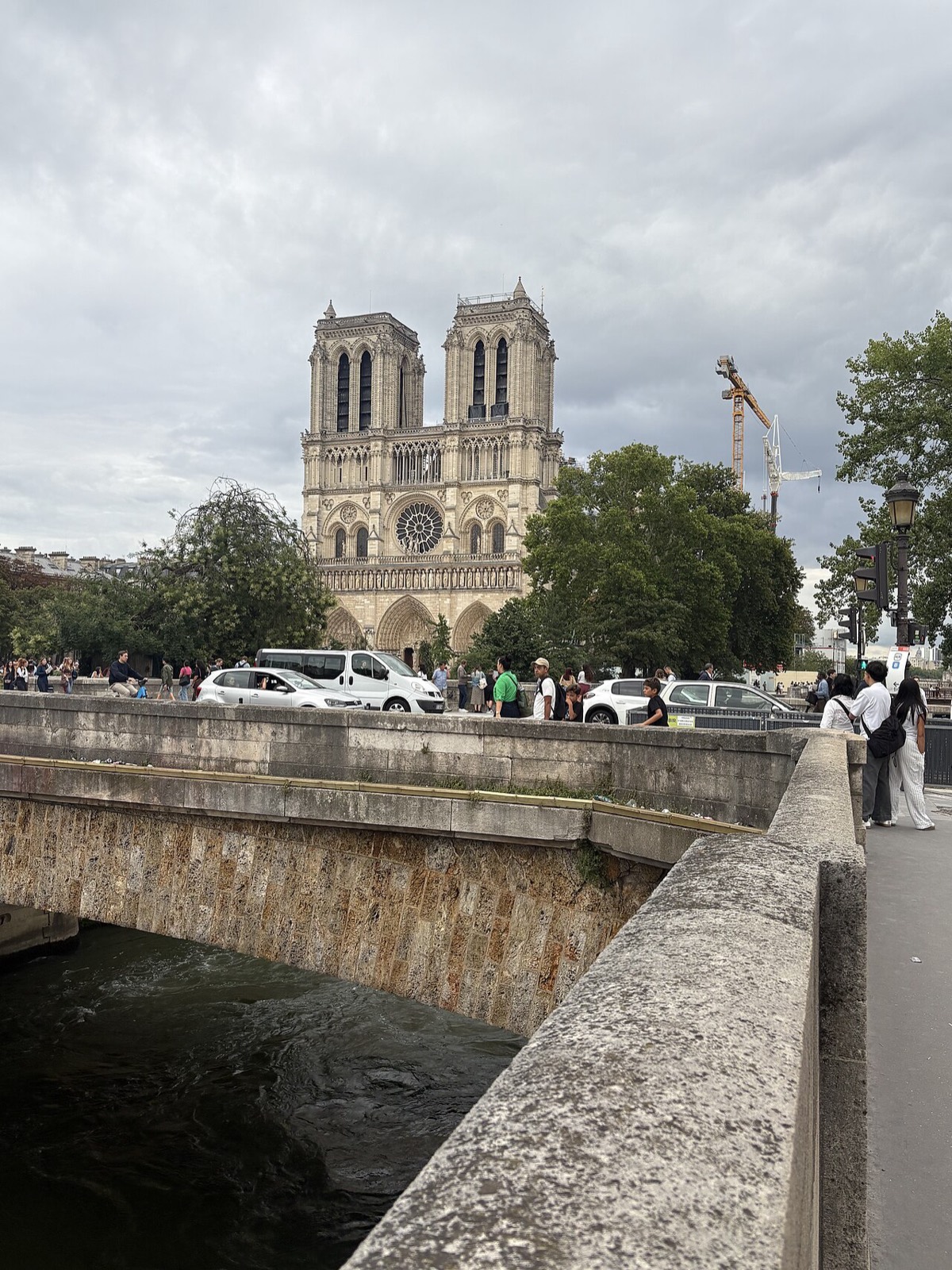
About thirty minutes south by Metro and RER. The cathedral of the Archdiocese of Paris and the present home of the Crown of Thorns, brought to Paris by Saint Louis IX, whose royal program shaped the necropolis at Saint-Denis.
Sacred place
Sainte-Chapelle
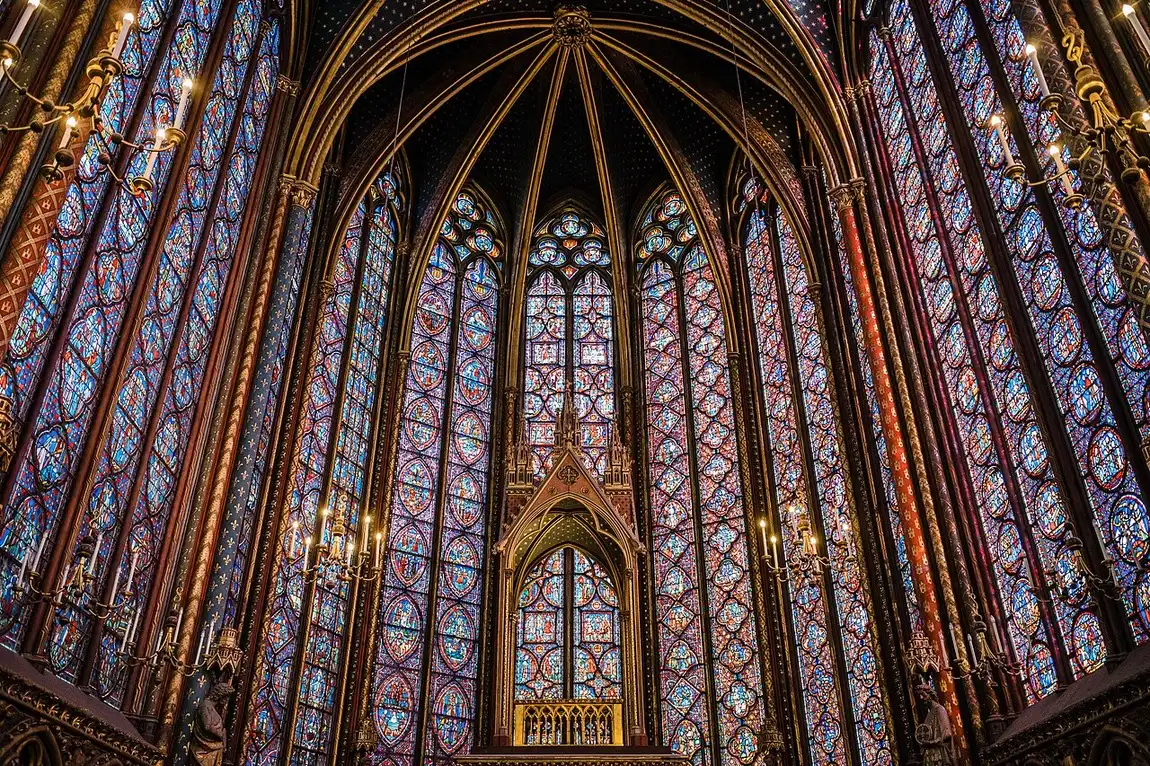
About thirty minutes south by Metro and RER. The royal palace chapel built by Saint Louis IX on the Île de la Cité, the same king whose recumbent tomb program defined the royal necropolis at Saint-Denis.
Sacred place
Saint-Germain-des-Prés
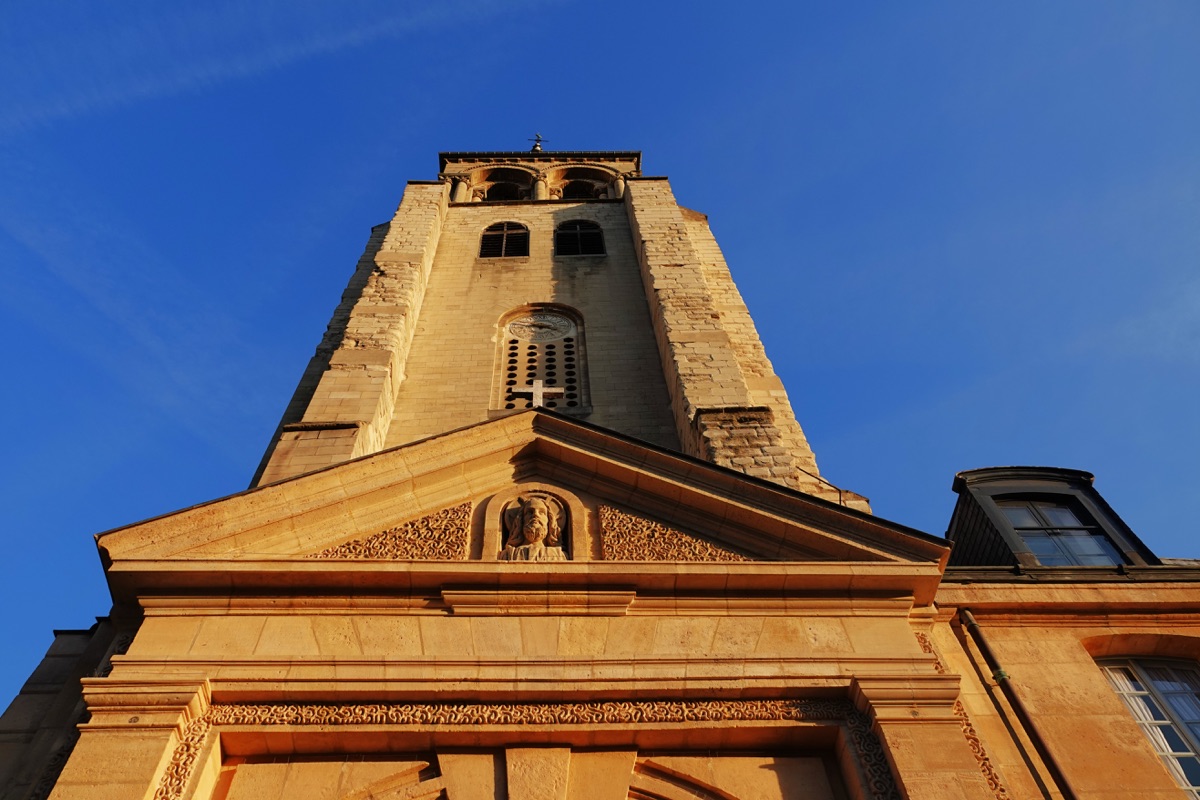
About thirty minutes south by Metro. The ancient abbey church of Saint Germain of Paris and one of the oldest churches in the city, witness to the Benedictine memory that Saint-Denis once shared.
Map · Paris, France
Plan your visit.
Editorial sources
Edited from the official Basilica Cathedral of Saint-Denis history, Gothic-architecture, royal-necropolis, and practical-information pages, with Catholic precision around the shrine and Revolution-era losses. Saint-Denis is both an active diocesan cathedral and a ticketed national monument. The relics of Saint Denis and his companions were deeply affected by the desecrations of the French Revolution; what is venerated today is the surviving witness of a long local devotion rather than an intact medieval treasury. The royal tombs are sacred-historical burials, not saint relics.