
Croagh Patrick and Saint Patrick's Oratory
Croagh Patrick joins a living Catholic penitential pilgrimage to a demanding mountain ascent, with Saint Patrick's Oratory at the summit and prudence governing every step.
- Location
- Westport, Ireland
- 53.7601° N · -9.6598° E
- Type
- Catholic sacred mountain and summit oratory
- A small white twentieth-century oratory on an exposed rocky summit
- Dedication
- Saint Patrick and prayer for Ireland
- Time Needed
- lower walk to full climb
A holy mountain that permits no bravado
Come to place prayer, penance, and Ireland's missionary memory into the body. The mountain is not a spiritual trophy. Its steep path, changing weather, and honest limits can teach humility before the summit ever comes into view.
Patrick's mountain in received tradition
Croagh Patrick was significant before Christianity and became one of Ireland's great Christian pilgrimage places. Catholic tradition remembers Patrick fasting here for forty days. Because Patrick's surviving writings do not record that episode, Eternal Roam names it as received tradition rather than contemporary testimony. Centuries of penitential ascent, the stations of the Reek, the annual national pilgrimage, and summit worship give the mountain a living Catholic identity that does not depend on overstating the evidence.
The sacred place is mountain, path, stations, and summit oratory together. The small white chapel stands against rock and weather rather than commanding them. From Murrisk, the path rises through the shoulder to the steep cone, where loose stone and exposure become the decisive practical reality.
Catholic tradition remembers Patrick fasting on the mountain for forty days; that episode belongs to later Patrician tradition rather than his own surviving writings.
Reek Sunday, traditionally the last Sunday of July, is the national pilgrimage day; current arrangements must be verified each year.
The summit rises to 765 metres above Clew Bay.
The short distance understates the climb's steep, loose, exposed, and weather-sensitive terrain.
A place is significant when it is still used.
Croagh Patrick makes bodily penance public and ecclesial. Pilgrims carry intentions, pray the stations, seek the sacraments when offered, and climb among strangers who share the same difficult ground. Turning back because of weather, health, or fatigue can be a truthful act of humility, not a failed pilgrimage.
- How quickly weather changes with height
- The transition from lower path to loose summit cone
- The difference between received Patrick tradition and his own surviving writings
- The shared responsibility of pilgrims, landowners, clergy, conservation workers, and rescuers
What to notice.
-
01
The decision at Murrisk
Assess weather, health, equipment, time, and local advice before the first step.
-
02
The stations of the Reek
Use the official prayer and posted guidance so devotion remains joined to the living pilgrimage.
-
03
The summit oratory
If conditions permit, arrive for prayer rather than conquest; current worship is limited to designated times.
-
04
The descent
Keep time and strength for the loose ground below the summit. The pilgrimage is not complete until everyone returns safely.
See all 4 · 1 more
- The descent Keep time and strength for the loose ground below the summit. The pilgrimage is not complete until everyone returns safely.
How much time, and what to do with it.
-
lower walk
A prayerful lower-path visit when summit conditions are unsuitable.
-
full climb
At least three hours round trip, often longer, only in suitable conditions.
How to visit well.
Check weather warnings, Westport Parish guidance, and mountain-rescue advice immediately before climbing. Wear proper footwear and layers, carry food and water, stay on the defined path, set a turnaround time, bring no dog, leave no trace, and accept a lower prayerful walk when the summit is unsafe.
Decide first whether the mountain is safe today.
The parish describes a climb of at least three hours round trip through dangerous terrain underfoot. Fitness, footwear, layers, food, water, daylight, weather, and local advice all belong to the decision.
- Route
- Out and back from Murrisk on the defined pilgrim path
- Minimum time
- At least three hours round trip; many pilgrims need longer
- Difficulty
- Demanding mountain climb with a steep, loose summit cone
- Facilities
- Facilities are at Murrisk; there are no toilets on the mountain
Additional schedule notes
Mountain preparation
- The cone is steep and loose.
- Consult the mountain-rescue and good-practice guidance linked by the parish.
Protect the mountain
- Mountain streams serve the local community.
- Habitat restoration depends on pilgrims keeping to the path.
What pilgrims come to venerate here.
Tomb and Burial
- No burial claim is made. Patrick's principal public burial tradition belongs to Downpatrick.
Relics and Sacred Tradition
- No bodily relic claim is made. The mountain's significance is pilgrimage, prayer, and received Patrician tradition.
Sacred Objects
- Saint Patrick's Oratory at the summit
- The traditional stations of the Reek
- The defined pilgrim path from Murrisk
How this place gathers the saints.
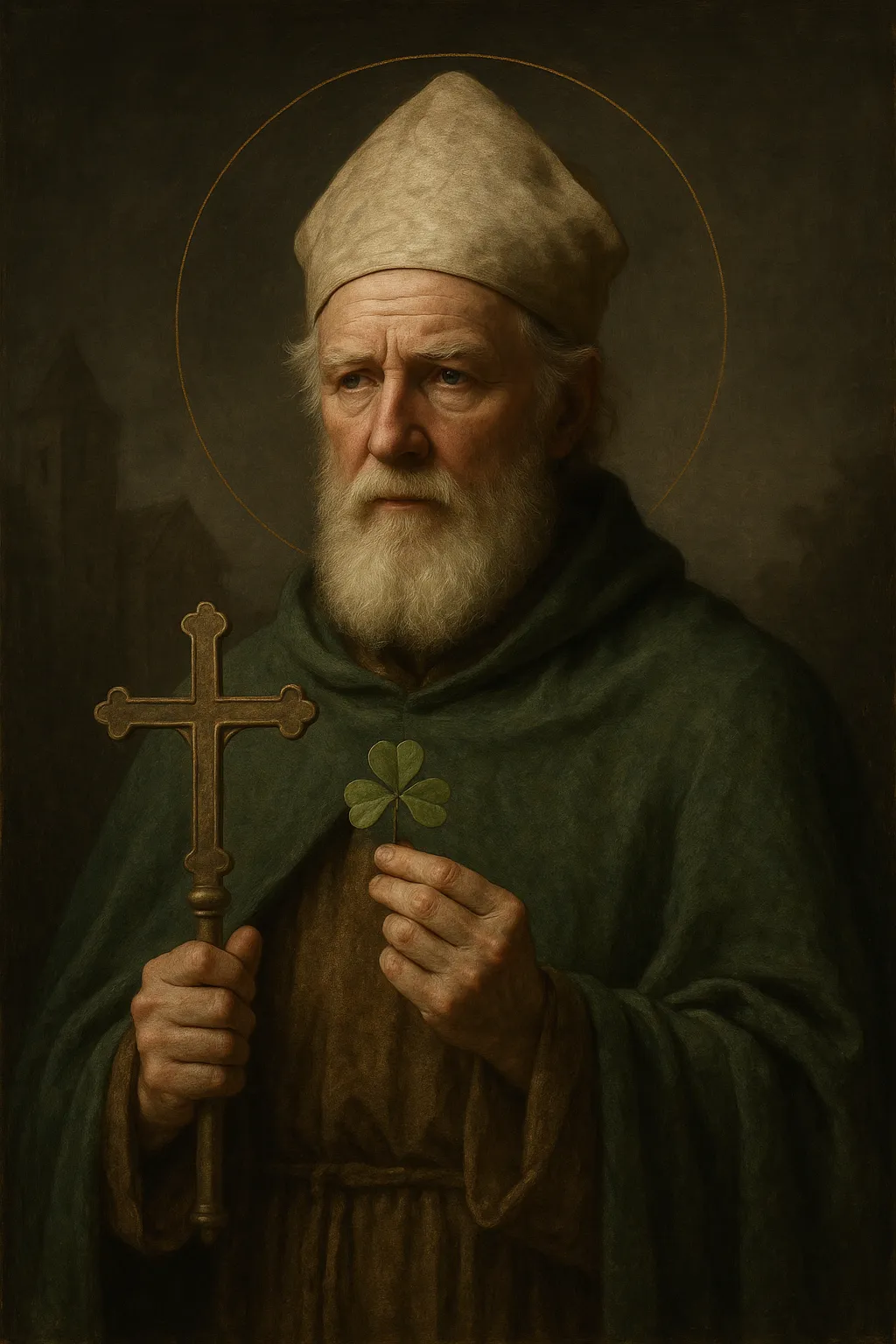
Within walking distance.
Plan your visit.
The page treats Croagh Patrick as a canonical sacred place so it can occupy Day 5 of a Journey. It does not redesign whole-route objects, which remain unschedulable inside an ordinary day by contract.
August 9, 2026
Photo credits
- Hero. Störfix / Wikimedia Commons (CC BY-SA 3.0). Source. CC BY-SA 3.0.
- The climb in practice. Tom Szustek / Wikimedia Commons (CC BY-SA 4.0). Source. CC BY-SA 4.0.