
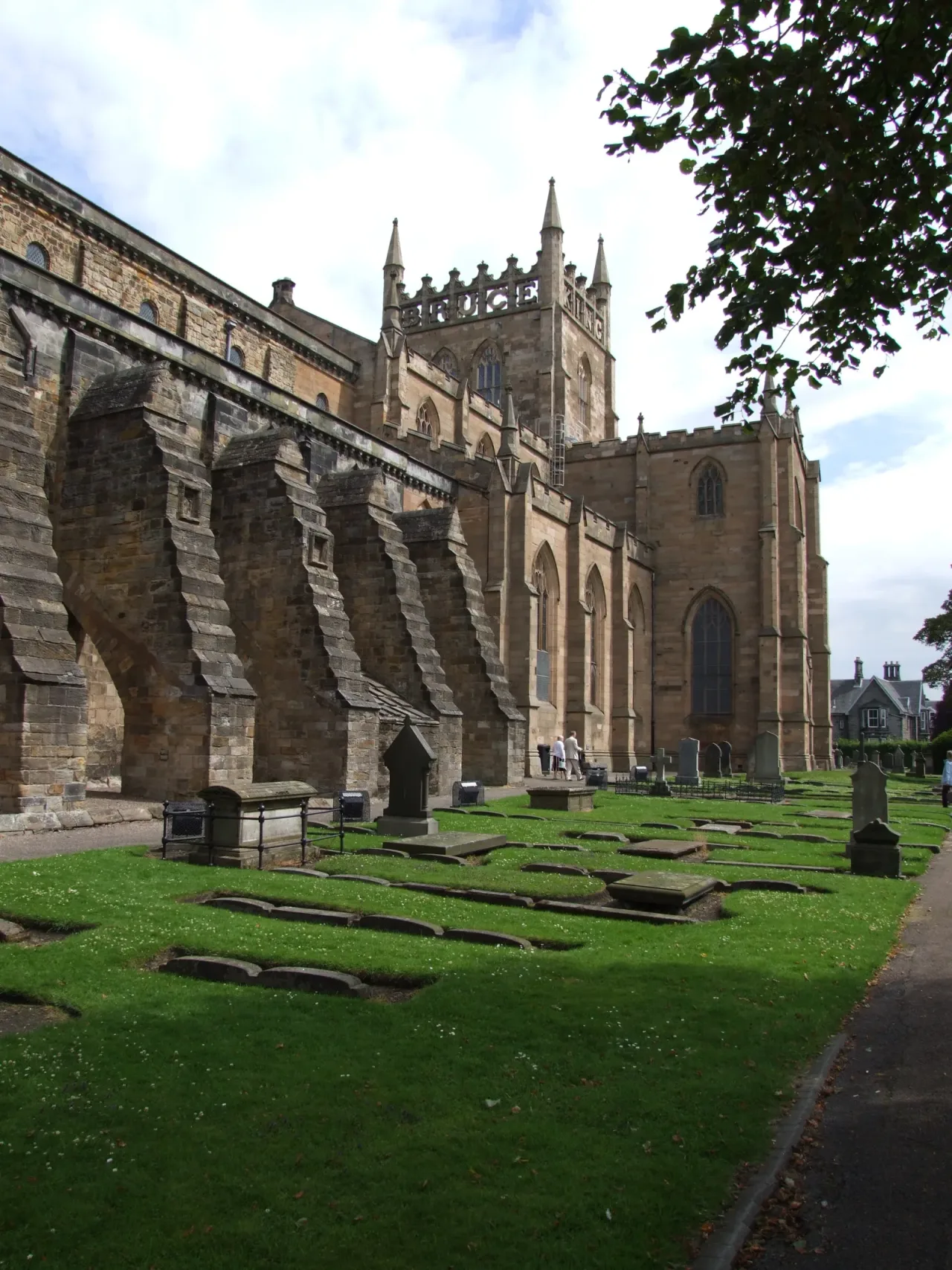
Dunfermline Abbey and Saint Margaret's Shrine
At Dunfermline, Margaret's public work and personal devotion meet: the priory she founded, the royal church she shaped, and the place where medieval Scotland venerated her after death.
- Location
- Dunfermline, Scotland 56.0714° N · 3.4615° W
- Type
- Abbey
- Dedication
- The Holy Trinity
The queen's abbey and the memory of a holy household
Margaret's sanctity was not detached from place. Dunfermline gathers her prayer, reform, hospitality, royal family, death, burial, and long public memory into one pilgrimage.
A royal foundation became Scotland's shrine
Margaret and Malcolm III established a religious house at Dunfermline around 1070. Her support for worship, the poor, and Church reform shaped the royal center that grew here. Margaret was buried at Dunfermline in 1093. After her canonization in 1250, her remains were translated to a shrine east of the high altar. The shrine base survives even though the Reformation dispersed or obscured much of the medieval cult.
The Romanesque nave, later parish church, palace remains, and exposed shrine setting reveal the abbey's long royal and religious history.
The abbey church is now Presbyterian and the medieval remains are a heritage site. Catholic pilgrims should pray with gratitude while respecting present worship and custody.
What to notice.
-
The surviving setting of Saint Margaret's shrine
Pray at the historic shrine base while keeping later relic claims distinct.
-
The Romanesque nave
Read the surviving medieval fabric within Margaret's royal foundation.
-
The royal burial and palace context
The complex connects Margaret's household, public vocation, and long Scottish memory.
How to visit well.
Check both Historic Environment Scotland and the abbey parish for current access, services, closures, and restrictions around the shrine remains.
Check both custodians before traveling to the shrine setting.
The active church and heritage areas can follow different schedules.
How this place gathers the saints.
Plan your visit.
The record preserves the distinction among Margaret's documented burial, the surviving shrine setting, and uncertain later relic history.
August 8, 2026