
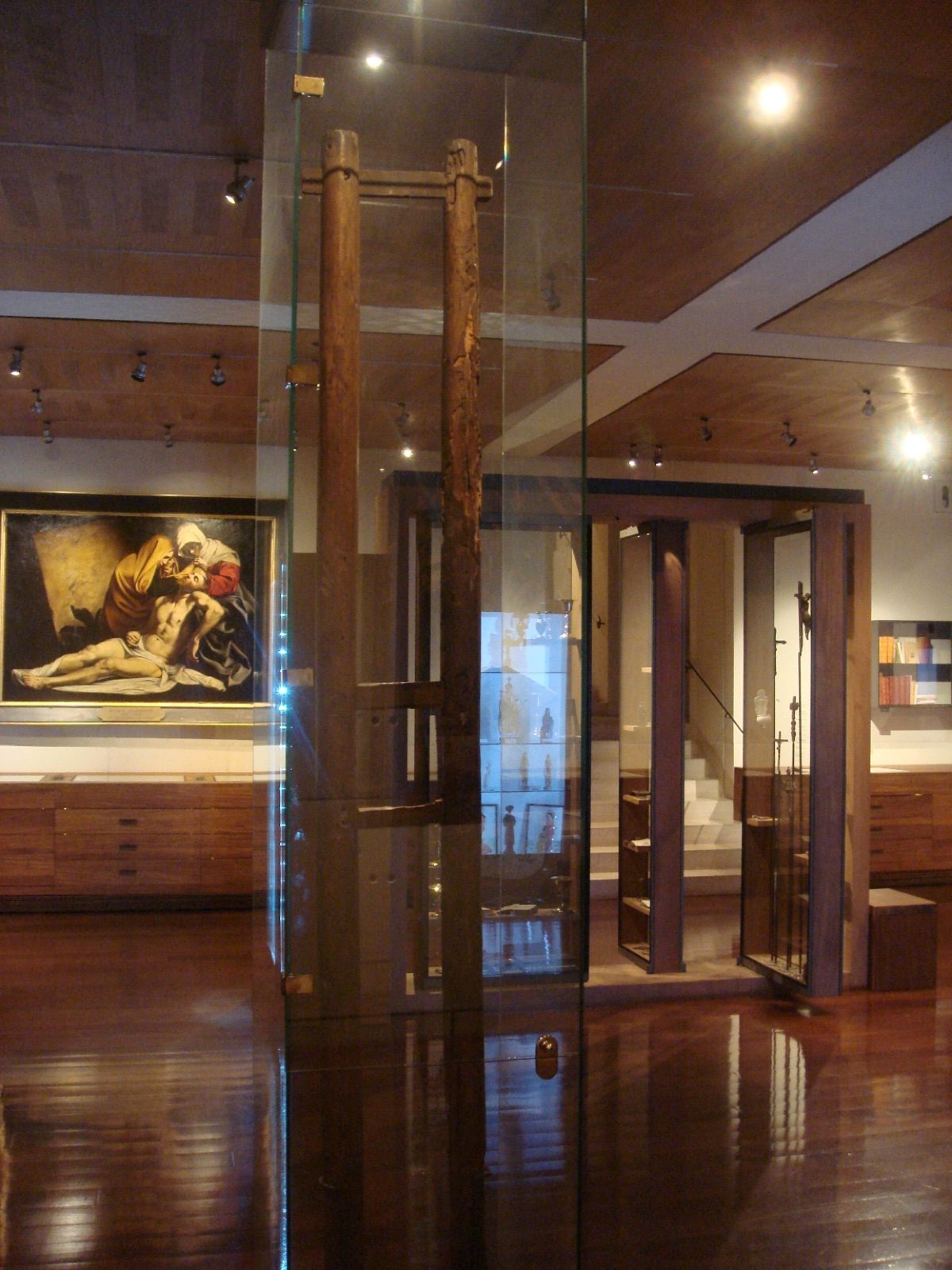
Paris Foreign Missions, Martyrs' Hall
A Rue du Bac martyr-memory site where Paris opens onto the Churches of Asia through relics, souvenirs, letters, instruments of suffering, and missionary witness.
FRANCE · PARIS
48.8521° N · 2.3208° E
- Location
- Paris, France 48.8521° N · 2.3208° E
- Type
- Missionary martyr memory site / museum, chapel, and crypt Institutional chapel, crypt, and museum spaces within the Paris Foreign Missions complex
- Dedication
- Missionary martyrs of the Paris Foreign Missions
- Time Needed
- 30 minutes to 2 hours
Why Go
Catholic Paris With a Global Horizon
Visit the Martyrs’ Hall when Rue du Bac needs a wider horizon. This is not a large basilica or a famous parish church. It is a quiet missionary memory site, where Paris is connected to priests sent to Asia, to martyrdom, to relics and personal objects, and to the Eucharistic life that made that witness possible.
From Missionary Sending to Martyr Memory
The Missions Étrangères de Paris have sent priests to Asia and the Indian Ocean for centuries. The official MEP account says the memory of the Salle des Martyrs began powerfully in 1842, when the remains of Pierre Borie, killed in Vietnam, returned to the seminary on Rue du Bac. Other remains and objects followed from missions in Vietnam and China. The room moved and changed as devotion, beatifications, visitors, and the need for a clearer presentation grew.
The Martyrs’ Hall is not read like a church nave. It is a sequence of museum, chapel, and crypt spaces. The display gathers objects in cases and arches, while the crypt and chapel keep the memory close to liturgy. The visitor is not looking for grandeur. The force of the place is in scale, proximity, and names.
The Martyrs’ Hall makes Catholic Paris global rather than merely French.
The hall keeps martyrdom in a sober register. What is shown here is presented as the memory of named missionaries and the Christians who died alongside them, rather than as spectacle.
The official MEP framing is unusually helpful because it distinguishes relics from souvenirs and connects memory to liturgy.
Spiritual Significance
The spiritual significance is missionary witness. MEP’s own language distinguishes relics from souvenirs and links the martyr tomb to the Eucharistic space. That distinction matters. A Catholic visit honors the martyrs without treating instruments of suffering as curiosities. It lets their letters, objects, relics, and names point back to Christ and to the Churches they served.
Five things to read slowly.
-
The Salle des Martyrs
Read the room slowly. The official MEP presentation arranges martyr memory through objects, letters, devotional items, and personal effects, not through spectacle.
-
The cangue of Saint Pierre Dumoulin-Borie
MEP presents the cangue as an axis of the room. Approach it as witness to martyrdom, not as a curiosity.
-
Relics and souvenirs
Use MEP’s own distinction: relics are the bodily remains of saints and blessed martyrs; souvenirs are objects related to their lives and martyrdom.
-
Letters and mission documents
The documents keep the martyrs human: priests in motion, writing, discerning, suffering, and remaining faithful.
-
The chapel and crypt context
Do not isolate the museum from prayer. The official framing connects the martyr memory to liturgy and the Eucharistic space.
What to notice
- How quiet the site is compared with the major churches of Paris.
- How Paris becomes connected to Asia through missionary sending and martyr memory.
- How MEP distinguishes relics from souvenirs instead of flattening them together.
- How the chapel and crypt prevent the visit from becoming only historical display.
How much time, and what to do with it.
-
Salle des Martyrs and prayer
5 ordered stopsCheck access first, then enter the Salle des Martyrs slowly. Keep the distinction between relics and souvenirs clear, and end by remembering the chapel and crypt context.
- Verify MEP public access for the day.
- Begin in the Salle des Martyrs.
- Pause at the cangue and martyr objects.
- Read letters and mission documents as human witness.
- End with the chapel and crypt context if accessible.
-
Rue du Bac with a missionary horizon
4 ordered stopsPair the Martyrs’ Hall with the Miraculous Medal and Saint Vincent de Paul chapels so the day holds Marian devotion, charity, priesthood, and mission together.
- Begin at the Chapel of Our Lady of the Miraculous Medal.
- Continue to the Chapelle Saint-Vincent-de-Paul.
- Walk to the MEP Martyrs’ Hall.
- Leave time for quiet rather than treating the site as an add-on.
How to Visit
Keep the visit sober, specific, and prayerful.
Treat this as a focused and quiet stop. Use the official MEP visit page before going, since access is tied to museum hours, holidays, and guided visits. Pair it naturally with the Chapel of Our Lady of the Miraculous Medal and the Chapelle Saint-Vincent-de-Paul, but give the Martyrs’ Hall its own seriousness.
- Check MEP access first Use the official MEP visit page for museum, chapel, crypt, holiday, and guided-visit information before going.
- Distinguish relics and souvenirs The official page makes this distinction itself. Preserve it when reading the displays.
- Do not rush the objects Letters, instruments, personal effects, devotional objects, and names need silence more than explanation.
- Pair it with Rue du Bac The nearby Miraculous Medal and Saint Vincent de Paul chapels make this a compact but serious Catholic geography.
Verify museum, chapel, and crypt access.
The MEP site publishes public access for the Salle des Martyrs, chapel, crypt, and guided visits. Confirm current hours before planning around the stop.
- Public access
- The MEP museum page says the Salle des Martyrs, chapel, and crypt are open to the public from Tuesday to Saturday, with holiday closures noted. Musée et activités culturelles
- Guided visits
- MEP lists guided visits for adults and recommends reservation for the scheduled visit. Musée et activités culturelles
- Martyr context
- The MEP Martyrs of Asia page identifies twenty-three MEP priests canonized by the Catholic Church and places their witness in Vietnam, Korea, and China. MEP Martyrs of Asia
Hours and access can change for holidays, events, guided visits, and MEP programming. This section records official-source guidance, not guaranteed access.
Relics, souvenirs, and martyr memory.
Relics and Sacred Tradition
- The MEP official museum page distinguishes relics from souvenirs: relics are the bodily remains of saints and blessed martyrs, while souvenirs are objects related to their lives and martyrdom.
- The site preserves and presents martyr memory with particular connection to Asia, especially Vietnam, Korea, China, and the wider missionary history of the Paris Foreign Missions.
Sacred Objects
- The Salle des Martyrs, where objects, documents, and martyr memories are arranged for a sober encounter with mission and persecution.
- The cangue associated with Saint Pierre Dumoulin-Borie, presented by MEP as an axis of the room.
- Objects of devotion, chains, letters, travel documents, and personal effects tied to missionaries and martyrs.
- The crypt and tomb area, where MEP describes relics and martyr memory in relation to the Eucharistic space.
- The chapel of the Missions Étrangères, which keeps the site from being only a museum.
Missionary witness carried back to Rue du Bac.
This page is not a portrait row. It is a martyr-memory page rooted in the Paris Foreign Missions and the Churches of Asia.

Around Rue du Bac.
-
City hub
Paris
Where this church sits within the wider Catholic geography of Paris.
-
Devotional chapel
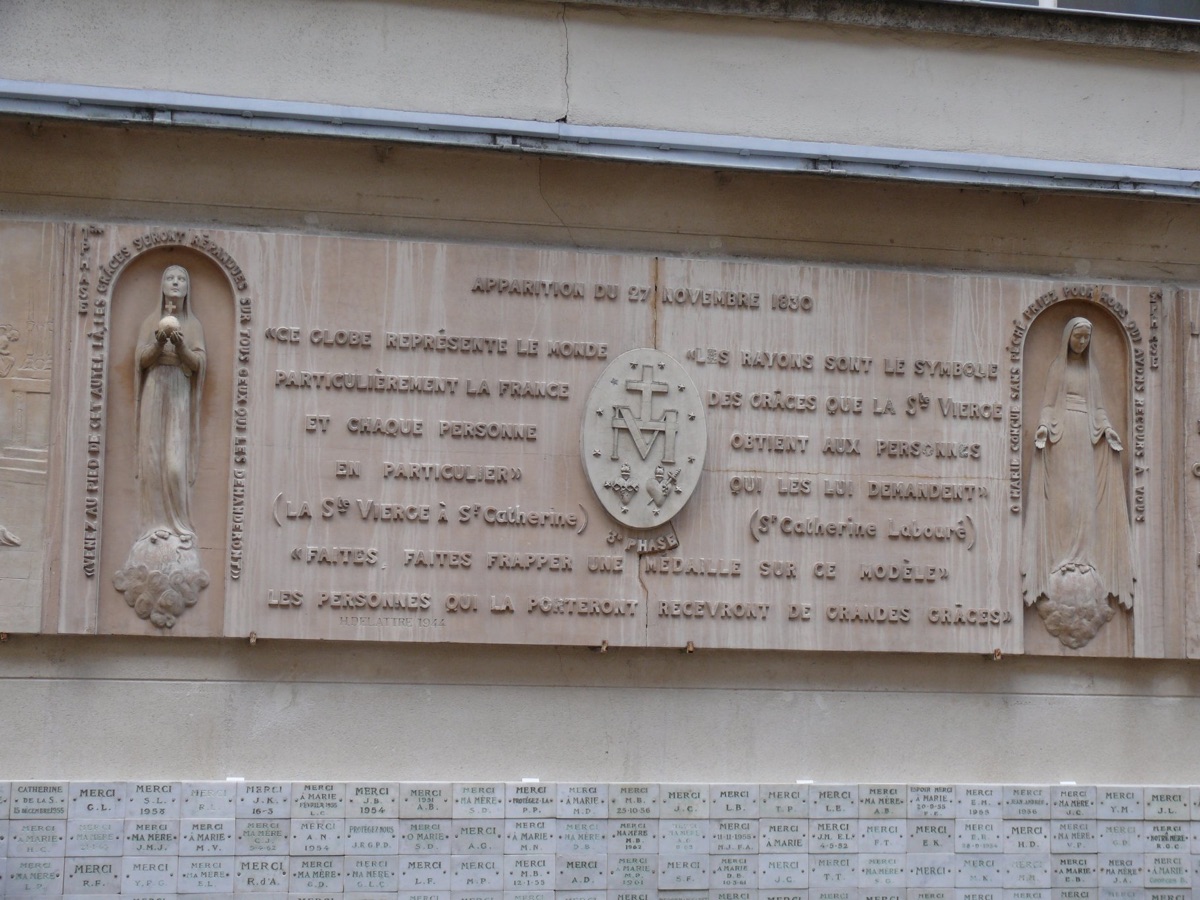
Chapel of Our Lady of the Miraculous Medal
The closest natural pairing on Rue du Bac, joining Marian devotion to missionary martyr memory.
-
Relic chapel
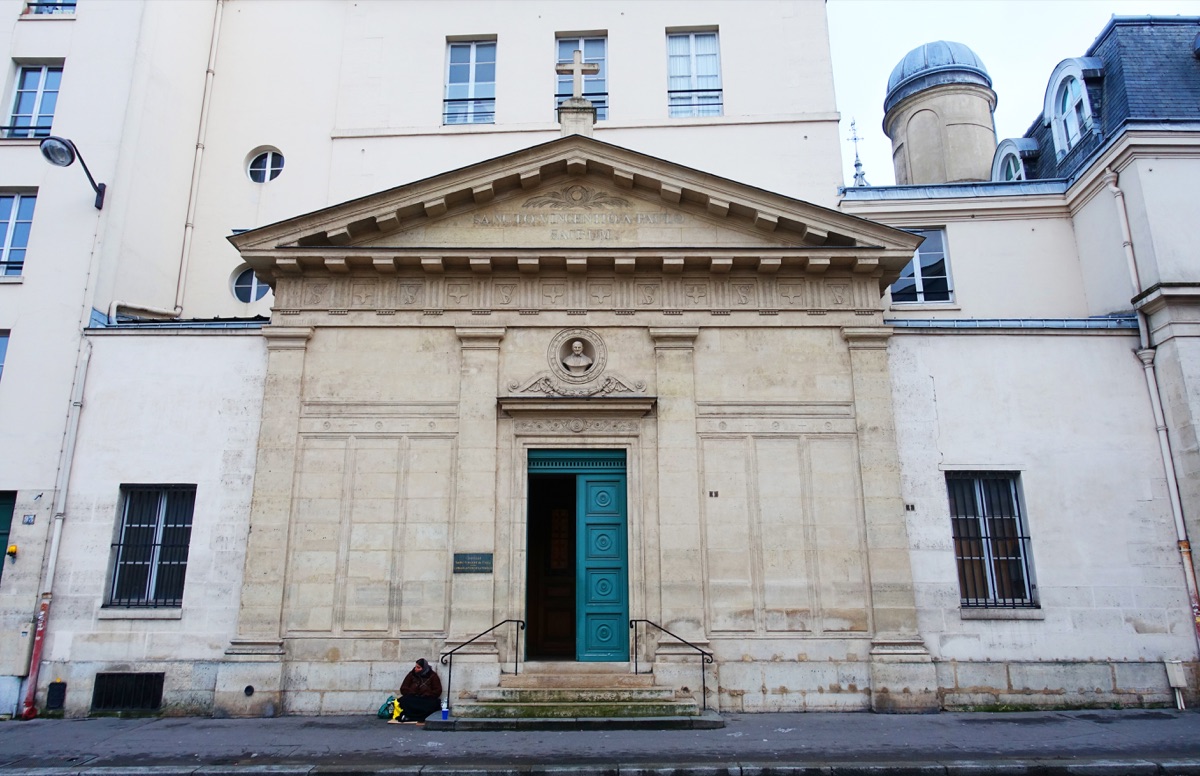
Chapelle Saint-Vincent-de-Paul
A nearby Vincentian stop that gives the Rue du Bac day a charity and priesthood context before or after MEP.
-
Parish church
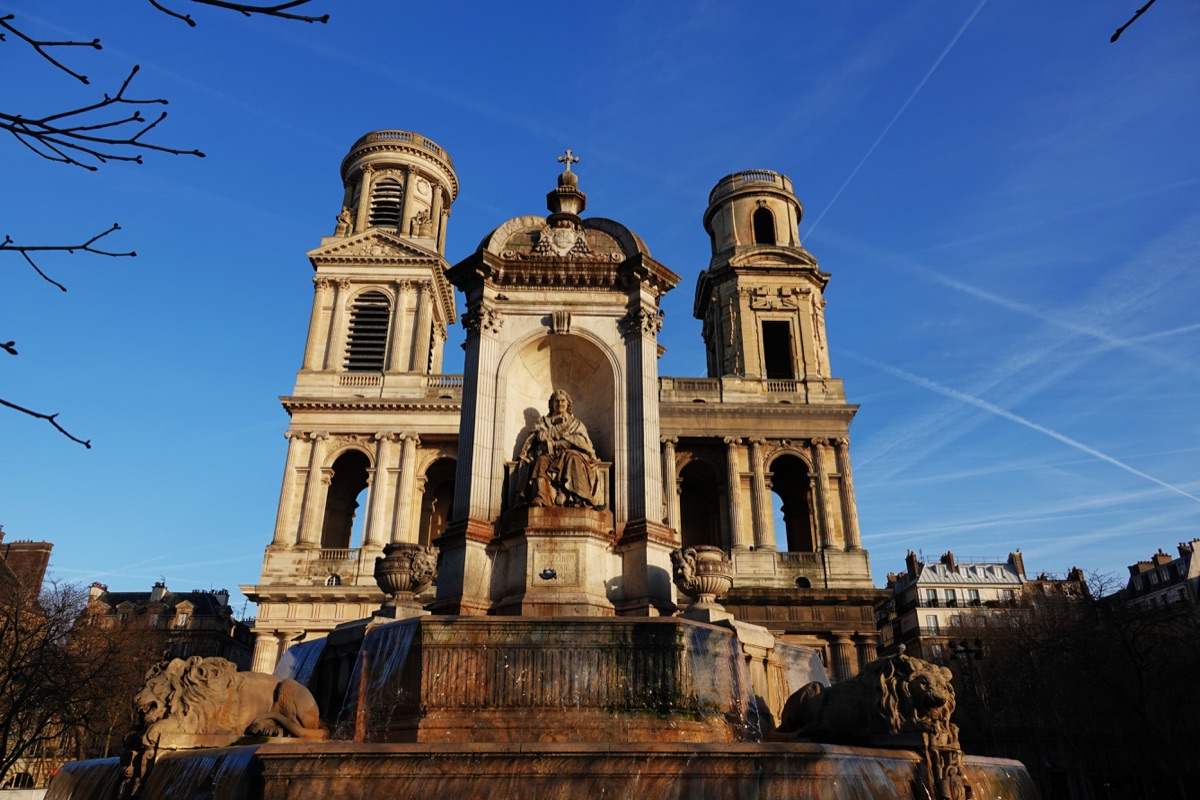
Saint-Sulpice
A larger Left Bank church nearby, useful if the day continues from martyr memory into sacred art and parish life.
Plan your visit.
Editorial sources
Relic language here follows the distinction the Missions Étrangères de Paris itself draws between relics and souvenirs of its martyrs, and the account of the Salle des Martyrs rests on the society's published material.
Official
Last reviewed
July 7, 2026
Photo credits
- Hero. PHGCOM / Wikimedia Commons (CC BY-SA 3.0). Source. CC BY-SA 3.0.