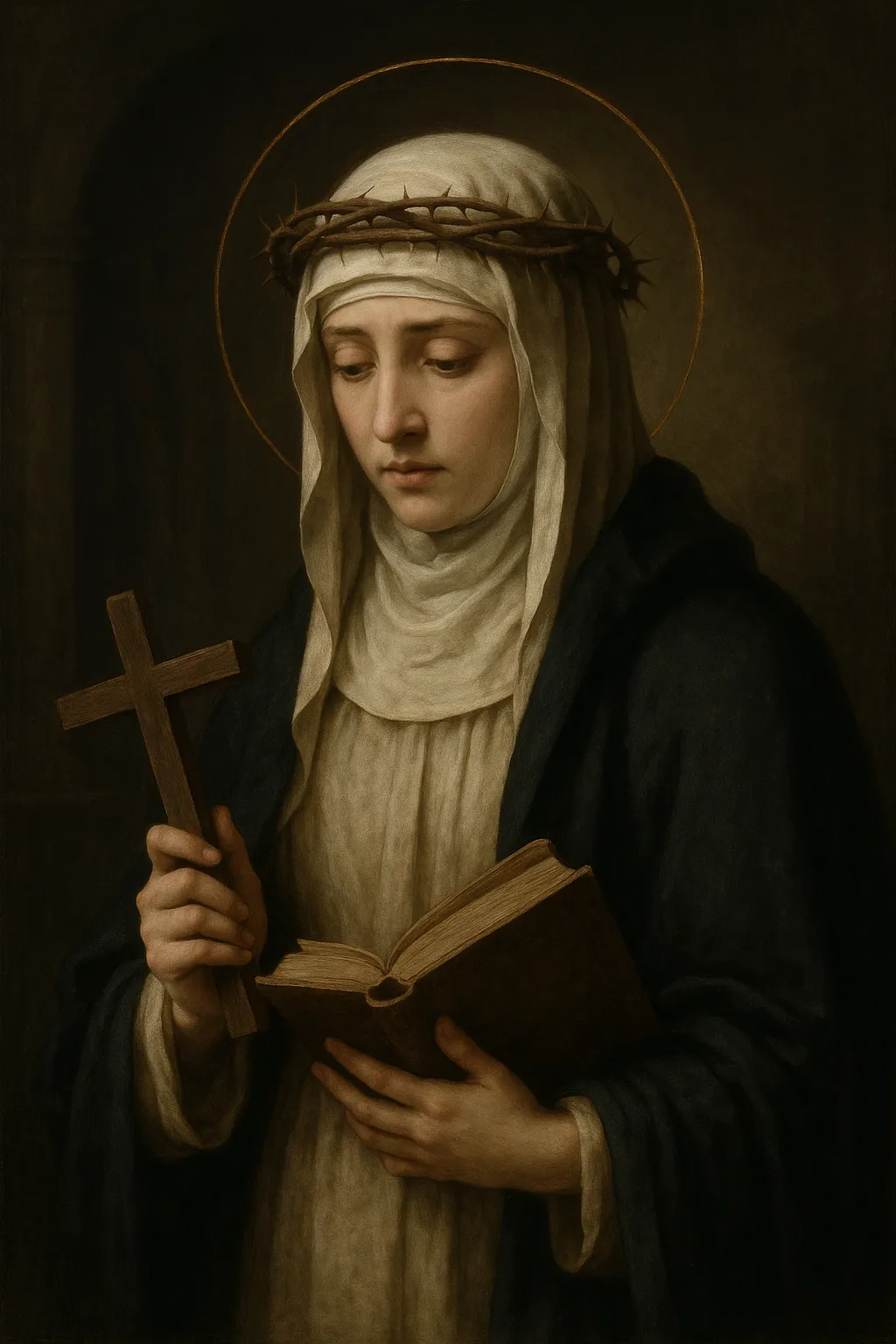
Body of Saint Catherine of Siena
Tomb and body relicYes, beneath the high altar
Basilica of Santa Maria sopra Minerva · Order of PreachersSanta Maria sopra Minerva is the Dominican basilica beside the Pantheon, the one Gothic interior in Rome, where pilgrims pray before the body of Saint Catherine of Siena beneath the high altar and the friar-painter Blessed Fra Angelico is buried.
Come here for Saint Catherine of Siena. Her body rests beneath the high altar of the principal Dominican church in Rome, a few steps from the Pantheon. The Minerva holds a great deal in one quiet, blue-vaulted nave: a Doctor of the Church at the altar, the tomb of Blessed Fra Angelico, Michelangelo's Risen Christ, and Filippino Lippi's frescoes in the Carafa Chapel.
The name remembers an ancient temple once thought to have stood on this ground, near the surviving Pantheon. An early church here was given to the Dominicans in the 13th century, and they raised the Gothic basilica that became their Roman home and a center of preaching and study. Catherine of Siena, a laywoman of the Dominican family and one of the strongest voices in the Church of her age, died in Rome in 1380 and was buried here. The Church venerates her as a Doctor of the Church and a co-patron of Italy and of Europe.
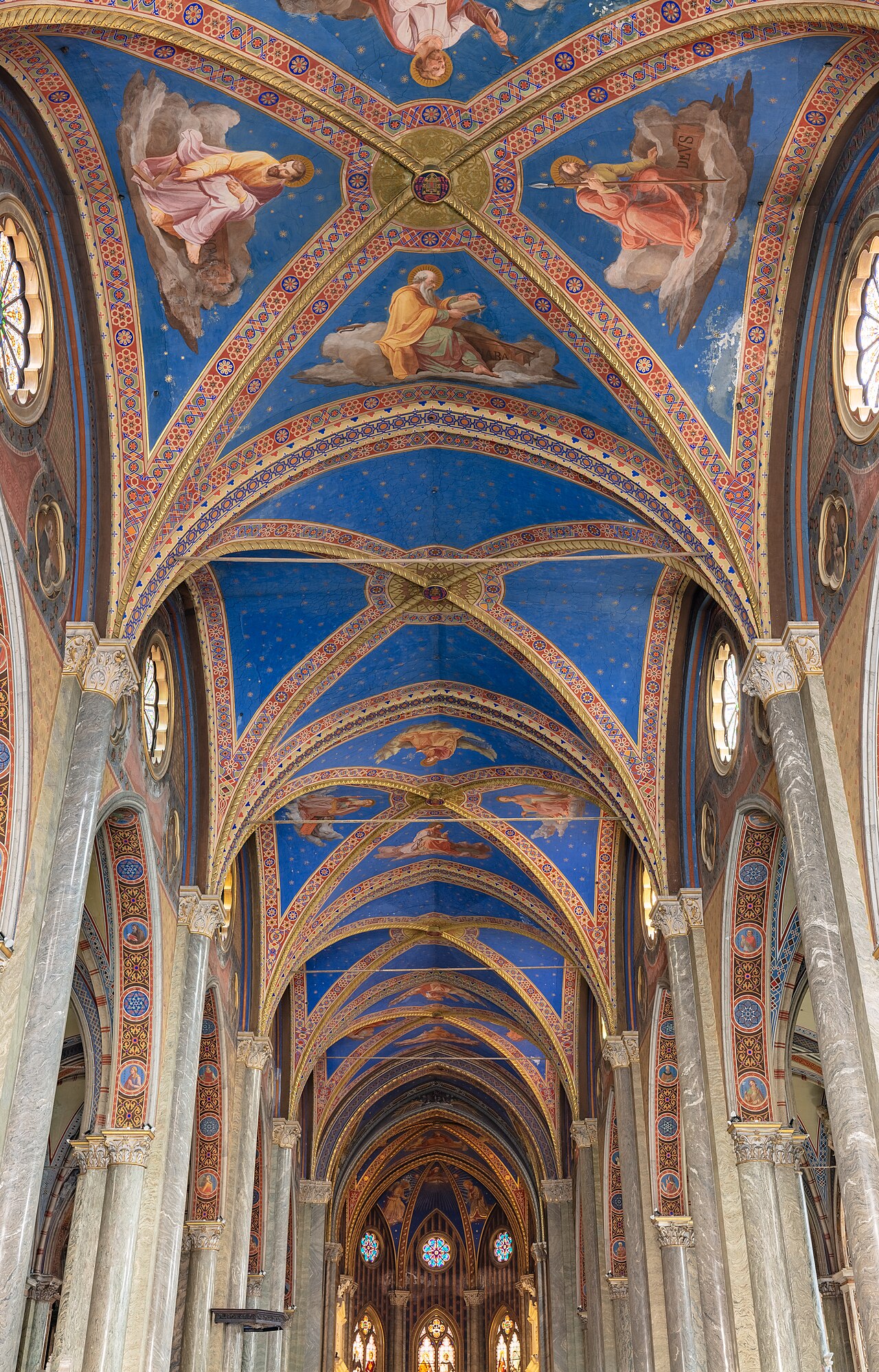
The Minerva is the only church in Rome that keeps a Gothic interior. The blue, star-spangled vaults that give the nave its character belong to a 19th-century Gothic Revival restoration, but the medieval Gothic bones beneath them are genuine and found nowhere else in the city. The art is unusually concentrated: Michelangelo's Risen Christ beside the altar, and the Carafa Chapel with Filippino Lippi's frescoes of the Annunciation and the Triumph of Saint Thomas Aquinas.
This is a working Dominican basilica before it is a gallery. The right way to enter is the way pilgrims have always entered: toward the altar and the tomb of Saint Catherine, with the art met along the way rather than as the reason for the visit.
Her body rests beneath the high altar, in the church of the Dominican family to which she belonged. This is the devotional center of the visit and the reason most pilgrims come. Her head is venerated separately in Siena.
Carved around 1521 and standing beside the high altar, the Cristo della Minerva is among the few Michelangelo sculptures still kept in the Roman church for which it was made.
In the right transept, Filippino Lippi's late 15th-century frescoes of the Annunciation and the Triumph of Saint Thomas Aquinas, the great Dominican theologian.
The Dominican friar and painter is buried in the church. His tomb slab is a quiet counterpart to the art on the walls around it.
Step out afterward to the small piazza, where Bernini's elephant bears an ancient Egyptian obelisk, carved in 1667. The basilica's name remembers an ancient temple once thought to have stood on this ground.
A short, devotional path that keeps the tomb of Saint Catherine at the center and meets the great art along the way.
The same path, slowed down, with Fra Angelico, the chapel of Saint Catherine's death, and the piazza outside.
Begin at the high altar and the tomb of Saint Catherine of Siena. If it is open, visit the chapel that preserves the reconstructed room associated with her death. Pause at Michelangelo's Risen Christ beside the altar, then the Carafa Chapel and the tomb slab of Fra Angelico. Step out afterward to the piazza and Bernini's elephant bearing its obelisk. The church closes for midday, so check current hours before planning around the visit.
Yes, beneath the high altar
Basilica of Santa Maria sopra Minerva · Order of PreachersWhen open to visitors
Basilica traditionSource note Traditional attributions are presented as tradition, with documentation named where it exists.
The basilica gathers the Dominican family of Rome around one altar: a Doctor of the Church at her tomb, and the friar-painter Fra Angelico nearby.
A two-minute walk north, the ancient rotunda consecrated as a church dedicated to Mary and the Martyrs.
Near the Pantheon, the French national church with Caravaggio's cycle of Saint Matthew.
Edited from the basilica's official Dominican source, the Wikimedia image provenance listed below, and Eternal Roam destination records. Relic and tomb language follows the established tradition of the Order of Preachers.
June 23, 2026
Use this for corrections, broken links, missing places, and planning ideas.