
St. Kateri Tekakwitha
of Ossernenon
A Mohawk and Algonquin woman whose love for Christ carried her through loss, illness, and exile to a life of prayer at Kahnawake.
She loved Jesus without denying who she was.
Benedict XVI, Canonization Homily, 2012 Traditional
The Life and Witness of Kateri Tekakwitha.
Kateri Tekakwitha was a young Mohawk woman who gave her whole heart to Christ. Born beside the Mohawk River, scarred by illness and orphaned as a child, she was baptized at twenty and walked hundreds of miles to live among Christians, where prayer, penance, and consecrated love filled her few remaining years.
Born in 1656 at Ossernenon, a Mohawk village on the river in present-day New York, Kateri was the daughter of a Mohawk father and a Christian Algonquin mother. When she was about four, smallpox swept the village and took her parents and younger brother. She survived, but the disease scarred her face and weakened her eyes, and she was raised by relatives in a world already touched by the French Jesuit missions.
As she grew, she was drawn to the faith the missionaries preached, and in 1676, at about twenty, she was baptized and took the name Kateri, for Catherine. Her conversion set her apart. Some in her village mocked and threatened her, and to follow Christ freely she left everything and walked to Kahnawake, a Christian mission village near Montreal.
At Kahnawake she gave herself to prayer, penance, and the care of the sick and the elderly, and she made a private vow of perpetual virginity, offering her body and her whole future to Christ. She died there in 1680, only about twenty-four, and those at her side told how the scars of smallpox faded from her face. Canonized in 2012, she is honored as the first Native American saint, especially loved by Indigenous and First Nations Catholics.
Remembered as the Lily of the Mohawks, Kateri was fully Mohawk and Algonquin and fully given to Christ. Pilgrims come to Kahnawake, where her relics rest, and to Fonda and Auriesville in the Mohawk Valley, drawn by a holiness that took root in her own land and among her own people.
A life, in years and approximate ages.
-
c. 1656BirthBirth at OssernenonKateri Tekakwitha is born in a Mohawk village in present-day New York to a Mohawk father and an Algonquin mother.
-
c. 1660About 4Smallpox and Family LossSmallpox takes her parents and brother and leaves Kateri with lasting physical marks and weakened eyesight.
-
c. 1676About 20BaptismShe is baptized as Catherine, or Kateri, and begins a Catholic life that brings both grace and pressure.
-
c. 1677About 21Move to KahnawakeKateri moves to the mission settlement near Montreal, where she lives the final years of her Catholic vocation.
-
c. 1680About 24Death at KahnawakeKateri dies at Kahnawake after a brief life of prayer, work, illness, and fidelity.
-
2012After deathCanonizedPope Benedict XVI canonizes Kateri Tekakwitha, remembered as the first Native American saint.
Dates are approximate where the surviving record is traditional or incomplete.
3 places where this witness remains visible.
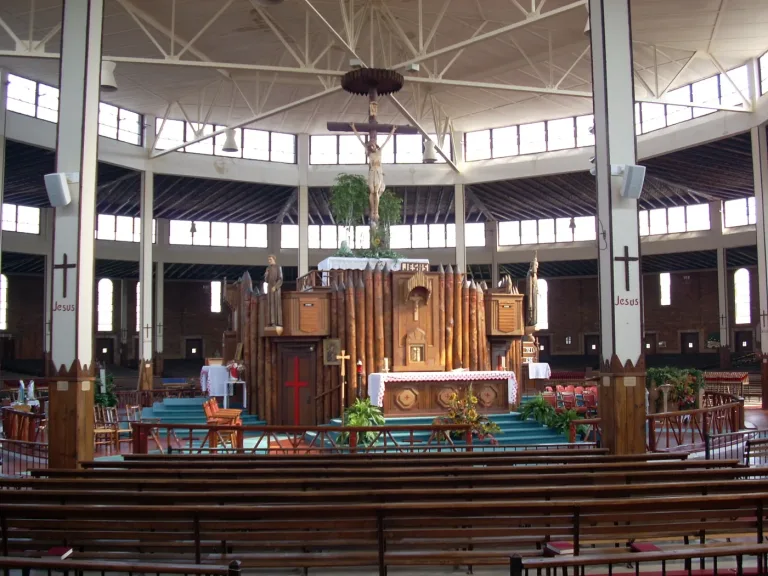
Shrine of Our Lady of Martyrs, Auriesville
Begin on the ridge above the river. The shrine has been venerated since the nineteenth century as the site of Ossernenon, where Kateri was born in 1656 and where the Jesuit missionaries Isaac Jogues and his companions were killed a decade earlier. Archaeologists have questioned the exact location of the town; the shrine keeps the memory of both the martyrs and her birth.
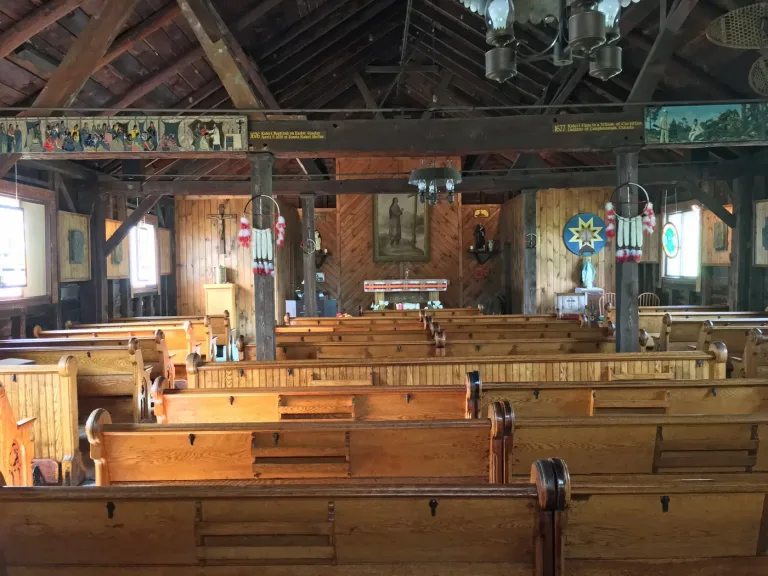
National Shrine of Saint Kateri Tekakwitha, Fonda
Cross the river to Fonda, where the Mohawk town of Caughnawaga stood and where Kateri lived after smallpox killed her family. The village site has been excavated and can be walked. She was baptised here on Easter Sunday 1676 by the Jesuit Jacques de Lamberville.
St. Francis Xavier Mission, Kahnawake
Kateri left the Mohawk Valley in 1677 for the Christian Mohawk settlement on the St Lawrence and lived there until her death on 17 April 1680, not yet twenty-four. She was buried at the mission, and her relics rest today in a marble tomb to the right of the altar in the mission church. She was canonised in 2012, the first Native American woman to be raised to the altars.
Kateri in the Mohawk Valley · 2 stops.
The two New York shrines sit about ten kilometres apart on opposite banks of the Mohawk River and make one unhurried day. This is her childhood country: the town she was born in, and the village where she was baptised at twenty. Her tomb is not on this route. It is at Kahnawake near Montreal, five hours north across the border, and deserves its own journey.
-
01 Birthplace
Shrine of Our Lady of Martyrs, Auriesville
Auriesville, New York, United StatesBegin on the ridge above the river. The shrine has been venerated since the nineteenth century as the site of Ossernenon, where Kateri was born in 1656 and where the Jesuit missionaries Isaac Jogues and his companions were killed a decade earlier. Archaeologists have questioned the exact location of the town; the shrine keeps the memory of both the martyrs and her birth.
-
02 Childhood home · Place of conversion
National Shrine of Saint Kateri Tekakwitha, Fonda
Fonda, New York, United StatesCross the river to Fonda, where the Mohawk town of Caughnawaga stood and where Kateri lived after smallpox killed her family. The village site has been excavated and can be walked. She was baptised here on Easter Sunday 1676 by the Jesuit Jacques de Lamberville.
To see nearby places, open the location page or add this route to a journey.
How to encounter Kateri.
Her life moved from the Mohawk Valley of her birth to the mission village where she gave herself to Christ. Her places hold both.
Baptized at twenty against real opposition, Kateri chose Christ at the cost of home and kin. Her courage is the heart of her story.
At the mission near Montreal she found the freedom to pray, to serve the sick, and to consecrate her life. Her relics rest there still.
Auriesville and Fonda in New York recall her birthplace and baptism, and the land and people who formed her.
Where the body and relics are venerated.
The saint is publicly venerated at a named tomb.
St. Francis Xavier Mission, Kahnawake
Kateri left the Mohawk Valley in 1677 for the Christian Mohawk settlement on the St Lawrence and lived there until her death on 17 April 1680, not yet twenty-four. She was buried at the mission, and her relics rest today in a marble tomb to the right of the altar in the mission church. She was canonised in 2012, the first Native American woman to be raised to the altars.
- The relics of Saint Kateri Tekakwitha, in the tomb beside the altar
Kahnawake is a Mohawk community, not a tourist site. Come as a guest, and check the mission and Kateri Centre hours before travelling.
Shrine of Our Lady of Martyrs, Auriesville
Catholics have venerated this ridge as Ossernenon, the town where Kateri was born in 1656, since the shrine was founded in the nineteenth century. Archaeological work since then has placed the Mohawk town somewhat differently, so the identification is traditional rather than settled. The shrine holds relics of the North American martyrs alongside her memory.
- Relics of the North American Martyrs, venerated with Saint Kateri's memory
The Coliseum church and the ravine walk are the heart of a visit. Open seasonally; check before travelling.
Saints Connected to Kateri Tekakwitha
-
Saint Josephine Bakhita
An African sister who, like Kateri, found her true freedom and dignity in belonging wholly to Christ. -
Saint Agnes
A young virgin martyr whose consecrated courage under pressure echoes Kateri's own. -
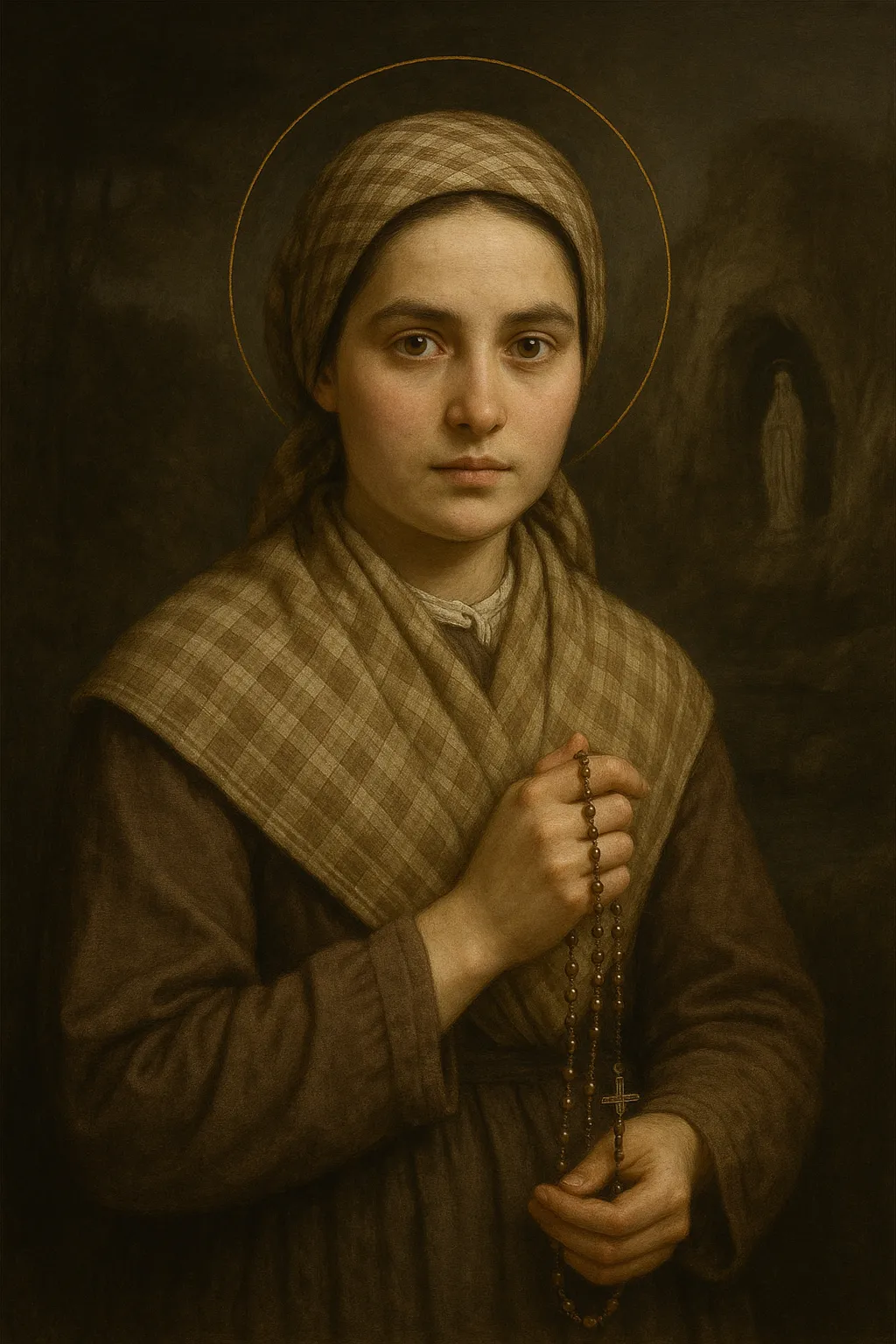
Saint Bernadette Soubirous
A young saint whose illness, simplicity, and hidden holiness became a path of grace.


A North American road from Ossernenon to Kahnawake.
Kateri's geography runs from the Mohawk Valley of her birth to the mission village where her holiness came to flower.
Ossernenon and the Mohawk River gave her beginning. This was her own country, the land and people of the Mohawk and the Algonquin, and it is inseparable from the saint she became.
Kahnawake, the Christian mission near Montreal, gave her final years. There, free to follow Christ, she filled her days with prayer, penance, and care for others until her death at about twenty-four.
Her memory is North American before it is anything else: the first saint to rise from the Indigenous peoples of the continent, honored today wherever Native and First Nations Catholics gather.
Photo credits
- Shrine of Our Lady of Martyrs, Auriesville. LotR, Public Domain, via Wikimedia Commons. Source. Public Domain.
- National Shrine of Saint Kateri Tekakwitha, Fonda. Ryan Amann, CC BY-SA 4.0, via Wikimedia Commons. Source. CC BY-SA 4.0.