
St. Louise de Marillac
She discovered that charity needs more than generous feeling: it needs formation, order, friendship, prayer, and the courage to cross every social boundary.
The will of God for me will be accomplished, provided I allow myself to be led by Him.
Spiritual Writings of Louise de Marillac, A.5 Documented
The widow who turned contemplative attention into a practical network of Catholic service
Louise de Marillac was born in 1591 into a complicated family situation and educated by Dominican sisters. A desire for religious life was refused, and in 1613 she married Antoine Le Gras. Marriage, motherhood, illness, widowhood, and spiritual anxiety formed the human ground from which her vocation to organized charity emerged.
On Pentecost 1623, amid a crisis of faith and vocation, Louise experienced an interior illumination that steadied her: she would one day live in community serving her neighbor, though the form was still hidden. After her husband’s death in 1625, Vincent de Paul became her spiritual director.
Vincent sent Louise to visit the parish Confraternities of Charity. She listened, inspected accounts, trained members, and saw where goodwill failed without reliable structure. Her gifts were not secondary administration around Vincent’s vision. They were essential to turning local charitable energy into sustained service.
On 29 November 1633, Louise received several country women into her Paris home. With Vincent and Marguerite Naseau, their witness became the Company of the Daughters of Charity. The sisters would not remain behind enclosure: their monastery, Vincent said, would be the houses of the sick and the streets of the city.
Louise formed the sisters spiritually and practically, wrote rules and letters, opened works for abandoned children, the sick, prisoners, and war refugees, and negotiated the institutional life of a new kind of community. She died in Paris on 15 March 1660. Her body is venerated in the Chapel of Our Lady of the Miraculous Medal at 140 rue du Bac.
Louise shows that Catholic charity becomes trustworthy when contemplation takes institutional form: people trained, money accounted for, needs observed, responsibilities shared, and every poor person received as a person rather than a project.
A life, in years and approximate ages.
-
c. 1591BirthBorn in ParisLouise is born into the Marillac family and later educated at Poissy.
-
c. 161321Marries Antoine Le GrasLouise enters married life and later becomes mother to Michel.
-
c. 162331Receives the Lumière of PentecostAn interior grace steadies her faith and foreshadows a community devoted to service.
-
c. 162534Widowed; begins collaboration with VincentAfter Antoine’s death, her spiritual friendship and apostolic collaboration with Vincent de Paul deepens.
-
c. 163342Daughters of Charity beginLouise gathers the first sisters in her home and begins their formation for direct service.
-
c. 166068Dies in ParisLouise dies after decades of forming and governing the Company.
-
1934After deathCanonizedPope Pius XI canonizes Louise de Marillac.
Dates are approximate where the surviving record is traditional or incomplete.
One place where this witness remains visible.
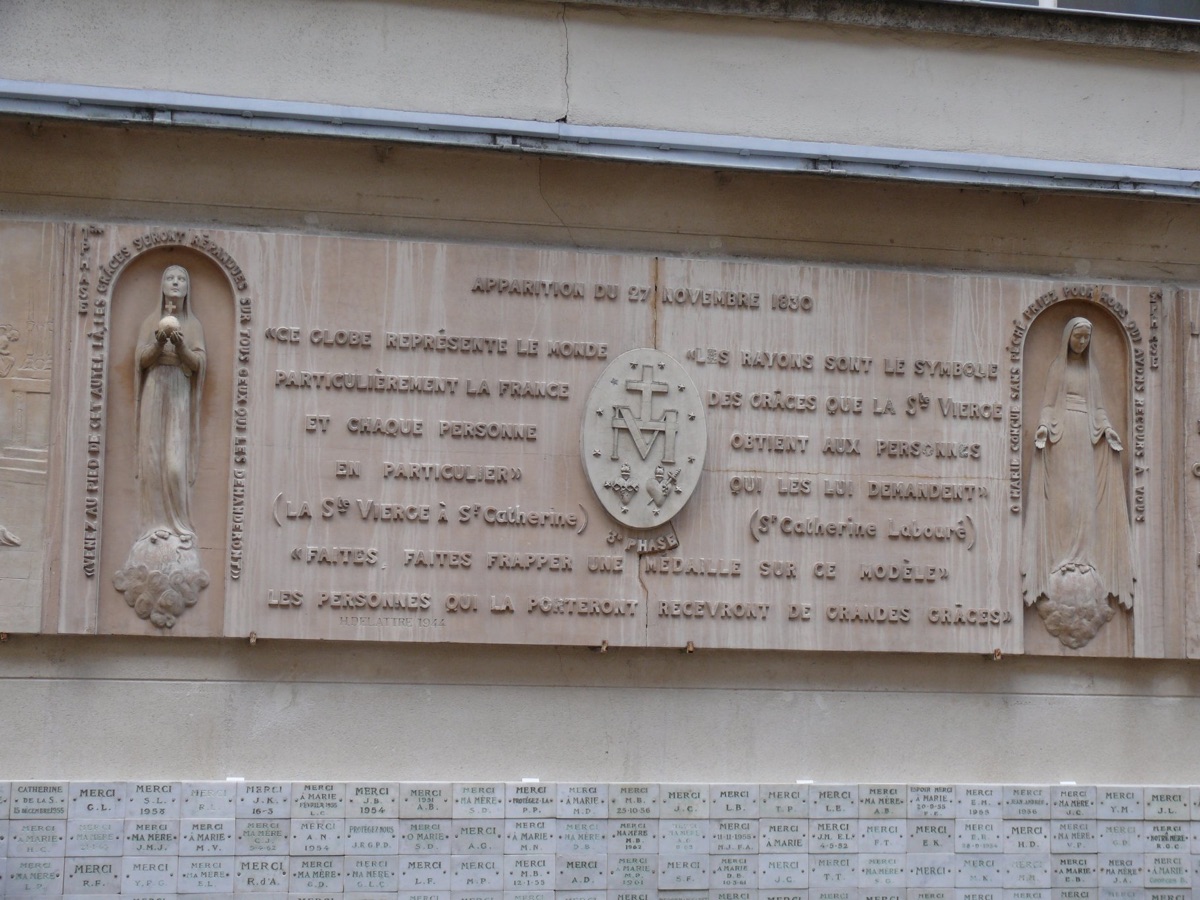
Chapel of Our Lady of the Miraculous Medal
Pray at Louise’s body and notice the shared Vincentian communion of saints gathered in one chapel.
Where the body is venerated.
The saint is publicly venerated at a named tomb.
Body and motherhouse
Louise’s body is venerated in the chapel of the community she co-founded and formed.
- Body of Saint Louise de Marillac
Do not let the better-known medal devotion eclipse the foundress whose disciplined charity helped make this house possible.
Kindred witnesses
-
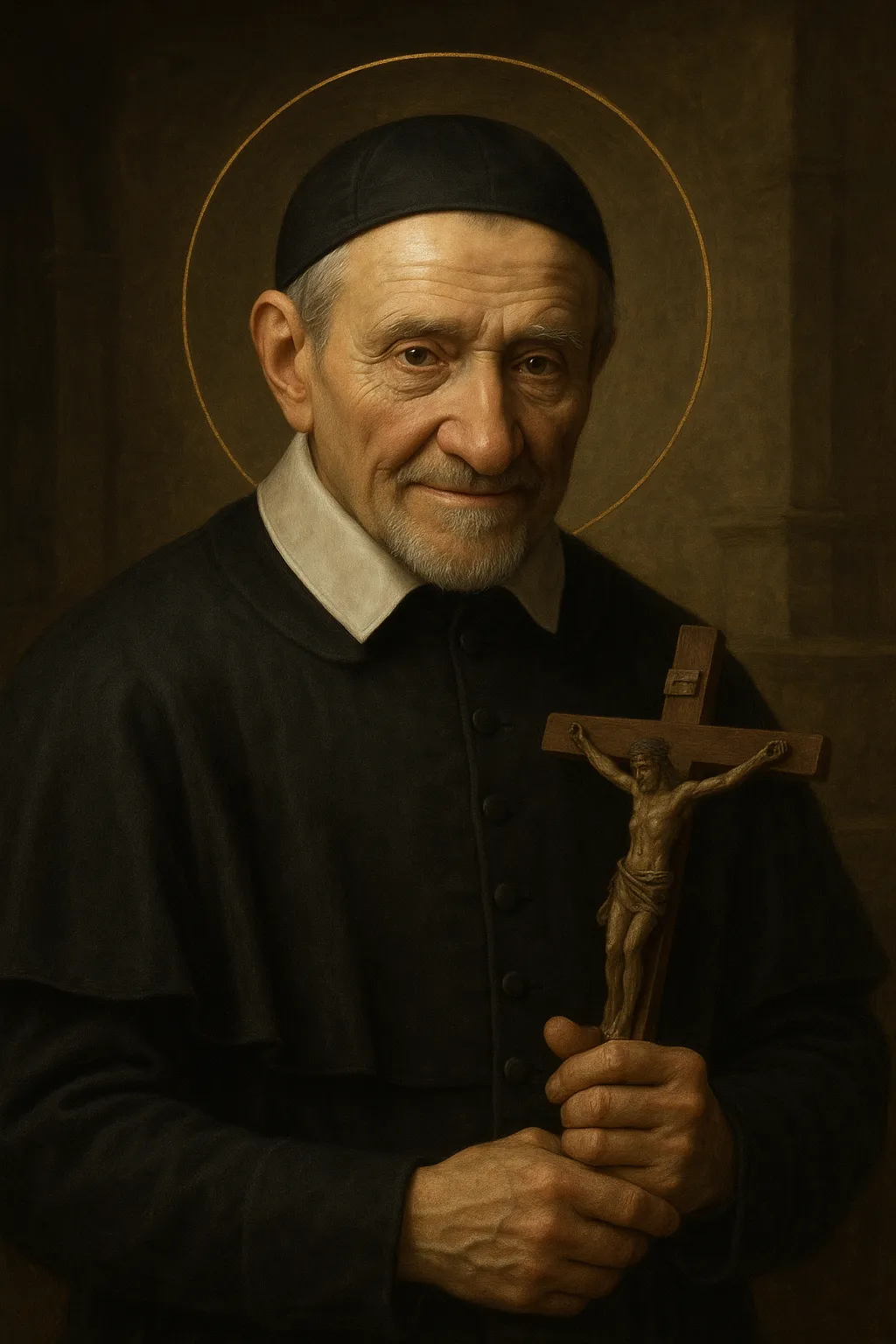
Saint Vincent de Paul
Her collaborator and spiritual director in the formation of the Daughters of Charity. -
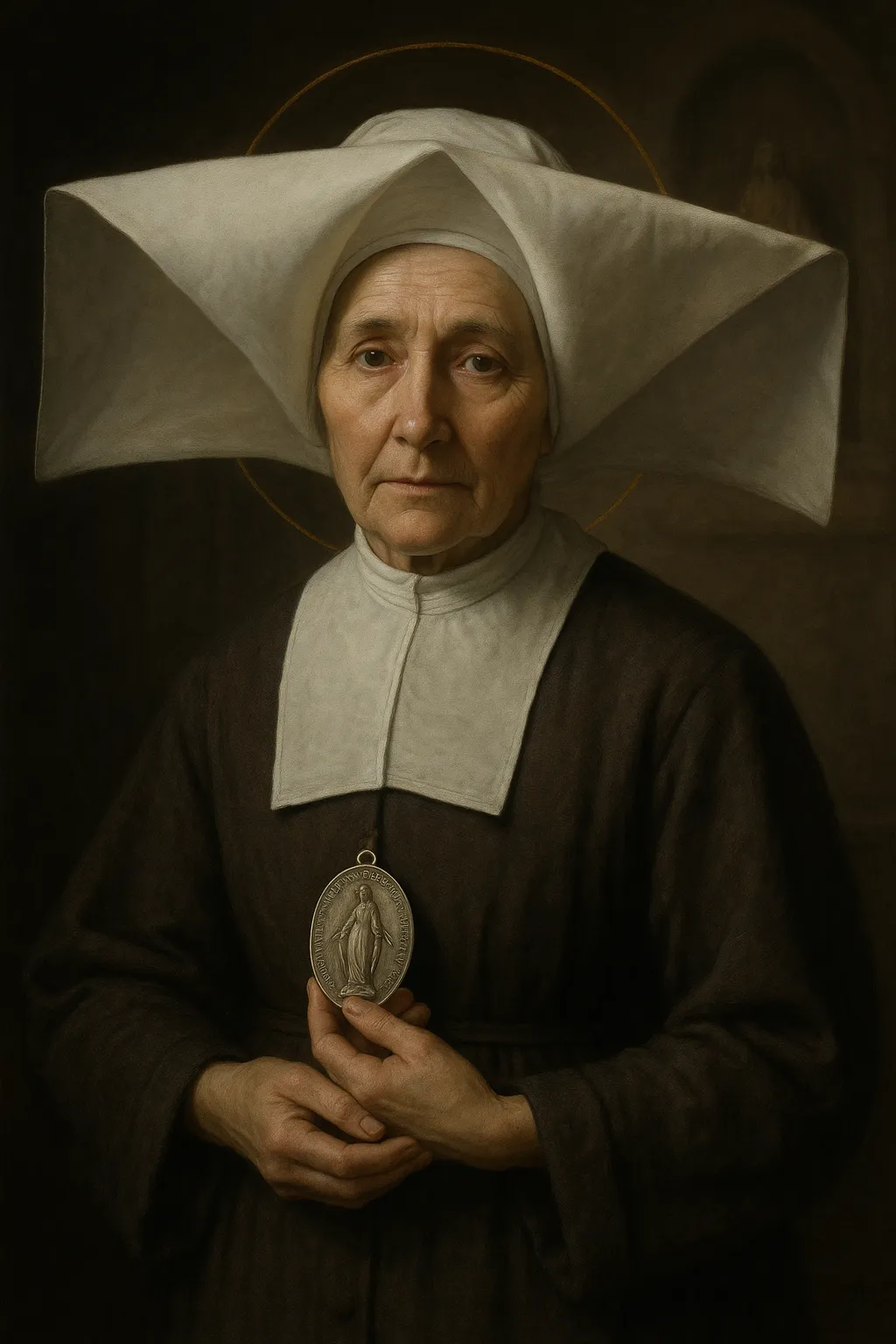
Saint Catherine Labouré
A later Daughter of Charity whose body is venerated in the same Rue du Bac chapel. -
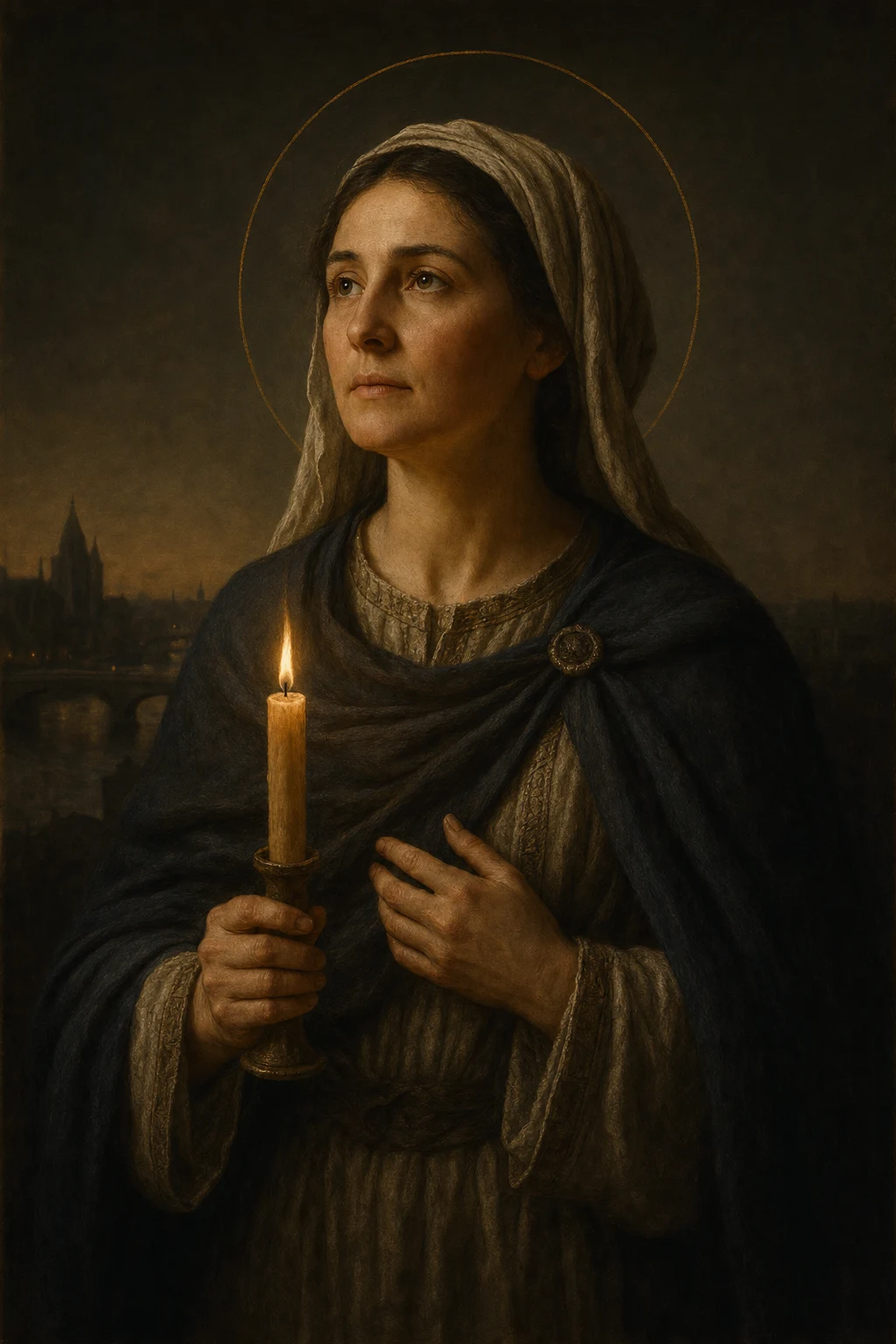
Saint Geneviève of Paris
Another Parisian woman whose prayer became practical protection and service of the city.
Where this leads next.
Photo credits
- Saint page. Eternal Roam devotional rendering. Source. Eternal Roam commissioned generation.
- Chapel of Our Lady of the Miraculous Medal. Peter Potrowl / Wikimedia Commons (CC BY-SA 4.0). Source. CC BY-SA 4.0.