
St. Monica
of Tagaste
A North African mother whose tears, patience, and faith shaped one of the Church's great conversions.
She saw what she had long prayed to see.
Confessions, Book IX Traditional
The Life and Witness of Monica.
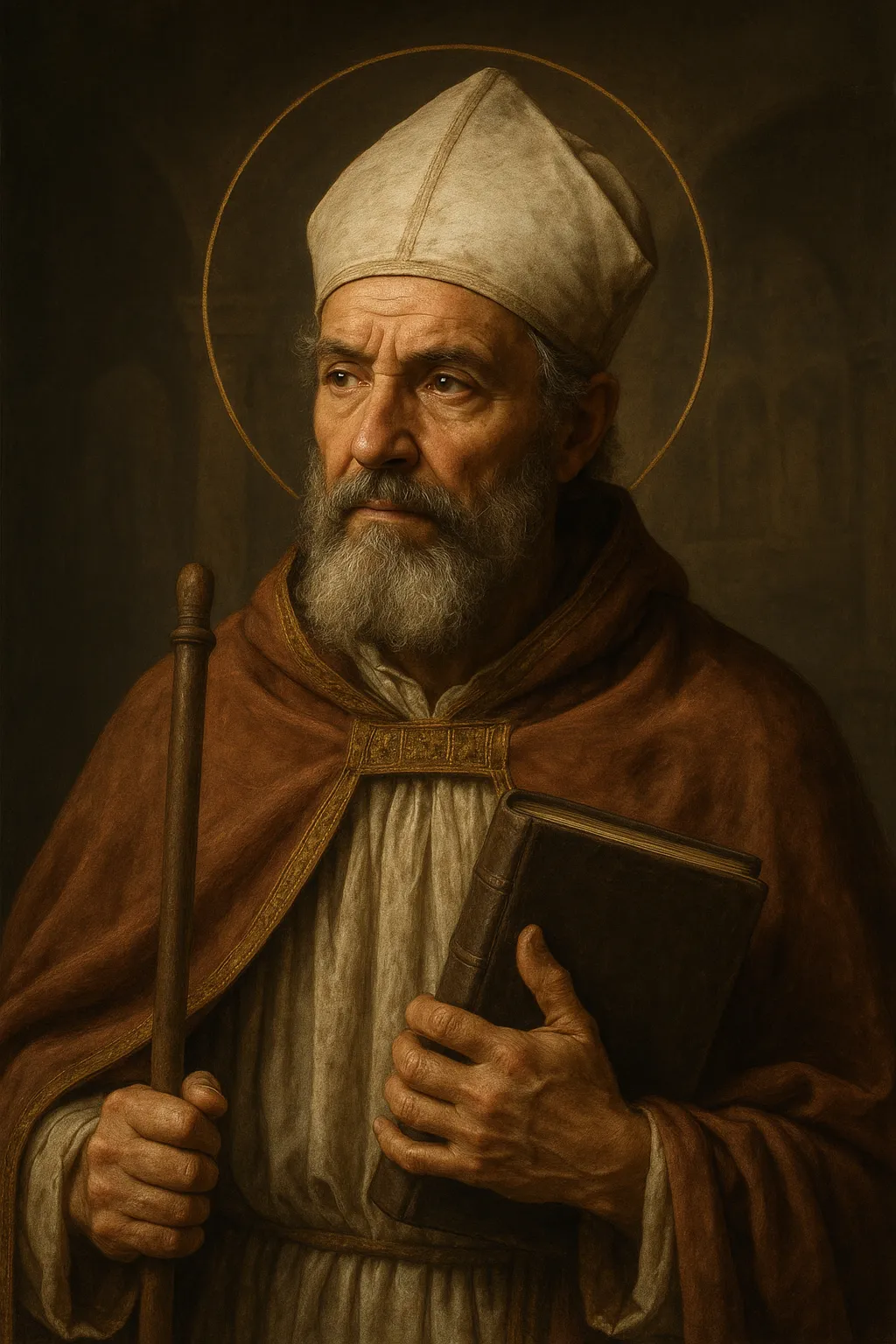
Monica is known almost entirely through Augustine, the son for whom she prayed across many years of anxiety, delay, and disappointment. In the Confessions she is not a decorative figure in Augustine's story. She is a mother with a real interior life, a woman of prayer whose hope was tested slowly.
Born in Roman North Africa in the fourth century, Monica married Patricius, a pagan husband whom Augustine remembers as difficult but eventually converted before his death. She lived the ordinary pressures of household life, marriage, motherhood, grief, and waiting, not the visible drama of martyrdom or public office.
Her son Augustine wandered through ambition, intellectual pride, Manichaeism, and a long resistance to baptism. Monica followed him in prayer and, at times, by travel. In Milan she found in Bishop Ambrose a pastor who understood both her tears and Augustine's mind. She lived to see Augustine baptized at Easter in 387.
Soon afterward, at Ostia, mother and son shared the famous conversation Augustine records in Book IX of the Confessions, lifting their minds toward the life of heaven. Monica died there before returning to Africa. Augustine would later write her memory into the heart of Christian literature.
Monica is a mother, widow, and family-life saint whose pilgrimage geography is quiet: North Africa, Milan, Ostia, and Rome, held together by prayer for a loved one.
A life, in years and approximate ages.
-
c. 331BirthBirth in Roman North AfricaMonica is born in the region of Tagaste in Roman North Africa, into the Christian world that will also form Augustine.
-
4th centuryMarriage and Household LifeMonica marries Patricius and lives the pressure of family life, prayer, and patient witness within an imperfect household.
-
c. 354About 23Birth of AugustineHer son Augustine is born at Tagaste. His later account of her prayer becomes the primary source for Monica's life.
-
c. 384About 53Milan and AmbroseMonica joins Augustine in Milan, where Ambrose's preaching begins to draw him toward Catholic faith.
-
c. 387About 56Augustine's BaptismAt the Easter Vigil in Milan, Ambrose baptizes Augustine. Monica lives to see the conversion for which she had prayed.
-
c. 387About 56Death at OstiaAfter the conversation at Ostia recorded in the Confessions, Monica dies before returning to Africa. Augustine buries her there; her relics are later translated to Rome.
-
1430After deathRelics Venerated in RomeMonica's relics are translated to Rome, where Catholics venerate them at the Basilica of Sant'Agostino.
Dates are approximate where the surviving record is traditional or incomplete.
5 places where this witness remains visible.
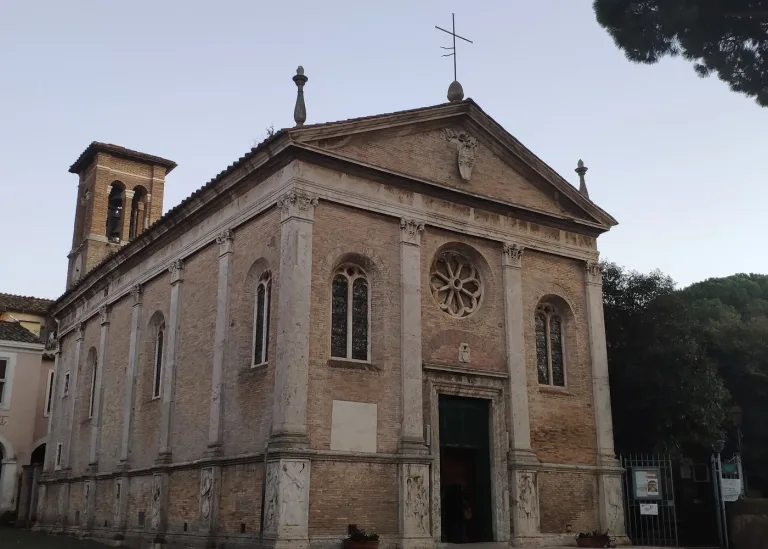
Sant'Aurea, Ostia Antica
Begin where the Confessions end. Monica died at Ostia in 387, after the conversation with Augustine recorded in Book IX, and was buried beside the tomb of the martyr Aurea. The present church keeps that memory, together with the recovered fragment of her funerary inscription. Allow about an hour, and pair it with the excavations next door.
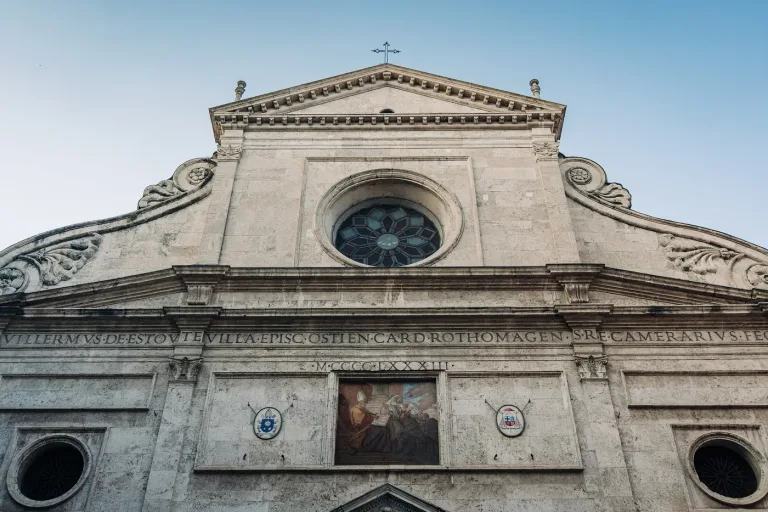
Basilica di Sant'Agostino in Campo Marzio
End at her tomb. Monica's relics were brought from Ostia to Rome in 1430 and rest in the chapel to the left of the high altar, in the church that carries her son's name. A quiet stop a few minutes from Piazza Navona.
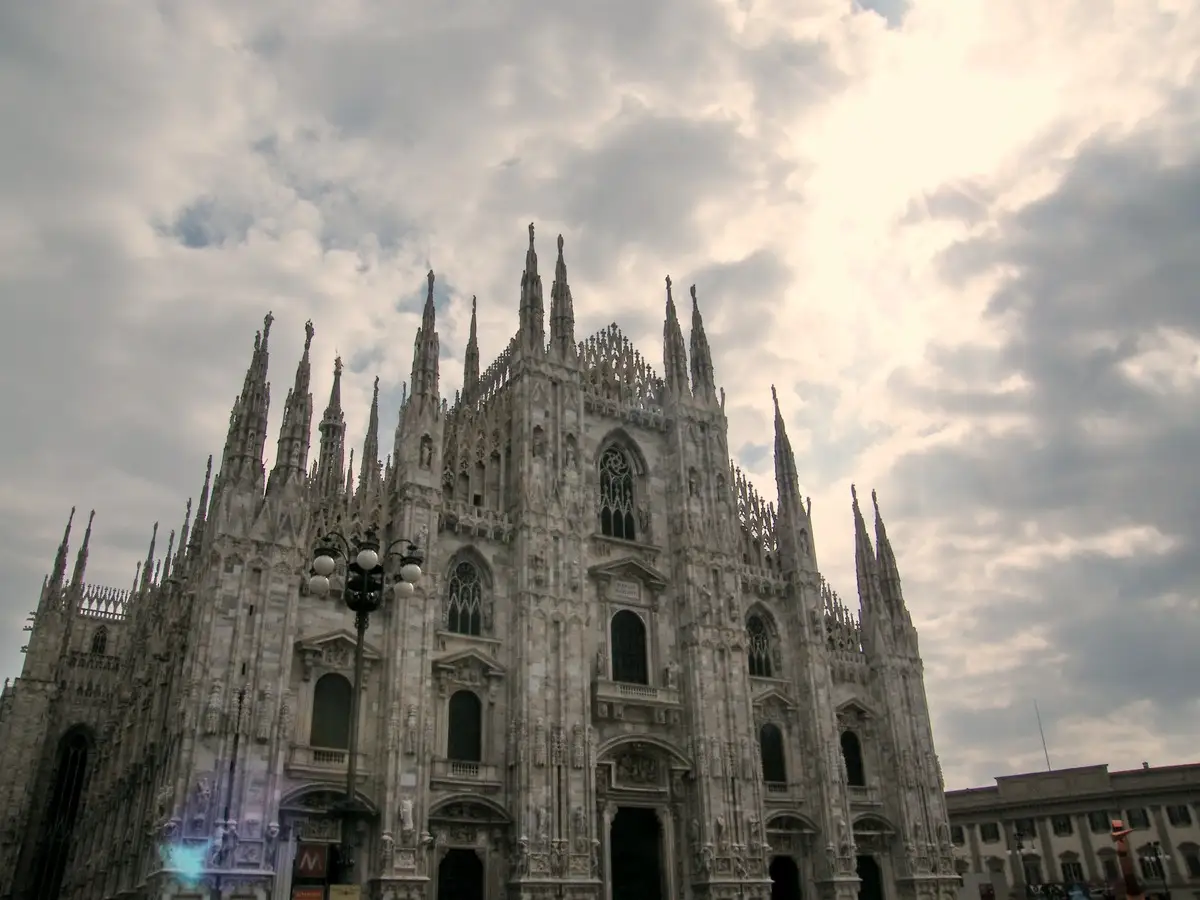
Milan Cathedral and the Baptistery of San Giovanni alle Fonti
Monica followed Augustine to Milan in 384 and lived there through the years of his turning. The fourth-century baptistery in which Ambrose baptised him at the Easter Vigil of 387 survives beneath the cathedral and can be visited. This is where she received what she had asked God for over many years.
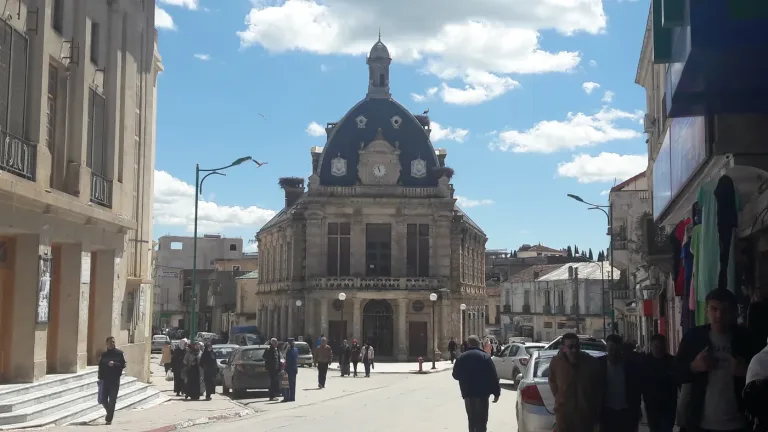
Souk Ahras, ancient Tagaste
Monica was born about 331 in Tagaste, the Roman North African town identified with modern Souk Ahras, and lived most of her life there as wife to Patricius and mother to Augustine. No church or shrine of Monica survives on the site; it is a place of memory rather than of devotion, and worth knowing as the ordinary household where her prayer began.
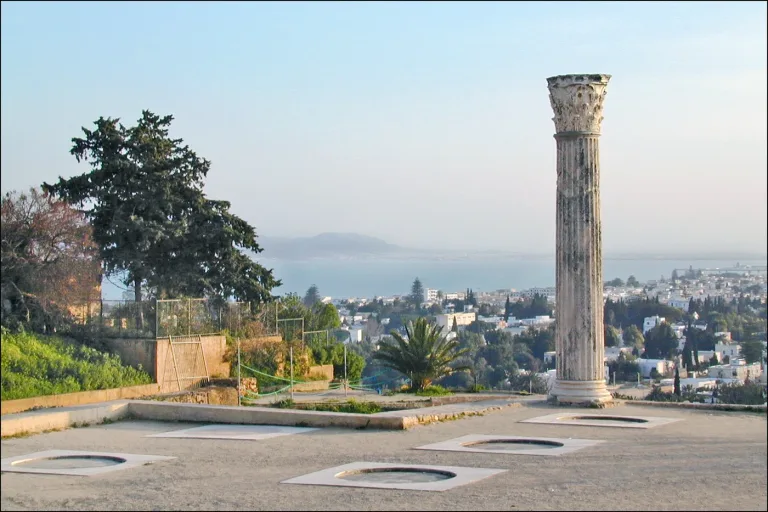
Carthage
Augustine studied at Carthage, and Monica followed him to its harbour. The Confessions record that he sailed for Rome at night while she prayed in a chapel by the shore, believing he would stay. The ancient port and the Christian archaeological sites can be visited today; as at Tagaste, there is no shrine of Monica here.
Monica in Rome and Ostia · 2 stops.
Two places hold the end of Monica's life, and they are half a day apart. Begin at Ostia Antica, where she died and was first buried, then return to the centre of Rome and pray at the tomb where her relics have rested since 1430. The train to Ostia Antica leaves from Roma Porta San Paolo and takes about thirty minutes; the church of Sant'Aurea stands inside the small medieval borgo beside the excavations, so allow time for both.
-
01 Burial place · Place of death
Sant'Aurea, Ostia Antica
Ostia Antica, Rome, ItalyBegin where the Confessions end. Monica died at Ostia in 387, after the conversation with Augustine recorded in Book IX, and was buried beside the tomb of the martyr Aurea. The present church keeps that memory, together with the recovered fragment of her funerary inscription. Allow about an hour, and pair it with the excavations next door.
-
02 Tomb
Basilica di Sant'Agostino in Campo Marzio
Piazza di Sant'Agostino, Rome, ItalyEnd at her tomb. Monica's relics were brought from Ostia to Rome in 1430 and rest in the chapel to the left of the high altar, in the church that carries her son's name. A quiet stop a few minutes from Piazza Navona.
To see nearby places, open the location page or add this route to a journey.
How to encounter Monica.
Begin with patience. Monica is not best understood by extracting a lesson from motherhood, but by watching what faithful love becomes when it cannot hurry grace.
Books I through IX of the Confessions give the primary witness. Augustine writes as a son who understands, late, what his mother carried.
Tagaste, Milan, Ostia, and Rome matter, but the movement is interior before it is monumental: waiting, prayer, baptism, and death.
Her patronage is strongest for parents and spouses who love someone they cannot force toward God.
Where the body and relics are venerated.
A principal relic site is named, with other fragments or reliquaries noted separately.
Basilica di Sant'Agostino in Campo Marzio
Pope Martin V had Monica's relics brought from Ostia to Rome in 1430. They rest in a chapel to the left of the high altar, in the Roman church dedicated to her son. This is the tomb Catholics have venerated as Monica's for close to six centuries.
- Relics of Saint Monica, venerated beneath the altar of her chapel
The chapel is on the left of the sanctuary. Pilgrims come to pray here for children and for those they cannot argue into faith.
Sant'Aurea, Ostia Antica
Monica died at Ostia in 387 and was buried beside the martyr Aurea. Her relics were removed to Rome in 1430, so this is no longer a relic shrine. What it keeps is the place itself, and a recovered fragment of the funerary epitaph written for her, found near the church in 1945.
- Fragment of Saint Monica's funerary inscription, recovered near the church in 1945
Come for the ground rather than for relics. The Confessions place the conversation at Ostia and her death here days later.

A mother's prayer across North Africa, Milan, and Rome.
Monica's sacred geography is not a triumphal route. It is the shape of a mother following a son through uncertainty.
North Africa gives the beginning: household, marriage, motherhood, and the long first years of Augustine's restlessness. This is where her prayer becomes ordinary before it becomes famous.
Milan is the place of answered prayer, but not because Monica solved Augustine. Ambrose preached, Augustine listened, grace worked, and Monica received what she had long asked God to give.
Ostia gives the final stillness. The journey home to Africa never happens. Instead, Augustine gives the Church the scene of a mother and son standing near the sea, speaking of the life to come.
Photo credits
- Souk Ahras, ancient Tagaste. Nora Mahfouf, CC BY-SA 4.0, via Wikimedia Commons. Source. CC BY-SA 4.0.
- Carthage. Jean-Pierre Dalbéra, CC BY 2.0, via Wikimedia Commons. Source. CC BY 2.0.
- Sant'Aurea, Ostia Antica. Kaga tau, CC BY-SA 4.0, via Wikimedia Commons. Source. CC BY-SA 4.0.
- Basilica di Sant'Agostino in Campo Marzio. Gcmarino, CC BY-SA 4.0, via Wikimedia Commons. Source. CC BY-SA 4.0.
- Milan Cathedral and the Baptistery of San Giovanni alle Fonti. Pilgab / Wikimedia Commons (CC BY-SA 3.0). Source. CC BY-SA 3.0.