
St. Benedict
of Norcia
The sixth-century hermit whose Rule shaped fifteen centuries of Western monasticism
Listen carefully, my son, to the master's instructions, and incline the ear of your heart. Receive willingly and carry out effectively your loving father's advice, that by the labor of obedience you may return to him from whom you had departed by the sloth of disobedience.
Rule of Saint Benedict, Prologue (c. 530–540) Documented
He wrote a rule, and a civilization grew on top of it.
Benedict was born in Nursia, in the central Italian highlands, around the closing decades of the fifth century, into a world where the western empire had collapsed and the towns of Italy were struggling to hold their shape. What we know of him with confidence comes from two sources: the short Rule he composed for his monks, and a hagiographic life written two generations later by Pope Gregory the Great as the second book of his Dialogues.
Gregory's account, written around 593, is the principal narrative of Benedict's life. It is also frankly hagiographic: Gregory is concerned to present Benedict as a man of the Spirit in the mould of the desert fathers, and the miracle stories are arranged for spiritual edification rather than chronology. The historical kernel, attested by the Rule itself and by Gregory's own use of older monastic sources, is clear enough: a young man from Nursia who went to Rome to study, withdrew from the city, lived as a hermit in a cave at Subiaco, gradually drew disciples, organised them into small communities, and finally settled with a group of monks on the mountain at Monte Cassino, where he composed his Rule and where he died.
The Rule of Saint Benedict is the document the Western Church has actually inherited. It is a short, practical guide of seventy-three brief chapters drawing on earlier monastic legislation, especially the anonymous Rule of the Master, but trimmed, ordered, and made humane. It assumes a monastery of stable monks under an abbot, balances liturgical prayer with manual work and study, treats the sick and the guest as Christ, and refuses both luxury and extremity. It is written for beginners, "a little rule for beginners," as Benedict says in the prologue.
Benedict himself did not legislate beyond his own house. The diffusion of the Rule across the Latin West took several centuries and was largely the work of Gregory the Great, the early English mission, and the Carolingian reformers, who imposed the Rule as the standard for monasteries within their reach. By the central Middle Ages, "Benedictine" had become almost a synonym for "monk" in the West.
Benedict died at Monte Cassino around 547 and was buried, according to Gregory, beside his sister Saint Scholastica in the oratory of Saint John the Baptist on the summit. The abbey has been destroyed and rebuilt four times, by the Lombards in 577, the Saracens in 883, an earthquake in 1349, and Allied bombing in 1944, and the relic tradition reflects this turbulent history. Monte Cassino preserves a tomb beneath the high altar of the rebuilt basilica; the abbey of Fleury in France venerates relics it identifies with Benedict through a seventh-century translation tradition. The two traditions have never been reconciled.
A life, in years and approximate ages.
-
c. 480birthBirth in NursiaBenedict was born into a noble family in Nursia (modern Norcia), Umbria, Italy. His early life was marked by a good education and a comfortable upbringing.
-
c. 500~20Studies in RomeBenedict was sent to Rome for his studies but became disillusioned with the city’s moral decay, prompting his turn toward a life of solitude.
-
c. 505~25Hermit Life in SubiacoBenedict retreated to a cave in Subiaco to live as a hermit, dedicating himself to prayer and asceticism, guided by a monk named Romanus.
-
c. 510~30Founding Monasteries in SubiacoBenedict began organizing communities of monks in Subiaco, establishing twelve monasteries, each with twelve monks, under his guidance.
-
c. 529~49Founding of Monte CassinoBenedict moved to Monte Cassino, where he founded the famous abbey, which became the cornerstone of Western monasticism.
-
c. 530~50Writing the Rule of Saint BenedictBenedict composed his Rule, a guide for monastic life emphasizing balance, prayer, work, and obedience, which became widely adopted.
-
c. 547~67Death at Monte CassinoBenedict died at Monte Cassino, reportedly standing in prayer, supported by his monks, after receiving the Eucharist.
-
1220After deathCanonizationPope Honorius III canonized Benedict, recognizing his profound impact on the Church and monastic life.
Dates are approximate and follow traditional biographical chronology. Many rest on Gregory the Great’s Dialogues, written within living memory of monks who knew Benedict but arranged for spiritual edification rather than strict sequence.
4 places where this witness remains visible.
Prefer a ready-made pilgrimage? See the The Benedictine Road: Norcia to Monte Cassino.

Nursia (modern Norcia)
Benedict was born here around 480, in the highland town the Romans called Nursia. The 2016 earthquake damaged much of the centre, including the Basilica of San Benedetto over the traditional site of his birth; restoration continues. Begin where he began, before the road to Rome and the cave at Subiaco.

Subiaco Monasteries
The cave at Subiaco, the Sacro Speco, where Benedict lived as a hermit for three years before disciples began to gather to him. Two monasteries cling to the cliff above the valley. A working Benedictine community keeps the place; pray in the cave, then walk down through the chapels.
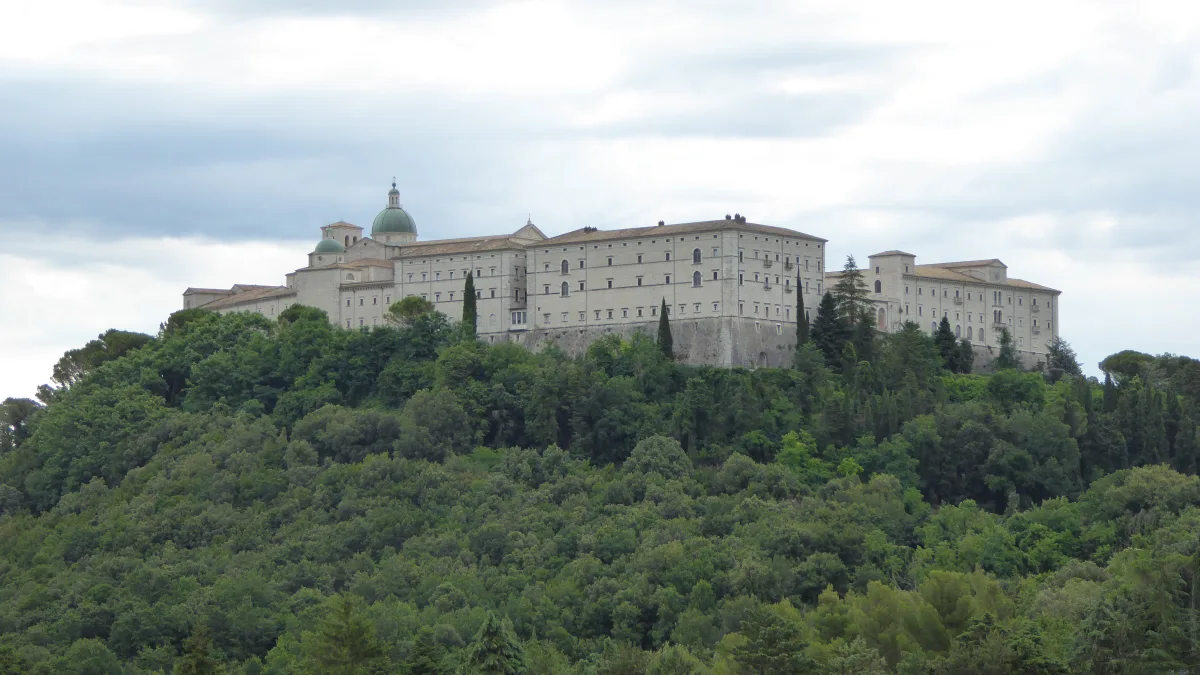
Abbey of Monte Cassino
End on the mountain Benedict chose for the abbey he founded around 529, where he composed the Rule and where he died around 547. The abbey has been destroyed four times, by the Lombards, the Saracens, an earthquake, and Allied bombing in 1944, and rebuilt each time. The tomb beneath the high altar is venerated as his, though the abbey of Fleury contests the tradition. Climb on foot if time allows.

Abbey of Saint-Benoît-sur-Loire (Fleury)
The Benedictine abbey on the Loire venerates relics it identifies with Benedict through a tradition that they were translated north from the ruined Monte Cassino around 673. The translation is recorded by Adrevald of Fleury in the ninth century. The tradition has been kept by the abbey for over a thousand years and is contested by Monte Cassino.
Contested relic traditions, documented plainly.
The relic tradition of Saint Benedict is genuinely contested. Monte Cassino preserves a tomb beneath the high altar of the basilica and holds, with Gregory the Great's Dialogues, that Benedict's body has remained at Cassino since his death around 547. The Benedictine abbey of Fleury (Saint-Benoît-sur-Loire) on the Loire in France venerates relics it identifies with Benedict, following a tradition that they were translated north around 673 after the Lombard sack of Monte Cassino in 577 had left the mountain in ruins; this tradition is recorded by Adrevald of Fleury in the ninth century and is the basis for centuries of pilgrimage to Fleury. The two abbeys have never reconciled their accounts. Pilgrims may visit either site honestly; neither can be said to be the certain resting place of the saint.
More than one site preserves a claim, without a settled consensus.
Tomb tradition
The Benedictine archabbey founded by Benedict around 529 and rebuilt after each of the destructions that have fallen on the mountain. The basilica preserves a tomb traditionally venerated as the resting place of Saint Benedict and Saint Scholastica beneath the high altar.
- Tomb traditionally venerated as that of Saint Benedict and Saint Scholastica beneath the high altar of the basilica
Approach the abbey on foot from the village if time allows; the climb is part of the pilgrimage. Pray in the basilica first, then descend to the crypt to the tomb. The cloisters and the small museum are best visited afterwards.
Relics venerated at Fleury as Saint Benedict's
The Benedictine abbey on the Loire venerates relics it identifies with Benedict through a tradition that they were translated north from the ruined Monte Cassino around 673. The translation is recorded by Adrevald of Fleury in the ninth century. The tradition has been kept by the abbey for over a thousand years and is contested by Monte Cassino.
- Relics traditionally venerated at Fleury as those of Saint Benedict, kept in a reliquary in the basilica
The Romanesque basilica is a working Benedictine monastery; Mass and the Divine Office are sung daily by the community. Pilgrims who come for Benedict here should come for the rival tradition with their eyes open.
Benedictine places reward stability, silence, and the patience of the Rule.
Norcia, Subiaco, and Monte Cassino are not a checklist of monuments. They are a movement, from origin, to solitude, to community, and they read most clearly when the traveler borrows a little of the discipline that built them.
Carry the Prologue of the Rule and a few chapters from Gregory the Great’s Dialogues, Book II. The Rule is short. The Dialogues set the tone for what the abbeys are remembering.
At Subiaco, sit in the lower spaces of the Sacro Speco before climbing to the frescoes. At Monte Cassino, end at the tomb beneath the high altar; the views and the museum come second to the prayer. At Norcia, stay long enough to feel the highland town the boy left.
Benedict rewards slowness, order, silence, and hospitality. Avoid stitching the three abbeys into a single rushed day. Vespers or Compline with the community, where it is offered, will tell you more than another tour.
Norcia → Subiaco → Monte Cassino is the chronological line: birth, solitude, foundation, and Rule. Walked in reverse, Cassino back to Subiaco back to Norcia, the same road becomes a conversion story: institution dissolving back into hidden conversion.
Kindred witnesses
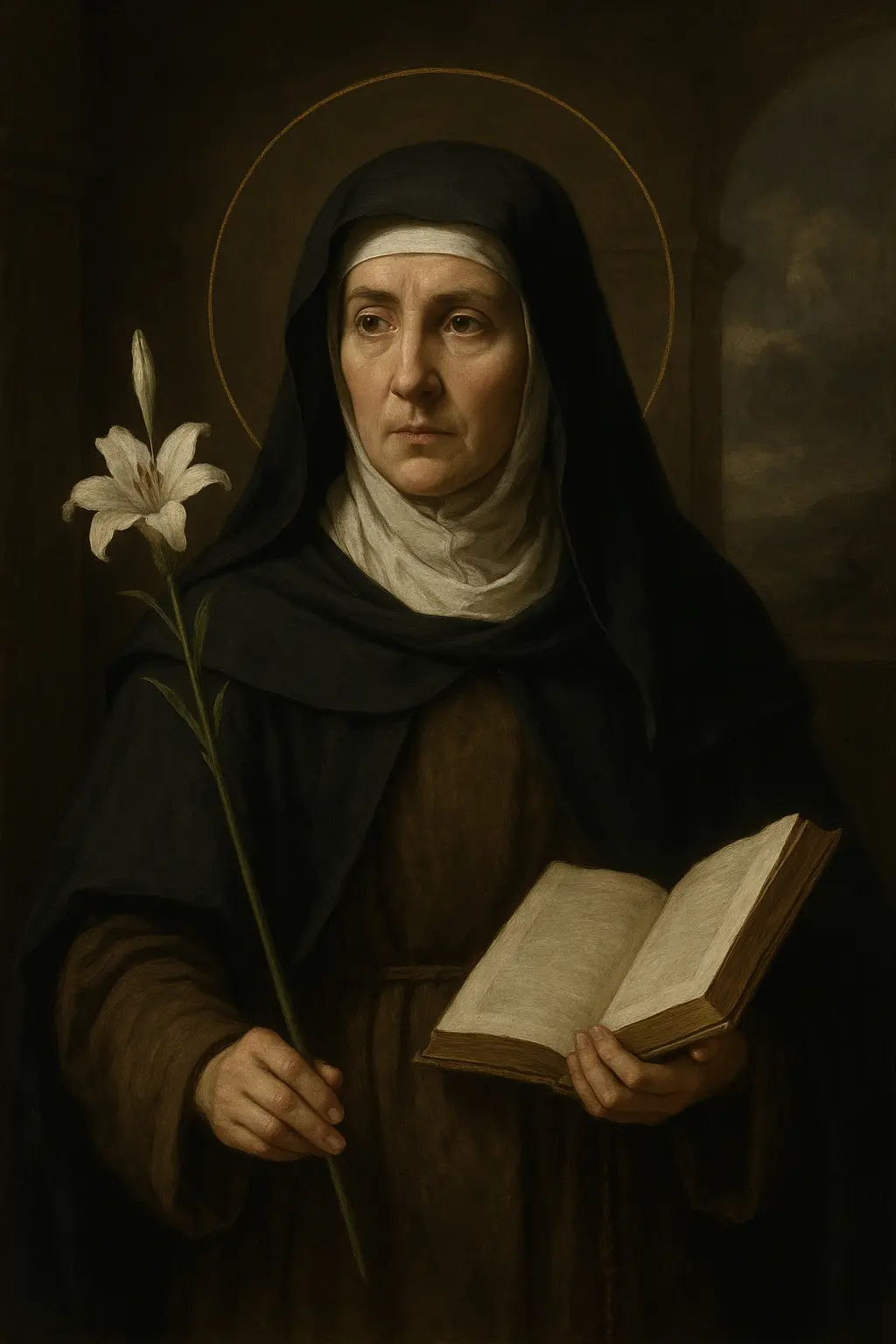

The Benedictine Road: Norcia to Monte Cassino · 3 stops.
Three places across Umbria and Lazio, in the order Benedict lived them: the town of his birth, the valley where he withdrew, and the mountain where he wrote the Rule and was buried. This is a journey of several days by road, not an afternoon.
-
01 Birthplace
Nursia (modern Norcia)
Norcia, Umbria, ItalyBenedict was born here around 480, in the highland town the Romans called Nursia. The 2016 earthquake damaged much of the centre, including the Basilica of San Benedetto...
-
02 Hermitage
Subiaco Monasteries
Subiaco, Lazio, ItalyThe cave at Subiaco, the Sacro Speco, where Benedict lived as a hermit for three years before disciples began to gather to him. Two monasteries cling to the...
-
03 Tomb
Abbey of Monte Cassino
Cassino, Lazio, ItalyEnd on the mountain Benedict chose for the abbey he founded around 529, where he composed the Rule and where he died around 547. The abbey has been...
How Benedict's witness still stands in the landscape
Benedict is not only a biography. His witness is carried by the monasteries he founded, a contested relic tradition, and the shape of Western monastic life that grew from his Rule. These are the connections that hold that ground together.
The places of his life.
The abbey Benedict founded around 529 and where, by long tradition, he died and was buried; the mother house of the Benedictine order.
The valley where the young Benedict first lived as a hermit and gathered his earliest communities before Monte Cassino.
His short Rule, written for a single community, became the pattern for monastic life across the West and earned him the title patron of Europe.
Where he rests.
The relics of Saint Benedict
Monte Cassino venerates Benedict and Scholastica beneath the high altar, while the abbey of Fleury holds that his relics were carried to France in the seventh century.
Two long-standing relic traditions, never reconciled. Eternal Roam names the dispute rather than choosing a side.
Benedict's life is historically grounded but reaches us largely through Gregory the Great's Dialogues, written within living memory of monks who knew him. Monte Cassino and the abbey of Fleury in France preserve rival relic traditions; the tradition is named here plainly rather than settled.
Photo credits
- Abbey of Saint-Benoît-sur-Loire (Fleury). Gilbertus, CC BY-SA 3.0, via Wikimedia Commons. Source. CC BY-SA 3.0.
- Nursia (modern Norcia). Sailko, CC BY 3.0, via Wikimedia Commons. Source. CC BY 3.0.
- Subiaco Monasteries. High Contrast / Wikimedia Commons. Source. CC BY 3.0 DE.
- Abbey of Monte Cassino. DonGatley / Wikimedia Commons (CC0 1.0). Source. CC0 1.0.