
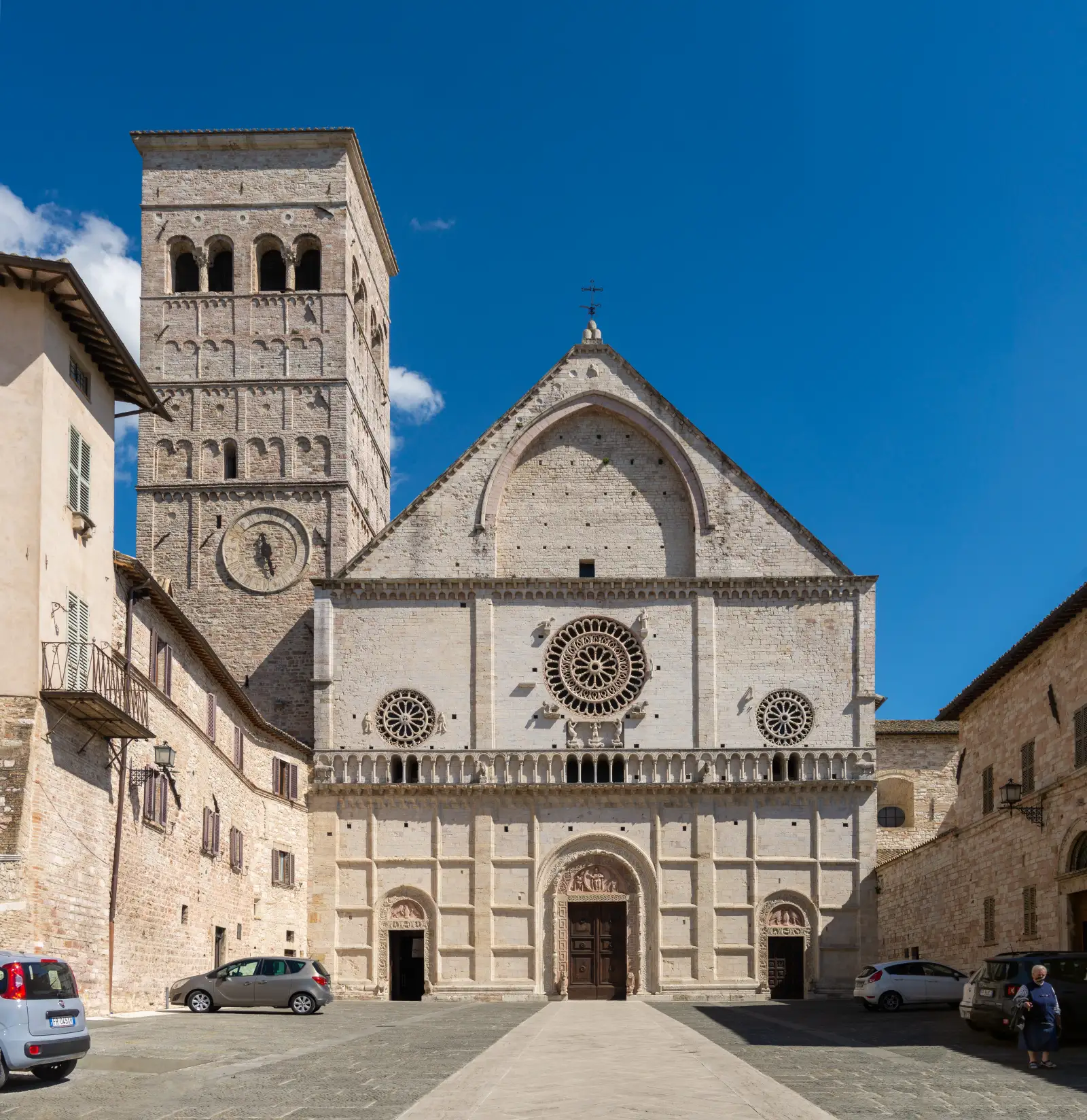
Cathedral of San Rufino
The cathedral of Assisi, with the baptismal font of Francis and Clare and the relics of Saint Rufinus, the first patron of the city.
ITALY · ASSISI
43.0710° N · 12.6190° E
- Location
- Assisi, Italy 43.0710° N · 12.6190° E
- Type
- Cathedral church and diocesan seat Umbrian Romanesque, attributed in tradition to the master Giovanni da Gubbio, with later interior remodelling in the 16th century
- Dedication
- Saint Rufinus of Assisi, traditionally venerated as the first bishop and martyr of the local Church
- Time Needed
- 30 minutes to half a day
Why Go
The Cathedral Between the Two Basilicas
San Rufino is the sacramental and diocesan heart of Assisi. The two great Franciscan basilicas gather the memory of Francis and Clare after their conversion; the cathedral is the church in which local tradition places their baptism, and where Saint Rufinus is venerated beneath the high altar.
A Cathedral Older Than Its Stones
A Christian community has gathered on this site since the early centuries of the Church in Assisi, beginning with a small basilica built over a Roman cistern in the years following the witness of Saint Rufinus. The present cathedral was raised in the 12th century, with its Romanesque facade attributed in tradition to the master Giovanni da Gubbio, and consecrated in 1253 by Pope Innocent IV. The interior was remodelled in the 16th century in a sober late Renaissance style, but the facade, the crypt, and the relic shrine of Saint Rufinus preserve the older layers of the cathedral's life. Saint Francis was baptized here in 1182, according to long-standing local tradition, and Saint Clare in 1194. Both grew up within sight of the cathedral piazza and would have known its bells, its bishop, and its sacramental life as their parish before they became the saints of Assisi.
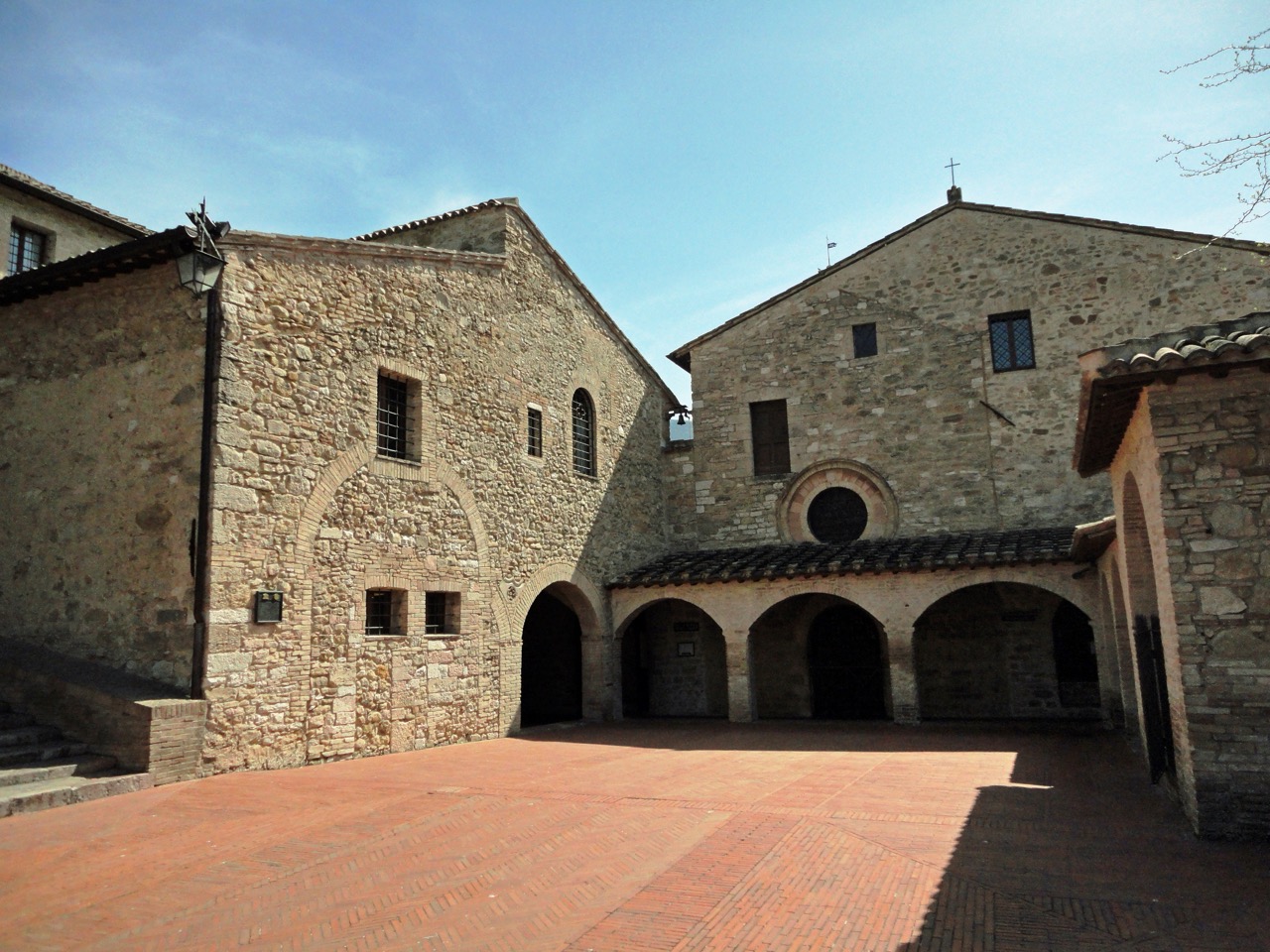
The Romanesque facade is the cathedral's most striking feature, with three carved portals, three rose windows, and a band of carved figures and lions that read like a small theological program. The interior was reworked in the 16th century by Galeazzo Alessi, giving the nave its present sober proportions while leaving the facade and the crypt intact. The baptismal font stands near the entrance in the right aisle; the high altar covers the sarcophagus traditionally venerated as that of Saint Rufinus.
Saint Francis was baptized at this church in 1182, according to long-standing local tradition, when it was still the earlier basilica on this site.
Saint Clare was baptized here in 1194, according to the same tradition, and her family lived close to the cathedral piazza.
The present Romanesque cathedral was consecrated in 1253 by Pope Innocent IV, replacing the earlier basilica while preserving the relic shrine of Saint Rufinus.
Saint Francis is traditionally said to have preached from the steps of this cathedral in his early years of preaching in Assisi.
The cathedral remains the seat of the bishop of Assisi, Nocera Umbra, and Gualdo Tadino, and so anchors the diocesan life of the city alongside the Franciscan basilicas.
Spiritual Significance
San Rufino is not a Franciscan basilica. It is the parish and cathedral church of the city, kept as a place of sacramental life and episcopal worship rather than as a pilgrimage stop alone. This gives the cathedral a different rhythm from the basilicas of Francis and Clare, and is part of why it matters to a serious Assisi pilgrimage.
What to notice.
-
The Romanesque facade
Three carved portals, three rose windows, and a band of carved figures and lions. Best seen in the morning light.
-
The baptismal font
In the right aisle near the entrance, traditionally venerated as the font where Francis and Clare were baptized.
-
The crypt and the relics of Saint Rufinus
Beneath the high altar, the sarcophagus traditionally identified with Assisi's first bishop and patron.
-
The Roman cistern beneath the floor
Reached through the diocesan museum. A reminder that the cathedral stands on much older layers of the city.
What to notice
- How the cathedral is set above the two basilicas in the geography of the old town, on the highest piazza of Assisi.
- That the facade and the interior come from different centuries, and that the older layers are preserved precisely where the cathedral keeps its memory: the font, the crypt, and the cistern.
- How the cathedral is still the parish life of Assisi, with weddings, baptisms, funerals, and daily sacramental rhythm rather than only pilgrim traffic.
- That Francis and Clare were baptized here, according to local tradition, before they were the saints whose basilicas now anchor the town.
How much time, and what to do with it.
-
A First Visit to the Cathedral
4 ordered stopsA focused visit to the cathedral, the font, the crypt, and the facade.
- Enter the cathedral from Piazza San Rufino and pause at the baptismal font in the right aisle.
- Walk up the nave and pray at the high altar above the relics of Saint Rufinus.
- Descend into the crypt to see the sarcophagus and the earlier basilica pavement.
- Return to the piazza and read the Romanesque facade slowly before leaving.
-
The Spine of the Old Town
5 ordered stopsThree churches along the main axis of the old town, walked end to end.
- Begin at the Basilica of Saint Francis on the western edge.
- Walk through the old town to the Cathedral of San Rufino on the highest piazza.
- Pray at the font and at the relics of Saint Rufinus in the crypt.
- Continue downhill to the Basilica of Saint Clare on the southern slope.
- End at the tomb of Clare and before the original San Damiano Crucifix.
San Rufino is best approached in the morning, when the eastern light catches the facade and the cathedral is quiet between the early Mass and the arrival of midday visitors. Allow time to sit in the nave rather than only to walk through.
How to Visit
How to visit well.
Enter the cathedral and pause first at the baptismal font in the right aisle near the door. Walk slowly up the nave, noticing the simplicity of the 16th-century interior set against the older facade. Pray at the high altar above the relics of Saint Rufinus, then descend into the crypt to see the sarcophagus and the earlier basilica pavement. If time allows, continue into the diocesan museum and the Roman cistern beneath the cathedral floor.
- Daily Mass and the Liturgy of the Hours kept by the cathedral chapter
- Episcopal liturgies and major diocesan celebrations
- Solemn observance of the feast of Saint Rufinus on August 11
- Quiet pilgrim prayer at the baptismal font and the high altar
What pilgrims come to venerate here.
Tomb and Burial
- Relics of Saint Rufinus of Assisi, traditionally identified as the first bishop and martyr of the city, are preserved in the crypt beneath the high altar.
Relics and Sacred Tradition
- The baptismal font preserved in the cathedral is traditionally venerated as the font where Saint Francis was baptized in 1182 and Saint Clare in 1194.
- The relics of Saint Rufinus rest beneath the high altar, the focal point of Assisi's diocesan patronal devotion.
- Fragments of the earlier basilica, including a section of the original 11th-century pavement, are visible in the crypt.
Sacred Objects
- The baptismal font in the right aisle near the entrance.
- The Romanesque facade by tradition attributed to Giovanni da Gubbio, with three rose windows and carved lions and figures around the central portal.
- The crypt beneath the high altar containing the sarcophagus traditionally venerated as that of Saint Rufinus.
- The Roman cistern beneath the cathedral floor, opened to visitors through the diocesan museum, preserved from the Roman city that stood here before the cathedral.
How this place gathers the saints.
Saint Clare of Assisi
Her parish church
According to long-standing local tradition, Clare was baptized at the cathedral font in 1194. Her family lived close to the cathedral piazza.
Saint Francis of Assisi
Baptized at the cathedral font, according to tradition, in 1182
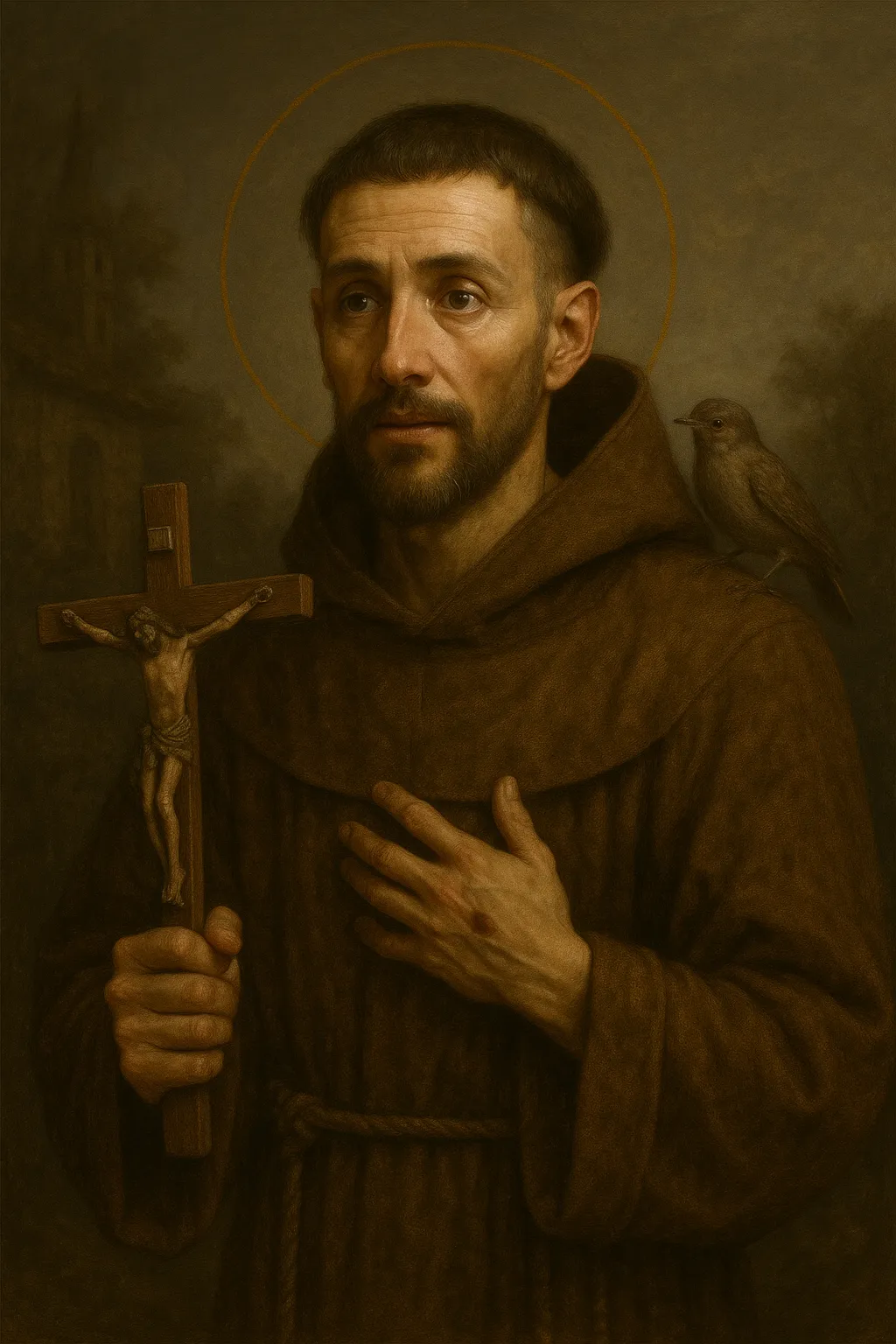
Saint Francis was baptized at this cathedral in 1182, according to long-standing local tradition. He grew up in its parish and is said to have preached from its steps in the early years of his preaching in Assisi.
Saint Rufinus of Assisi
First bishop and patron of Assisi; his relics rest in the crypt
Saint Rufinus is venerated as the first bishop and martyr of Assisi. His relics are preserved beneath the high altar of the cathedral that bears his name, and his feast is kept on August 11 as the principal patronal day of the city.

Within walking distance.
-
City hub
Assisi
Where this church sits within the wider Catholic geography of Assisi.
-
Sacred place
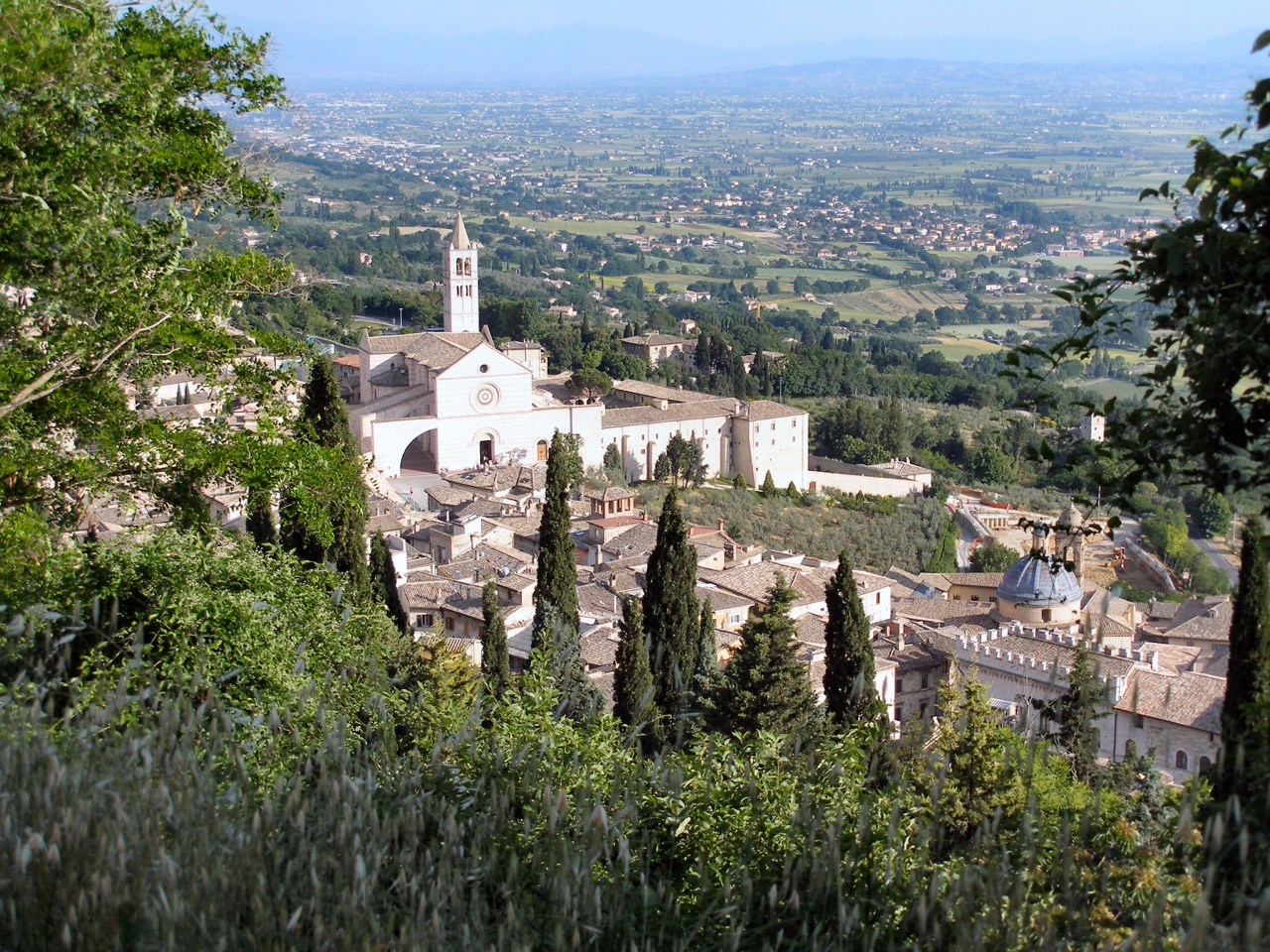
Basilica of Saint Clare
About five minutes downhill on the southern side of the old town, with the tomb of Clare and the original San Damiano Crucifix.
-
Sacred place
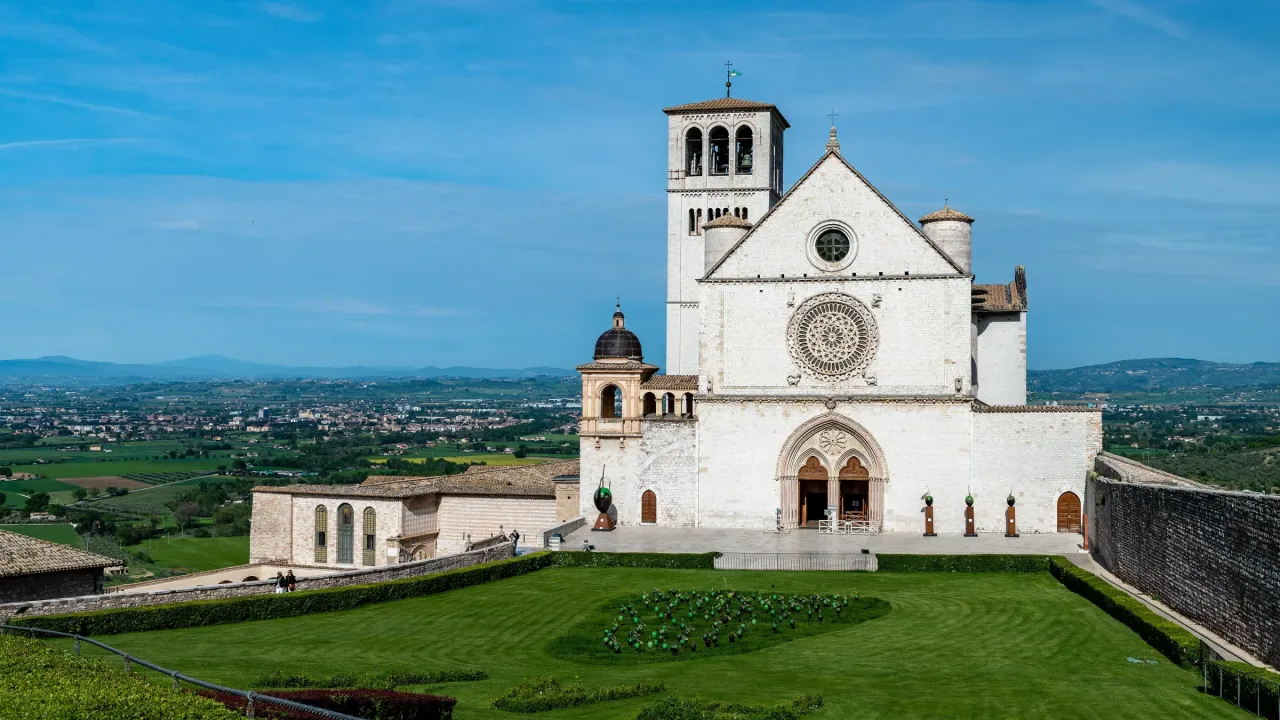
Basilica of Saint Francis
About fifteen minutes through the old town to the western edge, with the tomb of Francis in the crypt of the Lower Basilica.
-
Sacred place
San Damiano
About twenty minutes downhill outside the southern walls. The small church where Francis is traditionally said to have heard Christ speak from the crucifix.
-
Sacred place
Porziuncola at Santa Maria degli Angeli
About a fifteen minute drive into the valley below Assisi. The founding chapel of the Franciscan movement.
Plan your visit.
Editorial sources
The baptisms of Saint Francis (1182) and Saint Clare (1194) at this cathedral are held by long-standing local tradition and the witness of the early Franciscan biographers, rather than by a directly preserved sacramental record. The font and the cathedral piazza have been venerated under this tradition for centuries.
Official
Last reviewed
Pending review.
Photo credits
- Hero. Marco Ober / Wikimedia Commons (CC BY-SA 4.0). Source. CC BY-SA 4.0.