
St. Clare
of Assisi
She fled her family home on Palm Sunday 1212 and spent the rest of her life within walls she had chosen, fighting the Church for the privilege to own nothing.
Place your mind before the mirror of eternity; place your soul in the brilliance of glory; place your heart in the figure of the divine substance; and transform yourself entirely, through contemplation, into the image of the divinity itself.
Third Letter to Saint Agnes of Prague (c. 1238) Documented
Founder of the Poor Clares, who stayed forty years at San Damiano
Chiara di Favarone Offreduccio was the eldest daughter of a noble family in Assisi. She was eighteen when she heard Francis preach during Lent of 1212, and she walked out of her father's house on the night of Palm Sunday. She met Francis at the Porziuncola in the plain below the town, exchanged her noble clothing for sackcloth, and was consecrated by the cutting of her hair. Within months she had settled at the small church of San Damiano below the southern walls of Assisi. She did not leave again for forty-one years.
She was joined within months by her younger sister Catherine, later Saint Agnes of Assisi, and eventually by her mother Ortolana, who entered the same enclosure after a long lay life. Clare wrote her own Form of Life for the community, the first religious rule composed by a woman, and refused across four decades to accept the modifications successive popes wanted to impose. The privilege she demanded was the privilege to own nothing, individually or collectively, and to live entirely on what was given. Innocent III granted it first in 1216; Gregory IX renewed it under pressure; Innocent IV approved the Rule itself two days before her death.
She is remembered not only for what she withdrew from, but for one act of defense. In 1240, when Saracen mercenaries in the army of Frederick II reached the walls of San Damiano, Clare, already sick, was carried to the threshold of the convent with a small silver pyx containing the Blessed Sacrament. The soldiers withdrew. She had not yet been heard outside Assisi. The incident is the source of the iconography that depicts her holding the monstrance, and one of the reasons her enclosure was understood from the beginning as a center of authority rather than as mere shelter.
Her writings, the Rule, the Testament, the Blessing, and the four Letters to Agnes of Prague, are among the most spiritually mature mystical writings of the 13th century. She wrote of the soul as a mirror placed before the eternity of Christ. She died at San Damiano on August 11, 1253, with the parchment of Francis's Canticle of the Creatures beside her. Two years later she was canonized by Pope Alexander IV. In 1260 her body and the original crucifix from San Damiano were carried up to the new basilica built for her on the southern hill of Assisi, where they remain.
The community Clare founded at San Damiano became the Poor Clares, present today in monasteries across the Catholic world. Her body rests in the crypt of the basilica that bears her name; the original San Damiano Crucifix hangs in the side chapel above. San Damiano itself is preserved at the modest scale she kept: the small choir behind the altar, the refectory, the dormitory, and the garden where Francis composed the Canticle of the Creatures while staying with her in his last illness.
A life, in years and approximate ages.
-
c. 1194BirthBirth and Baptism in AssisiChiara di Favarone Offreduccio is born to a noble family in Assisi. Her father Favarino is a knight; her mother Ortolana, who will later join her at San Damiano, is from the noble family of Fiumi. She is baptized at the cathedral of San Rufino, according to long-standing local tradition.
-
c. 1212About 18Palm Sunday Flight to the PorziuncolaHaving heard Francis preach during Lent, Clare leaves her father's house in secret on the night of Palm Sunday. She walks four kilometres down to the Porziuncola in the plain. Francis meets her there with the brothers; she exchanges her noble clothing for sackcloth and is consecrated by the cutting of her hair.
-
c. 1212About 18Settlement at San DamianoAfter short stays at the Benedictine convent of San Paolo delle Abbadesse and at Sant'Angelo di Panzo while her family attempts to retrieve her, Clare settles at the small church of San Damiano below the southern walls of Assisi. Her sister Catherine, later Saint Agnes of Assisi, joins her within months. She will remain here for forty-one years.
-
c. 1216About 22The First Privilege of PovertyPope Innocent III grants Clare the privilege she has demanded: that her community at San Damiano shall be permitted to own no property, individually or collectively, and shall live entirely on alms. She will defend this privilege against successive papal pressures for the rest of her life.
-
c. 1240About 46Eucharistic Defense at San DamianoSaracen mercenaries in the army of Frederick II reach the walls of San Damiano. Clare, already sick, is carried to the threshold of the convent with a small silver pyx containing the Blessed Sacrament. The soldiers withdraw. The incident is the source of her iconography with the monstrance.
-
c. 1253About 59Approval of the Rule and DeathOn August 9, Pope Innocent IV approves the Form of Life Clare has written for her community, the first religious rule composed by a woman. The bull arrives at San Damiano while she is dying. She dies on August 11 with the parchment of Francis's Canticle of the Creatures beside her.
-
1255After deathCanonization and TranslationClare is canonized by Pope Alexander IV in 1255, two years after her death. In 1260 her body and the original San Damiano Crucifix are carried up from below the southern walls to the new basilica built for her on the hillside of Assisi, where they remain.
Dates are approximate where the surviving record is traditional or incomplete.
One place where this witness remains visible.
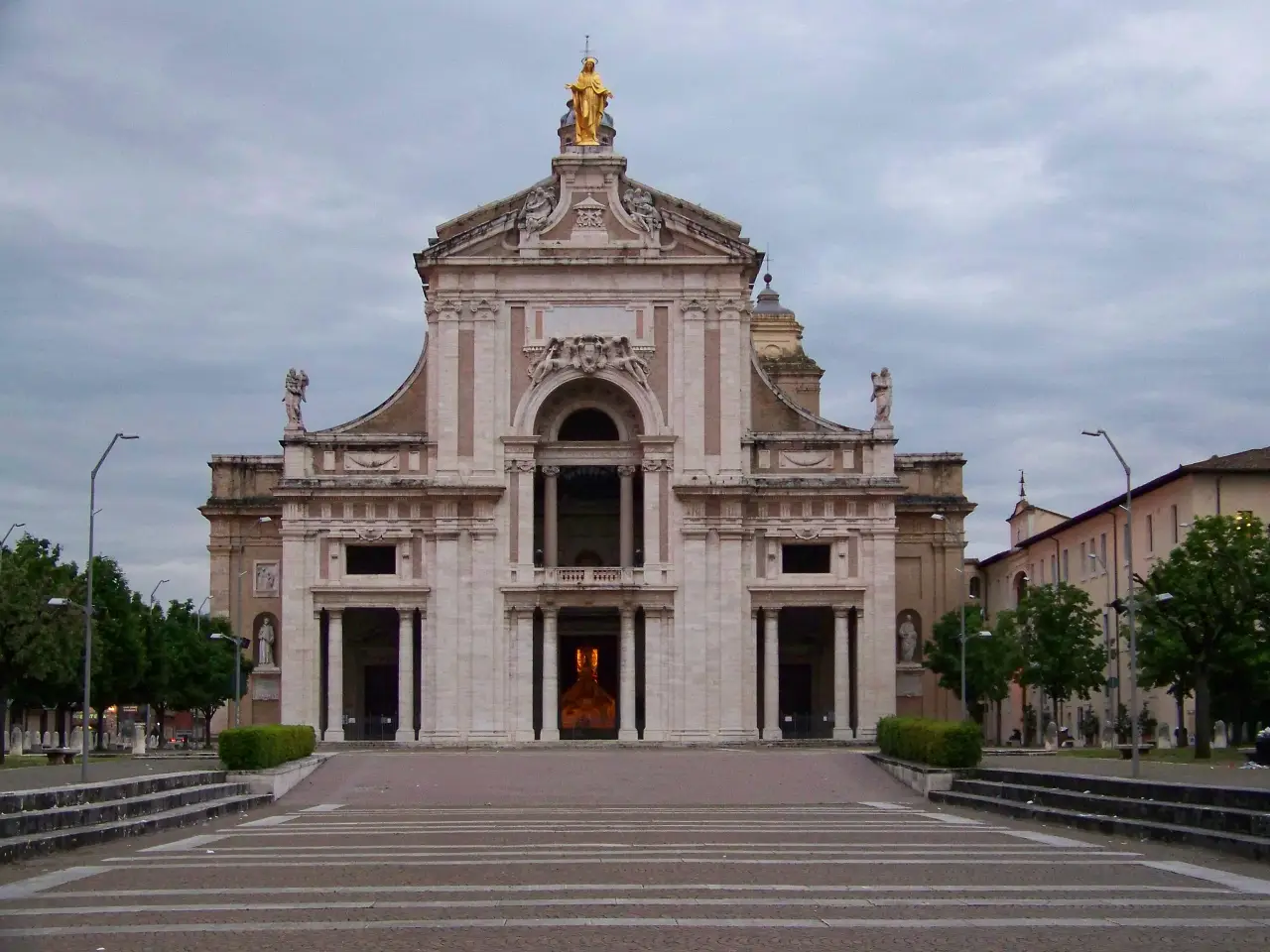
Porziuncola at Santa Maria degli Angeli
On the night of Palm Sunday 1212, Clare left her family's house in Assisi and came down to this chapel. Francis cut her hair and clothed her in penitential dress. Begin her path here, the place she chose her life.
Where the body and relics are venerated.
The saint is publicly venerated at a named tomb.
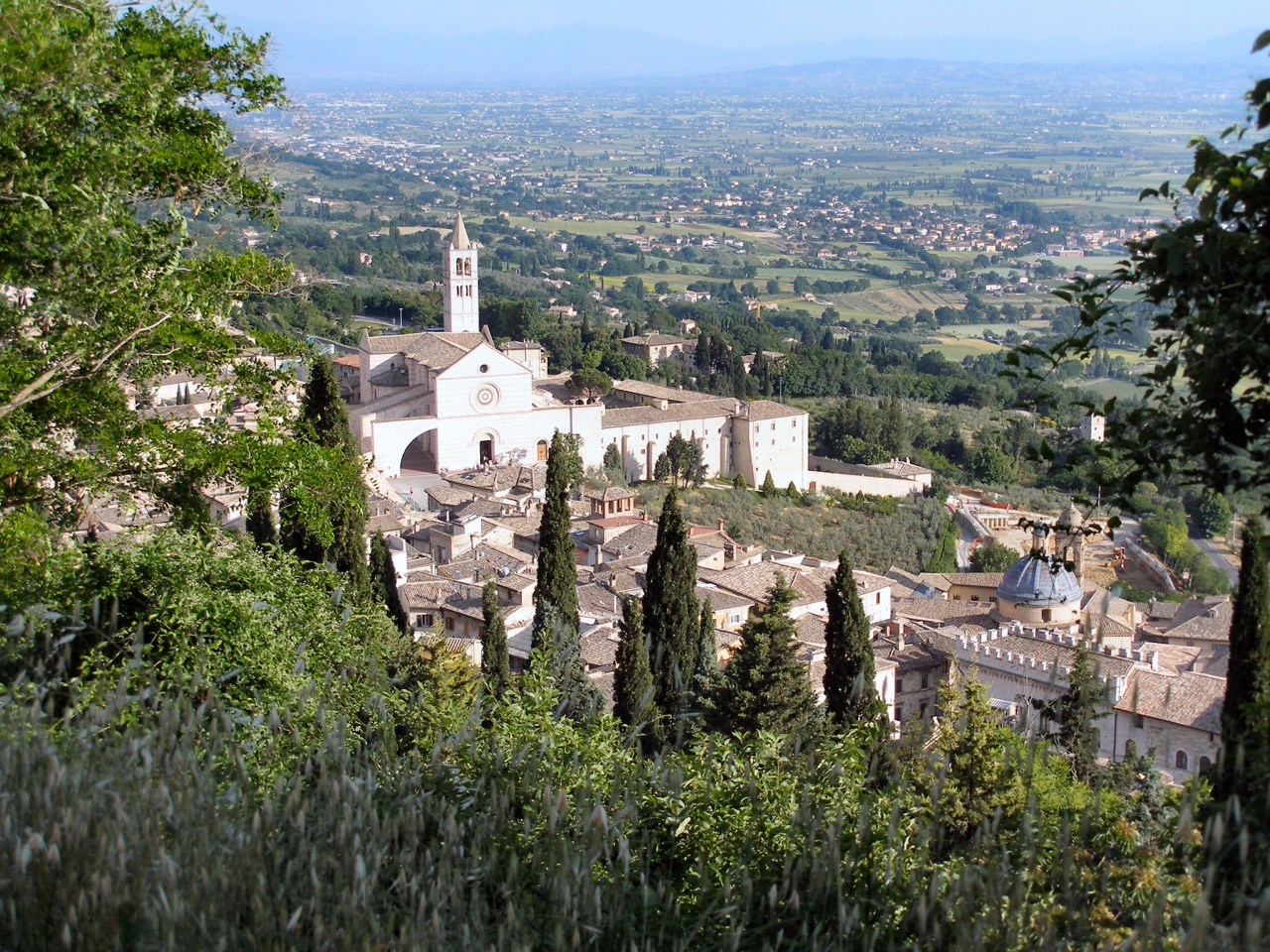
Basilica of Saint Clare, Assisi
The 13th-century basilica raised on the southern hill of Assisi over the body of Saint Clare. The original San Damiano Crucifix, the cross before which Francis prayed at his conversion, hangs in the Chapel of the Crucifix beside the nave.
- Body of Saint Clare in the crypt beneath the high altar
- Original San Damiano Crucifix in the Chapel of the Crucifix
- Hair, habit, breviary, and personal items of Saint Clare in the reliquary chapel
- Tomb of Saint Agnes of Assisi, her younger sister
Enter through the main door on Piazza Santa Chiara. Walk the nave; turn into the Chapel of the Crucifix on the right to pray before the San Damiano cross. Descend by the side staircase to the crypt and pray at the tomb of Clare.
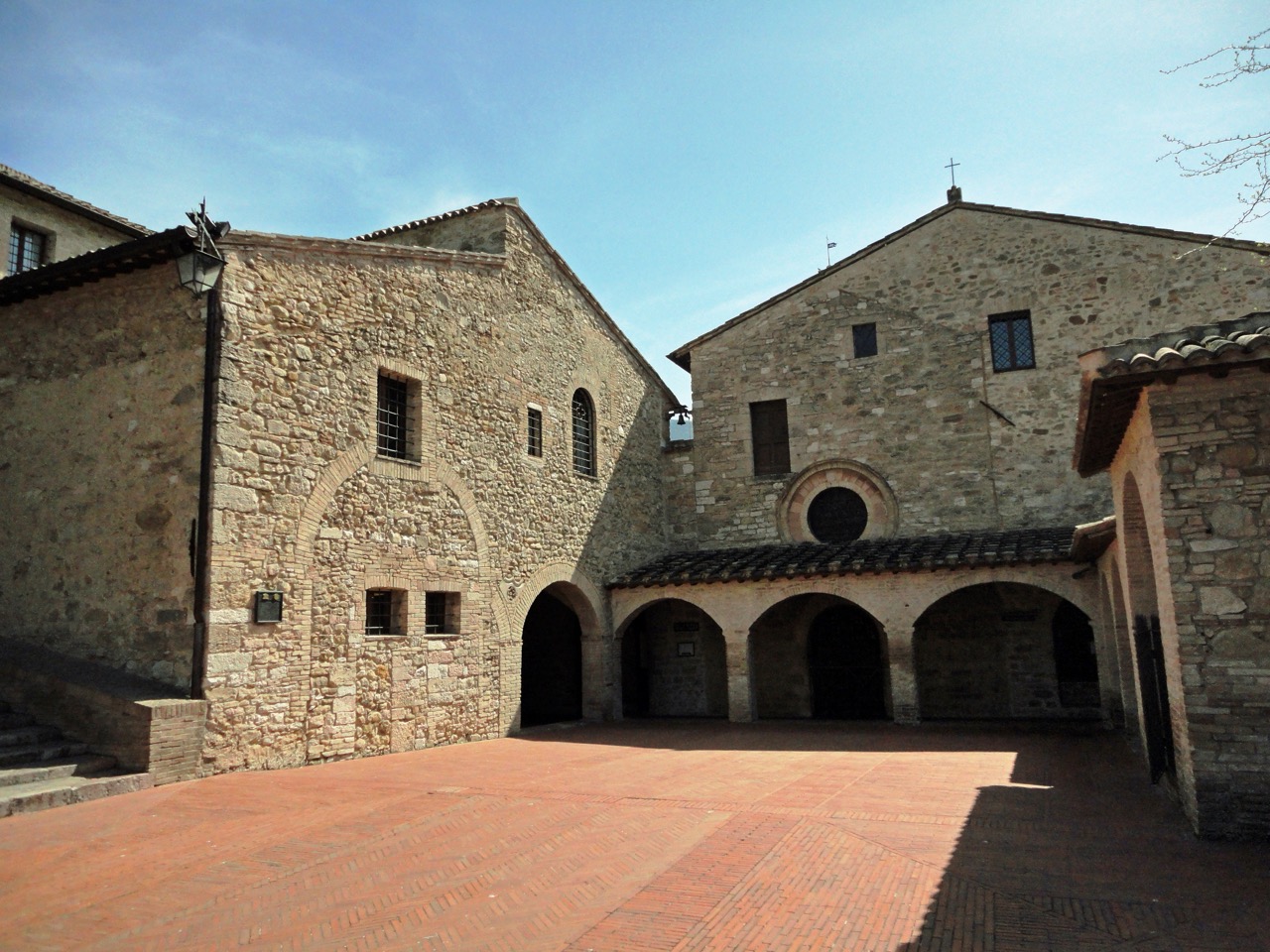
San Damiano, Assisi
The small church and cloister where Clare and her first sisters lived in enclosure from 1212 until her death in 1253. The site is preserved as a place rather than as a relic site: the original crucifix and her body are kept in the basilica in the old town.
- The Poor Clare choir behind the altar, with the wooden stalls of the first community
- The refectory of the early Poor Clares, with seats indicated for Clare and Saint Agnes of Assisi
- The garden behind the cloister where Francis composed the Canticle of the Creatures in 1225
- The small window through which Clare is traditionally said to have received Communion
Walk down from Porta Nuova on the southern side of the old town. Enter the church and pray before the copy of the crucifix that hangs where the original once did. Step into the small choir behind the altar; walk through the cloister, the refectory, and the dormitory above. End in the garden behind the apse.
Clare's Assisi asks pilgrims to stay still.
Francis's Assisi moves outward: repair, fraternity, the road to the lepers, the mountain at La Verna. Clare's Assisi moves inward and stays. The pilgrim who follows her is asked to slow down, to remain longer in one place than feels comfortable, and to trust that hiddenness is not absence.
Begin with the Third Letter to Agnes of Prague, short enough to read on the road, and the heart of Clare's contemplative teaching. Add the Form of Life, the first religious rule written by a woman, and her Testament. These three together are the closest a pilgrim can come to her own voice.
At San Damiano, give time to the cloister, the small choir behind the altar, and the refectory before the church. Clare lived here for forty-one years; the scale is the teaching. At the Basilica of Saint Clare, pause first in the Chapel of the Crucifix before the original San Damiano cross, then descend to the crypt and pray at her tomb. Resist the urge to walk her places quickly.
Look for enclosure as a positive choice, not a constraint. Look for the Privilege of Poverty, the right to own nothing, defended across four decades. Look for sisterhood, Eucharistic trust, and steadiness under pressure. Clare did not preach or travel; the road she walked was vertical and interior, and her courage was the courage to stay.
Read the path as consecration, hidden life, and resting place. Porziuncola is where she chose; San Damiano is where she lived; the basilica is where she now rests. The two basilicas anchor opposite ends of the medieval city, Francis at the west, Clare at the south, and the cathedral where they were both baptized stands between them.
Kindred witnesses
Clare's Assisi Route · 3 stops.
Clare's Assisi is short and vertical. Read it as consecration, enclosed life, and tomb: the chapel in the plain where she received the habit, the convent below the walls where she stayed for forty-one years, and the basilica on the southern hill where her body now rests.
-
01 VOCATION SITE
Porziuncola at Santa Maria degli Angeli
Santa Maria degli Angeli, Assisi, ItalyOn the night of Palm Sunday 1212, Clare left her family's house in Assisi and came down to this chapel. Francis cut her hair and clothed her in...
-
02 MONASTERY
San Damiano
Below the southern walls of Assisi, Umbria, ItalyThe convent where Clare lived in enclosure for forty-one years until her death in 1253. The original crucifix has been moved to the basilica in the old town;...
-
03 TOMB
Basilica of Saint Clare
Assisi, Umbria, ItalyEnd at the basilica raised over her body on the southern hill of Assisi. Pray before the original San Damiano crucifix in the chapel beside the nave, then...
Kept on August 11.
August 11 is Clare's feast day. The Poor Clare monasteries observe it with full liturgical solemnity, and in Assisi the Basilica of Saint Clare is the principal place of devotion. The community sings the Liturgy of the Hours from the choir behind the high altar, and pilgrims come throughout the day to the crypt and to the Chapel of the Crucifix.
Pair the basilica with a walk down to San Damiano in the late afternoon, when the path is quiet. The basilica gathers what was once kept at San Damiano; San Damiano keeps the scale at which it was lived.
How Assisi keeps the memory of Clare
Clare's life stayed within a few miles of Assisi, and so does her memory. The hill town, San Damiano where she lived in enclosure for forty-one years, the basilica that holds her body, the order she founded, and Francis beside her all belong to the same sacred ground.
-
City
Assisi
Clare was born into a noble Assisi family and never left the town for long; its churches and walls hold nearly the whole of her story.
-
Tradition
The Poor Clares
The enclosed community she began at San Damiano became the Poor Clares, now present in monasteries across the Catholic world.
-
Basilica and tomb
Basilica of Saint Clare
Built on the southern hill of Assisi to receive her body in 1260; she rests in the crypt, and the original San Damiano Crucifix hangs in a side chapel above.
DocumentedHer burial here is well attested by the early Franciscan record and the canonization process.
-
Where she lived
San Damiano
The small church below the walls where Clare lived in enclosure for forty-one years, preserved at the modest scale she kept.
Clare's life is well documented for a thirteenth-century woman, through her own writings, her canonization process, and the early Franciscan sources. Her body was carried up to the new basilica raised in her name in 1260 and rests there in the crypt.