
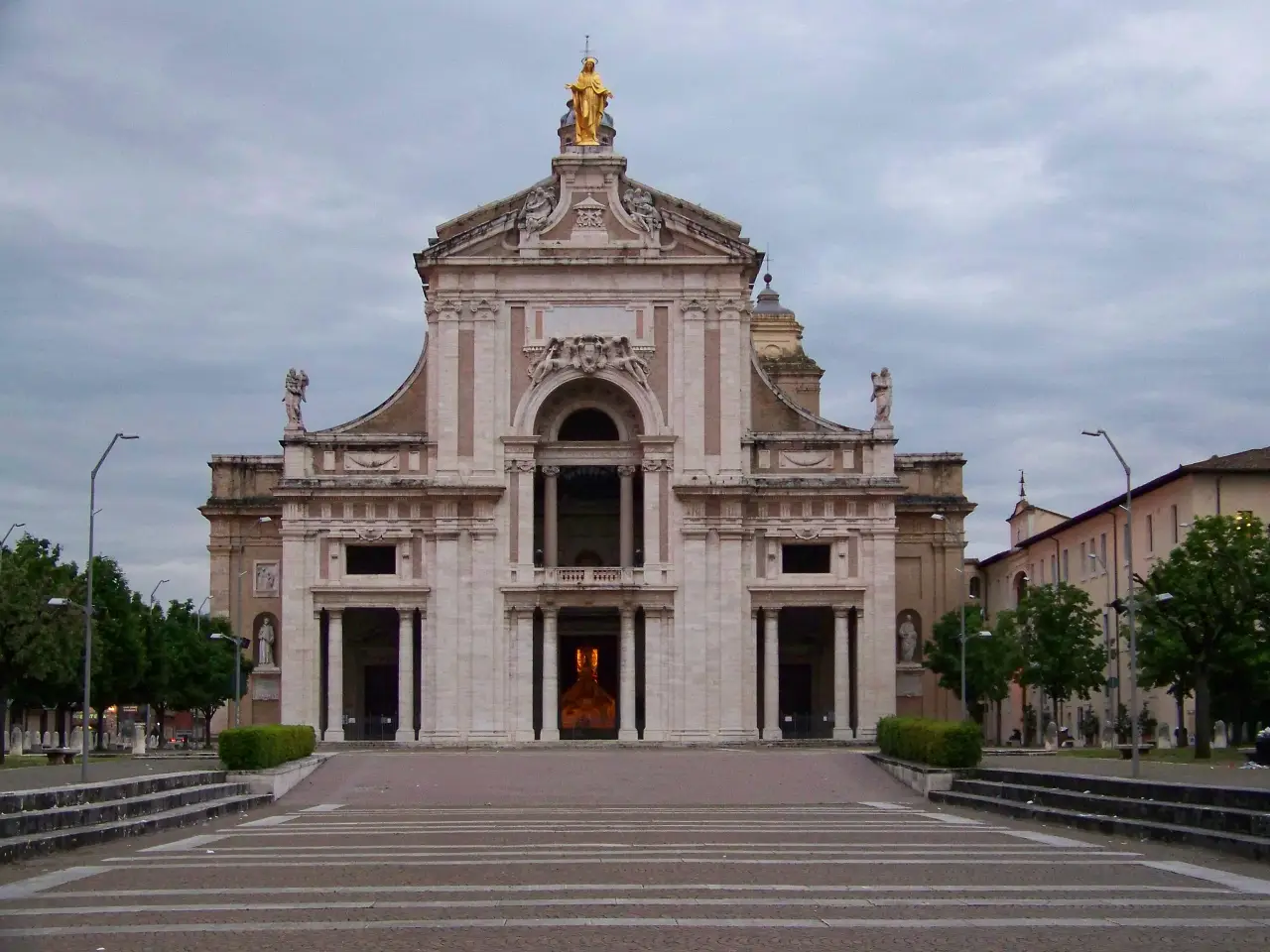
Porziuncola at Santa Maria degli Angeli
The small chapel where the Franciscan movement was born, preserved intact at the center of a much larger basilica.
- Location
- Assisi, Italy 43.0593° N · 12.5757° E
- Type
- Papal basilica enclosing the original Franciscan chapel A Romanesque chapel of the 9th or 10th century enclosed within a late Renaissance and early Baroque basilica designed by Galeazzo Alessi
- Dedication
- Saint Mary of the Angels, with the Porziuncola at its center
- Time Needed
- 1 hour to half a day
A Chapel at the Center of a Basilica
Come here to pray inside the Porziuncola itself, the small chapel that Francis rebuilt with his own hands and which became the cradle of the Franciscan order. The basilica was raised around the chapel rather than over it, so the Porziuncola can still be entered, prayed in, and approached as it was in Francis's lifetime.
From a Ruined Chapel to a Papal Basilica
The Porziuncola was a small abandoned chapel of Santa Maria degli Angeli in the plain below Assisi when Francis began to rebuild it by hand. Around 1208 the Benedictines of Mount Subasio gave it to him on condition that it remain the mother church of his order. Here Francis gathered the first brothers, received Saint Clare into religious life on Palm Sunday 1212, and obtained the Pardon of Assisi from Pope Honorius III. He died in the cell beside the chapel on October 3, 1226. The surrounding basilica was begun in 1569 under Pope Pius V to enclose and protect the chapel, and was consecrated in 1679.
The Porziuncola is a small stone Romanesque chapel of the 9th or 10th century, with a single nave and a frescoed altar wall painted by Ilario da Viterbo in 1393. The basilica that surrounds it is the work of Galeazzo Alessi in the late Renaissance idiom, with a long aisled nave and a great dome centered directly over the Porziuncola. The Cell of the Transitus opens off the right transept; the Rose Garden and the early cloister lie behind the apse.
The Porziuncola was given to Saint Francis by the Benedictines of Mount Subasio around 1208, on condition that it remain the mother church of the order.
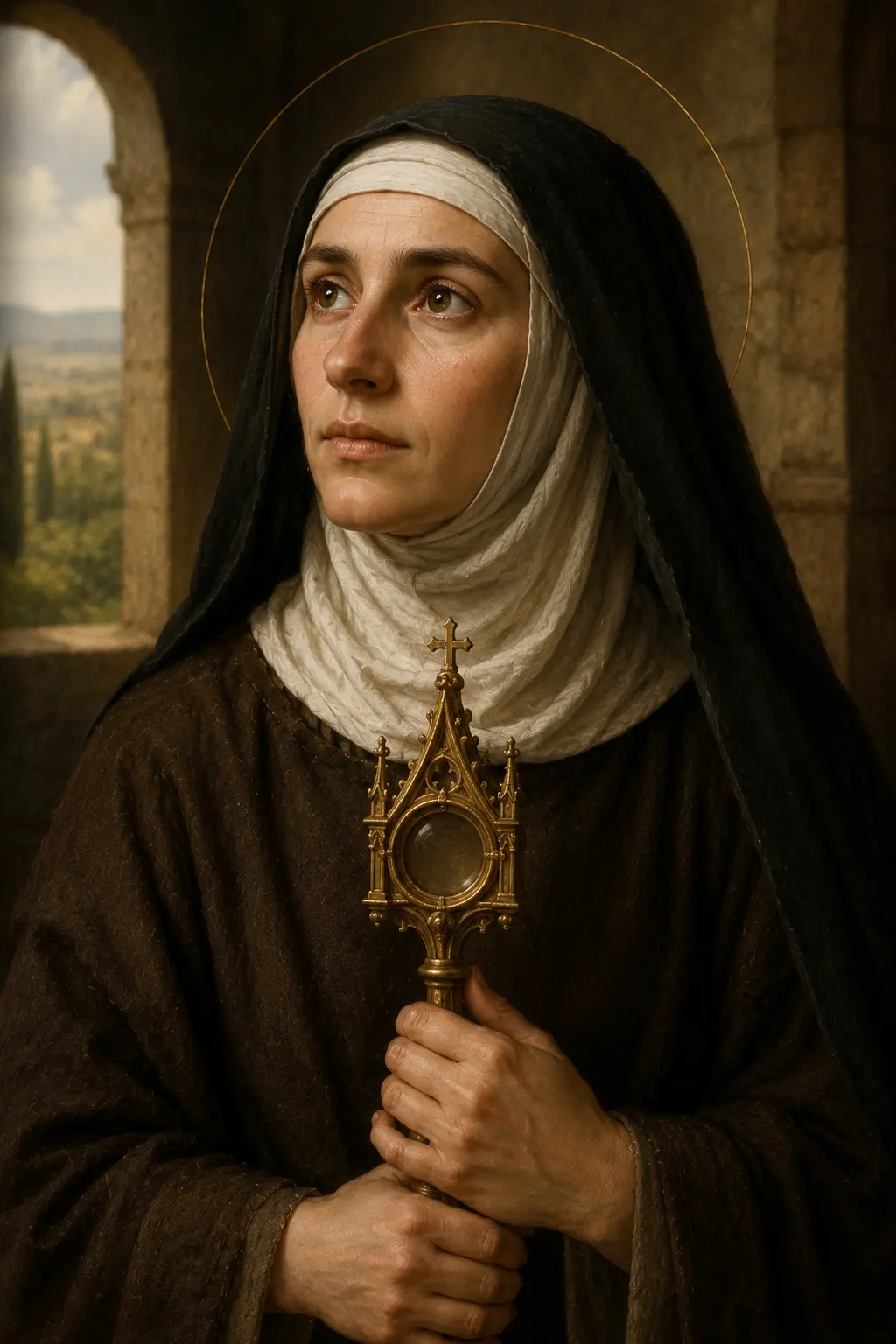
Francis received Saint Clare into religious life here on Palm Sunday 1212.
Francis died in the adjoining cell on October 3, 1226.
Pope Honorius III granted the Pardon of Assisi at the Porziuncola at Francis's request, a plenary indulgence traditionally observed on August 2.
Construction of the surrounding basilica began in 1569 under Pope Pius V to a design by Galeazzo Alessi and was consecrated in 1679.
The basilica is a working Franciscan church and one of the major pilgrimage destinations of the Franciscan world. Approach the Porziuncola as the spiritual center of the building, not as one site among many. Enter, kneel, and pray before walking the larger basilica.
What to notice.
-
The Porziuncola itself
The small Romanesque chapel beneath the central dome of the basilica. The reason the basilica exists.
-
The Cell of the Transitus
The cell where Saint Francis died on October 3, 1226, preserved off the right transept.
-
The Ilario da Viterbo altar wall
The 1393 fresco cycle inside the Porziuncola, depicting the granting of the Pardon of Assisi.
-
The Rose Garden behind the apse
The garden traditionally associated with Francis and the thornless roses, kept by the friars.
- The deliberate centering of the Porziuncola beneath the dome of the basilica, so the small chapel reads as the heart of the larger building rather than an exhibit within it.
- The contrast in scale between the Romanesque stones of the Porziuncola and the long Renaissance nave around it.
- How the Cell of the Transitus is preserved at the same modest scale as Francis lived, with only the recumbent statue added.
- The pilgrim traffic on August 2, when the Pardon of Assisi draws large numbers to confession and Mass at the chapel.
How much time, and what to do with it.
-
Walk the nave to the Porziuncola, pray inside the chapel, visit the Cell of the Transitus, and return to the Porziuncola before leaving.
-
Add the Rose Garden, the early cloister behind the apse, and a slower reading of the Ilario da Viterbo frescoes inside the chapel.
-
Pair the basilica with a return to the hilltop town of Assisi for the Basilica of Saint Francis and the Basilica of Saint Clare.
Begin and end at the Porziuncola itself. The basilica is large, but the visit only works if the small chapel at its center is treated as the destination and the rest as setting.
Entering as a pilgrim, not a tourist.
Enter the basilica through the main doors and walk down the nave to the Porziuncola at the center, beneath the dome. Pray inside the chapel before walking around it. From the right side of the nave, follow signs to the Cell of the Transitus. Continue out through the sacristy to the Rose Garden and the early cloister behind the apse, then return to the basilica for a final prayer at the Porziuncola.
- Daily Mass in the Porziuncola and in the surrounding basilica
- Sacrament of Reconciliation in many languages
- Veneration at the Cell of the Transitus
- Pilgrim observance of the Pardon of Assisi on August 2
What pilgrims come to venerate here.
Tomb and Burial
- Saint Francis of Assisi died in a cell adjoining the Porziuncola on October 3, 1226. The cell is preserved as the Cappella del Transito within the basilica.
- Several of Francis's earliest companions are remembered within the basilica complex.
Relics and Sacred Tradition
- The Porziuncola chapel itself is the principal sacred object: the place where Francis gathered his first brothers, where he received Saint Clare into religious life, and where the Franciscan rule first took shape.
- The basilica preserves objects traditionally associated with the death of Saint Francis at the cell beside the chapel.
Sacred Objects
- The frescoed altar wall of the Porziuncola painted by Ilario da Viterbo in 1393, depicting the granting of the Pardon of Assisi and scenes from the life of Francis.
- The Cell of the Transitus, with a statue of Francis recumbent.
- The Rose Garden behind the basilica, traditionally associated with the night Francis is said to have rolled among thorny roses; the thornless rose bushes are kept by the friars.
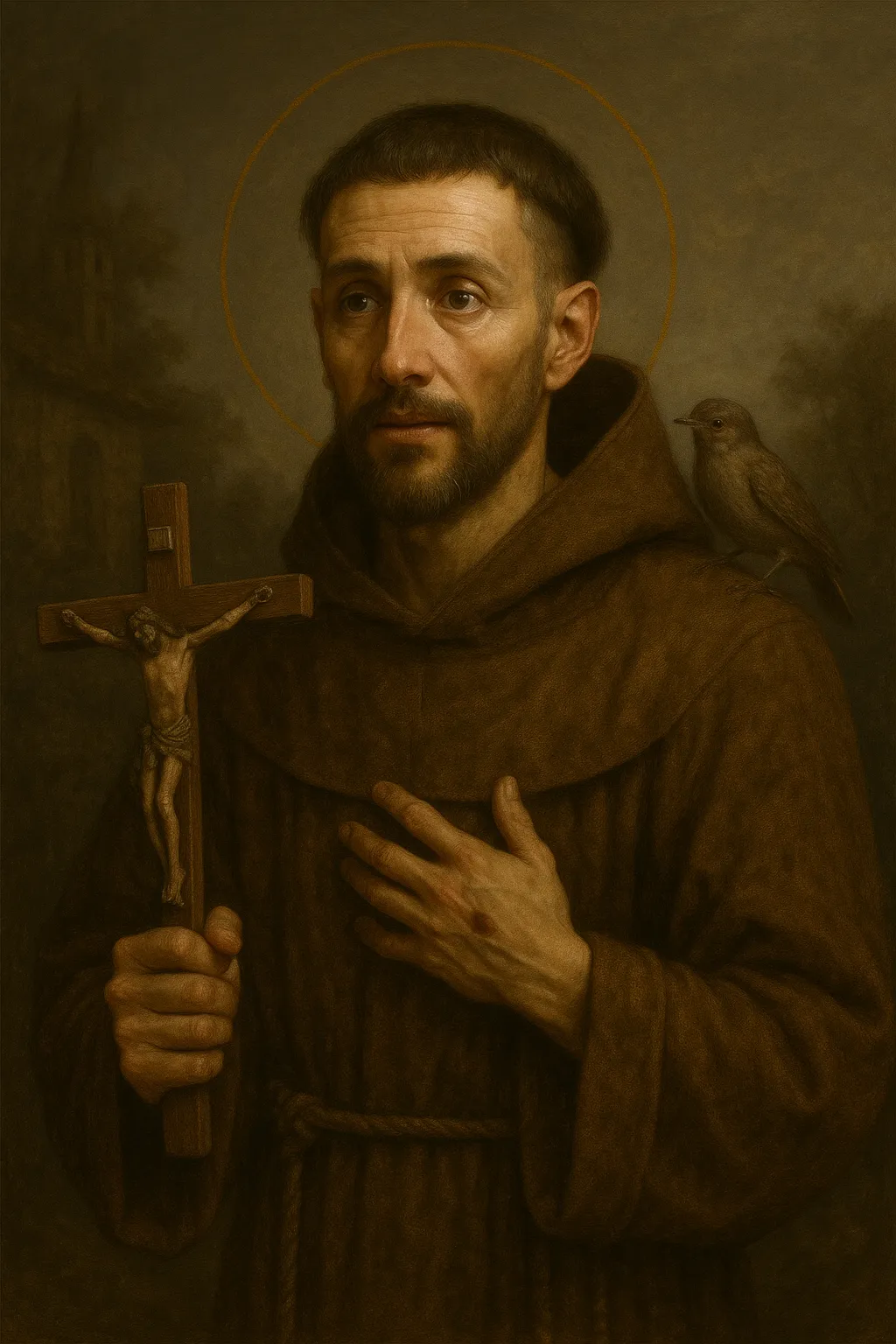
How this place gathers the saints.
Within walking distance.
-
City hub
Assisi
Where this church sits within the wider Catholic geography of Assisi.
-
Sacred place
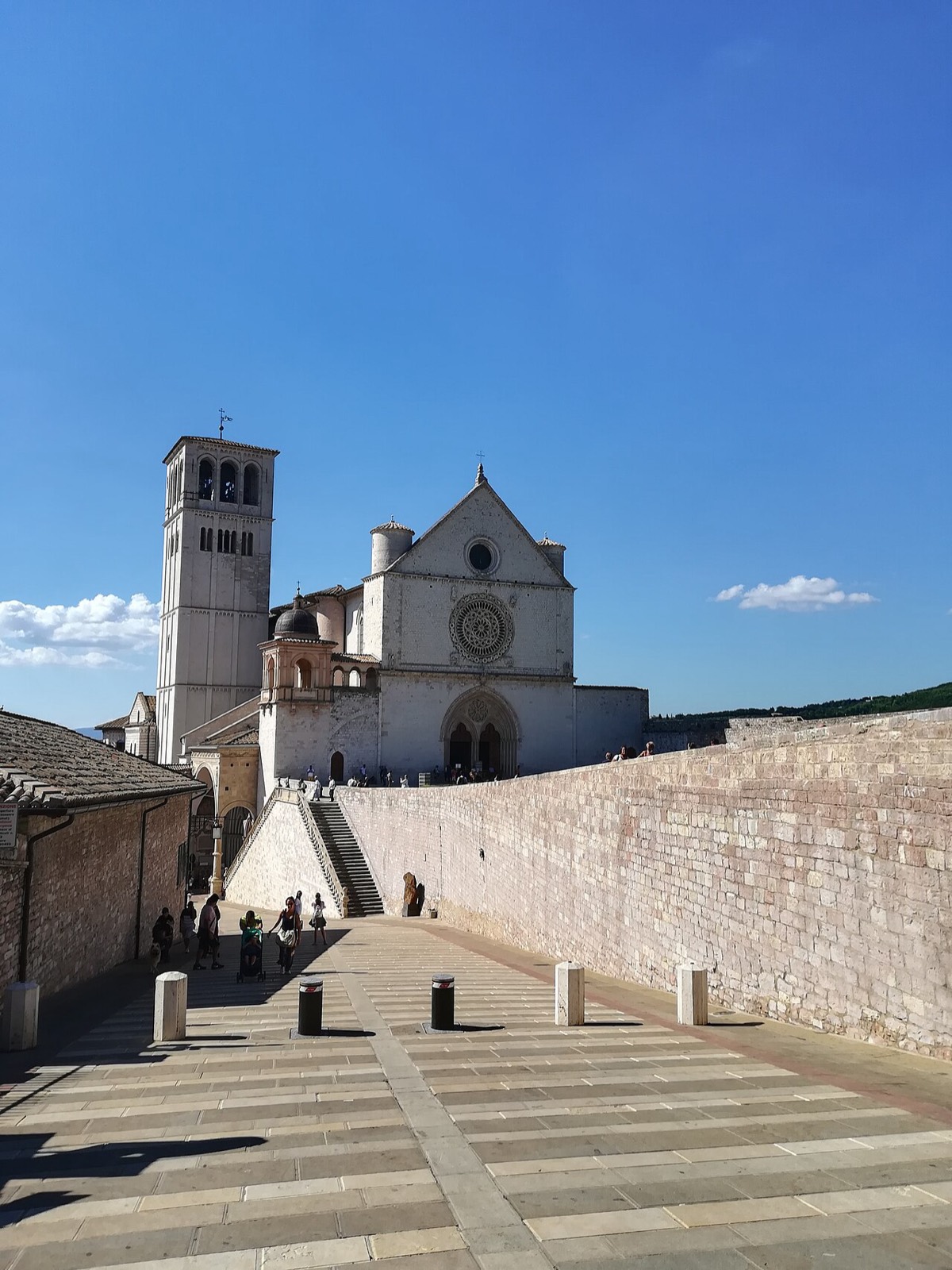
Basilica of Saint Francis
The papal basilica raised over the tomb of Saint Francis in the hilltop town above the plain.
-
Sacred place
Basilica of Saint Clare
The basilica over the tomb of Saint Clare on the southern side of the old town.
-
Sacred place
San Damiano
The small church between this basilica and the hilltop town, where Clare withdrew after Francis received her at the Porziuncola and remained for forty years.
-
Sacred place
Eremo delle Carceri
The hermitage on Mount Subasio above Assisi. Francis moved between this chapel in the plain and the woods on the hillside throughout his life, the valley for the brothers, the woods for himself.
Plan around this place.
The Porziuncola is the small chapel at the center of the basilica, not the basilica itself. Pilgrim attention is best kept on the chapel and on the Cell of the Transitus rather than on the surrounding architecture.
All photography credits
Pending review.