Copy of the San Damiano Crucifix
Devotional crucifix, faithful copyYes, above the small altar of the church
Sanctuary of San Damiano · Sacred Convent of AssisiThe quiet church and cloister where the call of Saint Francis and the enclosed life of Saint Clare took shape.
Come here for the place rather than for an object. The original San Damiano Crucifix is preserved in the Basilica of Saint Clare in the old town. San Damiano itself is where the encounter is traditionally located and where Clare and her sisters lived a hidden enclosed life for more than forty years.
San Damiano was a small abandoned church when Francis, after his conversion, began to repair it with his own hands and stones he gathered or begged in the town above. The early Franciscan sources connect this work to the call he is traditionally said to have heard from the painted crucifix in the church. The site became Clare's at the end of 1212. After Francis received her into religious life at the Porziuncola on Palm Sunday of that year, and after brief stays at two other convents while her family tried to retrieve her, Clare settled at San Damiano with her first companions. Her younger sister Catherine, Saint Agnes of Assisi, joined her within months. Clare remained here for forty-one years. The community moved up to the new basilica in 1260, seven years after her death, taking her body and the original crucifix with them.
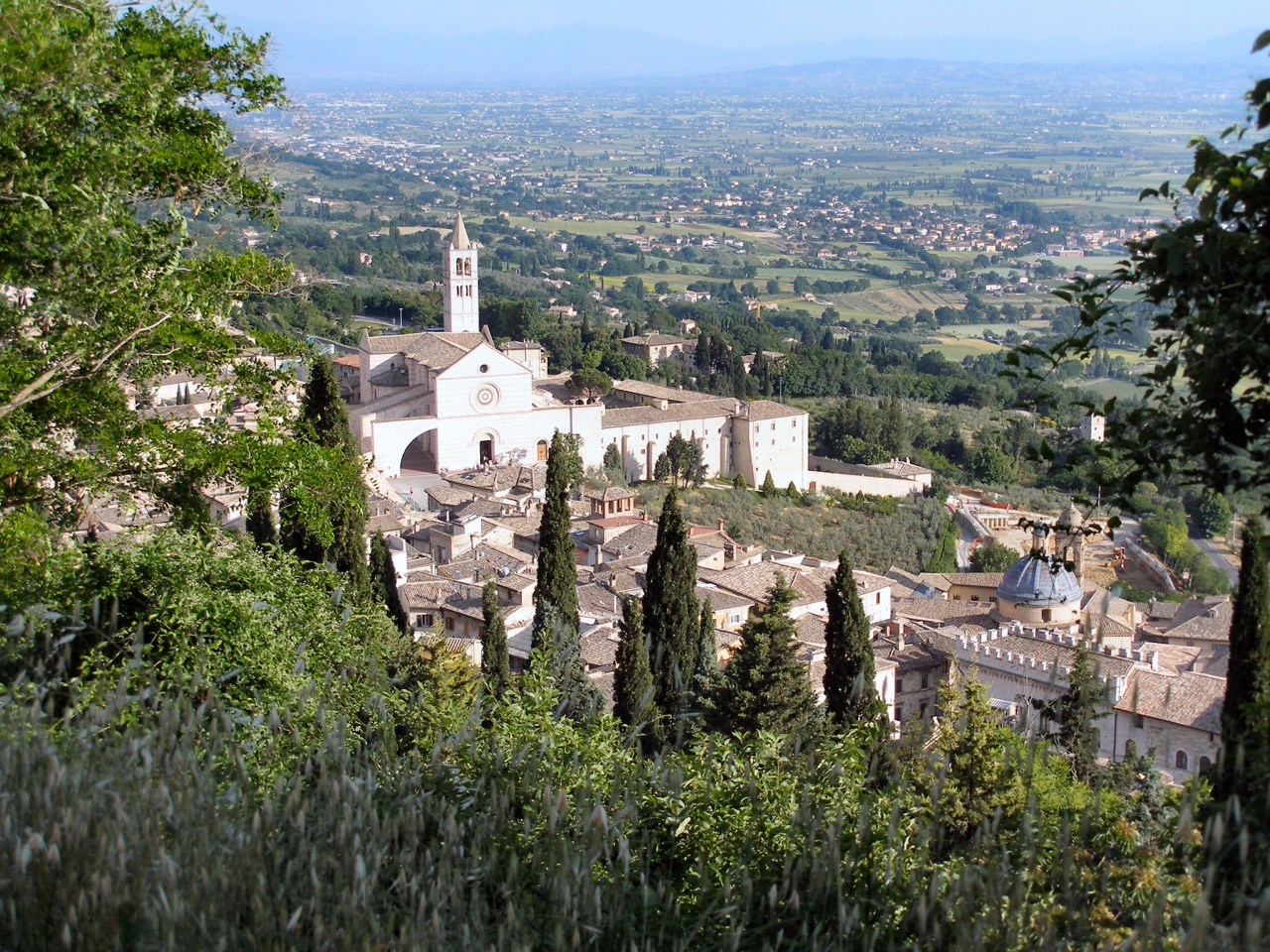
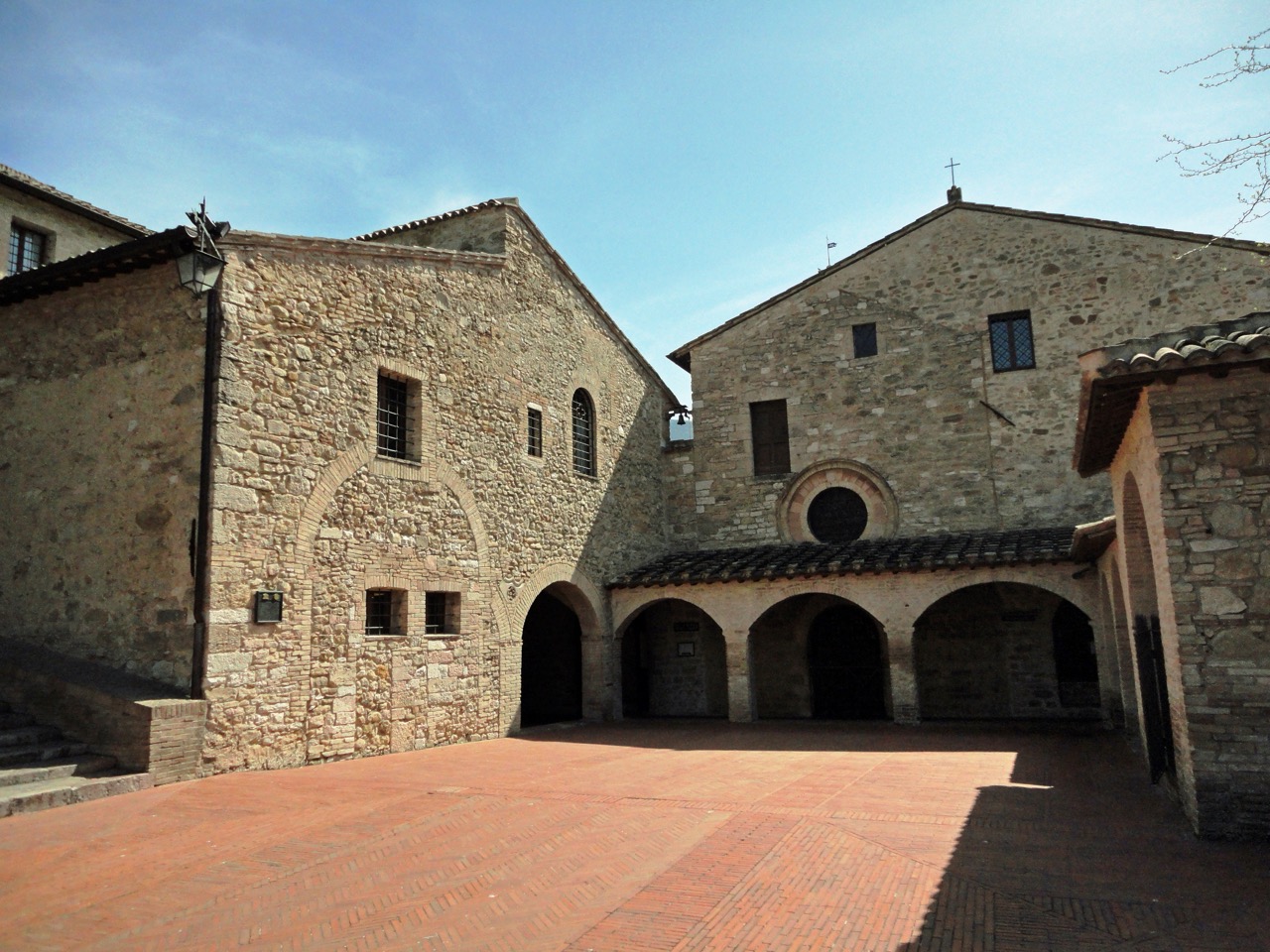
The church is a small Romanesque stone building with a single nave and a low choir behind the altar. The 13th-century cloister, refectory, and dormitory of the Poor Clares survive almost intact, kept at the same modest scale as the first community. The garden behind the cloister opens toward the Umbrian plain.
Francis, around 1205 or 1206, is traditionally said to have heard Christ speak from the crucifix in this church and to have begun rebuilding it with his own hands.
Clare arrived at San Damiano in 1212 after Francis received her into religious life at the Porziuncola, and lived here in enclosure until her death in 1253.
Saint Agnes of Assisi joined her sister Clare here a few weeks after her arrival.
The community moved to the new Basilica of Saint Clare in 1260, taking the original crucifix and Clare's body with them.
San Damiano has been in the continuous custody of the Conventual Franciscans since the 13th century.
San Damiano is one of the quieter destinations in Assisi and is best approached as a place of silence and slow attention. The custody of the Conventual Franciscans keeps it as a place of prayer rather than as a museum.
The original is in the Basilica of Saint Clare; the copy here is hung where the original once was.
The small enclosed space with the wooden stalls of the first community.
Preserved with the seats of Clare and Saint Agnes of Assisi indicated.
Traditionally associated with the composition of the Canticle of the Creatures in 1225.
Walk down from Porta Nuova, pray in the church before the copy of the crucifix, and step into the enclosed choir of the first Poor Clares behind the altar before climbing back to the town.
As above, plus the refectory and dormitory of the early community and a quiet pause in the garden behind the apse, where most of the Canticle of the Creatures was composed.
Pair the place Clare actually lived with the basilica that now holds her body and the original crucifix. Walk back up into the old town and end at the Cathedral of San Rufino, where she was baptized.
Walk down to San Damiano in the late morning or early evening, when the path is quiet and the Umbrian light is soft. The site only opens fully if it is approached slowly and in silence.
Walk down from the southern gate of Assisi. Enter the church first and pray before the copy of the crucifix. Step into the small choir behind the altar where Clare and her sisters prayed. Continue into the cloister, the refectory, and the early dormitory above. End in the garden behind the apse, where Francis is traditionally said to have composed most of the Canticle of the Creatures.
Yes, above the small altar of the church
Sanctuary of San Damiano · Sacred Convent of AssisiOpen to quiet prayer
Sanctuary of San DamianoVisited as part of the cloister
Sanctuary of San DamianoA place of silence behind the apse
Early Franciscan sources · Sanctuary traditionSource note Traditional attributions are presented as tradition, with documentation named where it exists.
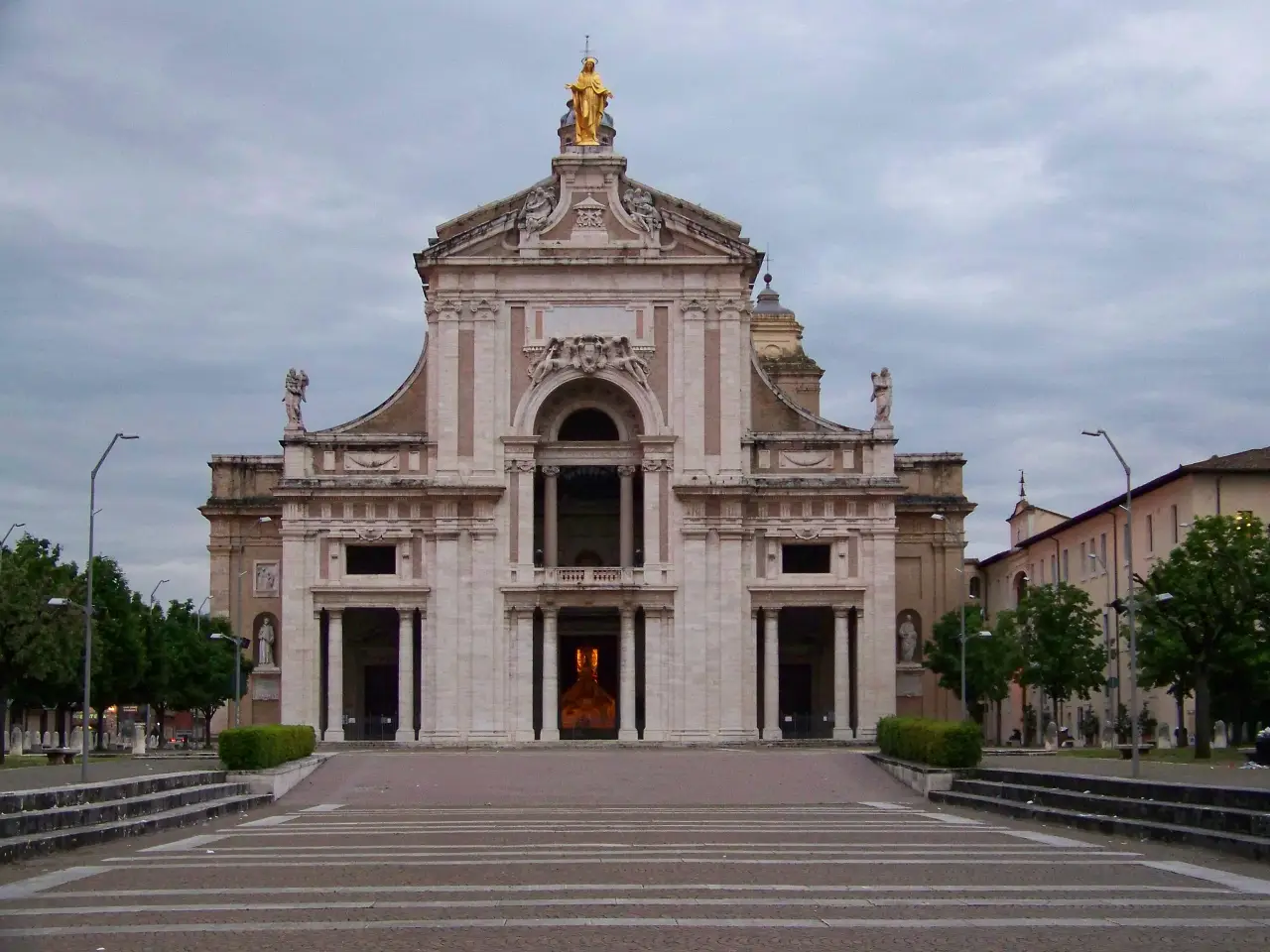
Where this church sits within the wider Catholic geography of Assisi.
The basilica in the old town that holds the tomb of Clare and the original San Damiano Crucifix from this church.
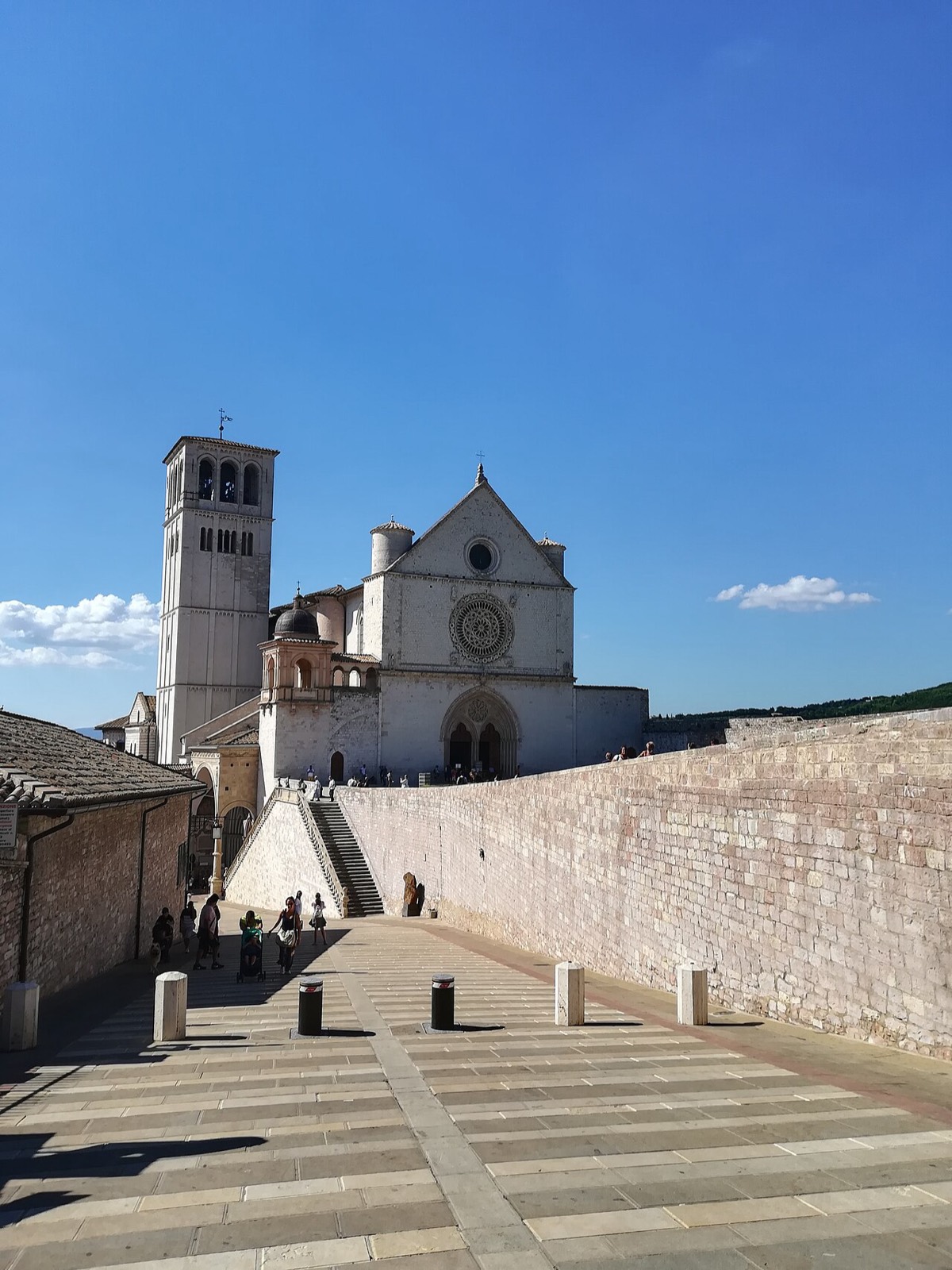
The papal basilica at the western edge of the old town, raised over the tomb of Saint Francis.
The small chapel in the plain below where Francis received Clare into religious life before she withdrew to San Damiano.
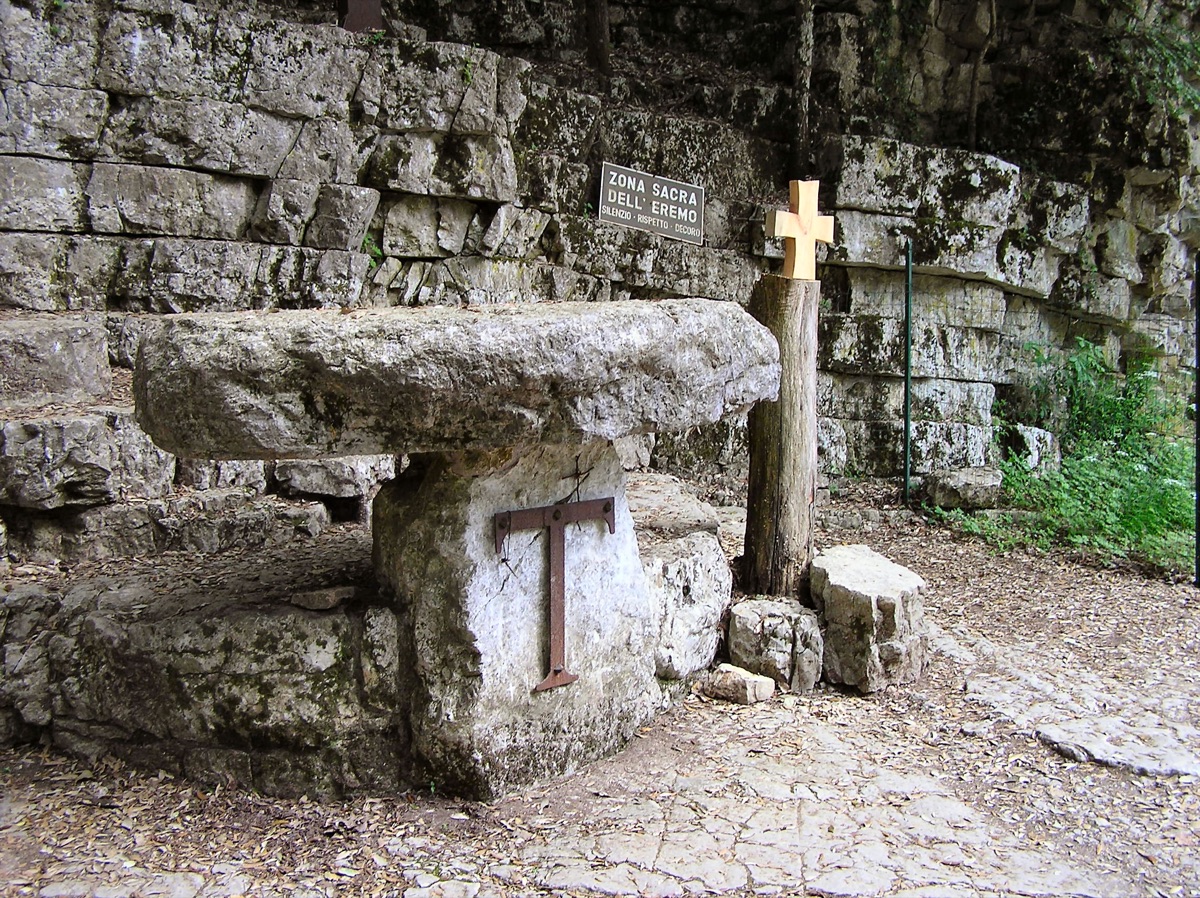
The Franciscan hermitage on Mount Subasio above Assisi. The other quiet site in the cluster: outward to the woods to balance Clare's inward enclosure here.
The cross that hangs above the altar at San Damiano today is a faithful copy. The original 12th-century crucifix has been preserved in the Basilica of Saint Clare in the old town since the Poor Clare community moved there in 1260.
Pending review.
Use this for corrections, broken links, missing places, and planning ideas.