
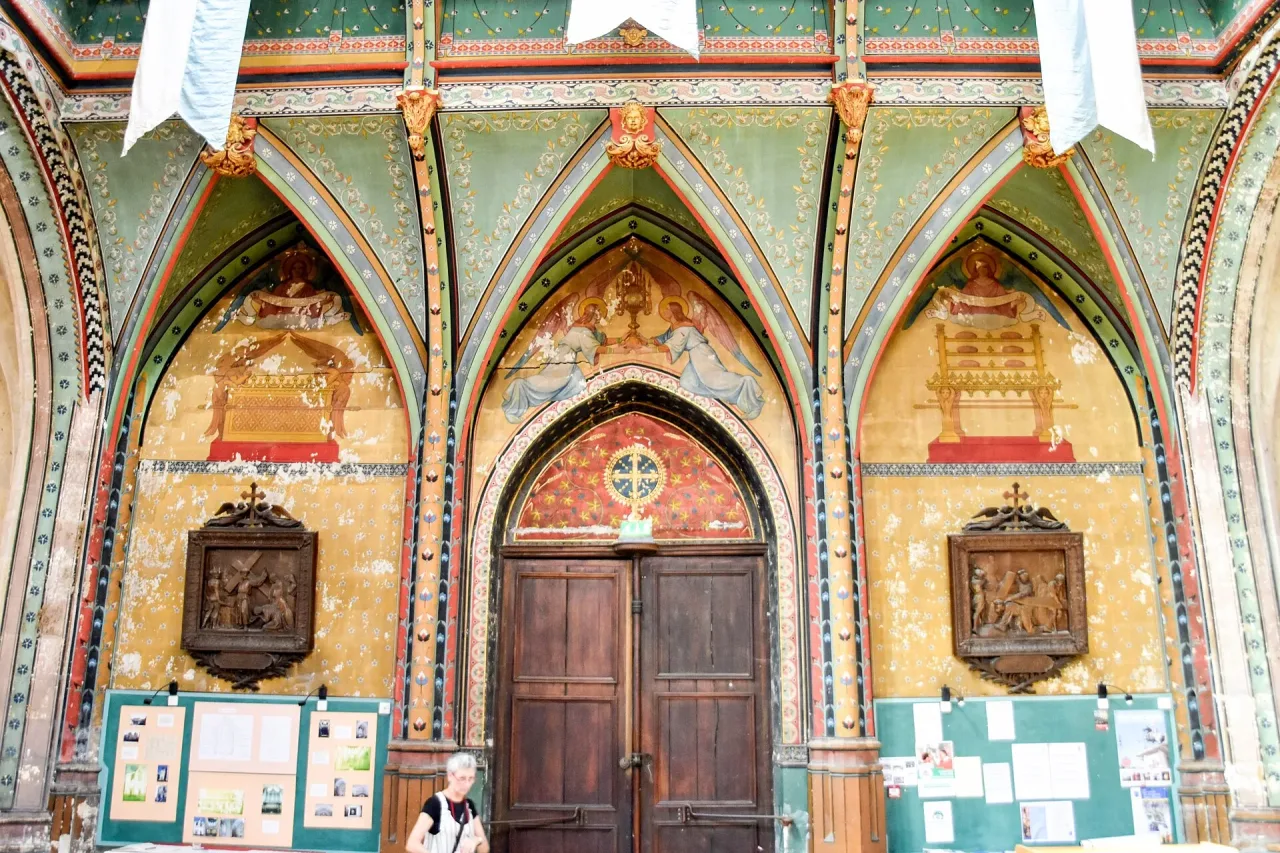
The polychrome decoration
Painted architectural decorationNot a devotional object; part of the fabric of the church
City of Chartres heritage recordsÉglise Saint-Aignan is the parish church of the old city, five minutes from the cathedral. Begun in 1514, it keeps a painted interior and sixteenth-century glass, and it is still used by its congregation.
Everyone leaves Chartres Cathedral impressed by pale stone and coloured light. Almost no one is told that the cathedral was once painted too. Saint-Aignan is five minutes away and it still is: green and red and gold across the vaults, patterns on every rib, painted scenes above the arches. It is the single most useful thing you can see in Chartres for understanding what you have just walked through.
Local tradition names Saint Aignan, the fifth-century bishop of Orléans, as the founder of a church on this ground. What stands here now was begun in 1514, over a crypt of the late fifteenth century, at the moment when flamboyant Gothic and the new classical vocabulary overlapped. Chartres was besieged in 1568 during the Wars of Religion and much of the earlier glass was lost. Twenty windows survive and are classified as historic monuments. The upper painting belongs to the Renaissance work; the lower arcades were painted in the nineteenth century, when the altar, the choir screens and the pulpit were also remade. Structural repairs to the lower choir and crypt began in 2025, and the church has stayed open through them.
Look for the join. The last flamboyant Gothic detailing and slender classical colonnettes sit in the same building and sometimes in the same bay, which is exactly what a church begun in 1514 in a French provincial town should look like.
Saint-Aignan is a working parish church rather than a monument, and it feels like one. There are notice boards by the door and chairs set out for the congregation. Nothing here has been arranged for visitors, which is why it is worth the five minutes.
Green, red, gold and blue across the vaults, the ribs and the walls. Most medieval and Renaissance churches were painted like this and almost none still are, which makes Saint-Aignan the most useful interior in Chartres for imagining the cathedral as it was.
Twenty windows are classified as historic monuments: scenes from the life of the Virgin, saints and martyrs, and families of donors set among painted architecture. Much of the earlier glass was damaged when Chartres was besieged in 1568.
The building was begun in 1514, at the moment the last flamboyant Gothic detailing gives way to slender classical colonnettes. Both are in the same building, sometimes in the same bay.
A late fifteenth-century crypt survives beneath the church, older than the building standing over it.
The short visit, and the one that pays: the painted west wall, the vaults, and the surviving sixteenth-century glass.
Go in and turn round first, so you meet the painted west wall before anything else. Then walk the nave slowly with your eyes up.
Not a devotional object; part of the fabric of the church
City of Chartres heritage recordsNot applicable
French Ministry of Culture monument recordsSource note Traditional attributions are presented as tradition, with documentation named where it exists.
Written from the Diocese of Chartres parish pages, the City of Chartres heritage and restoration pages, and the French Ministry of Culture monument records, with the Wikimedia image provenance given in the credits. The fifth-century foundation is given as local tradition rather than as documented history.
August 5, 2026
Use this for corrections, broken links, missing places, and planning ideas.