Museum of the Holy Land collections
Archaeological and devotional collectionVisited as a museum, not as a shrine
Xunta de Galicia museum register · Franciscan community of SantiagoSan Francisco is the Franciscan church and convent north of the cathedral, associated in Galician tradition with a pilgrimage made by Saint Francis in 1214, and holding the Museum of the Holy Land.
Come for two things that sit oddly well together: a Franciscan community that has kept pilgrim hospitality in this city for centuries, and a museum of the Holy Land assembled by friars who serve the holy places. It is five minutes from the cathedral and almost never crowded.
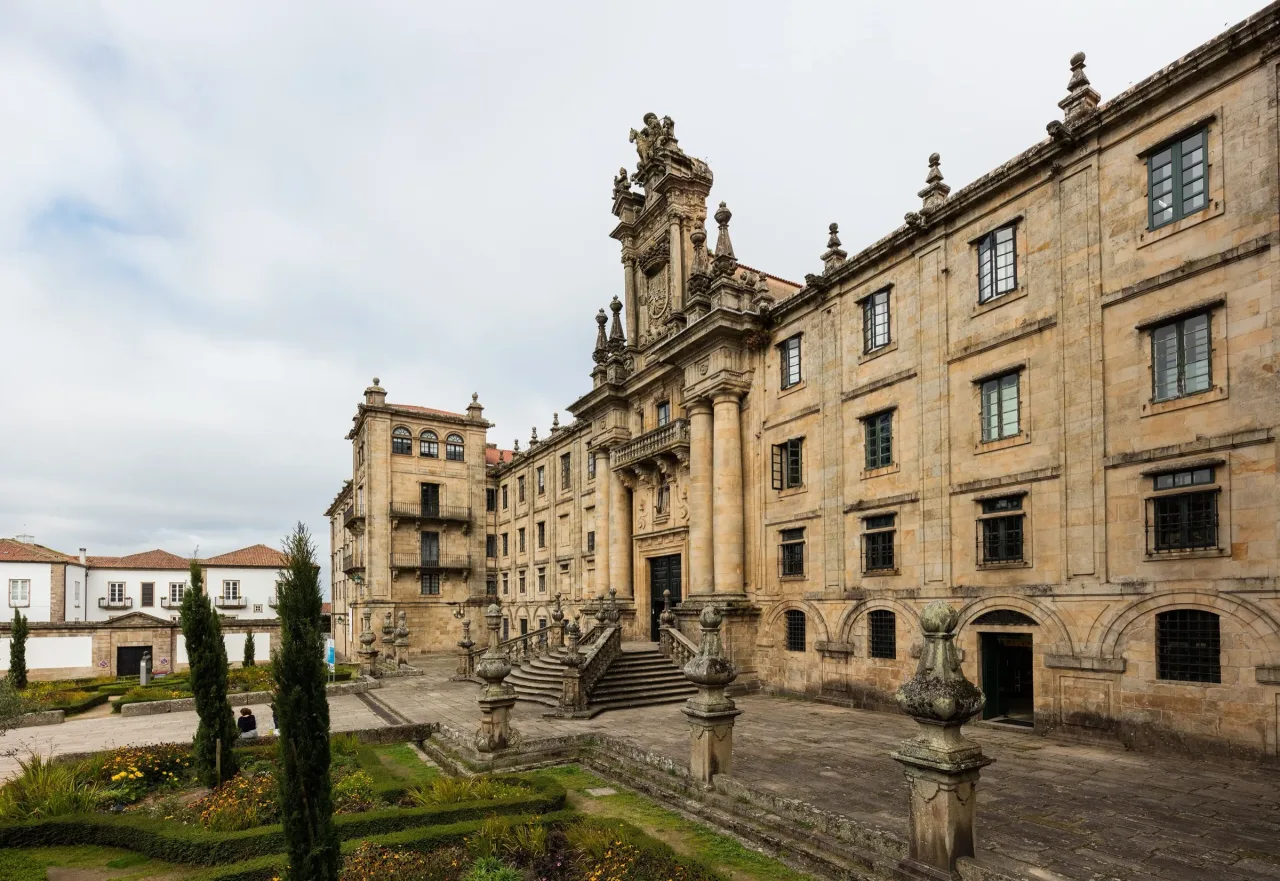
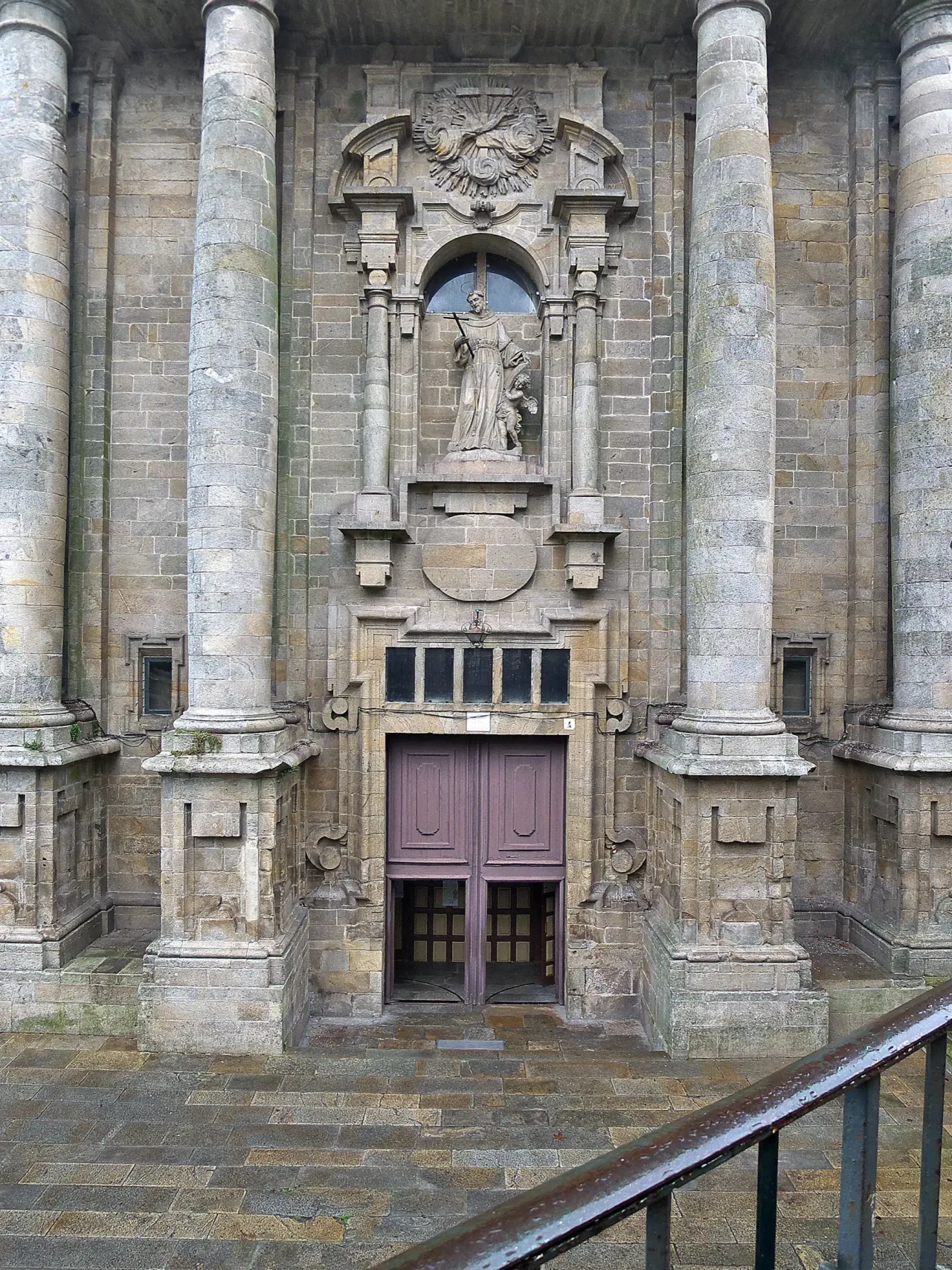
Galician tradition holds that Saint Francis of Assisi made the pilgrimage to Santiago in 1214, lodged on the slopes of Monte Pedroso, and asked a charcoal burner named Cotolay to build a house for his friars. The story is old and locally continuous, and it is not supported by contemporary documentation; Catholics in Santiago have kept it for eight centuries all the same, and the convent grounds still commemorate the meeting. What is certain is that the Franciscans have been here a very long time. The church that stands now is eighteenth-century, designed by Simón Rodríguez and finished by Manuel de Caeiro, a colossal Baroque front on a house whose founding legend is about poverty. In one of its cloisters the community keeps the Museum of the Holy Land, built up through the Order's long custody of the holy places.
Eighteenth-century Galician Baroque: a monumental facade of giant columns by Simón Rodríguez, completed by Manuel de Caeiro, over a much older conventual site.
Local tradition holds that Saint Francis of Assisi walked to Santiago in 1214 and asked that a house be founded here.
The Franciscan Order has served the Custody of the Holy Land since the thirteenth century, and this convent's museum grew out of that connection.
The Franciscans of Santiago have long provided hospitality to arriving pilgrims.
A working friary. Mass, confession, hospitality, and a museum in the cloister, in that order of importance.
Objects brought from the holy places by Franciscans of the Custody, held in a cloister of the convent. One of the more unexpected collections in Galicia.
Simón Rodríguez's giant order, finished around 1770 by Manuel de Caeiro. Stand back on the campiño to read it.
The grounds commemorate the charcoal burner whom tradition says built the first house for the friars at Saint Francis's asking.
Quiet, Franciscan, and available for prayer when the cathedral is not.
The church, the facade from the campiño, and the Cotolay memorial.
Add the Museum of the Holy Land at a proper pace.
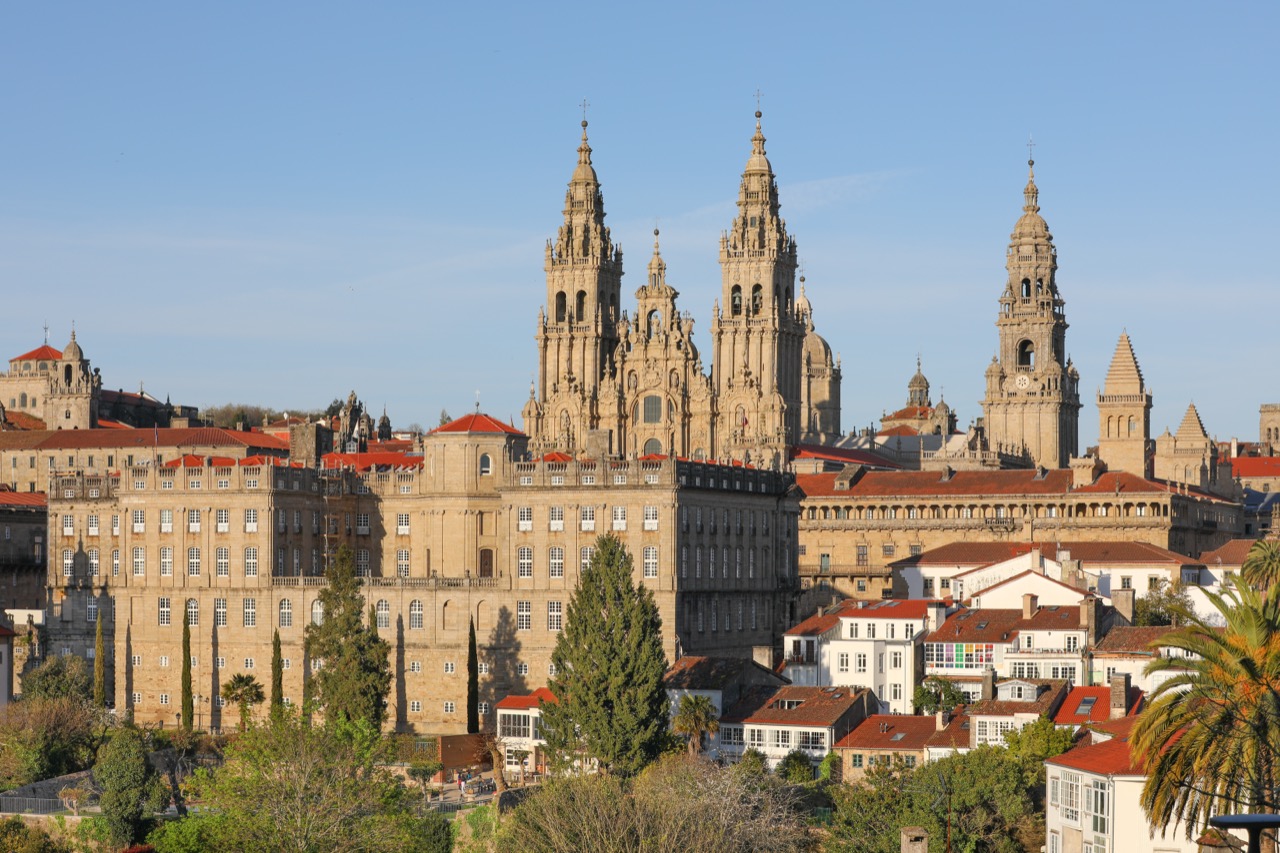
San Francisco and San Martiño Pinario together, north of the cathedral.
Church first, museum second. It is a five-minute walk from the cathedral's north side and a good first extension on an arrival afternoon.
The church and the museum are separate visits with separate hours. Confirm current times with the community, especially for the museum, which keeps shorter and more seasonal hours than the church.
Visited as a museum, not as a shrine
Xunta de Galicia museum register · Franciscan community of SantiagoRemembered in the convent and its grounds
Franciscan community of Santiago · Galician traditionSource note Traditional attributions are presented as tradition, with documentation named where it exists.
Two saints meet in this house: the one who came as a pilgrim, and the one he came to see.
Three minutes south, the Benedictine house facing the cathedral.
Five minutes south, where the Apostle's tomb is venerated.
Edited from the Franciscan community's own source, the Xunta de Galicia museum register for the Museum of the Holy Land, the Wikimedia image provenance listed in the credits, and Eternal Roam destination records. The 1214 pilgrimage of Saint Francis and the Cotolay foundation story are presented as long-standing local tradition, which is what they are.
August 4, 2026
Use this for corrections, broken links, missing places, and planning ideas.