Santiago de Compostela

The city of arrival

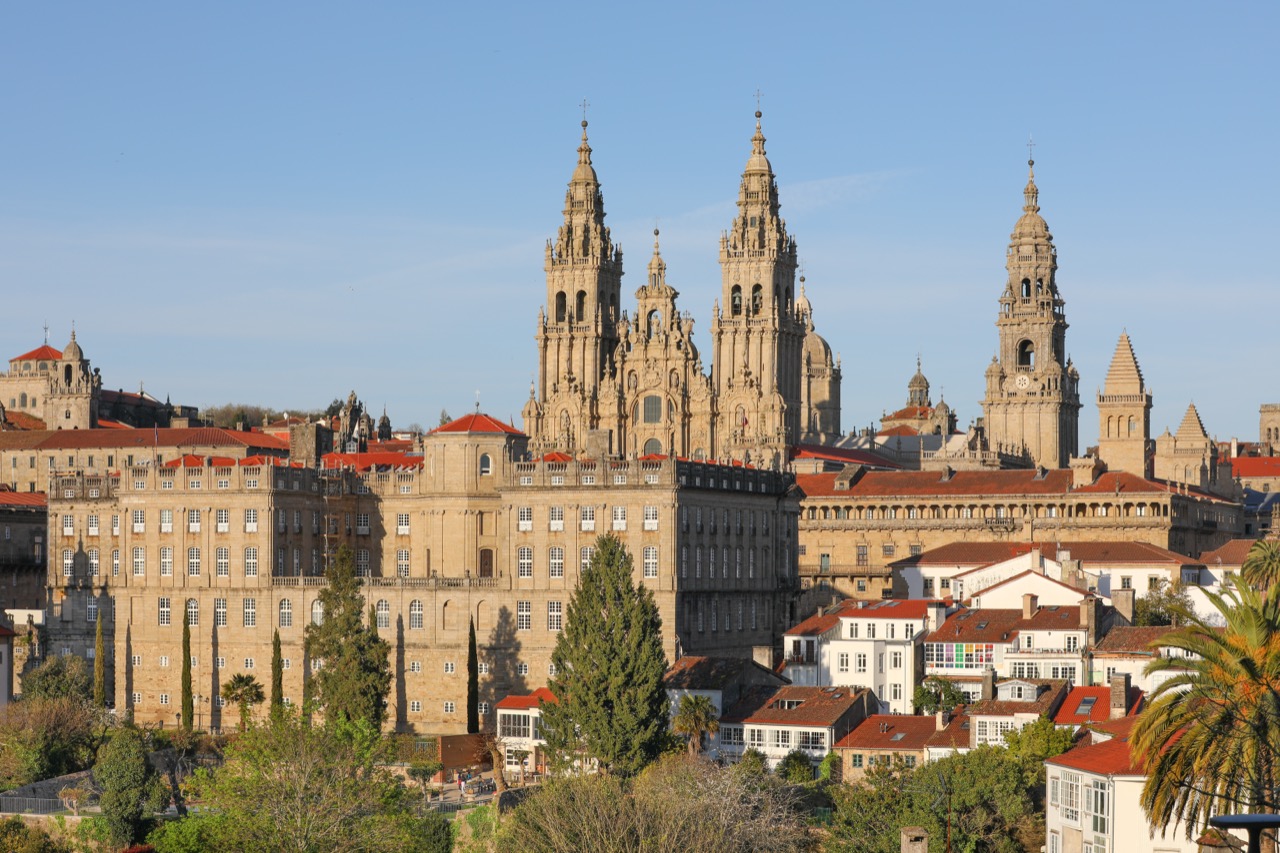
Santiago de Compostela is the goal of the Camino: a granite city in Galicia built around the tomb traditionally venerated as that of Saint James the Greater. Its cathedral, its two Benedictine houses, its Franciscan convent and its parish churches all grew from the shrine, and the next Compostelan Holy Year falls in 2027.

Region
Europe
Suggested time
An afternoon to two days
Places
6
Saints
3
Visit plans
5

Shrine-centered city

How the shrine and town fit together

Rome and Jerusalem were pilgrimage destinations before Santiago existed. What Santiago added was a road. From the ninth century, when Galician tradition holds that the Apostle's tomb was identified near Iria Flavia, a city rose on this hill and a network of roads formed across Europe to reach it, and both have been in continuous use ever since. That history explains why the city feels the way it does. Santiago is small, granite, wet, and arranged so that every street eventually turns toward one building. It is also a university town of thirty thousand students and a working regional capital, and the pilgrims who arrive at midday are walking through other people's Tuesday. The visit that works here is not a sightseeing circuit. It is an arrival: the square, the tomb, the Mass, and then, if there is time and appetite, the far quieter Catholic city that the cathedral has always overshadowed.

Sacred Geography

Three rings around one tomb

Catholic Santiago is not spread out. It is concentric. The cathedral and its four squares are the centre; the monastic and conventual houses form a ring immediately around them; and one Romanesque church stands apart, out along the river. Knowing which ring you are in tells you how far you have to walk, which in this city is never far.

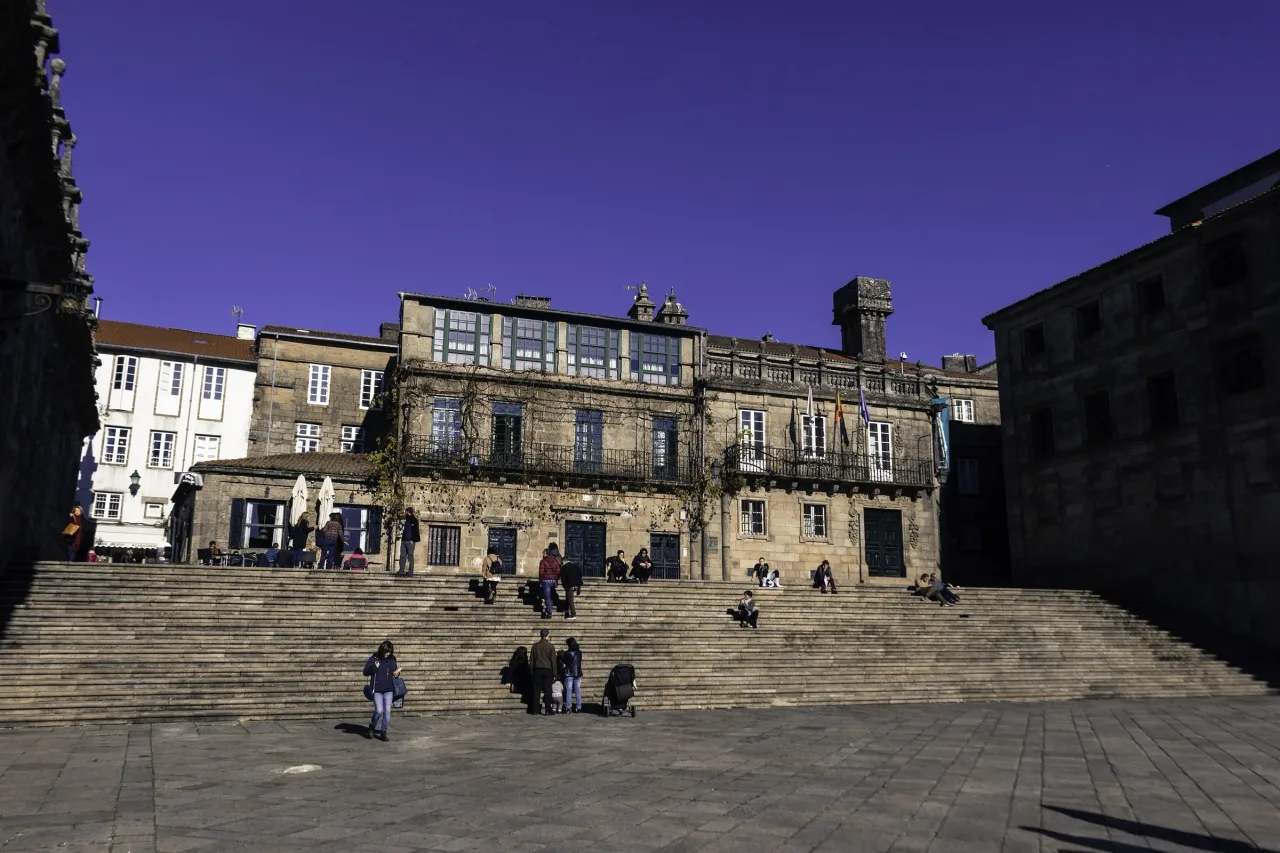
The Praza da Quintana in Santiago de Compostela, its broad flight of granite steps rising toward the long blank wall of the San Paio monastery.
The Quintana is the cathedral's eastern square. The Holy Door opens onto it, and the long wall opposite is the enclosure of a monastery that has kept this ground since the ninth century.

The cathedral and its squares

Four squares wrap the cathedral: Obradoiro to the west, Inmaculada to the north, Quintana to the east, Praterías to the south. Pilgrims arrive into the Obradoiro; the Holy Door is on the Quintana.

On the ground You can walk the whole circuit of the cathedral in ten minutes, and doing so before going in is the best orientation there is.

The monastic ring

The great houses stand immediately outside the cathedral's squares: San Martiño Pinario on the north, San Paio de Antealtares on the east, San Francisco a few minutes further north. All three grew from the shrine.

On the ground None of these is more than five minutes from the cathedral. San Martiño is sixty seconds from the north door.

The city below and the river beyond

The Rúa Nova and Rúa do Franco run downhill from the cathedral through the parish churches of the medieval city. Beyond them the ground drops to the river Sar and the old town ends.

On the ground Salomé is five minutes down the Rúa Nova. Sar is a twenty-minute walk further, downhill along the river, and it empties the crowds off you completely.

Shrine and town

Choose the sanctuary rhythm

The Apostle, the tomb, and cathedral liturgy

Benedictine custody and monastic Santiago

Franciscan memory and pilgrim hospitality

Churches of the Apostle's family and memory

Sacred art and Romanesque Galicia

Visit rhythm

Plan the sanctuary and town rhythm

Plan 1

An arrival afternoon

You walked in at midday and you are tired. Do the tomb, do the Mass, do the Pilgrim Office if the queue allows, and let the rest go. Nobody completes Santiago on the day they arrive.

  1. santiago-compostela
  2. san-martino-pinario

Plan 2

One full day after the Camino

The cathedral properly, including the tomb and the Pilgrim Mass, then the two Benedictine houses that ring it, and the Franciscan convent north of the square. This is the shape of the arrival guide.

  1. santiago-compostela
  2. san-martino-pinario
  3. san-paio-de-antealtares
  4. san-francisco-santiago
  5. santa-maria-salome-santiago

Plan 3

Two slower days in sacred Santiago

Add the ticketed cathedral spaces, the Pórtico da Gloria and the roofs, the sacred art museums of the monastic houses, and the walk out along the river Sar to the one Romanesque church the Baroque never rebuilt.

  1. santiago-compostela
  2. san-martino-pinario
  3. san-paio-de-antealtares
  4. san-francisco-santiago
  5. santa-maria-salome-santiago
  6. santa-maria-a-real-do-sar

Suggested pilgrimages

Paths we've walked, ready to make yours.

5 in Santiago de Compostela

Suggested order. Verify opening hours, transit, and walking conditions before you go.

Suggested pilgrimage Ready to save

The arrival afternoon

2 to 3 hours · 2 STOPS

What can actually be done on the day you walk in.

  1. 1 Santiago de Compostela Cathedral
  2. 2 Monastery of San Martiño Pinario

Saves the whole sequence to your journey. Shape it into a plan later.

Suggested order. Verify opening hours, transit, and walking conditions before you go.

Suggested pilgrimage Ready to save

One full day after the Camino

A full day · 5 STOPS

The cathedral properly, then the monastic ring around it.

  1. 1 Santiago de Compostela Cathedral
  2. 2 Monastery of San Paio de Antealtares
  3. 3 Monastery of San Martiño Pinario
  4. 4 Church and Convent of San Francisco
  5. 5 Church of Santa María Salomé

Saves the whole sequence to your journey. Shape it into a plan later.

Suggested order. Verify opening hours, transit, and walking conditions before you go.

Suggested pilgrimage Ready to save

Two slower days in sacred Santiago

Two days · 5 STOPS

The cathedral's ticketed spaces, the monastic museums, and the walk out to Sar.

  1. 1 Santiago de Compostela Cathedral
  2. 2 Monastery of San Martiño Pinario
  3. 3 Monastery of San Paio de Antealtares
  4. 4 Church and Convent of San Francisco
  5. 5 Collegiate Church of Santa María a Real do Sar

Saves the whole sequence to your journey. Shape it into a plan later.

Suggested order. Verify opening hours, transit, and walking conditions before you go.

How My Journey works →

Sanctuary and town

Begin with the sanctuary as a sacred landscape

Begin with orientation: the sanctuary at the center, the town and grounds around it, the places of the founding story, and the rhythm of arrival, prayer, and return. Open the Sanctuary guide

cathedral

Santiago de Compostela Cathedral

PRAZA DO OBRADOIRO

Built over the tomb traditionally venerated as that of Saint James the Greater. The crypt, the Pilgrim Mass, confession, the Pórtico da Gloria and the Holy Door all belong to one complex.

monastery

Monastery of San Martiño Pinario

PRAZA DA INMACULADA

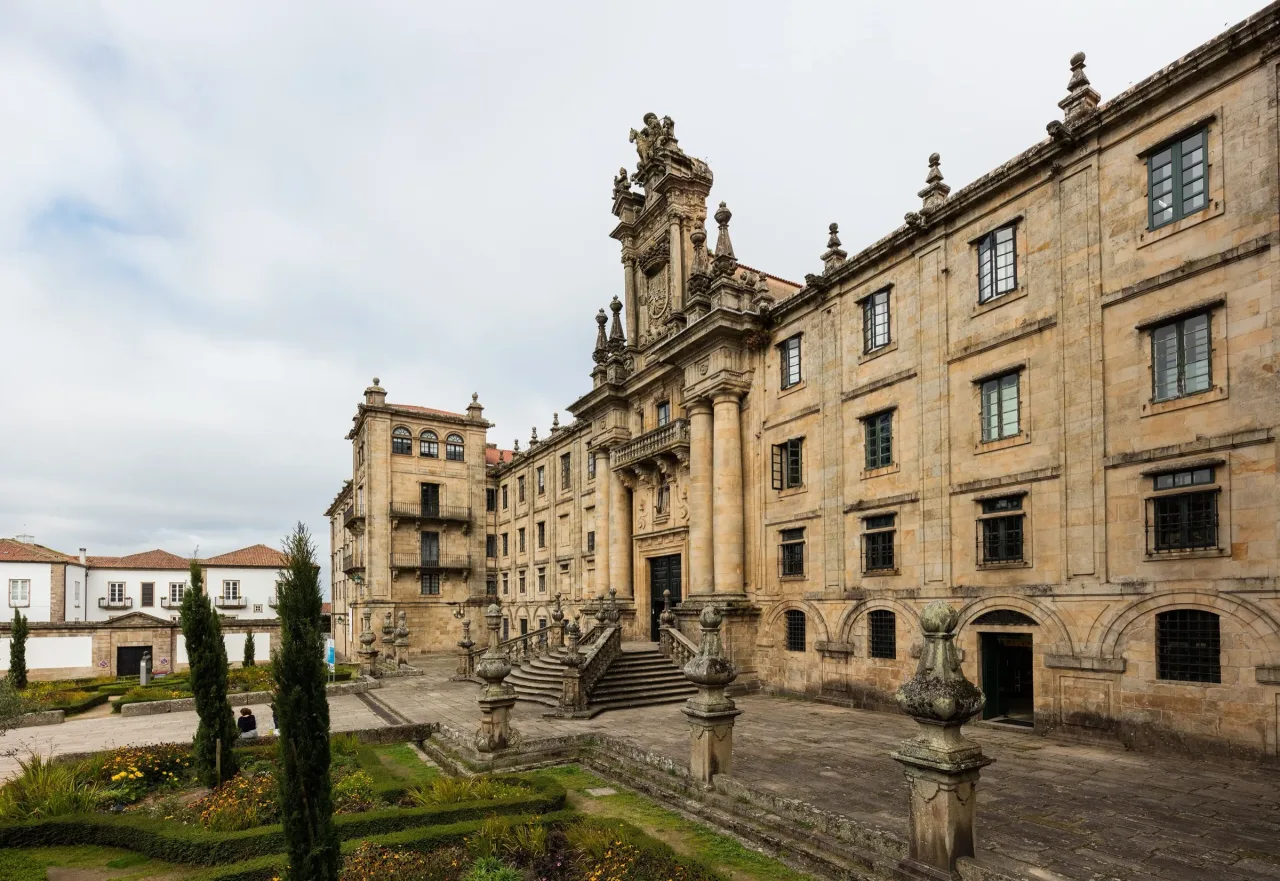
The great Benedictine house facing the cathedral, with one of the finest Baroque altarpieces in Spain and the cathedral's own choir stalls in its transept.

monastery

Monastery of San Paio de Antealtares

PRAZA DA QUINTANA

Founded in the ninth century to keep watch over the newly identified tomb, and still a living community of enclosed Benedictine nuns. Its museum holds the Ara de Antealtares.

church

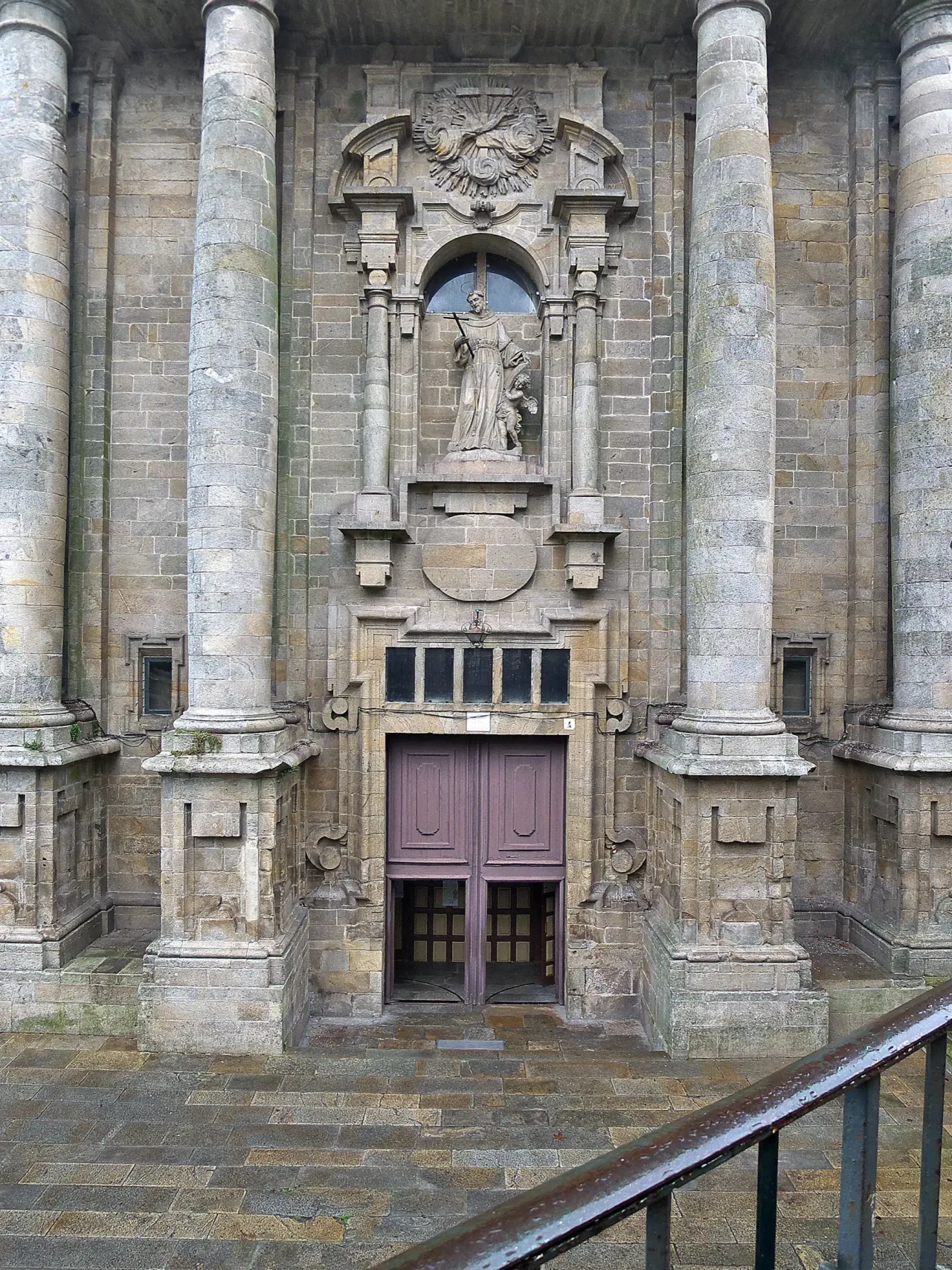
Church and Convent of San Francisco

CAMPIñO DE SAN FRANCISCO

A Franciscan community that has kept pilgrim hospitality here for centuries, associated in Galician tradition with a pilgrimage made by Saint Francis in 1214, and holding the Museum of the Holy Land.

church

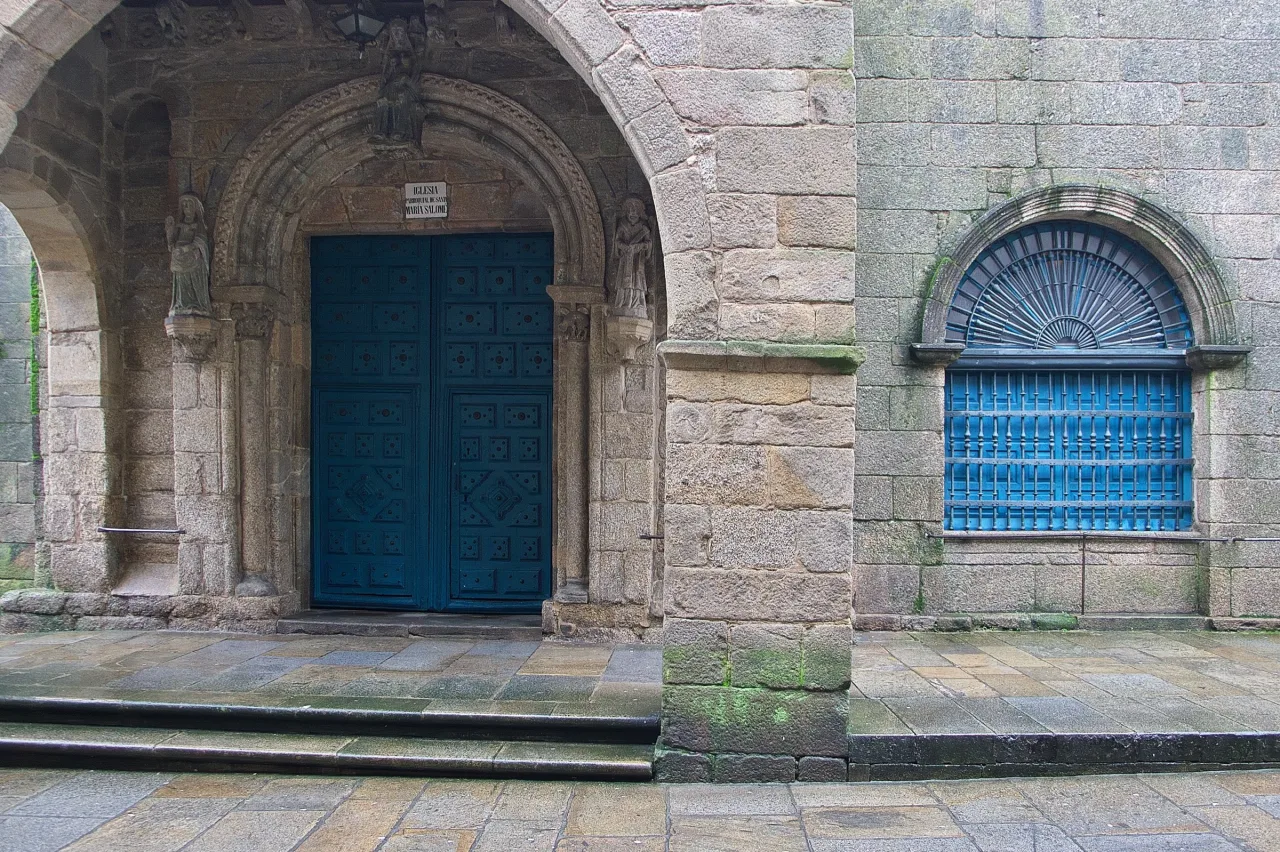
Church of Santa María Salomé

RúA NOVA

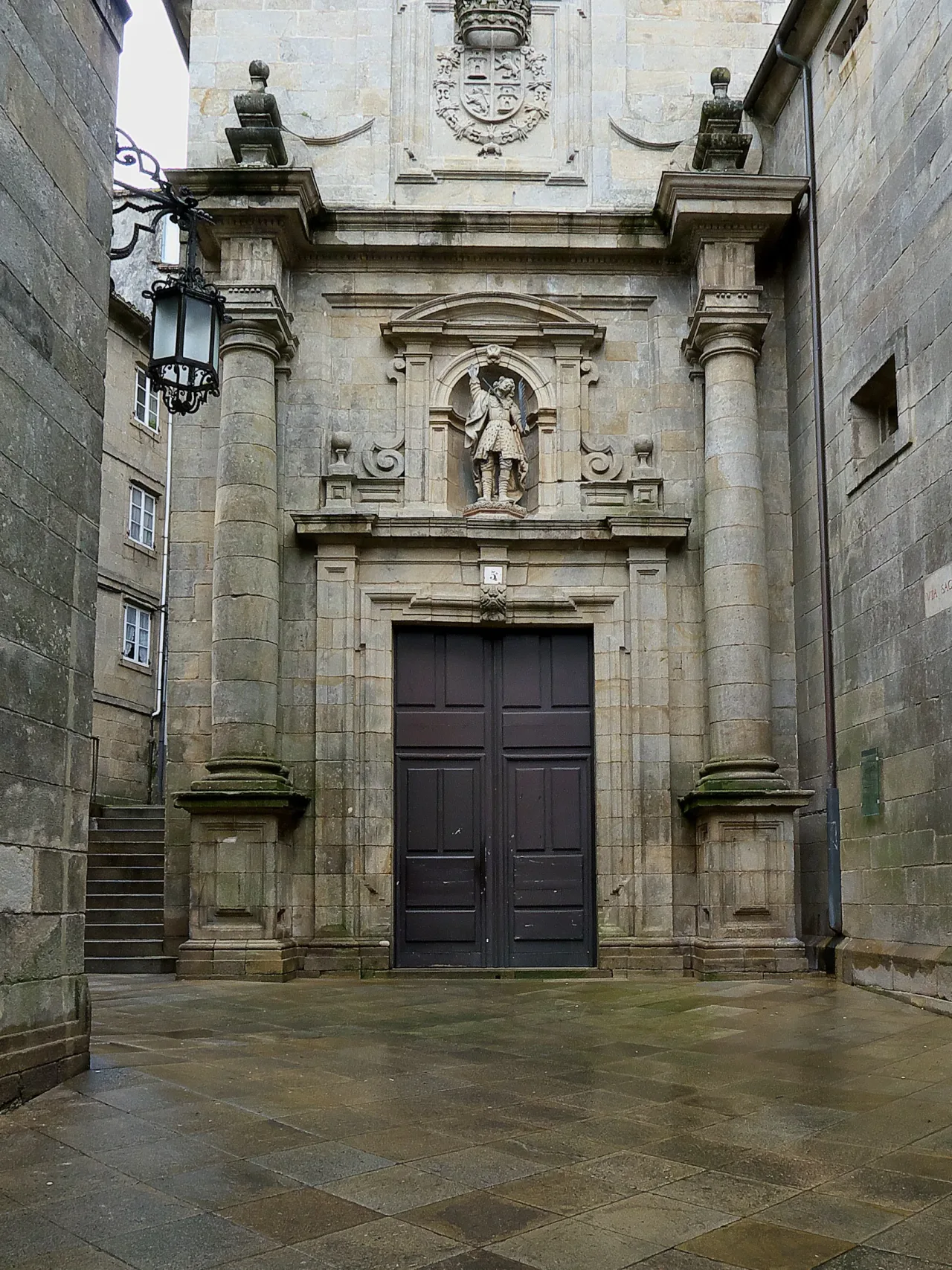
Traditionally the only church in Spain dedicated to Mary Salome, mother of Saint James and Saint John. A ten-minute stop with a twelfth-century portal.

church

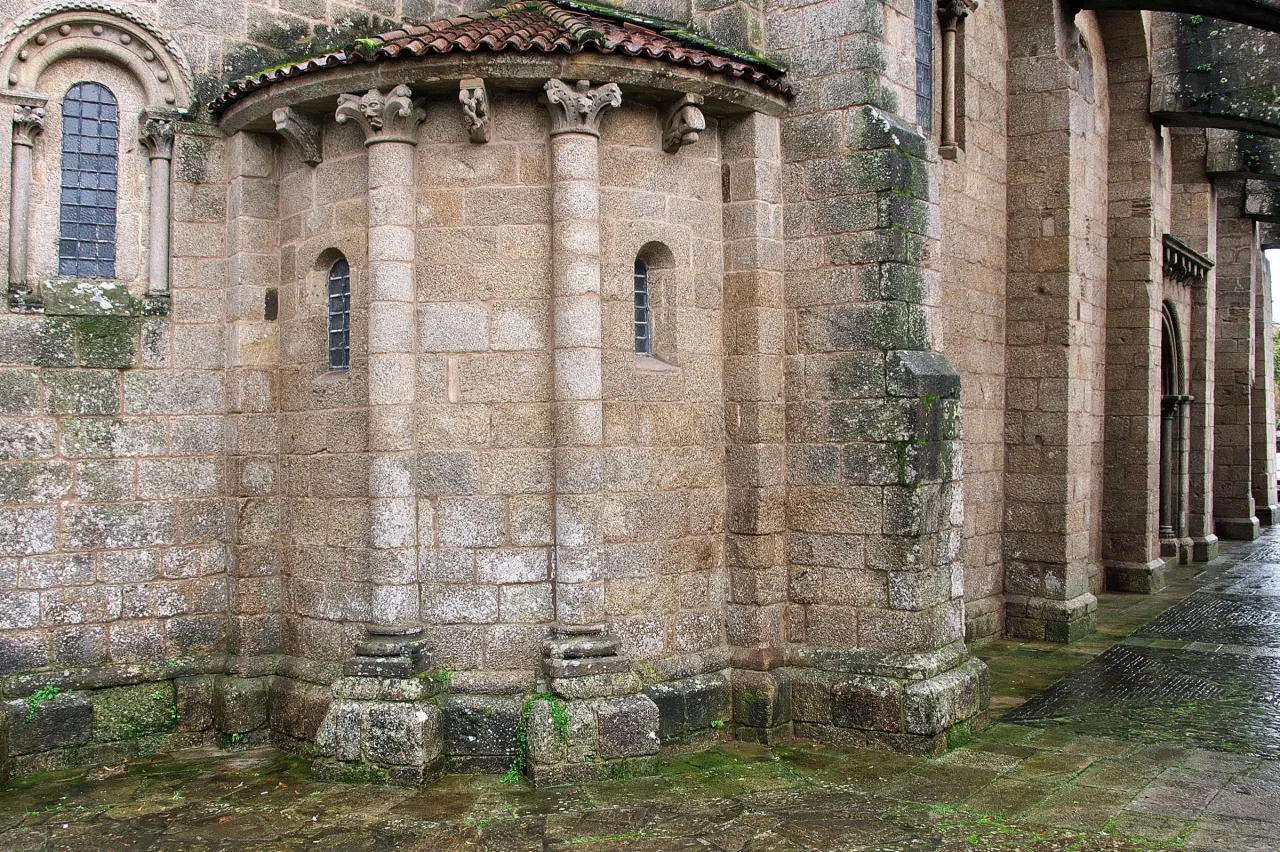
Collegiate Church of Santa María a Real do Sar

SAR, TWENTY MINUTES SOUTH

The most complete Romanesque interior in Santiago after the cathedral, and the one whose nave piers visibly lean. Included in the cathedral's ticketed visitor programme.

Sacred map

Santiago de Compostela Sacred Places Map

6 Essential Places shown.

Select a marker to visit or save that place. The list above stays complete on its own.

Each entry named and sourced

Tombs, relics & sacred objects

Santiago holds one relic tradition, and it is the reason for everything else.

Venerated at

SANTIAGO DE COMPOSTELA CATHEDRAL, CRYPT BENEATH THE HIGH ALTAR

The tomb traditionally venerated as that of Saint James the Greater

Traditionally venerated as the tomb of the Apostle. The veneration is ancient and continuous, and it rests on hagiography and long Catholic memory rather than on contemporary documentation.

A silver urn beneath the high altar, venerated since the ninth-century tradition of the tomb's discovery near Iria Flavia. It is the goal of every Camino route and the object of the Jubilee visit in a Holy Year.

Visit Santiago de Compostela Cathedral
Venerated at

MUSEUM OF SAN PAIO DE ANTEALTARES

The Ara de Antealtares

Traditionally venerated as the altar raised by the Apostle's disciples at his burial place. The tradition is long-standing and continuously held; it is not an archaeologically dated first-century altar.

A marble slab on a semicylindrical base, kept by the Benedictine community that has held this site since the ninth century.

Visit Monastery of San Paio de Antealtares
Venerated at

PRAZA DA QUINTANA, SANTIAGO DE COMPOSTELA CATHEDRAL

The Holy Door of the cathedral

A Jubilee door, not a relic. Passing through it is encouraged during a Holy Year and is not among the conditions the Church sets for the plenary indulgence.

Walled up between Holy Years and opened for them, with bronze leaves by Suso León installed in 2004. The next Compostelan Holy Year is 2027, because 25 July falls on a Sunday.

Visit Santiago de Compostela Cathedral
  • Traditionally venerated as the tomb of the Apostle. The veneration is ancient and continuous, and it rests on hagiography and long Catholic memory rather than on contemporary documentation. The tomb traditionally venerated as that of Saint James the Greater Santiago de Compostela Cathedral, crypt beneath the high altar
  • Traditionally venerated as the altar raised by the Apostle's disciples at his burial place. The tradition is long-standing and continuously held; it is not an archaeologically dated first-century altar. The Ara de Antealtares Museum of San Paio de Antealtares
  • A Jubilee door, not a relic. Passing through it is encouraged during a Holy Year and is not among the conditions the Church sets for the plenary indulgence. The Holy Door of the cathedral Praza da Quintana, Santiago de Compostela Cathedral

Practical, not booking

Before you go

Holy Year 2027: why it is a Jubilee

A Compostelan Holy Year falls whenever 25 July, the feast of Saint James, lands on a Sunday. In 2027 it does. The privilege goes back to a grant of Pope Callixtus II in the twelfth century, and the years run in a repeating pattern of six, five, six and eleven. The last was 2021, extended into 2022; the next after 2027 is 2032.

The Holy Door

The Porta Santa on the Praza da Quintana is walled up between Jubilees and opened for them. Its bronze leaves are the work of Suso León, installed in 2004. Entering by it is strongly encouraged during a Holy Year; it is not one of the conditions the Church sets for the indulgence.

The Jubilee indulgence, and what it is not

The plenary indulgence of a Compostelan Holy Year is granted to those who visit the Apostle's tomb in the cathedral, pray for the intentions of the Holy Father, and receive sacramental confession and Communion, which may be made within the days before or after the visit. It may be received once a day and may be applied to the faithful departed. It requires no walking, no credential and no certificate, and receiving the Compostela does not confer it.

The Compostela is a certificate, not a grace

The Pilgrim Reception Office issues the Compostela free to pilgrims who completed at least 100 kilometres on foot or horseback, or 200 by bicycle, on a recognised route with a properly stamped credential, and who came for Christian reasons. It records what you did. It is not a sacrament, an indulgence or a Jubilee document, and the two are constantly confused.

What is confirmed for 2027, and what is not

Confirmed: the year is a Holy Year, and the Archbishop has established a Diocesan Commission to prepare it, working on evangelization, holiness and hope. Not yet published: the programme of celebrations, the date of the Holy Door opening, access arrangements, reservations, or crowd management. Anything you read specifying those is speculation. Expect heavier demand than an ordinary year and book accommodation early.

Celebrate the arrival, quietly

The city's code of good practices asks visitors to mark their arrival without excessive noise, out of respect for the people who live here. Santiago's old town is residential. The square at midnight belongs to somebody's bedroom window as much as to the end of your Camino.

Put your poles away

The code asks pilgrims to store walking sticks or fit them with rubber tips. Metal points on granite pavement damage the stone and make a noise that carries the length of a street. It is the smallest possible courtesy and the most visible.

Pedestrians first, bicycles walked

Dismount in the pedestrian zones and walk the final stretch. Large groups are asked to keep to traffic rules and to leave room. The old town is narrow and the last few hundred metres are the busiest in the city.

The urban landscape is not a picnic ground

The code puts this plainly: the historic centre is not a picnic area or a campsite. Use the bins and the free public facilities, keep the heritage spaces and the gardens as places of quiet, and buy from the local traders whose city you are walking through.

Silence inside

The cathedral, the monastic churches and San Paio in particular are places of prayer with communities living behind them. Keep your voice down, keep phones away during the liturgy, and if a Mass is beginning, sit rather than circulate.

Backpacks are not allowed inside the cathedral for security reasons, and only small bags are admitted. The Spanish Post Office runs a pilgrim left-luggage service on the Rúa do Franco, minutes from the Obradoiro, which takes packs, poles and bicycles.

The basilica is free. The Pórtico da Gloria, the permanent collection and cloister, the treasury and relic chapel, Gelmírez Palace, and the roofs and Carraca tower are ticketed, timed, and best booked before you arrive.

The Pilgrim Reception Office on the Rúa das Carretas is open daily and manages demand with a QR ticket system. It states that in periods of heavy influx, collection of the Compostela on the same day cannot be guaranteed. Plan a second morning rather than a frantic first afternoon.

The Botafumeiro is used on the cathedral's published solemnities and for groups that arranged it in advance. It is not part of every Pilgrim Mass. Arriving from the Camino gives no claim on it.

Museum hours at the monastic houses are shorter and more seasonal than church hours, and San Paio is an enclosed monastery where only the church and museum are open.

Santiago rains. Galicia is green for a reason, and the granite pavement of the old town is slippery when wet.

The whole core is walkable in twenty minutes end to end. Only Santa María a Real do Sar, twenty minutes south along the river, needs planning.

Photo credits
  1. Santiago de Compostela; Santiago de Compostela city hero. Photo: Xosé Antonio, CC BY-SA 3.0, via Wikimedia Commons. Source. CC BY-SA 3.0.
  2. Santiago de Compostela Cathedral. Photo: Luis Miguel Bugallo Sánchez (Lmbuga), CC BY-SA 4.0, via Wikimedia Commons. Source. CC BY-SA 4.0.
  3. Monastery of San Martiño Pinario. Photo: Diego Delso, CC BY-SA 4.0, via Wikimedia Commons. Source. CC BY-SA 4.0.
  4. Monastery of San Paio de Antealtares. Photo: José Luis Filpo Cabana, CC BY 3.0, via Wikimedia Commons. Source. CC BY 3.0.
  5. Church and Convent of San Francisco. Photo: José Luis Filpo Cabana, CC BY 3.0, via Wikimedia Commons. Source. CC BY 3.0.
  6. Church of Santa María Salomé. Photo: Jl FilpoC, CC BY-SA 4.0, via Wikimedia Commons. Source. CC BY-SA 4.0.
  7. Collegiate Church of Santa María a Real do Sar. Photo: José Luis Filpo Cabana, CC BY 3.0, via Wikimedia Commons. Source. CC BY 3.0.
  8. The Quintana is the cathedral's eastern square. The Holy Door opens onto it, and the long wall opposite is the enclosure of a monastery that has kept this ground since the ninth century.; Three rings around one tomb. Photo: Bene Riobó, CC BY-SA 4.0, via Wikimedia Commons. Source. CC BY-SA 4.0.