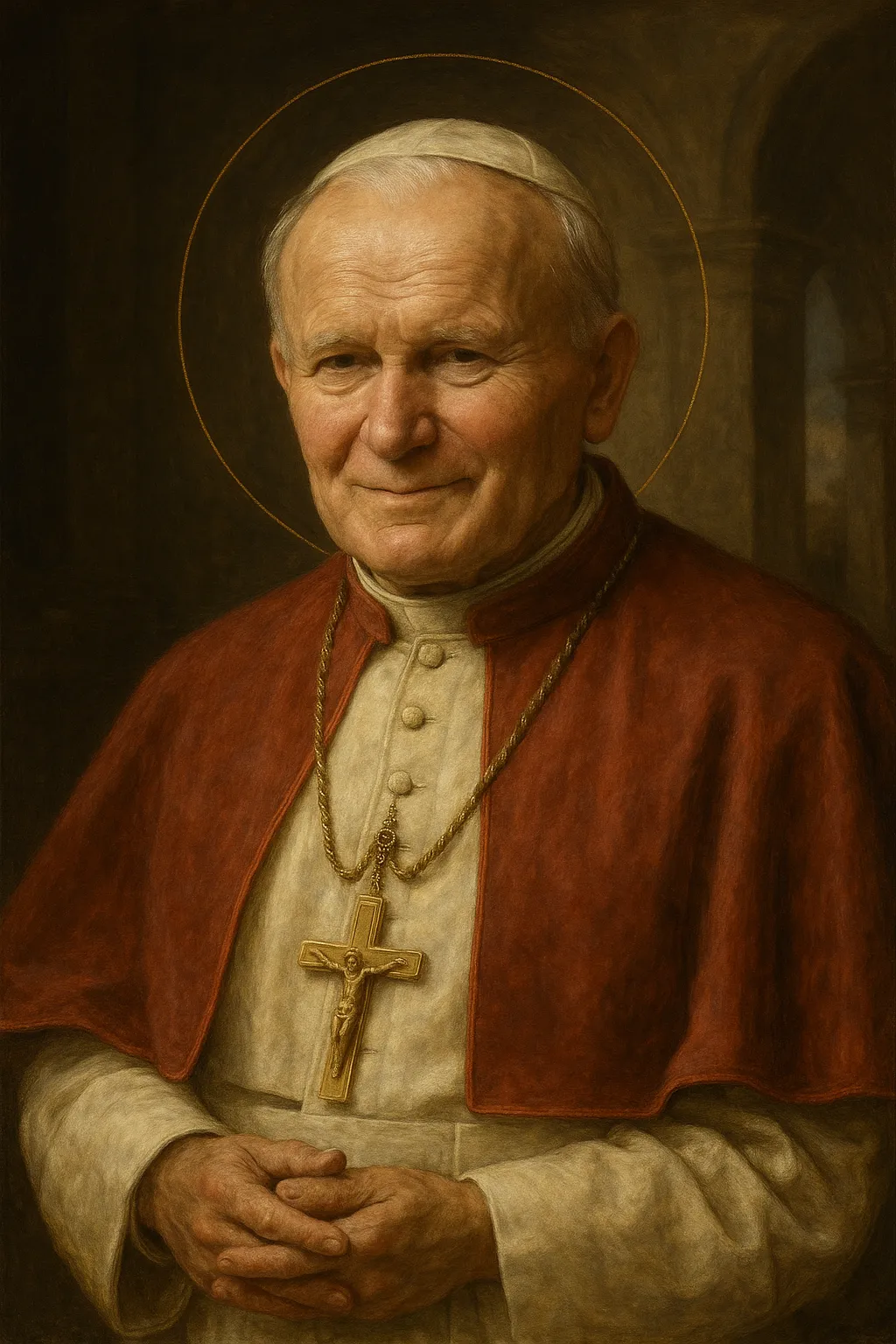
The scapular of St. John Paul II
Personal object of a saintIn a reliquary beside the altar holding the relics of Bl. Alfons Mazurek
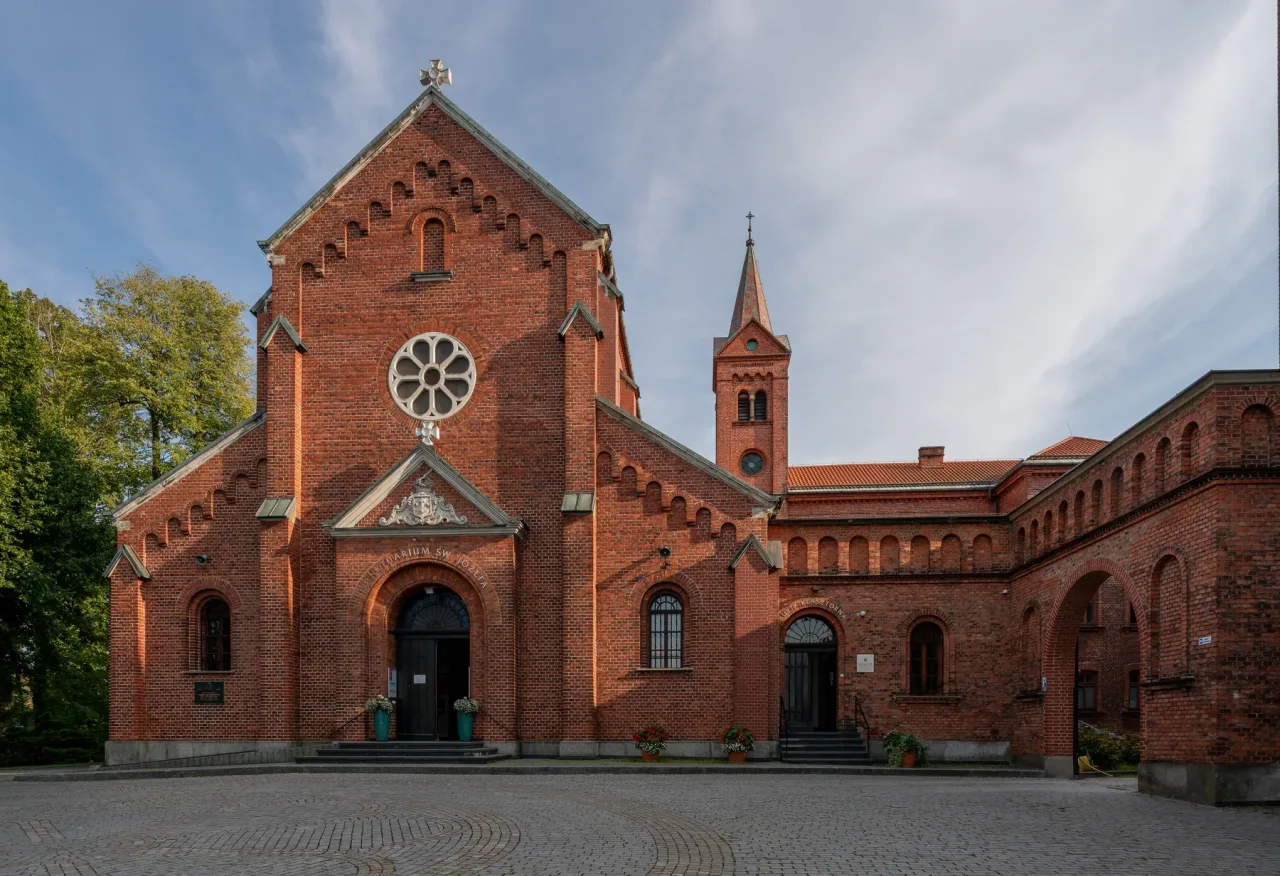
Discalced Carmelite friars, WadowiceThe Carmelite church and friary on the Górka above Wadowice, founded by St. Raphael Kalinowski, and the place where Karol Wojtyła received the scapular he wore until his death.
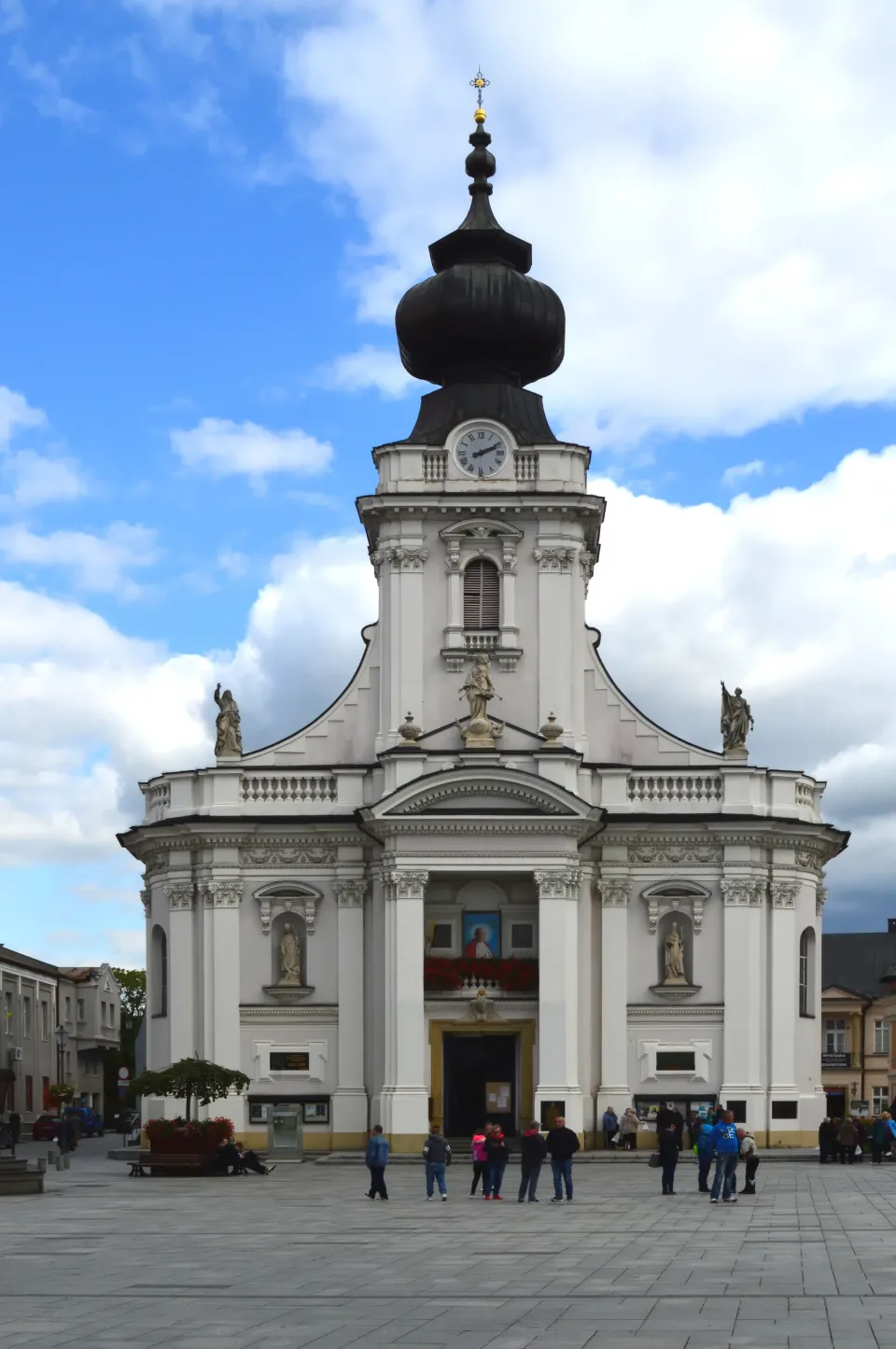
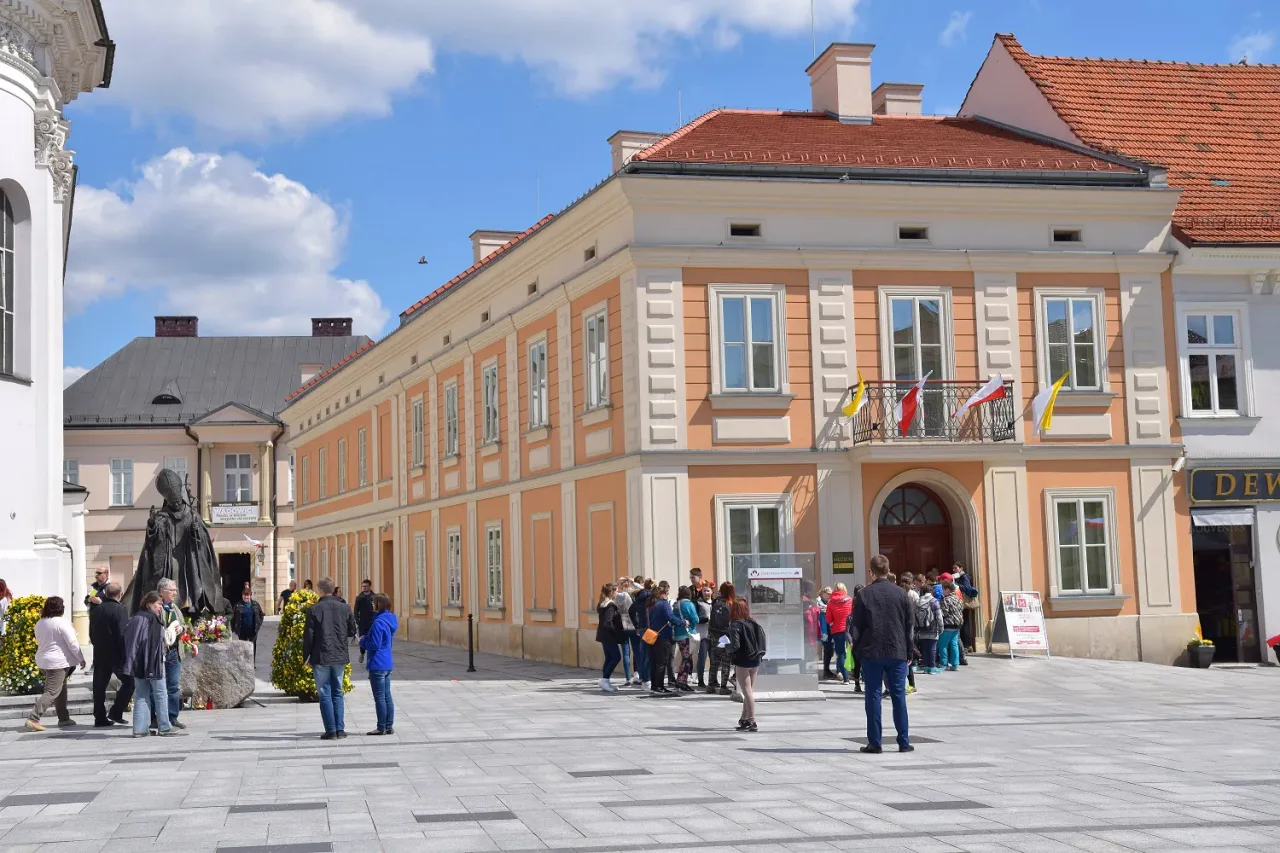
The basilica holds his baptism and the museum holds his childhood, but this is where a devotion he kept for seventy years was placed on him. He said so himself, at Wadowice in 1999: that he still wore the scapular, exactly as he had received it from the Carmelites on the Górka in his teens. The sanctuary is also a genuine Carmelite house with its own saints, not an annexe to his story.
By the 1860s the partitions had suppressed every Carmelite house on Polish soil except the hermitage at Czerna. Its revival from 1880 produced, within a decade, the will to found again. In 1891 the Czerna chapter resolved on a house at Wadowice; the consents came through in April 1892, from the province, from Rome, and from Bishop Albin Dunajewski of Kraków.
On 1 August 1892 Fr. Raphael Kalinowski arrived with three companions. Kalinowski was a former military engineer and a veteran of the January Rising who had entered Carmel after Siberian exile. He brought with him a figure of St. Joseph and an image of St. Joseph given by the Carmelite nuns of Kraków. The house was canonically erected that September, and Cardinal Dunajewski blessed its first chapel on 1 November 1892, opening it to the town.
The foundation existed to form young men and find vocations for a reviving province, and Kalinowski set up a college for boys beside it. The present church, red brick and neo-Romanesque, was built between 1897 and 1899 with the south wing of the friary, and consecrated on 27 August 1899 by Bishop Jan Duklan Puzyna.
The friars spread two devotions through the district: to St. Joseph, and to Our Lady of the Scapular. Under the partitions their confessionals, where a penitent could be heard in Polish, drew people from well beyond the town. Karol Wojtyła grew up a few minutes downhill from all of it.
A three-aisled brick church of the late 1890s in a restrained neo-Romanesque idiom: a gabled west front with a rose window over the arched doorway, a bell tower set back to the side, and the friary ranges running off behind. The scale is modest and deliberately so; this was built as a religious house with a public church attached, not as a civic monument.
The single most useful thing to understand here is which parts of the site are open to you.
The sanctuary church keeps a full schedule of Mass and confession and is open to anyone who walks up the hill.
The friary is an enclosure. It is a home for a religious community under vows, and it is not generally open to visitors. Do not plan a visit around seeing inside it.
John Paul II's own scapular returned here in 2005, according to his wishes, and is kept in a reliquary beside the altar that holds the relics of Bl. Alfons Mazurek.
St. Raphael Kalinowski founded this house and is honoured here in his own right. The sanctuary keeps his relics and preserves his cell.
Two things are happening on the same site and visitors need to hold them apart. The church and the sanctuary spaces are open and busy. The monastery is an enclosure where friars live under vows, and it is not a visitor attraction. What is shown of the community's life is shown deliberately and on the friars' terms.
The scapular John Paul II received here as a boy and wore for the rest of his life, returned to the sanctuary in 2005.
The founder of the house. The sanctuary also preserves the cell in which he lived and died.
A papal ring given by John Paul II in 2003 is set into it.
The Górka is a real rise above the town. Coming up it on foot is how the devotion reached the town below.
The short climb and the church. Most visitors come for the scapular and stay for the quiet, which after the queue on the square below is the real difference of the place.
It is about ten minutes uphill from plac Jana Pawła II, and the climb is real if modest. Come into the church first. The scapular reliquary and the Kalinowski relics are the two things most visitors are looking for. Group visits and any access beyond the public church are arranged with the friars in advance, not on arrival.
In a reliquary beside the altar holding the relics of Bl. Alfons Mazurek
Discalced Carmelite friars, WadowiceIn the sanctuary church; the cell is preserved
Discalced Carmelite friars, WadowiceSet into the main altar image
Discalced Carmelite friars, WadowiceSource note Traditional attributions are presented as tradition, with documentation named where it exists.
Edited from official church sources, local image provenance, and Eternal Roam destination records.
August 6, 2026
Use this for corrections, broken links, missing places, and planning ideas.