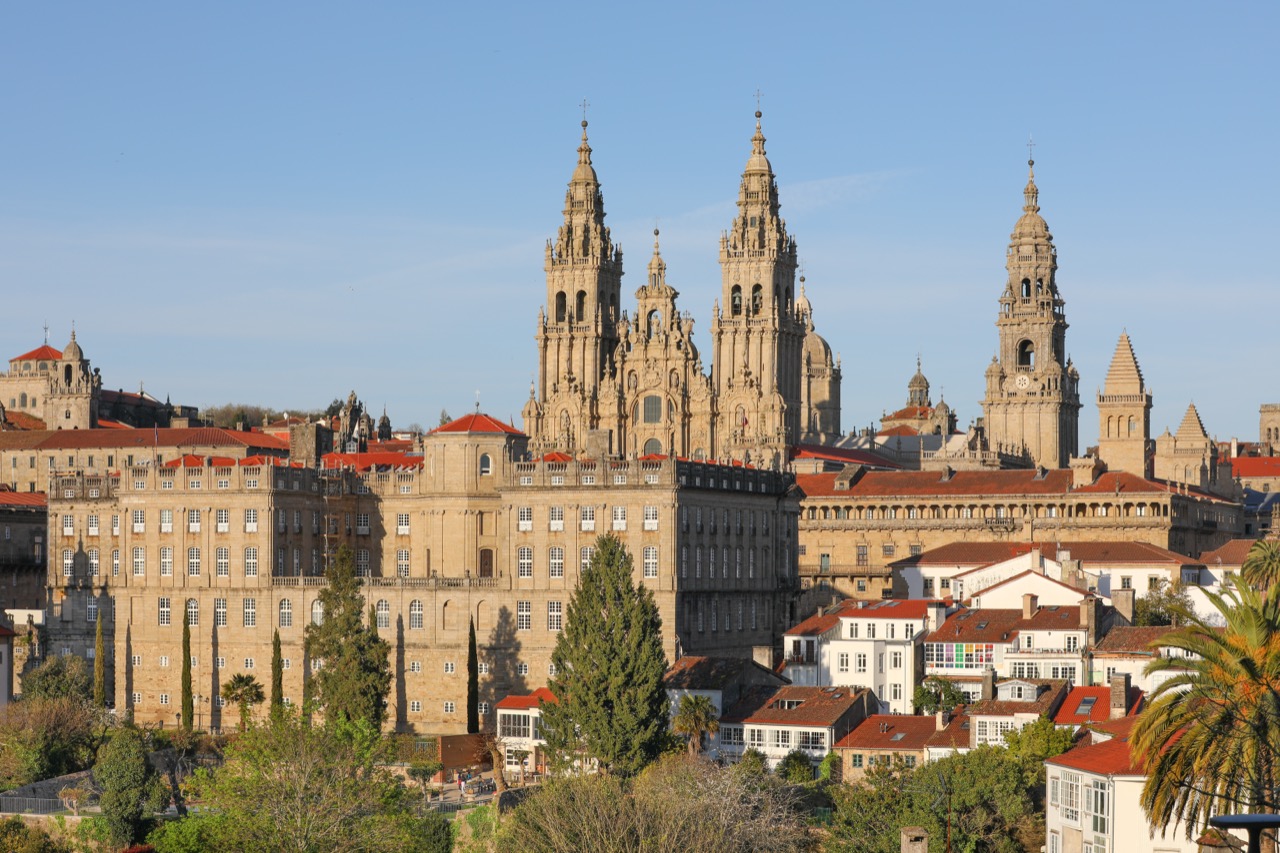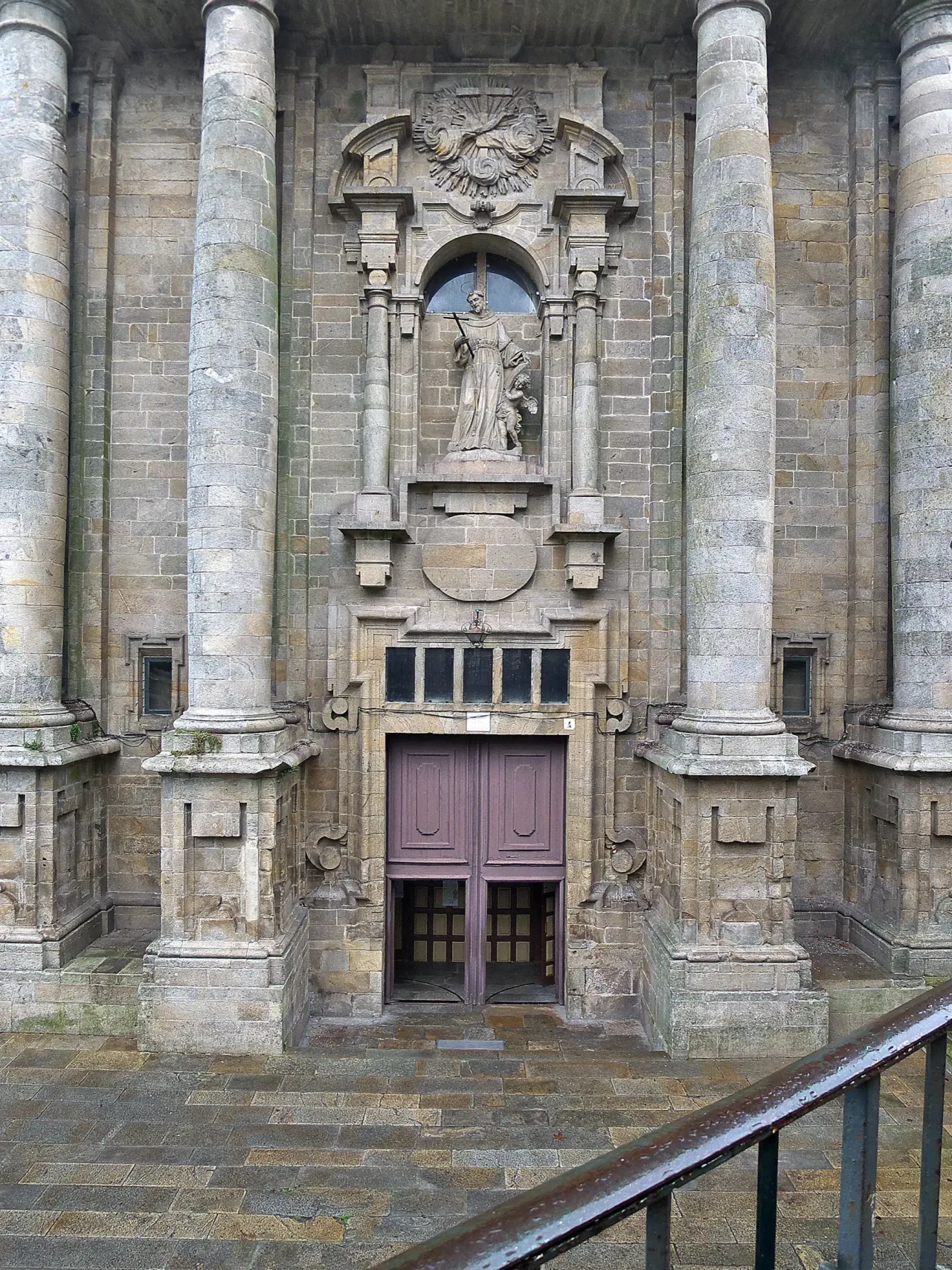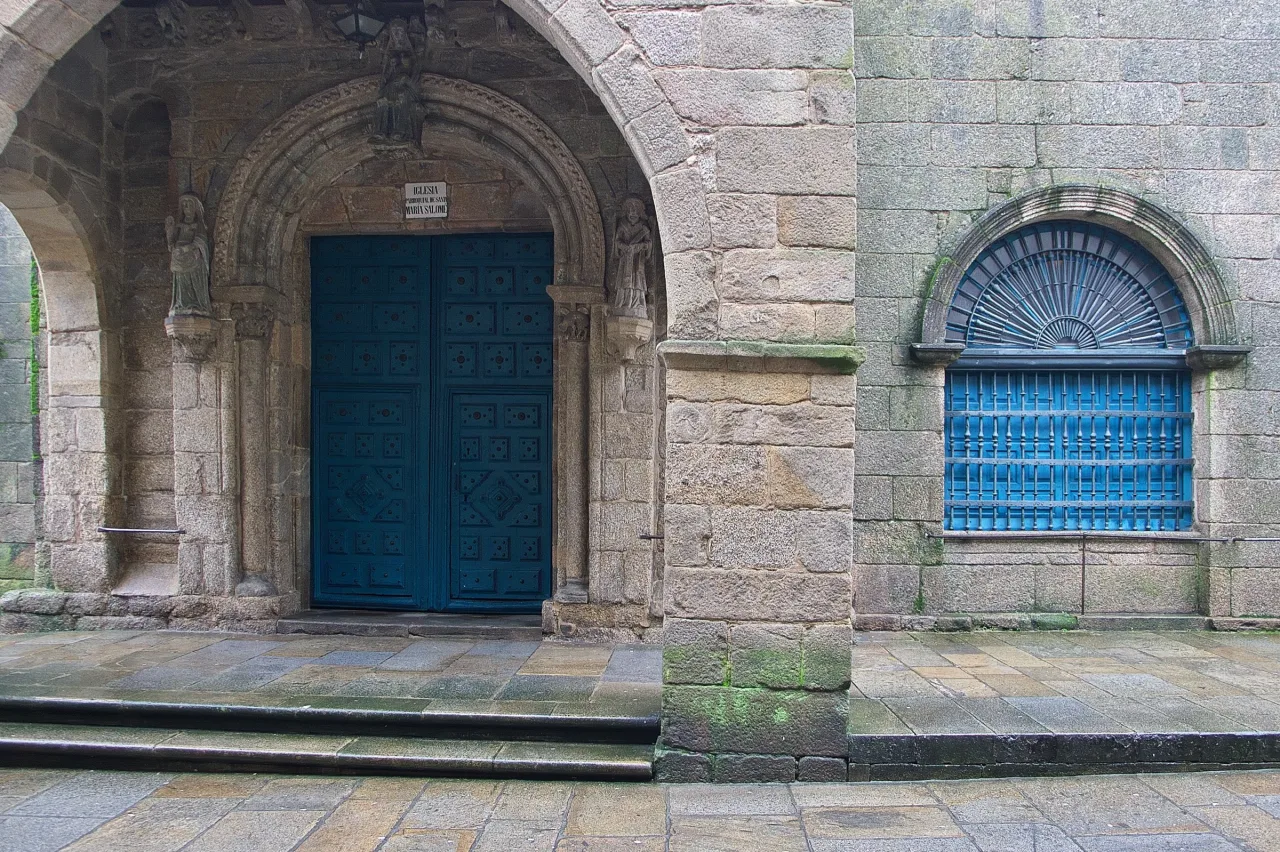
Dedication to Mary Salome
Church dedicationYes, in the parish liturgy and at the high altar image
Archdiocese of Santiago de Compostela · Galician heritage registerSanta María Salomé is the parish church on the Rúa Nova dedicated to the mother of Saint James, traditionally held to be the only church in Spain under that dedication.
Come because Santiago is a city built around one Apostle, and this is the one church that remembers his family. It takes ten minutes. The dedication is the point, and the Romanesque portal under the portico is worth the stop on its own.
The church belongs to the group of parishes associated with the great twelfth-century building campaign of Archbishop Diego Xelmírez, when the city around the Apostle's shrine was given the churches it still uses. Later centuries reworked almost everything: a Gothic Virgin above the door, a seventeenth-century chapel on the transept arm, an eighteenth-century bell gable, and the open portico that now shelters the entrance from the Rúa Nova. What did not change was the dedication. Mary Salome is named in the Gospels among the women who followed Jesus from Galilee, who stood near the cross, and who came to the tomb on the first morning; Catholic tradition identifies her as the mother of James and John.
A twelfth-century Romanesque facade and portal, most of the rest rebuilt: Gothic sculpture over the door, a Baroque chapel, an eighteenth-century bell gable, and a street portico added over the whole.
The church is traditionally presented as the only one in Spain dedicated to Mary Salome.
It is one of the parish churches associated with the twelfth-century building campaign of Archbishop Diego Xelmírez.
The open portico added later gives the street one of its few sheltered thresholds.
This is a working parish, not a monument. It is small, it is usually quiet, and it asks nothing of a pilgrim except a few minutes.
Traditionally held to be the only church in Spain dedicated to Mary Salome. In Santiago, that is not a footnote.
Late twelfth-century work under the influence of Master Mateo, including an Annunciation, sheltered by the later street portico.
On the high altar, the reason to come inside rather than photograph the front and walk on.
The portal, the nave, and the image of Mary Salome.
The same, unhurried, around a parish Mass.
A ten-minute stop on the way between the cathedral and the lower streets. Do not build a morning around it; do not walk past it either.
It stands on the Rúa Nova, five minutes downhill from the cathedral. Opening hours are those of a parish rather than a museum, so it is best visited around a Mass time.
Yes, in the parish liturgy and at the high altar image
Archdiocese of Santiago de Compostela · Galician heritage registerVisited as the threshold of the church
Cervantes Virtual Centre · Galician heritage registerSource note Traditional attributions are presented as tradition, with documentation named where it exists.
This is the family church of Santiago's Apostle.
Five minutes uphill, where the Apostle's tomb is venerated.
Ten minutes north, the Franciscan house with the Museum of the Holy Land.
Edited from Galician heritage and diocesan sources, the Cervantes Virtual Centre's survey of Santiago's churches, the Wikimedia image provenance listed in the credits, and Eternal Roam destination records. The claim that this is the only Spanish church dedicated to Mary Salome is reported as it is presented locally, not asserted as verified.
August 4, 2026
Use this for corrections, broken links, missing places, and planning ideas.