
Whithorn Priory and Saint Ninian's Shrine
Whithorn joins early Christian archaeology, the received memory of Saint Ninian, a major medieval shrine, and a Catholic pilgrimage that still walks toward the shore.
- Location
- Whithorn, Scotland
- 54.7357° N · -4.4160° E
- Type
- Early Christian centre, medieval cathedral priory, and living pilgrimage landscape
- Medieval priory church, crypts, graveyard, and archaeological site
- Dedication
- Saint Ninian
At Scotland's first recorded Christian centre
Come because Whithorn is where Scotland's Christian story becomes both ancient and honest. Bede names Ninian and a stone church called Candida Casa, while archaeology reveals a substantial early Christian community whose exact relationship to that written account remains debated. The medieval priory made Ninian one of Scotland's great pilgrim saints, and the crypts still give his cult a physical centre. The modern Catholic pilgrimage continues beyond the town toward Saint Ninian's Cave and Mass near the shore, joining scholarship, tradition, landscape, and living faith without asking any one of them to carry more certainty than it can bear.
Ninian, Candida Casa, and the making of a shrine
Writing in 731, Bede described Ninian as a bishop who had been instructed at Rome, dedicated a stone church to Saint Martin, and preached among the southern Picts. He called the place Candida Casa, the White House. Later medieval lives expanded the narrative, especially Aelred of Rievaulx in the twelfth century. Modern historians debate Ninian's chronology, identity, and even the way the cult developed under Northumbrian influence. Excavation at Whithorn nevertheless reveals a Christian community with important burials, inscriptions, trade, and ecclesial life from the early medieval centuries. A Premonstratensian priory and cathedral grew here in the Middle Ages, with Ninian's shrine drawing royal and popular pilgrimage until the Reformation.
The visible priory is medieval and fragmentary. The roofless nave, parish church, graveyard, museum, and vaulted crypts occupy a compact town site, while excavated evidence reaches further back than the surviving walls. The crypts preserve the spatial memory of the medieval shrine, but the original Candida Casa has not survived as an identifiable standing building. The place is strongest when read across its layers: inscribed stones and burials, cathedral priory, disrupted shrine, modern interpretation, and the road south toward the cave and shore.
Whithorn holds the first recorded name in Scotland's Christian story and the necessary humility to admit how much of Ninian's life remains uncertain.
Whithorn is a shared Christian landscape with a Church of Scotland parish, heritage custody, and an active Catholic pilgrimage. Enter as a respectful guest and keep documented history, archaeology, and received devotion clearly named.
What to notice.
-
01
The medieval shrine crypts
Receive them as the centre of Ninian's medieval cult without presenting them as an authenticated bodily tomb.
-
02
The early Christian stones
The inscriptions and archaeology are firmer witnesses than later biographical detail.
-
03
The road toward the cave
Undertake it only with proper footwear, weather judgment, and the time required for the separate shore walk.
How to visit well.
Begin with the museum and priory remains, descend to the crypts when open, and pray without claiming a verified bodily shrine. Treat the cave walk as a separate outdoor undertaking, not a casual extension of the town visit.
The priory and the cave require different plans.
The museum and managed parts of the priory keep seasonal arrangements. Saint Ninian's Cave is reached by a separate rough outdoor walk, and the annual Catholic pilgrimage publishes its own current instructions.
- Time needed
- Two hours for the town site and museum. The cave requires a separate half-day allowance with suitable conditions.
- Getting there
- Whithorn is remote in the Machars. A car is the practical default, and the cave trail begins outside the town.
- Best time
- Use the museum's seasonal opening or the published national pilgrimage date. Never attempt the cave walk without checking conditions.
What pilgrims come to venerate here.
Tomb and Burial
- Medieval tradition held that Ninian was buried at his church in Whithorn. The precise location and surviving bodily custody are not established.
Relics and Sacred Tradition
- The priory crypts belonged to the medieval shrine complex. Eternal Roam presents them as the focus of Ninian's cult, not as proof of authenticated surviving relics.
Sacred Objects
- The Latinus Stone, an early Christian inscribed stone from Whithorn
- The medieval crypts associated with the shrine
- The wider archaeological record of an early Christian community
How this place gathers the saints.
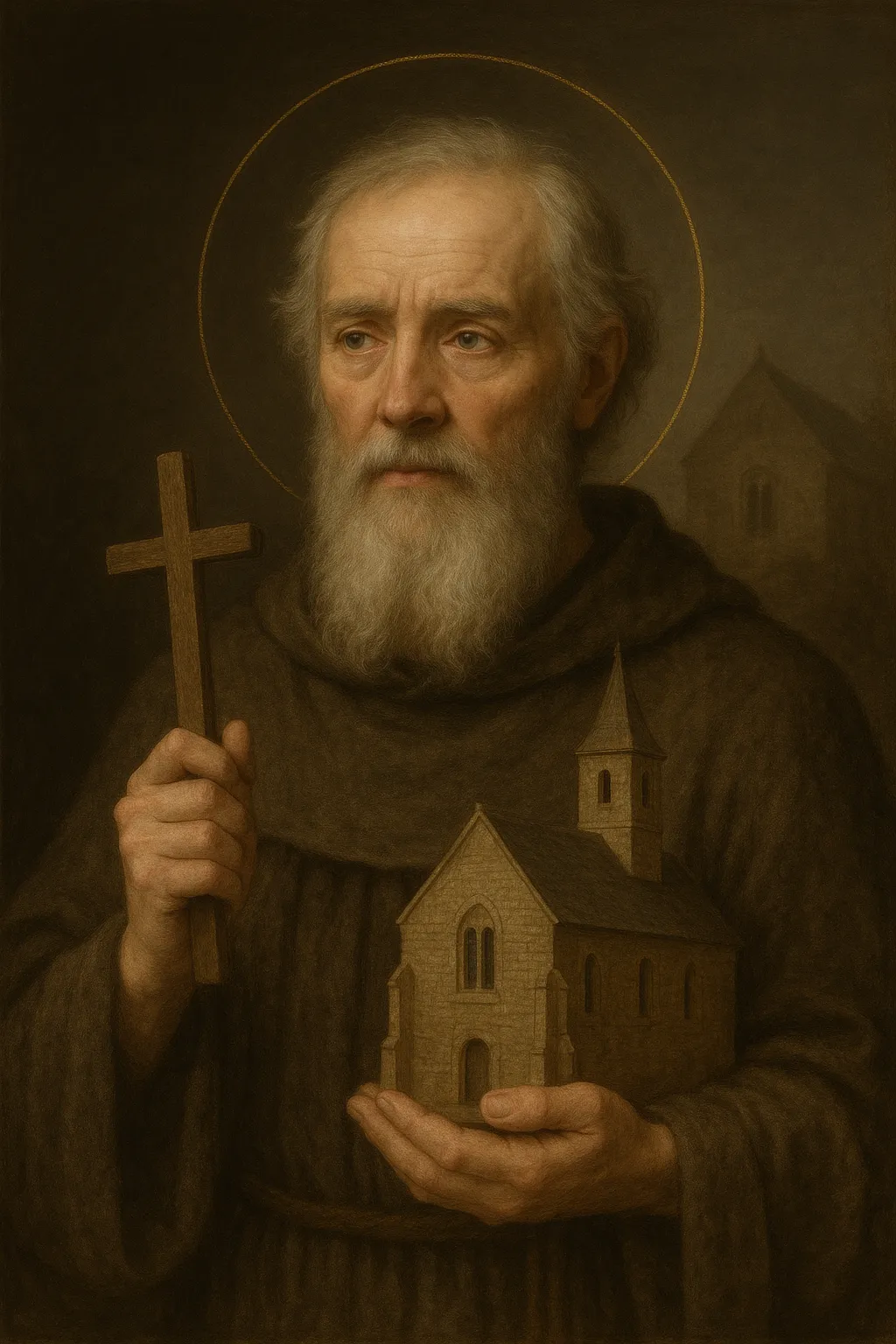
Across Scotland's sacred map
-
Abbey and royal shrine
Dunfermline Abbey and Saint Margaret's Shrine
A separate central Scotland journey to Margaret's royal foundation and shrine.
-
Cathedral ruins and apostolic shrine
St Andrews Cathedral and Saint Andrew's Shrine
A separate east-coast pilgrimage to Scotland's medieval national apostolic shrine.
Plan your visit.
Edited from official church sources, local image provenance, and Eternal Roam destination records.
August 10, 2026
Photo credits
- Hero. Tom Parnell / Wikimedia Commons. Source. CC BY-SA 4.0.
- The shrine crypts. Billy McCrorie / Wikimedia Commons. Source. CC BY-SA 2.0.