
Sacro Speco, the Monastery of Saint Benedict at Subiaco
The cliff monastery at Subiaco holds the cave where Benedict lived alone before there was an order, a rule, or a single monk following him.
- Location
- Subiaco, Italy
- 41.9269° N · 13.0944° E
- Type
- Benedictine sanctuary built into a cliff
- A monastery built in stages into the face of a cliff, with two churches and a sequence of chapels and caves linked by staircases
- Monastic Tradition
- Benedictine sanctuary and monastery
- The site of Benedict's eremitical years and the beginning of Benedictine monasticism
- Time Needed
- 1 to 2 hours
Where Benedict Was Nobody Yet
Every Benedictine house in the world traces back to a decision made here by a young man who had given up on Rome. Benedict came to Subiaco to be a hermit, not a founder. He lived in a cave in this cliff for about three years, and the monastery states plainly that the cave inside the sanctuary is that cave. Come to see the beginning: not the achievement at Monte Cassino, but the solitude that preceded it.
A Cave, Then Everything Else
The monastery's own account is direct. This is the cave in which the young Benedict of Norcia lived in the early sixth century as a hermit, following the example of the Desert Fathers. In that solitude, it says, he brought to maturity the charism and the spirituality that would lead him within a few years to found the first monastic communities along the Aniene river valley.
The cave became a place of worship as early as the sixth century, and the oldest artistic evidence dates to the eighth. Real construction began only in the second half of the eleventh century, five hundred years after Benedict had gone. The monastery was not built to house him; it accumulated around a memory of him.
There is no facade and no plan, because there was no level ground. The monastery is pinned to the face of a cliff, carried on high arches and overhangs, with two churches at different heights linked by staircases cut through the rock. The Lower Church sits closest to the cave and is the original core; the Upper Church was added above it. The frescoes are not decoration applied to walls so much as the surface the building presents at every turn.
The Upper Church and the Lower Church, built at different heights against the rock
The staircases and chapels that link the two churches through the cliff
The view down the Aniene valley, where Benedict founded his first communities
A monastery is best understood by the life it was built to sustain.
Benedictine monks still live here and keep the sanctuary. Visits are guided when a monk or a member of the sanctuary staff is free to guide them, which gives the place the character of a house receiving guests rather than a site admitting ticket holders. Flash photography and video are not permitted inside. The sanctuary closes for several hours in the middle of every day, which is worth planning around and worth respecting as what it is.
- Benedict came here to be alone, not to found anything. The Rule, the order and Monte Cassino all came later. Subiaco is the part of his life with no institution in it yet.
- Five hundred years separate Benedict's cave from the beginning of serious construction here in the eleventh century. The monastery is a memorial raised by people who came long after him.
- The building has no ground floor in any ordinary sense. Every wall meets rock somewhere, and the cliff is visible inside the sanctuary as often as the masonry is.
- Benedict's principal bodily relics are not at Subiaco. The tomb traditionally venerated as his is at Monte Cassino, and the abbey of Fleury has long claimed relics translated to France. Eternal Roam treats that as a tradition venerated in two places rather than a settled fact.
- A Benedictine community still lives here. The guided visit is offered by monks and sanctuary staff, and the closing hours in the middle of the day belong to the life of the house.
What to notice.
-
01
The Holy Cave
The Sacro Speco itself, which the monastery describes as the cave where Benedict lived as a hermit. Venerated as a place of worship since the sixth century. Go here first and let the rest of the building explain itself afterwards.
-
02
The Lower Church
The original core of the monastery, built closest to the cave. The oldest layer of a building that grew upward from the rock rather than outward from a plan.
-
03
The Upper Church
Added above the lower one, and covered with the thirteenth and fourteenth century fresco cycles the monastery calls extraordinary in quality.
-
04
The portrait of Saint Francis
Painted in 1223 and described by the monastery as the oldest surviving portrait of Francis of Assisi. He is shown without a halo and without the stigmata, which is to say, shown as a man who was still alive.
-
05
The staircases through the rock
The connecting stairs and chapels are not circulation between the sights; they are the clearest evidence of what it cost to build here at all. Walk them slowly.
See all 5 · 2 more
- The portrait of Saint Francis Painted in 1223 and described by the monastery as the oldest surviving portrait of Francis of Assisi. He is shown without a halo and without the stigmata, which is to say, shown as a man who was still alive.
- The staircases through the rock The connecting stairs and chapels are not circulation between the sights; they are the clearest evidence of what it cost to build here at all. Walk them slowly.
How much time, and what to do with it.
-
1 Hour
The walk up, the Holy Cave, and the two churches. Enough to understand what the place is, if you do not linger over the frescoes.
-
2 Hours
The same with a guided visit, which is the way to make sense of the chapels and the sequence of the building, plus time for the frescoes on the way back up.
Walk up through the woods without hurrying. Go down to the cave before you look at anything else. Read the frescoes on the way back out, and look down the Aniene valley before you leave, because that is where what began here went next.
How to visit without rushing.
-
Prayer at the Holy Cave, venerated as a place of worship since the sixth century
-
A Benedictine community still living at the sanctuary and receiving pilgrims
-
Guided visits offered by the monks and the sanctuary staff in several languages
-
Current opening hours and liturgy are published by the monastery and change with the season
See all 4 · 1 more
- Current opening hours and liturgy are published by the monastery and change with the season
What pilgrims come to notice and venerate.
Tomb and Burial
- No saint is buried here. The tomb traditionally venerated as Benedict's is at Monte Cassino, and the relic tradition is set out on its own page.
Relics and Sacred Tradition
- The cave itself, which the monastery describes as the very cave where the young Benedict of Norcia lived as a hermit in the early sixth century
Sacred Objects
- The Sacro Speco, the Holy Cave, a place of worship since the sixth century with artistic evidence reaching back to the eighth
- The fresco cycles of the thirteenth and fourteenth centuries, which cover the walls of both churches and the connecting stairs
- The portrait of Saint Francis of Assisi painted in 1223, described by the monastery as the oldest surviving likeness of him
The lives remembered here.
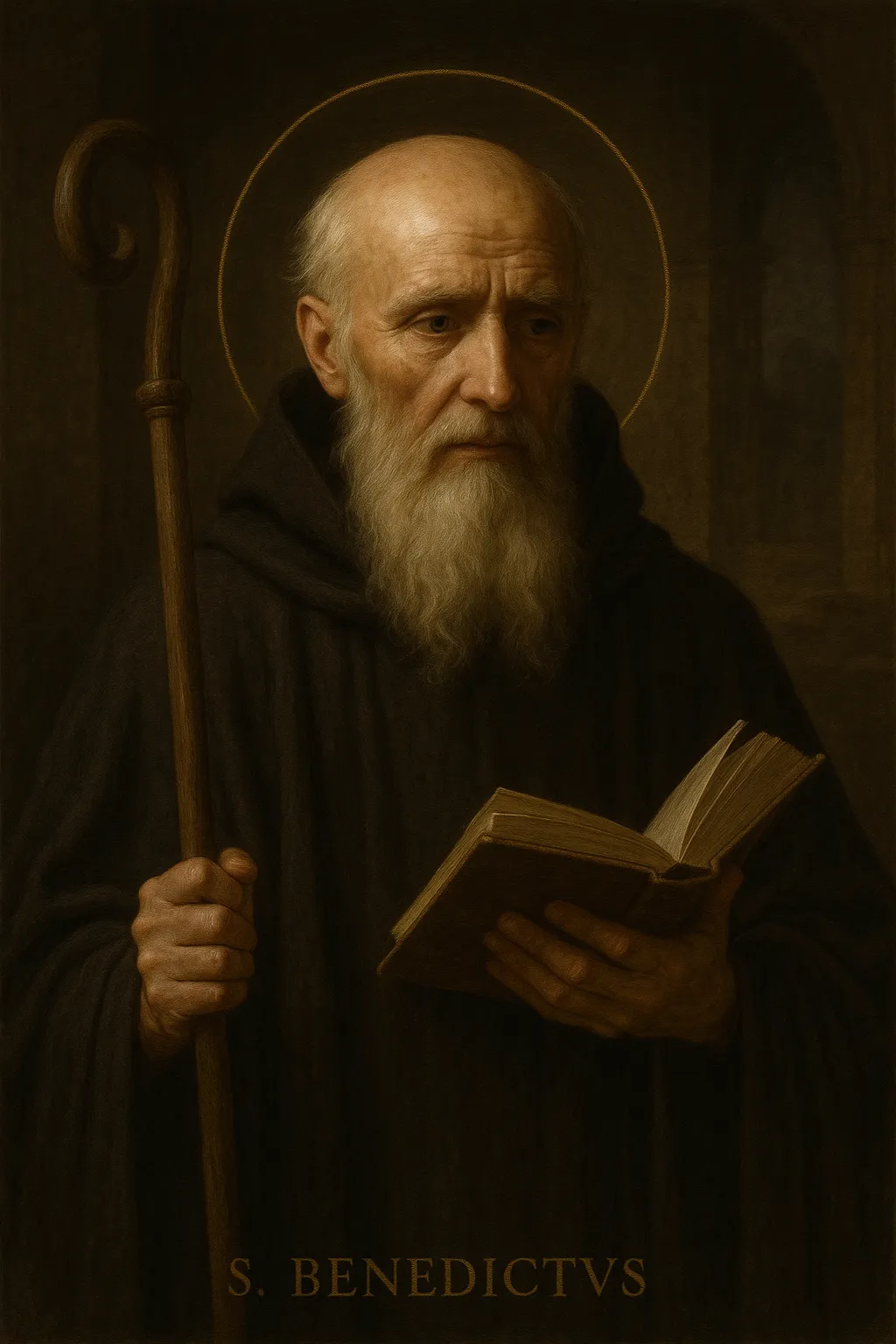
- Saint Benedict Lived here · his eremitical years, before he founded anything Withdrew to a cave in the cliff at Subiaco in the early sixth century and lived there as a hermit for about three years. From that solitude came the first monastic communities of the Aniene valley, and eventually Monte Cassino and the Rule. He is not buried here.
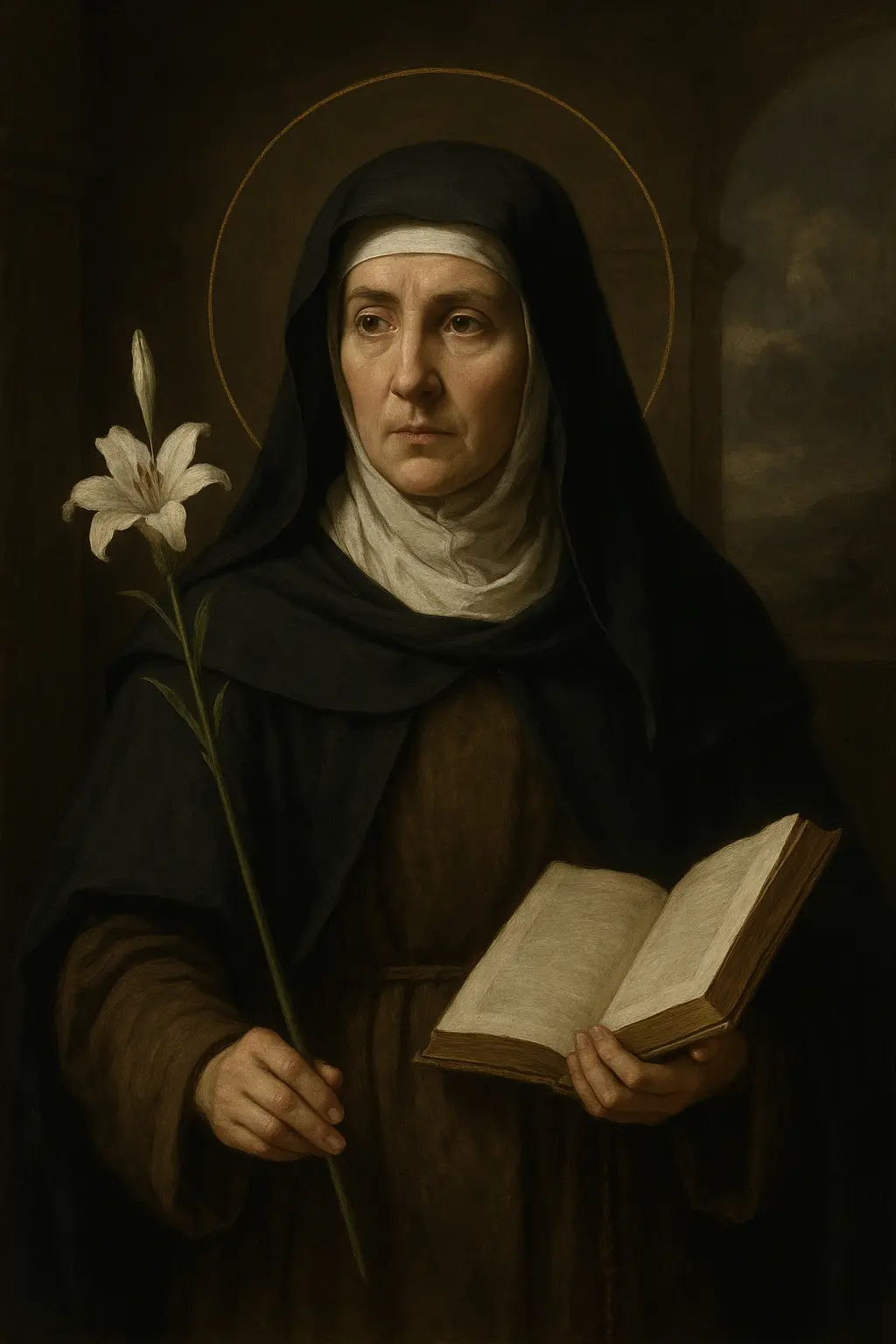
- Saint Scholastica The valley where Benedict first lived the monastic life that Scholastica shared.
Within walking distance.
-
Benedictine archabbey
Abbey of Monte Cassino
Where Benedict went after Subiaco, where he died, and where the tomb venerated as his is kept. Subiaco is the beginning of this story and Monte Cassino is its conclusion.
-
Contested relic tradition
Relics of Saint Benedict
The dedicated relic page sets out the two ancient claims without ranking either. Useful precisely because Subiaco makes no relic claim of its own.
Plan your visit.
Written against the monastery's own pages for the history of the cave, the fresco cycles and visitor information. Opening hours differ between summer and winter, the sanctuary closes in the middle of the day, and guided visits depend on a monk or member of staff being available; check the monastery's information page before travelling.
August 12, 2026
Photo credits
- Hero. Simone Frignani / Wikimedia Commons (CC BY-SA 4.0). Source. CC BY-SA 4.0.
- The painted upper church. Livioandronico2013 / Wikimedia Commons. Source. CC BY-SA 4.0.