
Tomb of St. Paul the Apostle
The marble sarcophagus venerated as the burial place of the apostle Paul, beneath the papal altar of the basilica raised on the road to Ostia, brought back into view by the excavation of 2006.
Why pilgrims come
Rome keeps its two apostles at opposite ends of the city.
Peter is met in a crowd. Paul is not. The basilica on the road to Ostia stands well outside the old walls, past the ring road and the river bend, and the pilgrims who reach it tend to have come deliberately. The reward is a building of extraordinary calm: a colonnaded forecourt, a nave of eighty granite columns, and a frieze of papal portraits running the whole way round above them, from Peter to the pope now reigning.
Beneath the papal altar is a sarcophagus of unpolished marble, a little over two and a half metres long. The basilica's own account places it where Constantine built the first altar, and describes how the excavations of 2006 brought it back to light after centuries hidden behind masonry. Above it, set into the floor, is the fourth-century slab cut with the words PAVLO APOSTOLO MART, to Paul, apostle and martyr. Rome has been saying that over this spot for sixteen hundred years.
In 2009 a probe of the sarcophagus was reported to have found material consistent with a first or second century date. That is worth knowing and worth holding lightly. A date establishes a period, not a person, and the basilica's own presentation of the tomb does not rest on it. The case for this grave was never laboratory work. It is the unbroken decision of the Roman church to build here, and to keep building here.
Pilgrims come to the quieter apostle, at the end of a longer journey, which is roughly how Paul arrived in the first place.
What is venerated here
Four different kinds of claim meet under this altar. They are not equally strong, and the page does not blend them.
A large sarcophagus in unpolished marble, 2.55 metres by 1.25, beneath the papal altar. Its presence and position are documented fact, confirmed by the 2006 excavation.
The basilica records that the sarcophagus lies where Constantine had the first altar raised. The site was chosen in the fourth century to mark a grave already venerated as Paul's.
The memorial slab cut PAVLO APOSTOLO MART, to Paul apostle and martyr. It records what the Roman church of that century believed lay beneath it.
That Paul was martyred outside Rome and buried on this spot, in an unbroken tradition that produced the Constantinian church and every basilica since.
A probe of the sarcophagus was reported to have found material consistent with a first or second century date. That is consistent with the tradition. It does not identify the remains, and the basilica's own account of the tomb does not rely on it.
What a pilgrim can actually see
Stated honestly, with access caveats. Nothing here promises more than the shrine ordinarily offers.
The confessio and sarcophagus
Open hoursThe sunken confessio before the papal altar was reopened after the 2006 excavation so that the face of the sarcophagus can be seen through a grille. Pilgrims pray at the rail above it.
·The sarcophagus is not opened and the remains are not exposed. Access closes during liturgies at the papal altar.
The inscribed slab
Open hoursThe fourth-century memorial cut PAVLO APOSTOLO MART, set above the tomb.
The frieze of popes
Usually visibleMedallion portraits of every pope encircling the nave, the basilica's most quietly astonishing feature and a lesson in continuity that takes ten minutes to walk.
The cloister
TicketedThe thirteenth-century cloister with its inlaid twisted columns, among the finest in Rome, entered separately from the basilica.
·Separate admission and its own hours.
How to visit
A short, practical posture. The shrine will guide you the rest of the way.
Go out, and go slowly
The basilica is a metro ride from the centre on Line B. It is the least rushed of the four papal basilicas, and it repays an hour rather than twenty minutes.
Pair it with Peter, not with the Forum
Rome's apostolic geography is Peter at the Vatican and Paul on the Ostian Way. Taking them on the same day, at opposite ends of the city, is the oldest Roman pilgrimage there is.
January 25 and June 29
The Conversion of St. Paul closes the Week of Prayer for Christian Unity here, and the Solemnity of Peter and Paul on June 29 is the city's own feast. Both change the basilica's schedule.
Check hours at the source
The basilica publishes its own hours and those of the cloister separately, and liturgies close the confessio without notice. The official basilica site is the authority. Access details on this page were last reviewed on 11 August 2026.
Connected saints & places
Every relic belongs to a saint, a church, and a city. Follow the connections outward: each one names its relationship to what is kept here.
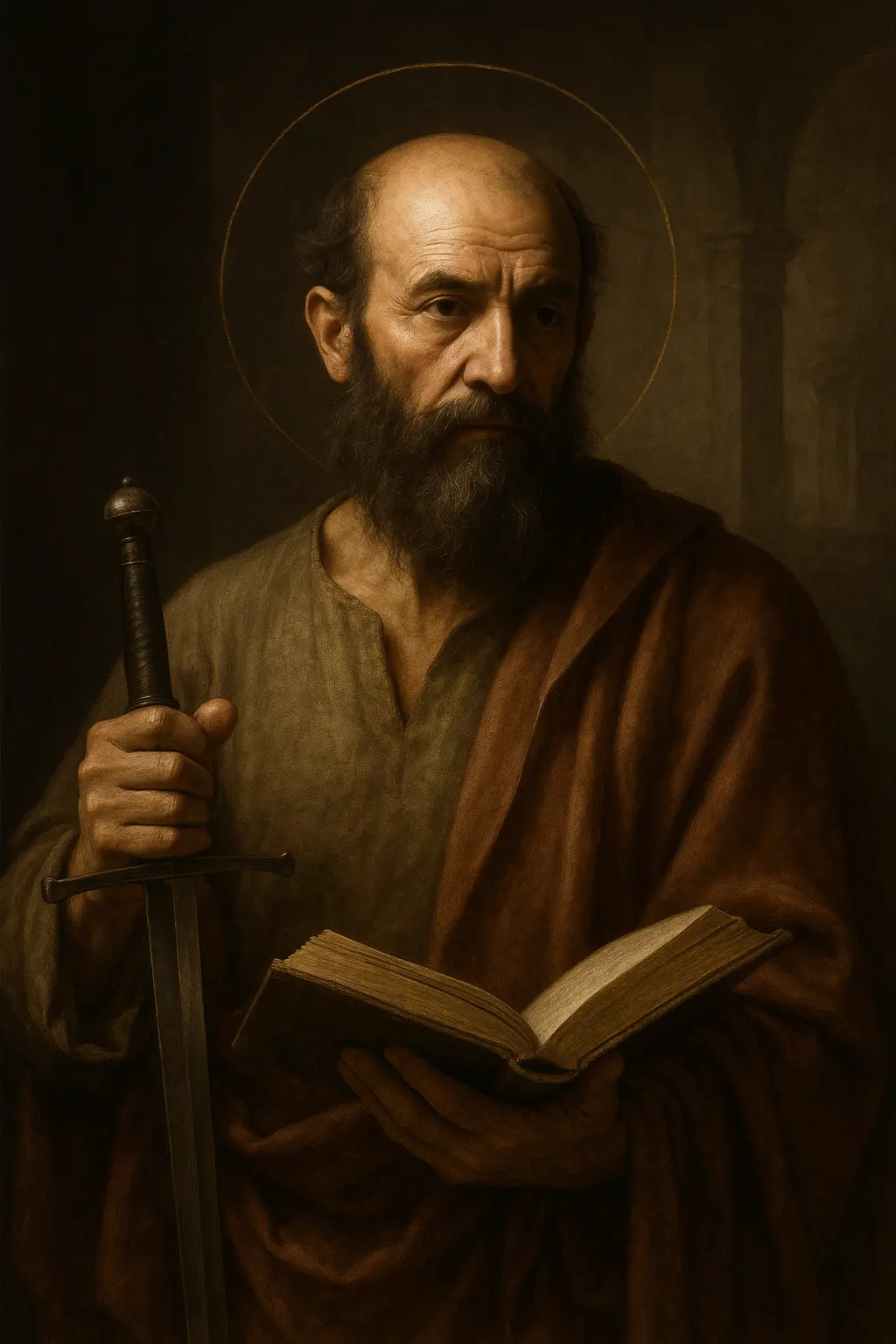
Nearby sacred places
Each carries an honest travel cost. "Nearby" means reachable on the same pilgrimage, not merely thematically linked.
Tomb of St. Peter
The other apostolic grave, beneath the high altar of St. Peter's. The two tombs are the poles of Christian Rome.
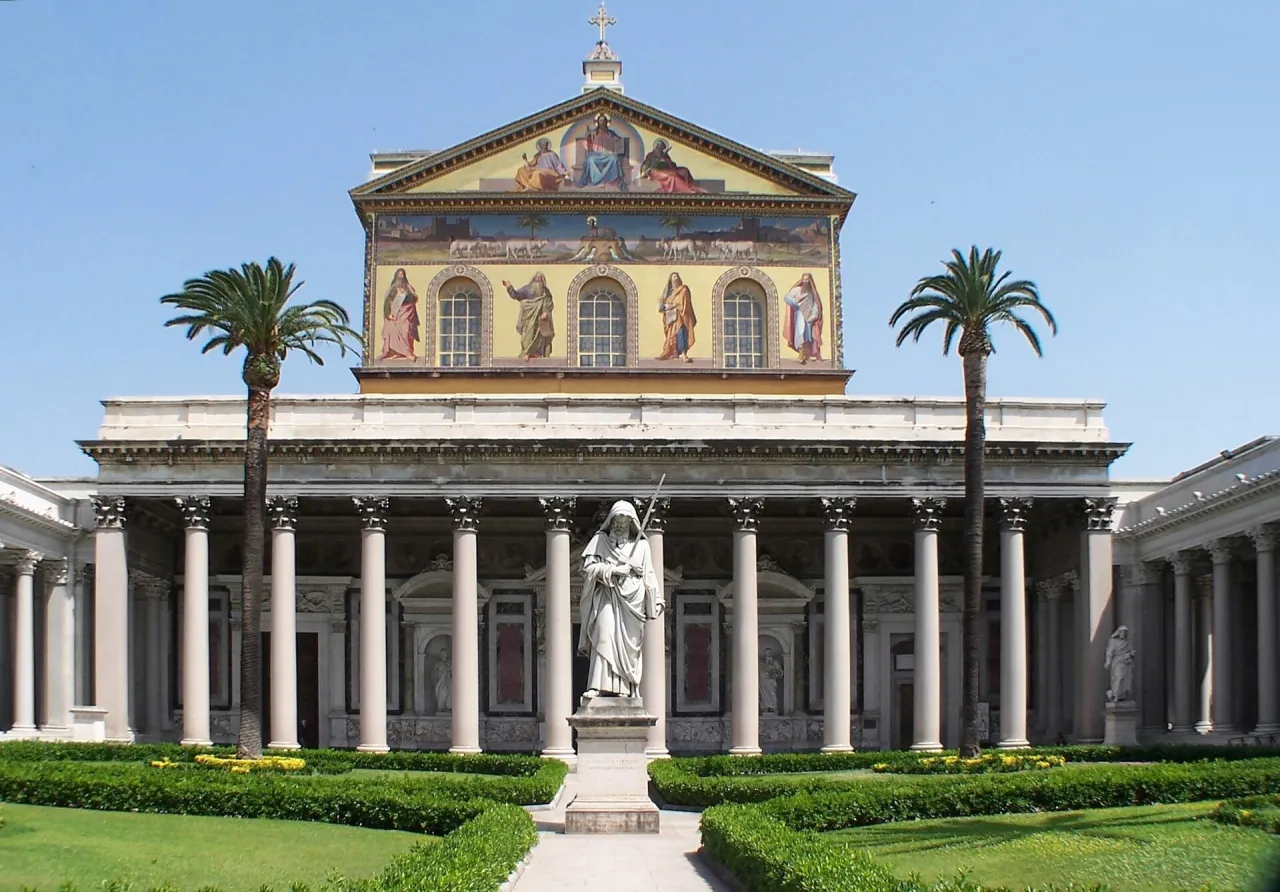
St. Paul Outside the Walls
The basilica itself: the colonnaded forecourt, the granite nave, the papal frieze and the cloister.
How we hold this record
A documented sarcophagus, a fourth-century inscription, an ancient tradition, and one much-quoted scientific result that proves less than it is usually said to prove.
- Official The basilica records a sarcophagus in unpolished marble, 2.55m by 1.25m, height 0.97m, standing where Constantine had the first altar built.
- Official The excavations of 2006 brought to light the sarcophagus, which had been hidden by masonry.
- Historical A fourth-century memorial slab above the tomb is cut PAVLO APOSTOLO MART, to Paul apostle and martyr.
- Tradition The identification of this grave with the apostle Paul is an ancient Roman tradition, on which the Constantinian basilica and every later rebuilding rests.
- Careful note A probe reported in 2009 found material consistent with a first or second century date. A date indicates a period, not a person, and the basilica's own account of the tomb makes no dating claim.
The sarcophagus is not opened and the remains are not exposed.
Public access varies with liturgy, security, and (where noted) reservation requirements. The official sources above should be consulted for current access before planning around it.