
St. Olav
The roads to Nidaros do not canonize conquest. They lead toward a converted king, a violent age, a martyr memory, and the mercy every ruler needs.
The cathedral, the feast of Olsok, and the roads to Nidaros preserve the Church’s memory of a king whose power stood in need of conversion.
Nidaros Cathedral and the National Pilgrim Center Well-attested
The warrior-king whose contested life became a northern summons to conversion and pilgrimage
Olav Haraldsson was born around 995 and came of age in the martial world of Viking expeditions. Baptized as a Christian—traditions differ on the place and circumstances—he returned to Norway, claimed the kingship in 1015, and worked to consolidate both the realm and the Church. His methods could be forceful, and a truthful Catholic account cannot turn political violence into piety.
Olav’s reign belongs to the long conversion of Norway rather than a single dramatic national baptism. He supported bishops, churches, and Christian law, while also using royal power against rivals. Sources were written after his death and often interpret kingship through saga, miracle, and national memory.
Driven into exile by opposition and the power of Cnut, Olav returned in 1030. He was killed at the Battle of Stiklestad on 29 July. The political battle and the later martyr cult must be distinguished: dying in battle is not itself proof of sanctity.
Very soon, reports of miracles gathered around his body. His remains were translated and enshrined at Nidaros, and his cult received episcopal recognition. The cathedral that rose above his tomb became the great pilgrimage destination of medieval Scandinavia.
The Reformation disrupted the shrine, and the present location or survival of his remains is uncertain. Yet the pilgrimage endured in memory and has been renewed through the Saint Olav Ways. Today the pilgrim can walk without pretending every saga episode is documentary fact: conversion, repentance, costly leadership, death, and the desire for a Christian North remain enough.
Olav’s sanctity should not be used to bless coercion or nostalgia. His cult asks whether power can be converted, whether rulers stand under judgment, and whether a violent life can still be brought penitently toward Christ.
A life, in years and approximate ages.
-
c. 995BirthBorn in NorwayOlav Haraldsson is born into a Norwegian ruling family.
-
c. 1015Young adultReceives baptismOlav becomes Christian before returning to claim the Norwegian kingship.
-
c. 1015About 20Claims the kingshipOlav returns to Norway and consolidates rule after conflict with rivals.
-
c. 1024About 29Christian law strengthenedRoyal and ecclesial cooperation advances Christian law and organization at Moster.
-
c. 1028About 33Driven into exileOpposition and Cnut’s power force Olav from Norway.
-
c. 1030About 35Killed at StiklestadOlav dies in battle after returning to Norway. His cult grows rapidly after his death.
-
1031After deathTranslated and acclaimed as saintHis body is translated at Nidaros and public veneration develops around the shrine.
Dates are approximate where the surviving record is traditional or incomplete.
2 places where this witness remains visible.

Saint Olav Ways
Choose one official corridor and plan for season, mountain conditions, lodging, and remoteness.
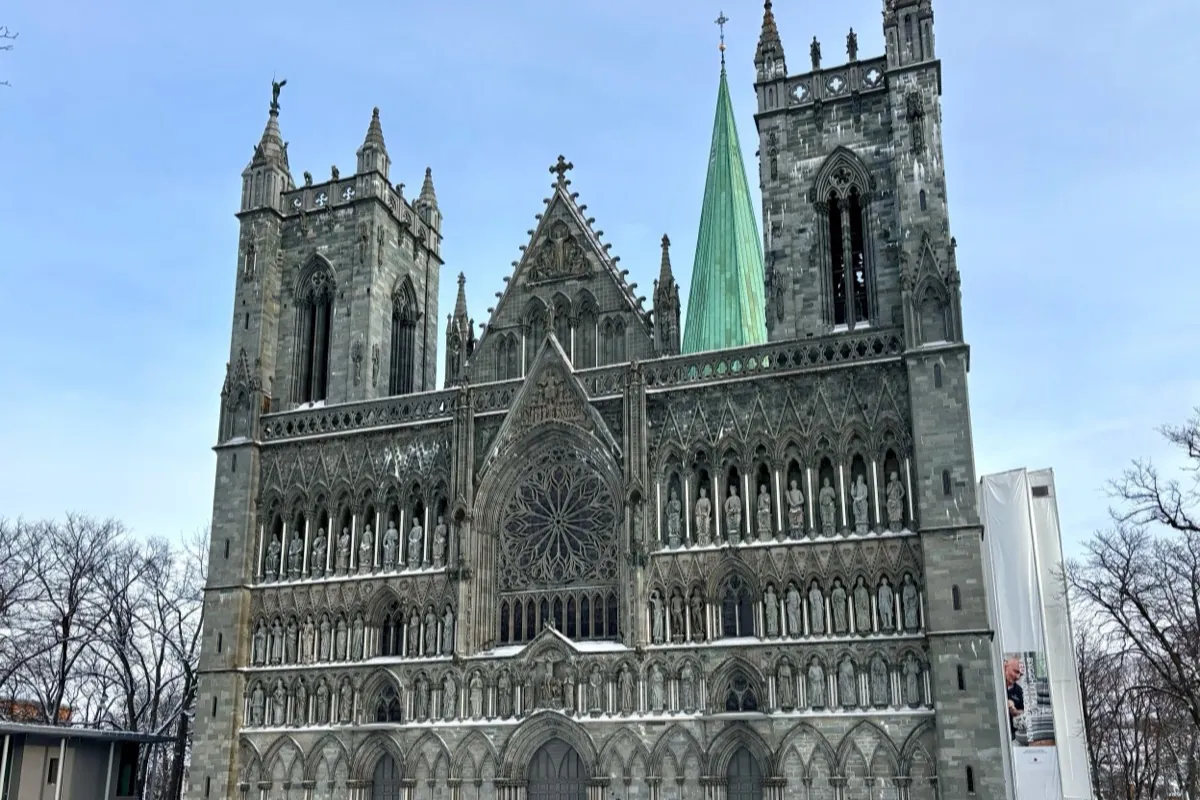
Nidaros Cathedral
End beneath the cathedral’s west front and enter the living church built over Olav’s shrine memory.
Where the body is venerated.
The tradition does not preserve a public relic site with confidence.
Traditional burial place and medieval shrine
The cathedral was built over Olav’s burial tradition and became the principal medieval pilgrimage shrine of the North.
- Traditional burial site; medieval shrine lost or dispersed
Arrive as the medieval pilgrim did: toward prayer at the cathedral, while allowing the uncertainty around the relics to remain honest.
Kindred witnesses
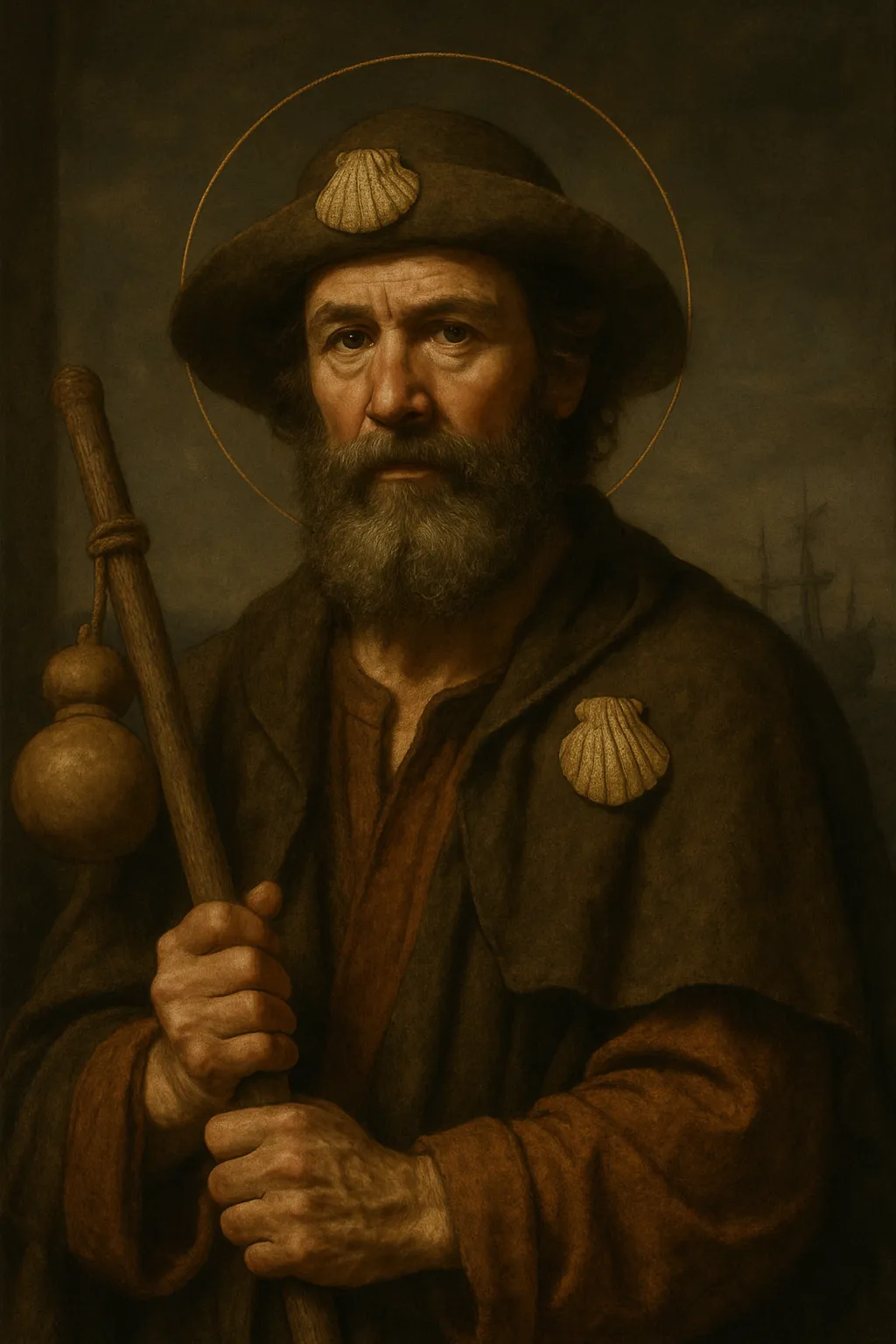
Photo credits
- Saint page. Eternal Roam devotional rendering. Source. Eternal Roam commissioned generation.
- Saint Olav Ways. Wolfmann, CC BY-SA 4.0, via Wikimedia Commons. Source. CC BY-SA 4.0.
- Nidaros Cathedral. kallerna / Wikimedia Commons (CC BY-SA 4.0). Source. CC BY-SA 4.0.