
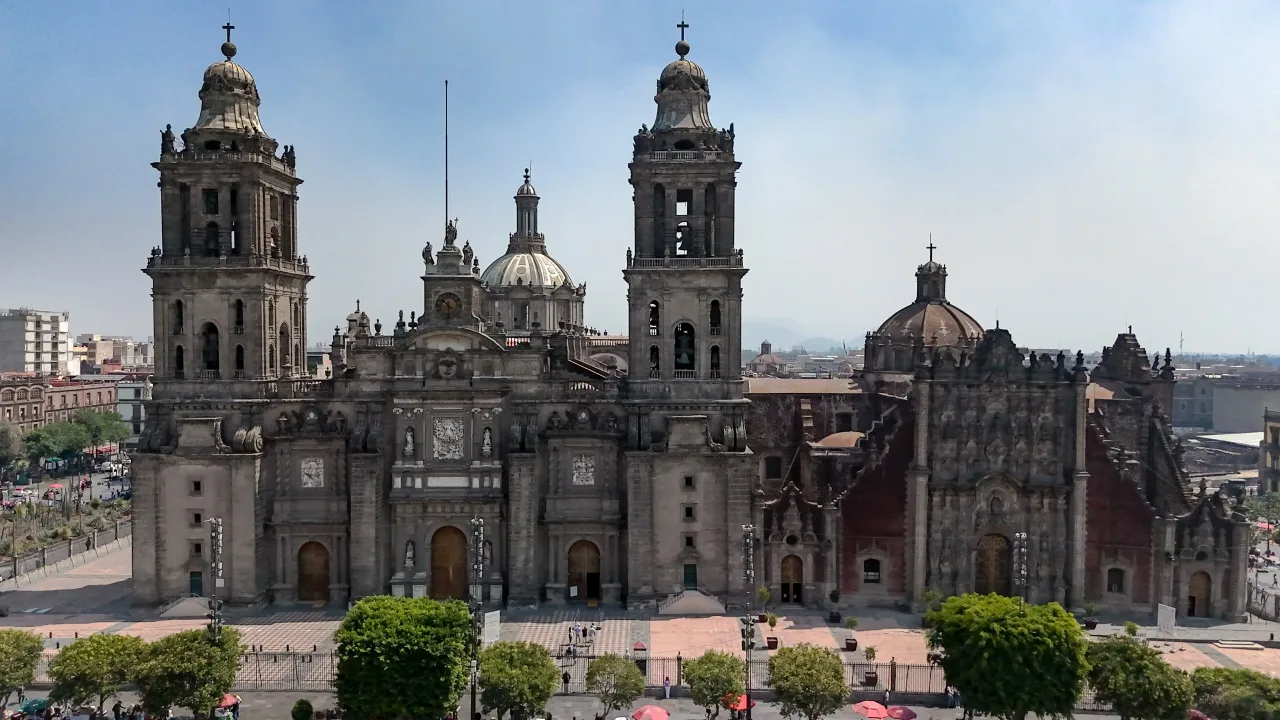
Metropolitan Cathedral of Mexico City (Catedral Metropolitana)
The cathedral church of the Archdiocese of Mexico stands on the north side of the Zócalo. It was begun in 1573 and not finished until 1813, and it holds two of the greatest baroque altarpieces in the Americas. The Sagrario Metropolitano, the parish church built against its eastern flank, belongs to the same visit.
- Location
- Mexico City, Mexico 19.4342° N · 99.1331° W
- Type
- Cathedral A Renaissance plan of five naves begun in 1573 to designs by Claudio de Arciniega, filled with baroque and churrigueresque altarpieces, and completed with a neoclassical dome, towers and facade by Manuel Tolsá in 1813
- Dedication
- The Assumption of the Blessed Virgin Mary
- Time Needed
- 30 minutes to half a day
The Cathedral on the Zócalo
Begin Catholic Mexico City here. This is the seat of the archdiocese and the largest cathedral in the Americas, and it gathers the city's Catholic history into one building: the sixteenth-century foundation of the see, the baroque century that filled it with gold, and the neoclassical towers that finally closed it in 1813. It is also the plainest lesson in how this city was made, standing on the drained lake and beside the excavated temple precinct of Tenochtitlan.
Two and a Half Centuries of Building
A first cathedral was built on this square in the 1520s, and the diocese of Mexico was erected in 1527 with Juan de Zumárraga as its first bishop. That earlier church was the episcopal seat during the years the Guadalupan account describes, and it proved small and poorly built. Work on the present cathedral began in 1573 to a plan by Claudio de Arciniega, on the model of the great Spanish cathedrals, with five naves and a forest of columns. Building ran through floods, funding failures and changes of taste. The interior was dedicated in 1667, the baroque altarpieces were carved in the decades after, and the dome, towers and facade were only completed by Manuel Tolsá in 1813. The result is not one design but a record of the centuries that made it. The ground itself has never been still: the cathedral sits on the soft bed of the lake the Mexica city stood in, and it has settled unevenly ever since, held now by an engineering campaign carried out in the 1990s.
Five things, not fifty.
-
The Altar of the Kings
The gilded retablo filling the apse, carved between 1718 and 1737 by Jerónimo de Balbás. Its estípite columns are among the earliest churrigueresque work in the Americas, and the whole wall is meant to be read as one burst of gold.
-
The Altar of Forgiveness
The retablo closing the west end of the choir, by the same hand, damaged by fire in 1967 and restored. It faces the nave, so it is the first altarpiece most visitors meet.
-
The Sagrario Metropolitano
The parish church built against the cathedral's eastern flank between 1749 and 1768 by Lorenzo Rodríguez, its front a dense screen of carved white stone against dark red tezontle. It is a separate building with its own door, and it is easy to walk past.
-
The pendulum and the levelling work
The cathedral stands on the soft bed of the drained lake and has sunk unevenly for centuries. A plumb line hung in the nave and the visible slope of the floor record the engineering campaign of the 1990s that stabilised it.
-
The choir in the middle of the nave
Spanish cathedrals put the choir stalls in the body of the church rather than behind the altar, and this one keeps that plan. It cuts the nave in two and changes how the whole interior is read.
- The cathedral is not one design. Work ran from 1573 to 1813, so a Renaissance plan carries baroque altarpieces and a neoclassical dome and towers finished by Manuel Tolsá.
- The floor is not level. The building has settled into the lakebed unevenly since it was begun, and the slope is visible along the aisles.
- The dark red stone is tezontle, a volcanic rock quarried near the valley, and it sets the colour of the whole historic centre.
- The sacred precinct of Tenochtitlan stood immediately north-east of here, and the excavated Templo Mayor is a two minute walk from the cathedral door. Stone from the demolished Mexica temples was reused in the first cathedral built on this square.
How much time, and what to do with it.
-
The two great altarpieces
3 ordered stopsThe shortest honest visit. Enter, let the scale settle, and give the time to the two altarpieces that carry the building.
- The crossing, entered from the Zócalo doors
- The Altar of Forgiveness at the west end of the choir
- The Altar of the Kings in the apse
-
The cathedral and the Sagrario
4 ordered stopsThe same path slowed down, with the side chapels and the parish church next door that most visitors miss entirely.
- The nave and the choir in the middle of it
- The Altar of Forgiveness
- The Altar of the Kings and the apse chapels
- The Sagrario Metropolitano, entered from its own door
What pilgrims come to venerate here.
Tomb and Burial
- The cathedral is not a saint's burial church. Archbishops of Mexico are buried in the crypt beneath the Altar of the Kings, which is normally shown only on guided access.
Relics and Sacred Tradition
- The cathedral does not present a single major relic as the reason for a pilgrim's visit. Its draw is the liturgical life of the archdiocese and the altarpieces.
Sacred Objects
- The Altar of the Kings, carved by Jerónimo de Balbás between 1718 and 1737.
- The Altar of Forgiveness, by the same hand, restored after the fire of 1967.
- The choir stalls and the two organs above them, in the body of the nave.
- The Sagrario Metropolitano, built between 1749 and 1768 by Lorenzo Rodríguez against the cathedral's eastern flank.
How this place gathers the saints.
The cathedral's saint connection is one of office and ground rather than of relics.
Five minutes on foot, and a different order
-
Church
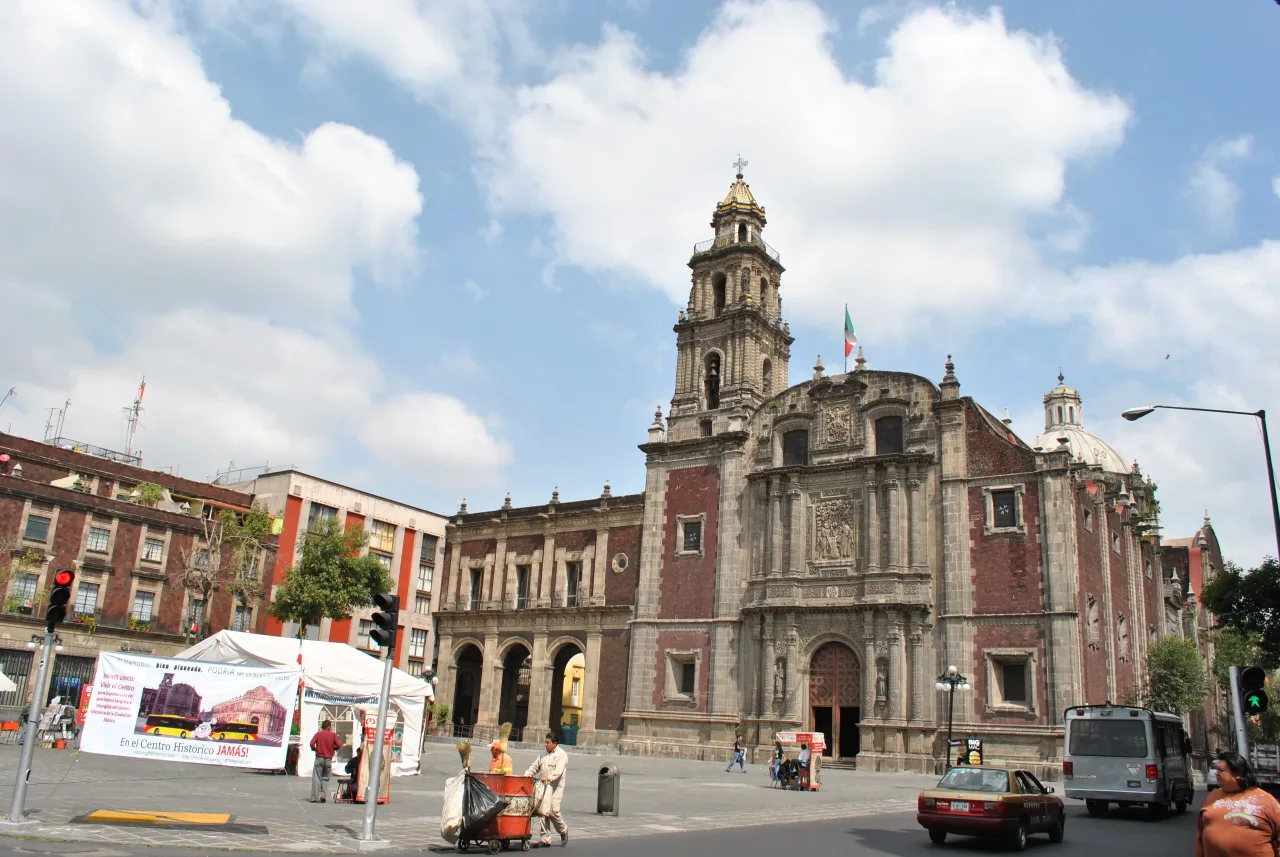
Templo de Santo Domingo
Five minutes north through the arcaded streets, the surviving church of the Dominican house.
-
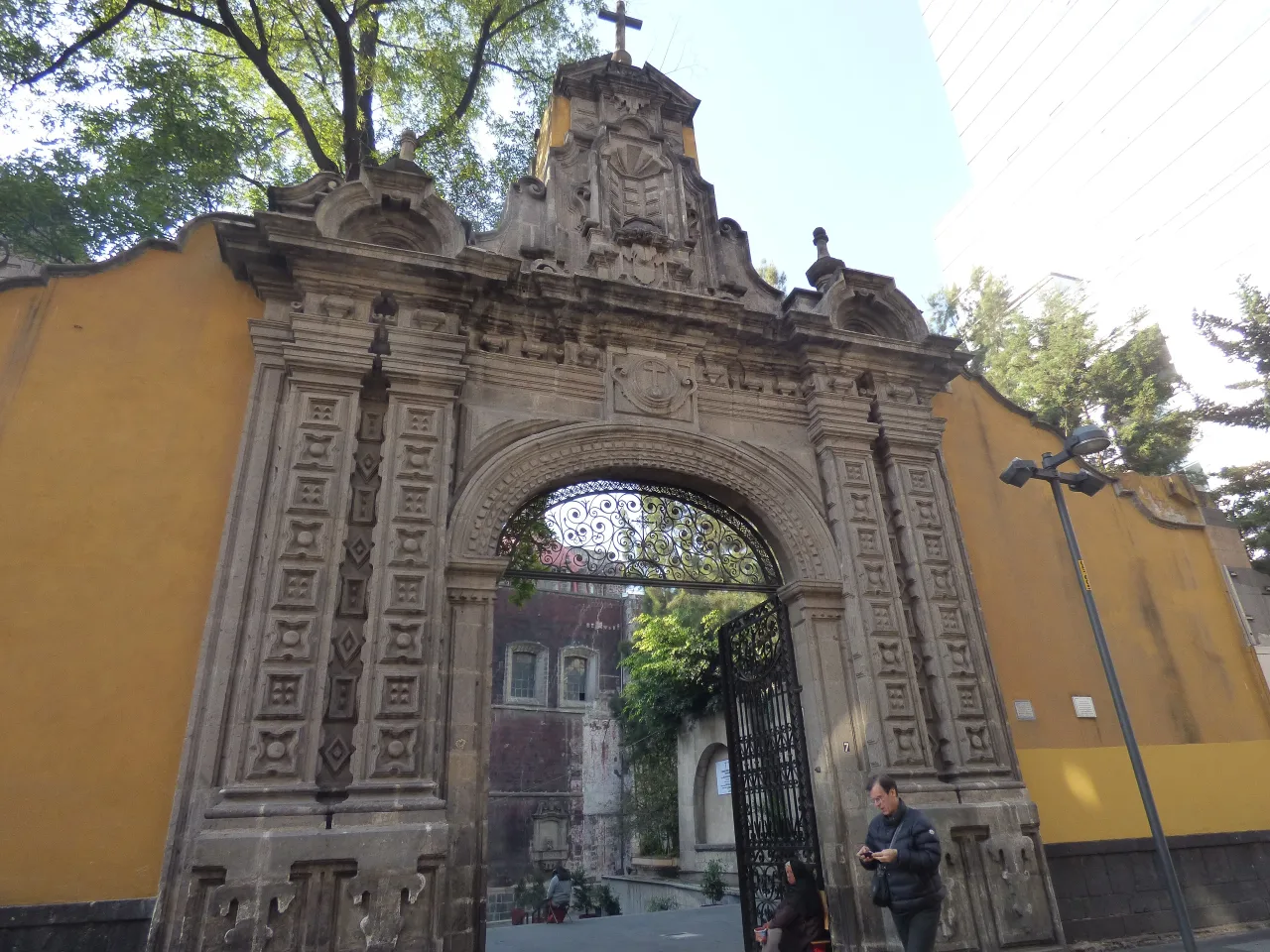
Church
Templo de San Francisco
Ten minutes west along Calle Madero, the church of the first Franciscan convent in the city.
Plan around this place.
Edited from the cathedral's own history pages, the Archdiocese of Mexico, and Eternal Roam destination records. The sixteenth-century episcopal seat and the present building are kept distinct, and the Guadalupan account is given in the language of shrine tradition. Confirm Mass times, bell tower access and the state of any restoration work before visiting.
August 4, 2026
Photo credits
- Hero. Photo: ProtoplasmaKid, CC BY-SA 4.0, via Wikimedia Commons. Source. CC BY-SA 4.0.
- The Altar of the Kings. Photo: José Luiz, CC BY-SA 4.0, via Wikimedia Commons. Source. CC BY-SA 4.0.