Mexico City

The historic centre, the religious orders, and the martyrs of the twentieth century

The Metropolitan Cathedral and the Sagrario, the surviving churches of the Dominican and Franciscan houses, the great popular devotion at San Hipólito, and the burial church of Blessed Miguel Pro.

Region
North America
Suggested time
A half day in the historic centre, or two days with Tepeyac
Places
6
Saints
2
Visit plans
3

Orientation

How the city gathers

Mexico City is usually treated as the airport before Guadalupe. It deserves better. This was the first metropolitan see in the Americas, erected in 1527 and raised to an archdiocese in 1547, and the city the mendicant orders worked from for three centuries. Very little of that survives whole: the great convents were suppressed and demolished in the nineteenth century, and what remains is a church here and a church there on streets that were once cloisters. Then, in the twentieth century, the Church here was persecuted outright, and the city gained a martyr whose body still lies in a parish in Colonia Roma. That is the story this hub carries. Guadalupe and the hill of Tepeyac belong to their own hub, and to their own day.

Sacred geography

Choose a way into the city

Cathedral and episcopal Mexico

Mendicant orders and colonial evangelization

Martyrdom and twentieth-century Catholic history

Living popular devotion

Sacred art and architecture

Sacred Geography

Three grounds, and a hill to the north

Catholic Mexico City is not spread evenly. Almost all of it gathers in the few blocks of the historic centre, with one modern martyr's church across the city in Colonia Roma. The great Marian sanctuary sits well to the north at Tepeyac and is reached by metro, which is why it belongs to its own hub and its own day.

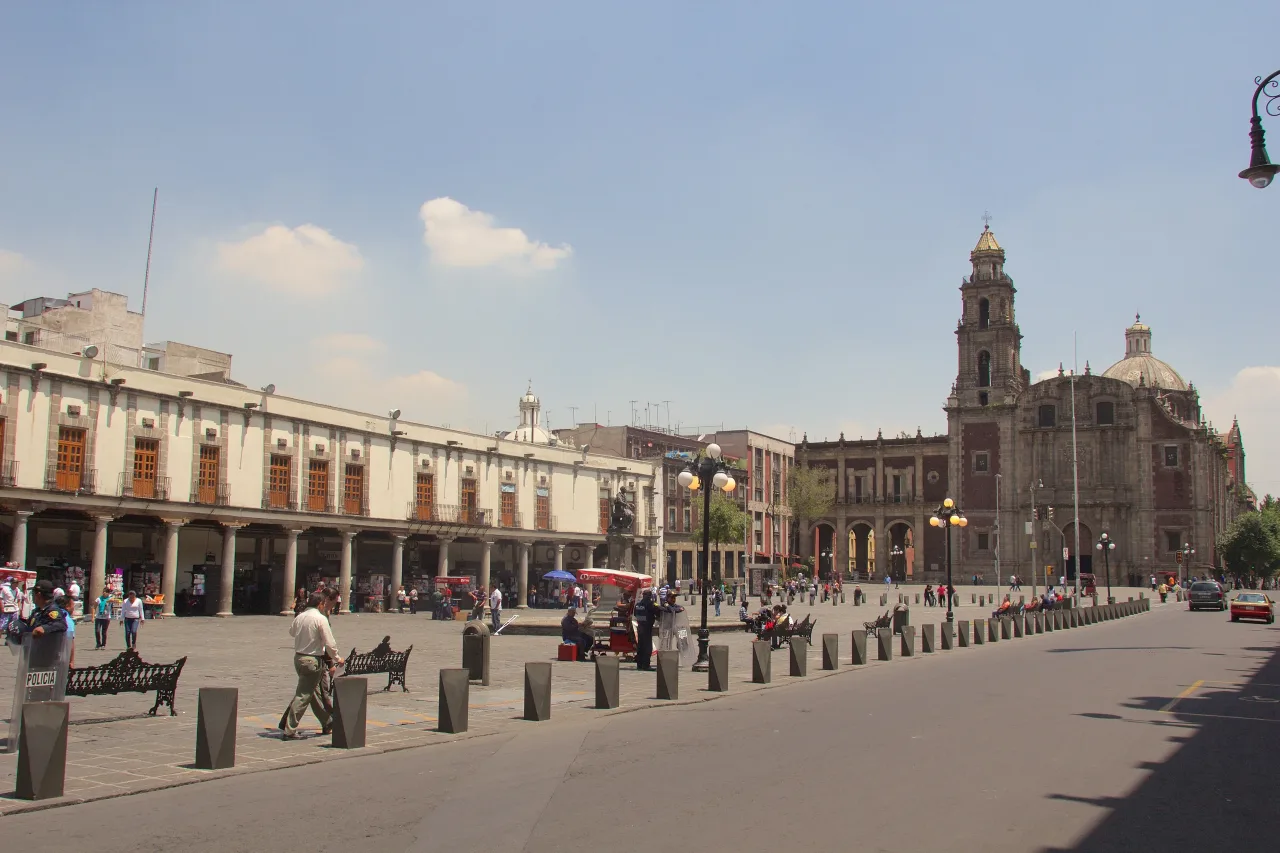
Plaza de Santo Domingo in Mexico City, the arcaded Portal de los Evangelistas along one side and the tower and dome of the Dominican church closing the far end.
Plaza de Santo Domingo, five minutes north of the cathedral. The whole of the historic centre is walkable at this scale.

The Zócalo

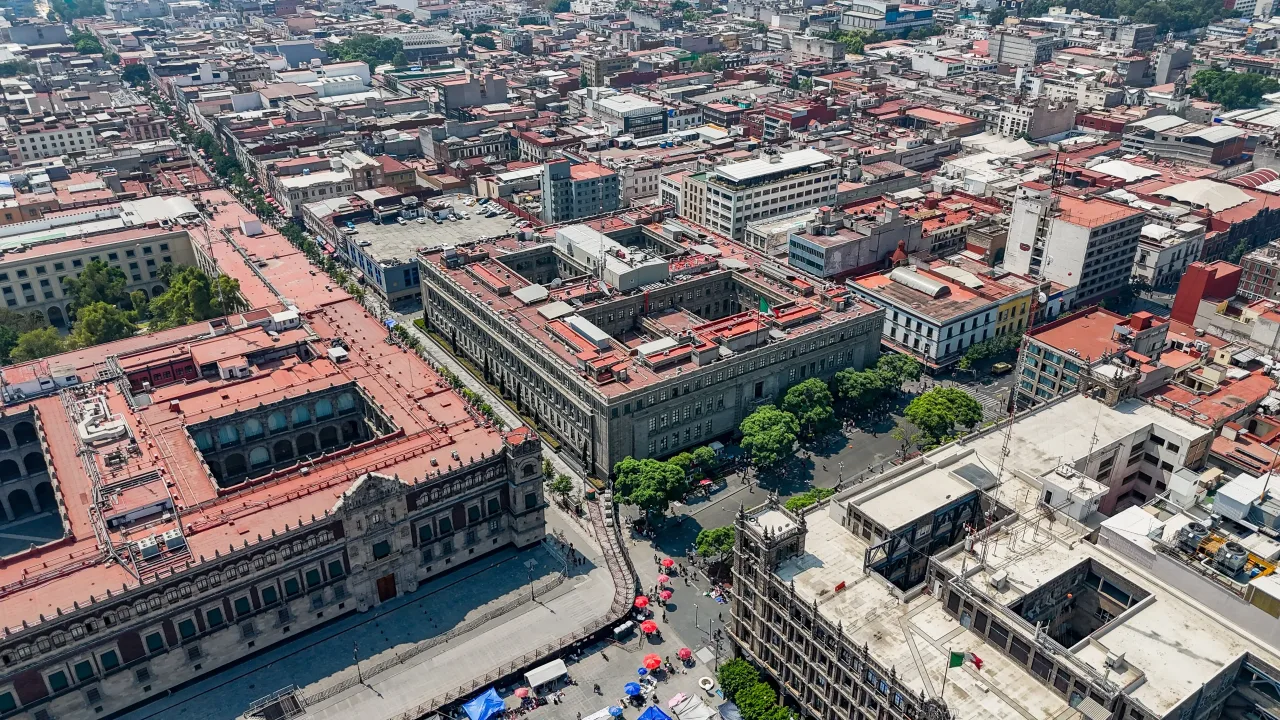
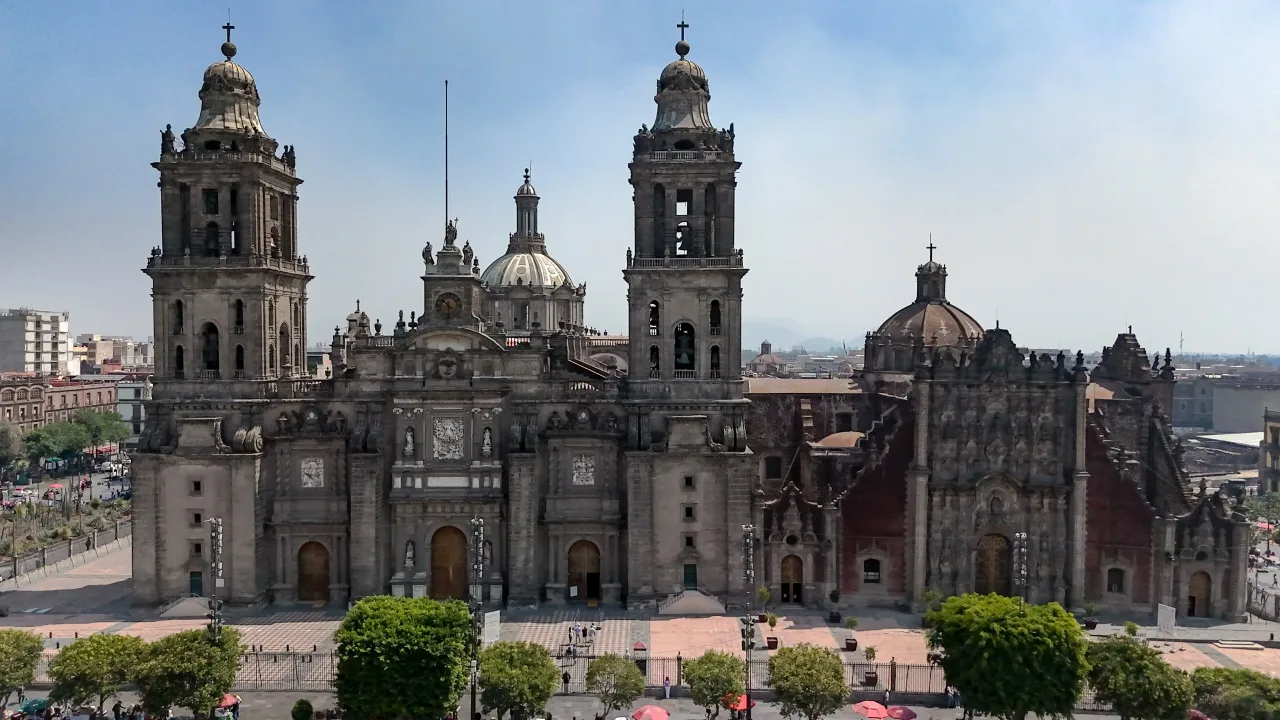
The great square at the centre of the city, with the cathedral and the Sagrario Metropolitano along its north side and the excavated Templo Mayor immediately behind them.

On the ground Flat and entirely walkable, and usually crowded. The cathedral and the Sagrario are one stop; the Templo Mayor is two minutes east.
North and west of the square

The streets of the old religious houses: Plaza de Santo Domingo five minutes north, Calle Madero running west to San Francisco, and the Alameda beyond it with San Hipólito on its far corner.

On the ground All walkable, on the flat. Santo Domingo to San Francisco is about ten minutes; San Francisco to San Hipólito another fifteen along the Alameda.

Colonia Roma

A residential quarter of the early twentieth century, south-west of the centre, where the Jesuit parish of the Sagrada Familia holds the body of Blessed Miguel Pro.

On the ground Not walkable from the centre. Twenty minutes by metro to Insurgentes, or a short taxi ride.

Tepeyac is around forty-five minutes north by metro and is not part of this ground. It carries the sanctuary of Guadalupe, and this guide treats it as a separate pilgrimage rather than a stop on a city itinerary.

Essential places

Where to begin in Mexico City

cathedral

Metropolitan Cathedral of Mexico City

THE ZóCALO

Begun in 1573 and finished in 1813, the cathedral church of the first metropolitan see in the Americas. The Altar of the Kings fills its apse, and the parish church of the Sagrario is built against its eastern flank.

church

Templo de Santo Domingo

PLAZA DE SANTO DOMINGO

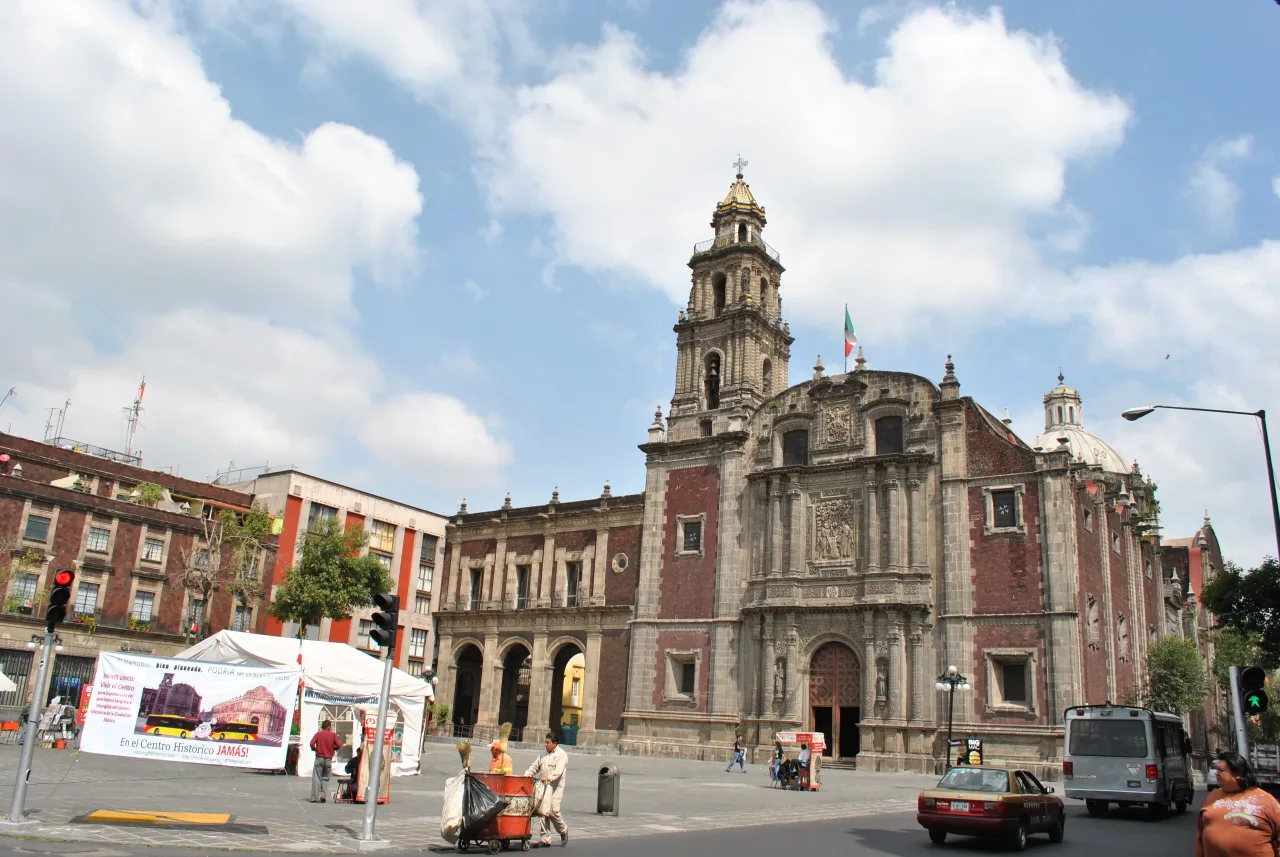
What is left of the Dominican house, dedicated in 1736. The convent that filled these blocks was demolished in the nineteenth century; the church, its altarpieces and the arcaded square remain.

church

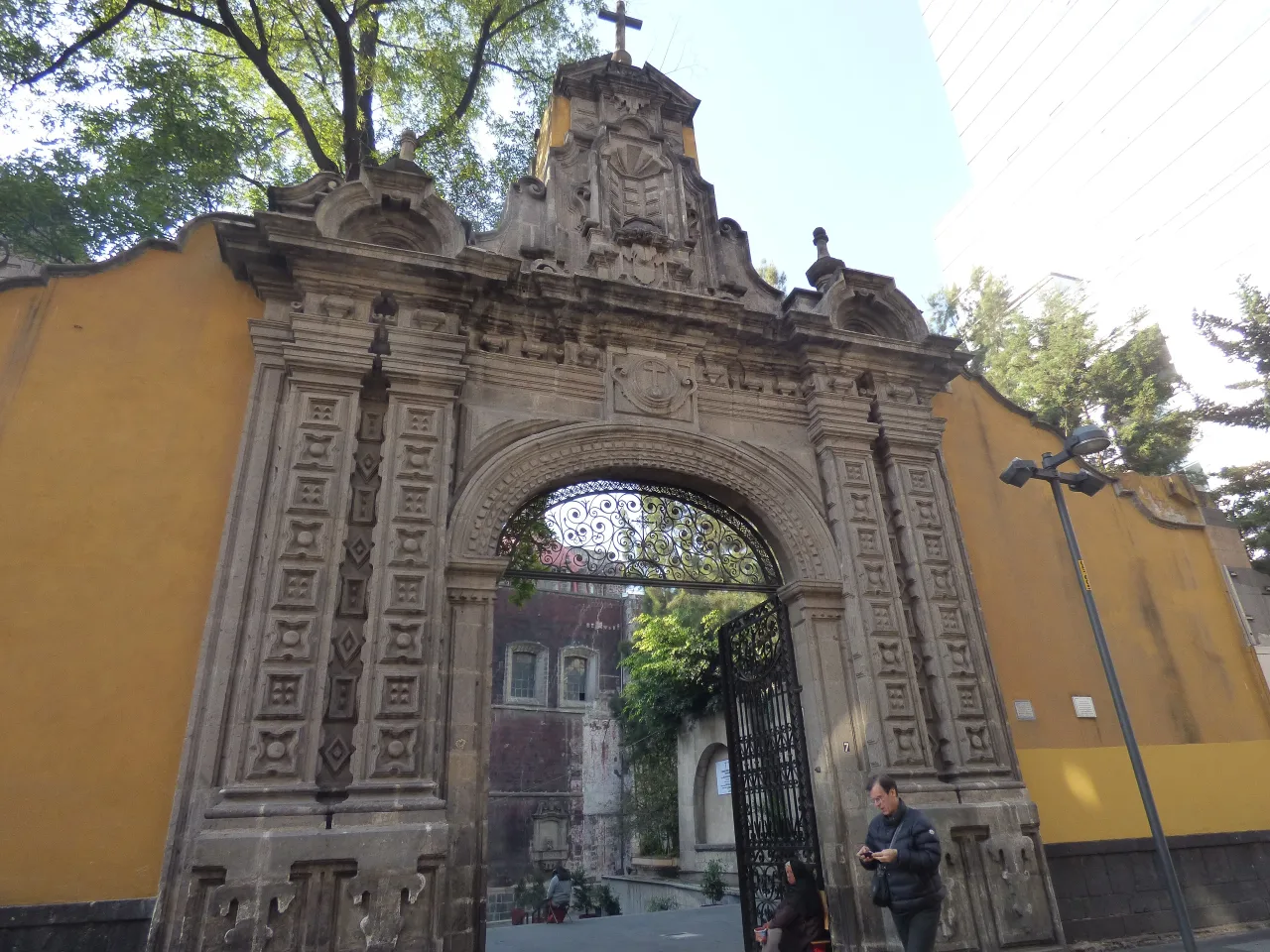
Templo de San Francisco

CALLE MADERO

The church of the first Franciscan convent in the city, founded in the 1520s. The house once covered more than thirty thousand square metres; you now enter through a carved gate and down into a sunken atrium.

church

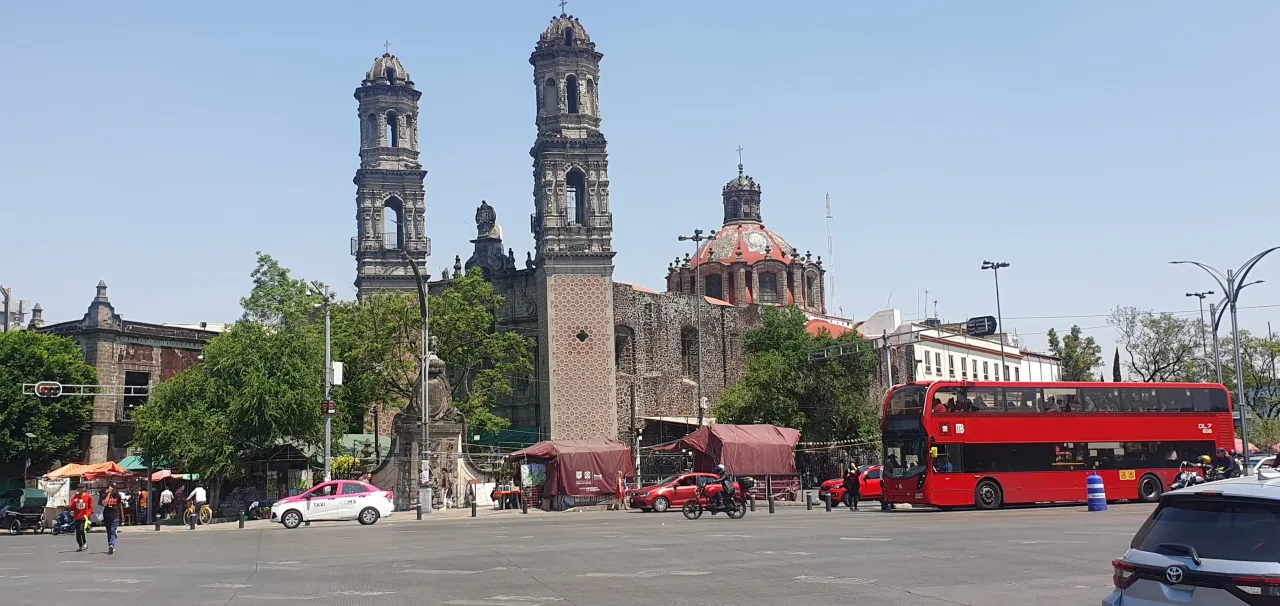
Templo de San Hipólito y San Casiano

REFORMA AND HIDALGO, AT THE ALAMEDA

The centre of devotion to San Judas Tadeo in Mexico. On the twenty-eighth of each month the crowds close the surrounding streets; on other days it is a quiet church with a difficult sixteenth-century origin.

church

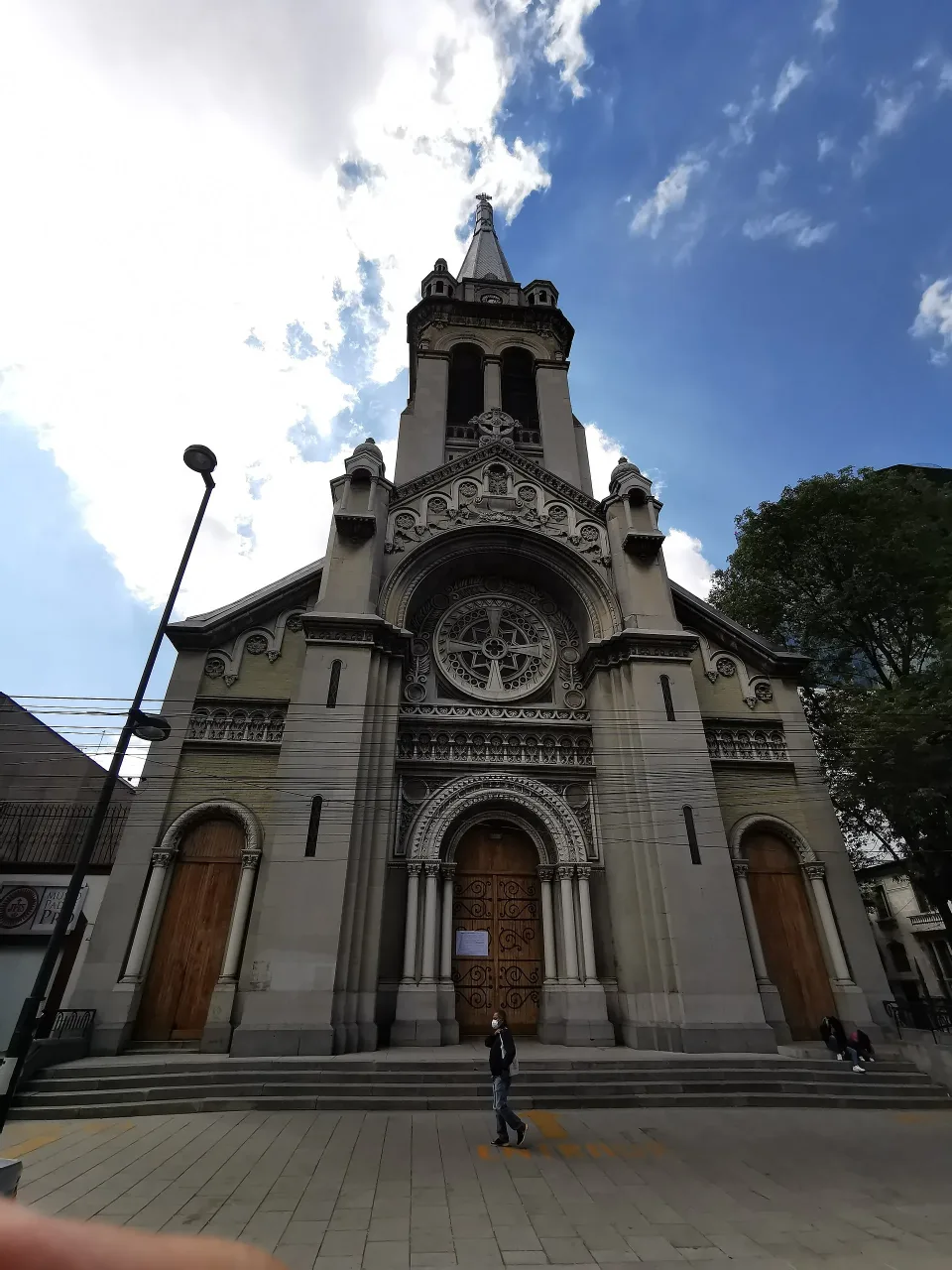
Templo de la Sagrada Familia

COLONIA ROMA NORTE

The Jesuit parish where Blessed Miguel Agustín Pro is buried. He was shot without trial in 1927 and beatified as a martyr in 1988; the museum beside the church keeps the clothes he died in.

Also notable in Mexico City

  • Templo de La Profesa church · Isabel la Católica, in the historic centre

Sacred map

Mexico City Sacred Places Map

6 Essential Places shown.

Select a marker to visit or save that place. The list above stays complete on its own.

Suggested pilgrimages

Paths we've walked, ready to make yours.

3 in Mexico City

Suggested order. Verify opening hours, transit, and walking conditions before you go.

Suggested pilgrimage Ready to save

A focused half day

3 to 4 hours · 2 STOPS

The Zócalo and the Dominican square five minutes north.

  1. 1 Metropolitan Cathedral
  2. 2 Templo de Santo Domingo

Saves the whole sequence to your journey. Shape it into a plan later.

Suggested order. Verify opening hours, transit, and walking conditions before you go.

How My Journey works →

Each entry named and sourced

Tombs, relics & sacred objects

This is not a relic city in the way Rome is. Its two strongest devotional objects are a modern martyr's remains and a venerated image whose following is only decades old.

Venerated at

TEMPLO DE LA SAGRADA FAMILIA, COLONIA ROMA

The remains of Blessed Miguel Agustín Pro

Documented burial of a beatified martyr; he has not been canonized

The Jesuit priest executed on 23 November 1927 is buried in this parish. The museum beside the church holds the clothing he was wearing when he was shot.

Visit Templo de la Sagrada Familia
Venerated at

TEMPLO DE SAN HIPóLITO

The venerated image of San Judas Tadeo

A modern and well documented devotion; no ancient tradition is claimed

Given the central place at the main altar in 1982, after a chapel to the saint was added in the 1950s. The devotion gathered around it is now among the largest recurring popular devotions in the Americas.

Visit Templo de San Hipólito y San Casiano
  • Documented burial of a beatified martyr; he has not been canonized The remains of Blessed Miguel Agustín Pro Templo de la Sagrada Familia, Colonia Roma
  • A modern and well documented devotion; no ancient tradition is claimed The venerated image of San Judas Tadeo Templo de San Hipólito

Visit plans

Plan your time in Mexico City

Plan 1

A focused half day

The Zócalo and the streets immediately north of it. The cathedral with the Sagrario beside it, then Santo Domingo five minutes away. Enough to understand the episcopal and mendicant city without rushing.

  1. cathedral-mexico-city
  2. santo-domingo-mexico-city

Plan 2

One full Catholic Mexico City day

The historic centre walked west: the cathedral and the Sagrario, Santo Domingo, San Francisco on Calle Madero, and San Hipólito at the far corner of the Alameda. This is the shape of the one-day guide.

  1. cathedral-mexico-city
  2. santo-domingo-mexico-city
  3. san-francisco-mexico-city
  4. san-hipolito-mexico-city

Plan 3

Two days, with Tepeyac

Give the first day to the historic centre and Colonia Roma, and the whole of the second to Tepeyac and the sanctuary of Guadalupe. That is the division most pilgrims want, and it keeps the shrine from being squeezed into an afternoon.

  1. cathedral-mexico-city
  2. san-hipolito-mexico-city
  3. sagrada-familia-mexico-city

Practical, not booking

Before you go

The city sits at about 2,240 metres. Visitors who have just flown in tire faster than they expect, and a first day of walking should be planned shorter than it looks on the map.

The four central churches are all free to enter. They keep parish hours rather than museum hours, and several close in the early afternoon; confirm on the day rather than trusting one posted schedule.

Churches close to sightseeing during Mass. The historic centre is busiest around midday and on Sunday.

The Padre Pro museum in Colonia Roma opens on weekday mornings only and is closed at weekends, which is the single most common way a visit to it fails.

San Hipólito on the twenty-eighth of the month, and above all on 28 October, means street closures, very large crowds and long queues. Plan around it or plan for it, but do not arrive expecting a normal visit.

Traffic in Mexico City is heavy and unpredictable. The metro is much faster than a taxi for the ride to Colonia Roma or north to Tepeyac.

Keep bags closed and valuables out of sight in dense crowds, particularly around the Zócalo and on devotion days at San Hipólito.

Shoulders and knees should be covered in all of these churches.

Connected saints

Saints woven into Mexico City

Mexico City's saints are unevenly placed. The one the whole country knows belongs to the hill at Tepeyac rather than to these streets; the one buried here has not been canonized.

Photo credits
  1. Mexico City; Mexico City city hero. Photo: ProtoplasmaKid, CC BY-SA 4.0, via Wikimedia Commons. Source. CC BY-SA 4.0.
  2. Plaza de Santo Domingo, five minutes north of the cathedral. The whole of the historic centre is walkable at this scale.; Three grounds, and a hill to the north. Photo: Mike Peel, CC BY-SA 4.0, via Wikimedia Commons. Source. CC BY-SA 4.0.
  3. Metropolitan Cathedral of Mexico City. Photo: ProtoplasmaKid, CC BY-SA 4.0, via Wikimedia Commons. Source. CC BY-SA 4.0.
  4. Templo de Santo Domingo. Photo: ProtoplasmaKid, CC BY-SA 3.0, via Wikimedia Commons. Source. CC BY-SA 3.0.
  5. Templo de San Francisco. Photo: Luis Alvaz, CC BY-SA 4.0, via Wikimedia Commons. Source. CC BY-SA 4.0.
  6. Templo de San Hipólito y San Casiano. Photo: José Luiz, CC BY-SA 4.0, via Wikimedia Commons. Source. CC BY-SA 4.0.
  7. Templo de la Sagrada Familia. Photo: Nanahuatl, CC BY-SA 4.0, via Wikimedia Commons. Source. CC BY-SA 4.0.