
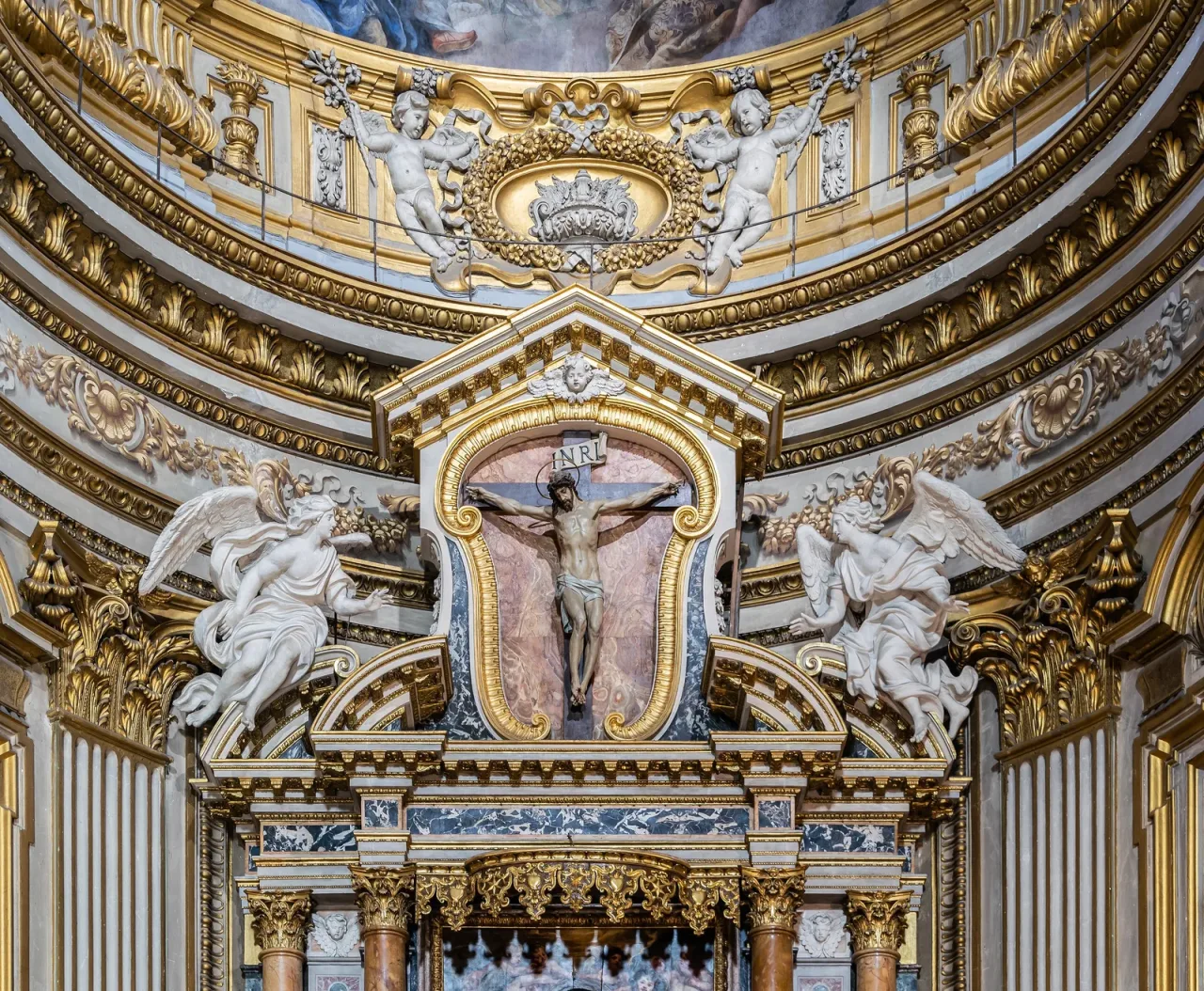
Santa Maria in Vallicella (Chiesa Nuova), Rome
Philip Neri's own church, where he is buried, and where the rooms he lived in are kept a staircase above the sacristy.
- Location
- Rome, Italy 41.8983° N · 12.4692° E
- Type
- Oratorian parish church A late sixteenth-century church begun in 1575, with a nave frescoed by Pietro da Cortona in the following century
- Dedication
- Saint Mary in Vallicella The tomb of Saint Philip Neri and the Madonna Vallicelliana
- Time Needed
- 1 hour to half a day
The Church They Built Around a Confessor
Philip Neri spent sixty years in Rome making the faith cheerful and hearing confessions until the day he died. In 1575 Gregory XIII approved his Congregation of the Oratory and gave it the small church of Santa Maria in Vallicella. The Oratorians pulled it down and built this one, which Romans still call the Chiesa Nuova, the New Church, four and a half centuries later. Philip is buried in a chapel here and his rooms are upstairs. Few saints can be visited so completely in one building.
A New Church for a New Kind of Community
Philip came to Rome around 1534 as a pilgrim and was ordained in 1551. The informal gatherings he held with his penitents at San Girolamo della Carita grew until they needed a room of their own, and out of them came the Oratory: priests living together in community without vows, which was a genuinely new thing.
In 1575 Gregory XIII approved the Congregation and assigned it Santa Maria in Vallicella. The medieval church was in poor condition, so it was demolished and a larger one begun that same year. Philip died in the early hours of 26 May 1595, at eighty, after a full day of hearing confessions, and was canonised in 1622 alongside Ignatius of Loyola.
Most of what a visitor notices was added after Philip died. Pietro da Cortona frescoed the nave, dome and apse between 1648 and 1666, and Rubens painted the sanctuary pictures in 1608 to frame the older image the church was really built around. The chapel of Saint Philip, to the left of the sanctuary, is the richest thing in the building, and what it houses is a body.
The nave, dome and apse frescoed by Pietro da Cortona between 1648 and 1666
Guido Reni's painting of the Virgin appearing to Saint Philip, kept in the upper chapel of the Camerette
The church begun in 1575 under the architect Matteo di Città di Castello
The Chiesa Nuova is a parish, not a monument, and the Oratorian Fathers serve it as they have since 1575. Confession has been the work of this house from the beginning and remains its most characteristic ministry, which is fitting for a saint who spent his last day hearing it. The Camerette above the sacristy are kept as a place of prayer rather than as a museum of a life.
What to notice.
-
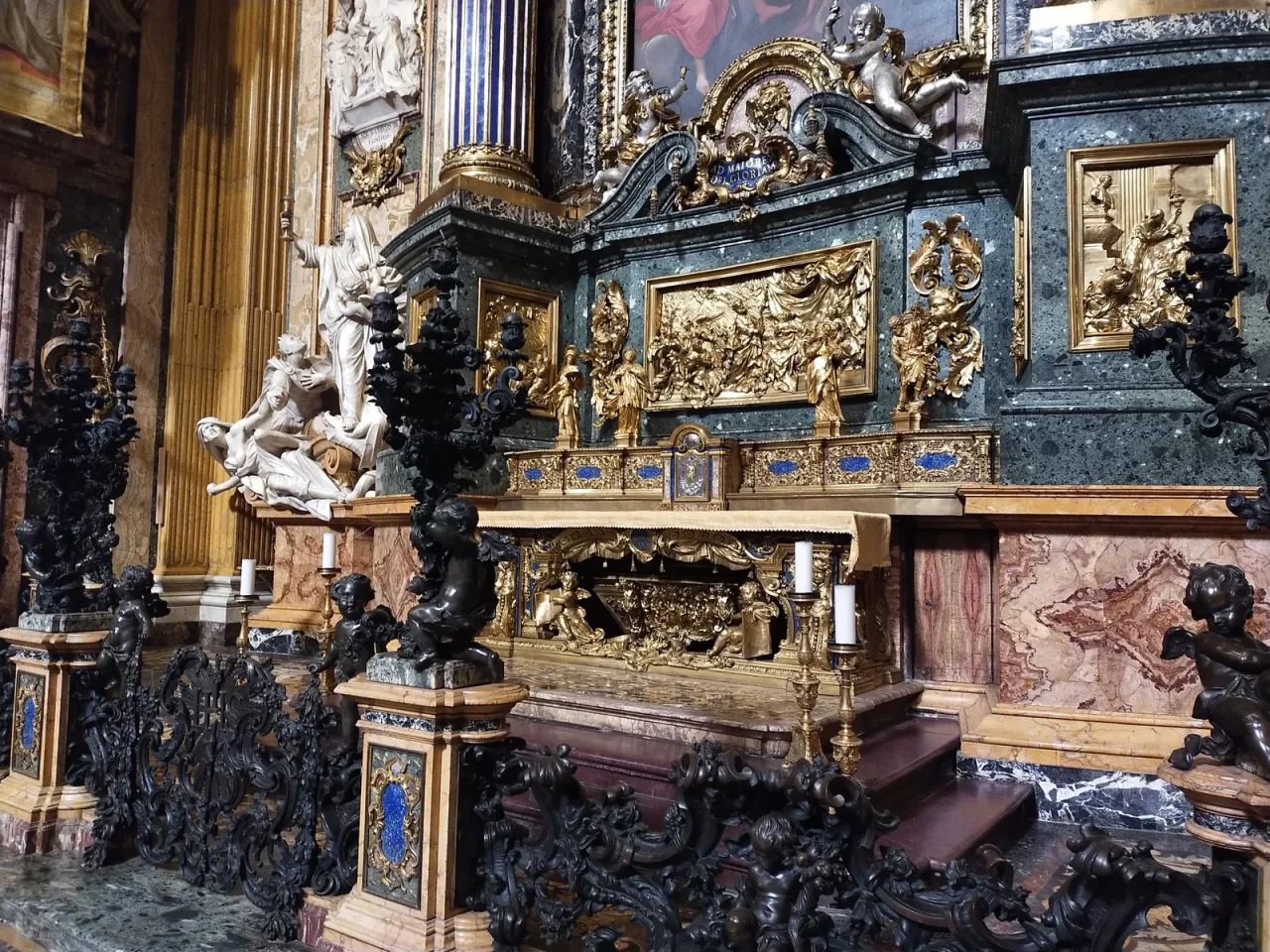
The chapel and tomb of Saint Philip Neri
To the left of the sanctuary, faced in marble, semi-precious stone and mother-of-pearl, and designed at the start of the seventeenth century. His body is venerated beneath the altar.
-
The Madonna Vallicelliana
A fourteenth-century fresco of the Virgin and Child with two angels, set above the high altar. It came into the church after being venerated for weeping, and it is older than the building raised around it.
-
The Camerette
Philip's rooms above the sacristy, including the Red Room with his relics and personal things, and the chapel holding Guido Reni's original painting of the Virgin appearing to him. Separate hours; ask.
-
Rubens in the sanctuary
Painted in 1608, with angels venerating the Madonna at the centre and saints on the flanking canvases. Made to frame the older image rather than to compete with it.
-
Pietro da Cortona's ceiling
The nave, dome and apse, frescoed between 1648 and 1666, with the sacristy decorated by him too. The Baroque case built around a sixteenth-century preaching church.
- Romans call this the Chiesa Nuova, the New Church, because in 1575 it was. The name has outlasted four and a half centuries and is now the ordinary way to refer to it.
- This is the Rome church of that name and has nothing to do with the Chiesa Nuova at Assisi, which is a different building in a different city, built over the house traditionally identified as the home of Saint Francis's family.
- Philip died on 26 May 1595 after a full day of confessions, and confession is still the characteristic work of this house. The continuity is not decorative.
- The Congregation of the Oratory was priests living in community without vows. Rome had not seen that before, and the church was built to house it.
- Roman tradition has long associated Philip with the walk between the seven great pilgrim churches, and his own decisive experience of prayer came in the catacombs of San Sebastiano, one of them.
How much time, and what to do with it.
-
The chapel and tomb of Saint Philip, the Madonna Vallicelliana over the high altar, and the Rubens paintings around it.
-
The same with the Camerette above the sacristy, if their hours line up, and time to sit in the nave under Pietro da Cortona's frescoes.
-
As above, with Mass or confession, and paired with the Gesù a short walk east for the rest of sixteenth-century Rome.
Pray at the tomb in the chapel to the left of the sanctuary. Then look up at the Madonna Vallicelliana, which is what the whole church was built to hold. Then ask for the Camerette, because the rooms are the closest you will get to the man.
How to visit well.
Go to the chapel on the left of the sanctuary first. Philip is buried beneath its altar, and the mother-of-pearl and marble around him are a seventeenth-century argument about what he was worth. Pray there before you look at anything.
Then look up at the high altar. Above it is the Madonna Vallicelliana, a fourteenth-century fresco of the Virgin and Child with two angels, moved into the church and set at its centre; Rubens's paintings of 1608 were made to hold it. The image is older than everything around it, which is the same pattern the Gesù shows a few streets away.
Finally, ask about the Camerette, the small rooms above the sacristy where Philip lived. The Red Room keeps relics and things that belonged to him, and the upper chapel holds Guido Reni's painting of the Virgin appearing to him. They have their own hours and are easy to miss, and they are the reason to come here rather than to any other church in Rome.
- A working Roman parish served by the Oratorian Fathers
- Prayer at the tomb of Saint Philip Neri in the chapel to the left of the sanctuary
- Devotion before the Madonna Vallicelliana above the high altar
- The feast of Saint Philip on 26 May, kept here with particular solemnity
What pilgrims come to venerate here.
Tomb and Burial
- Saint Philip Neri, who died in this house in the early hours of 26 May 1595 and is buried in the chapel built for him to the left of the sanctuary
Relics and Sacred Tradition
- The body of Saint Philip Neri, venerated beneath the altar of his chapel
- Relics and personal memories of Philip kept in the Red Room among the Camerette
Sacred Objects
- The Madonna Vallicelliana, a fourteenth-century fresco of the Virgin and Child with two angels, brought into the church and set above the high altar
- Rubens's paintings for the sanctuary, made in 1608, with the central image of angels venerating the Madonna
- The Camerette, the rooms above the sacristy where Philip lived, including the Red Room and his private chapel
How this place gathers the saints.

Within walking distance.
-
City hub
Rome
Where this church sits within the wider Catholic geography of Rome.
-
Mother church of the Society of Jesus
Church of the Gesù
Ignatius was Philip's friend, and the two were canonised together in 1622. Their churches are fifteen minutes apart and read well as one afternoon.
-
Papal archbasilica
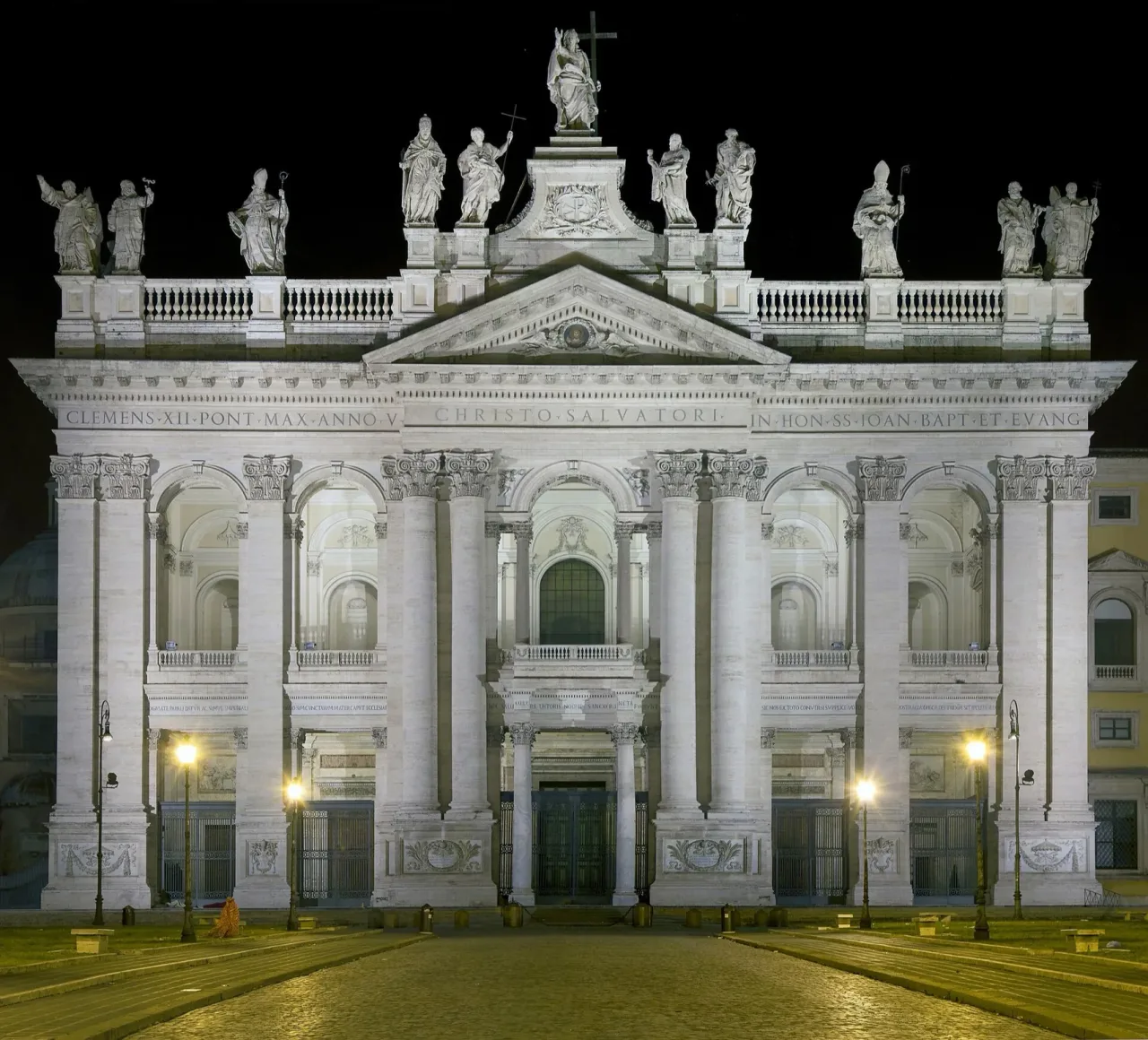
Basilica of Saint John Lateran
One of the seven great pilgrim churches of Rome, the walk between which Roman tradition has long associated with Philip.
Plan your visit.
Written against the Oratorian Congregation's own pages for the church and for the life of Saint Philip, with the Camerette and the sanctuary paintings corroborated by the Rome tourist board's heritage entry. The Congregation gives the 1575 foundation, the demolition of the medieval church and the date of Philip's death; its own pages do not describe the tomb, which is presented here from that corroborating institutional source. This is the Roman church of this name, not the Chiesa Nuova at Assisi. This is a working parish, and the Camerette keep their own hours; check the Oratory's timetable before travelling.
August 12, 2026
Photo credits
- Hero. Krzysztof Golik / Wikimedia Commons (CC BY-SA 4.0). Source. CC BY-SA 4.0.
- The nave Philip Neri knew. Livioandronico2013 / Wikimedia Commons. Source. CC BY-SA 4.0.