
Church of the Gesù, Rome
The Jesuits' own church in Rome, built for preaching, holding the tomb of the man who wrote the Spiritual Exercises.
- Location
- Rome, Italy 41.8958° N · 12.4796° E
- Type
- Mother church of the Society of Jesus A single wide nave with side chapels and no aisles, built so a congregation could hear a preacher, with a later Baroque interior
- Dedication
- The Most Holy Name of Jesus The tomb of Saint Ignatius and the Madonna della Strada
- Time Needed
- 1 hour to half a day
Where the Society of Jesus Keeps Its Founder
The Gesù is the mother church of the Society of Jesus, and the reason to come is not the ceiling. Ignatius is buried here, in the left transept, under an altar built a century after his death by a Jesuit brother. The image of the Madonna he prayed before is in a chapel of her own. The rooms where he lived and died are beside the church. This is the place where a way of praying that has shaped the whole Church can be traced back to one man's actual life.
A Church Built to Be Heard In
Ignatius arrived in Rome as a middle-aged former soldier with a few companions and a set of spiritual exercises he had worked out at Manresa. The Society of Jesus was approved in 1540. He spent his remaining years governing an order expanding faster than anyone had planned, and died in Rome in 1556.
The Gesu was built after his death as the order's principal church, and its plan is a statement of purpose: one wide nave, no aisles, chapels down the sides, so a large congregation could see and hear a preacher. The chapel that now holds him came later, after a public competition in 1695 won by Andrea Pozzo, himself a Jesuit brother.
The plan matters more than the decoration. A single broad nave with side chapels was an unusual choice, made because this order preached, and everything Baroque sits inside that earlier decision. The two transept chapels answer each other: Ignatius on the left, Francis Xavier on the right.
The rooms where Ignatius lived and died, preserved beside the church
The wide single nave, designed so that a congregation could hear preaching
The chapel of Saint Francis Xavier in the right transept, facing Ignatius across the church
The Gesù is a working church served by the Jesuits, with Mass through the day rather than a fixed visiting circuit. The tomb draws people who have made the Spiritual Exercises or been taught by the order, and they tend to stay a while. The Madonna della Strada chapel is quieter and is where most of the actual praying happens.
What to notice.
-
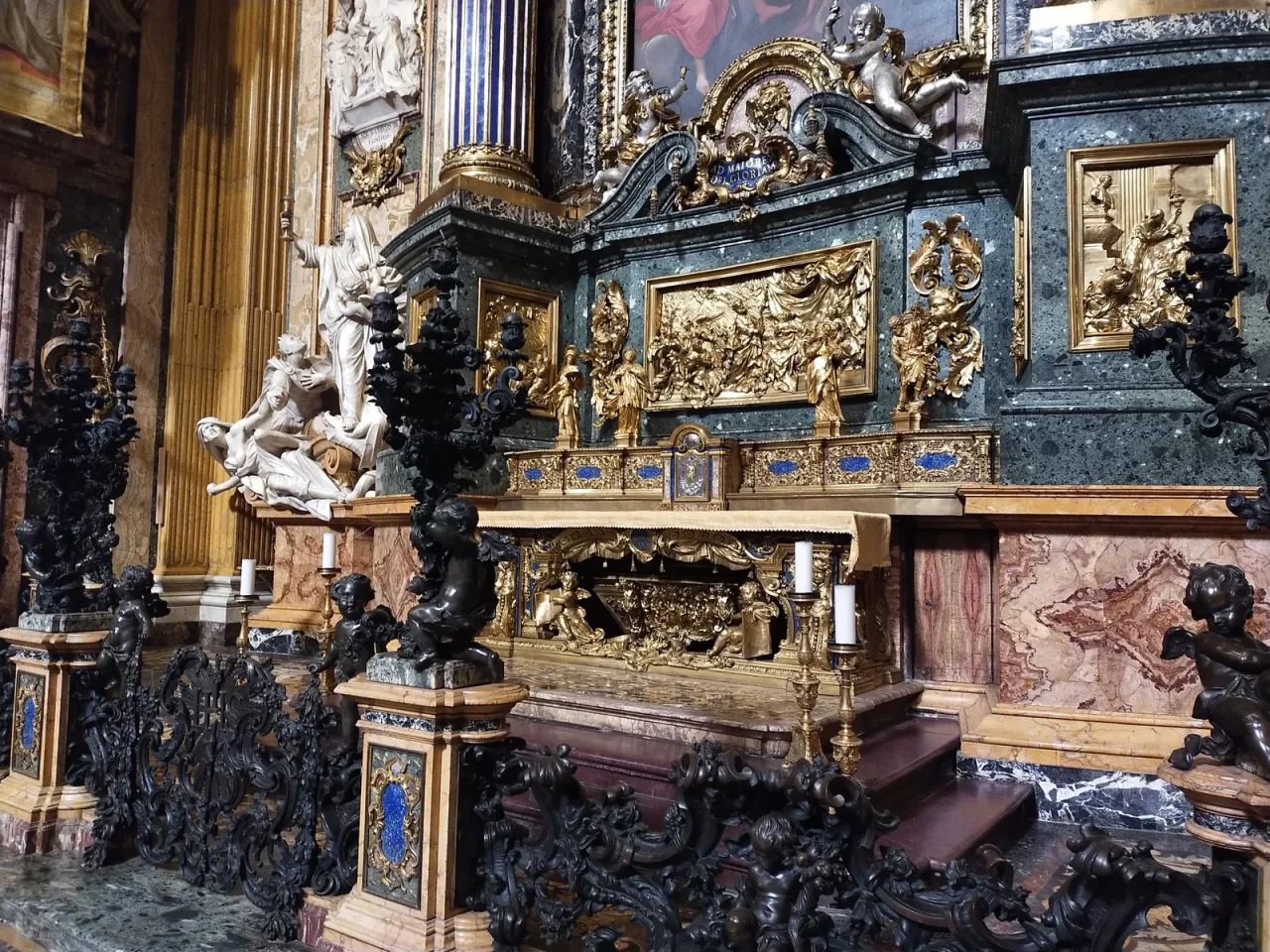
The tomb of Saint Ignatius
In the left transept, beneath the altar designed by the Jesuit brother Andrea Pozzo after he won the competition for it in 1695. The body is kept in a gilt bronze urn by Alessandro Algardi.
-
The Madonna della Strada
A fresco of the Virgin and Child of the thirteenth or fourteenth century, venerated as miraculous and particularly dear to Ignatius. It came from a small church that stood on what is now the piazza outside.
-
The rooms of Saint Ignatius
Beside the church, kept as they were, where he lived and governed the Society and where he died in 1556. A separate visit with its own hours, and the most personal thing in the complex.
-
The chapel of Saint Francis Xavier
In the right transept, opposite Ignatius. The two chapels were built to be read together: the man who stayed in Rome and the man he sent east.
-
The nave itself
Stand at the back before you go anywhere. One wide space, no aisles, chapels down the sides. The shape is the argument: this is a room built for a congregation to hear a preacher.
- The Gesù was built as the order's principal church after Ignatius died, and its plan was copied by Jesuit churches around the world. What looks like Roman Baroque is in part a template that travelled.
- Andrea Pozzo was a Jesuit brother, not an outside architect. The most theatrical altar in the church was designed by a member of the founder's own order for the founder's own tomb.
- The silver statue of Ignatius above the altar is not the original. Le Gros's statue was melted during the French occupation in 1798 and only the vestment survives; the rest is stucco, silvered in the early nineteenth century.
- The Madonna della Strada is small and medieval and predates everything around it. It is the only object in the church that Ignatius himself would recognise.
- Ignatius is one point in a wider Ignatian geography. Montserrat is where he laid down his sword, Manresa is where he wrote the Exercises, Loyola is where he was born and wounded, and Rome is where he died and is buried.
How much time, and what to do with it.
-
The nave, the tomb of Ignatius in the left transept, and the Madonna della Strada in her chapel.
-
The same with the chapel of Francis Xavier and the rooms of Saint Ignatius, if their hours line up with your visit.
-
As above, with Mass, and paired with Sant'Ignazio a few streets north for the rest of Ignatian Rome.
Stand at the back of the nave and see the shape of the room first. Pray at the tomb in the left transept. Then find the Madonna della Strada, which is small and easy to walk past and is the thing Ignatius himself prayed before.
How to visit well.
Go to the left transept first. The Chapel of Saint Ignatius is unmistakable, and beneath Pozzo's altar is Algardi's urn holding the body of the saint. Stay long enough to pray rather than to photograph the altar.
Then find the Madonna della Strada. She is in her own chapel, a small fresco of the Virgin and Child, perhaps two hands wide, dated between the later thirteenth and the earlier fourteenth century. It came from a small church that stood where the piazza outside now is, and Ignatius prayed before it. After Pozzo's altar the scale of it is the point.
Cross to the right transept for the chapel of Francis Xavier, then ask about the rooms of Saint Ignatius beside the church. They have their own hours and are a separate visit, and they are the closest thing in Rome to standing in the place where the order was governed and where its founder died.
- Mass through the day, morning and evening, and on Sundays and feasts
- Prayer at the tomb of Saint Ignatius in the left transept
- Devotion before the Madonna della Strada in her own chapel
- The rooms of Saint Ignatius, kept beside the church and open to visitors
What pilgrims come to venerate here.
Tomb and Burial
- Saint Ignatius of Loyola, founder of the Society of Jesus, whose body is kept in a gilt bronze urn by Alessandro Algardi beneath the altar of his chapel
Relics and Sacred Tradition
- The body of Saint Ignatius, in Algardi's urn under the altar of the Chapel of Saint Ignatius in the left transept
Sacred Objects
- The Madonna della Strada, a fresco of the Virgin and Child of the thirteenth or fourteenth century, venerated as miraculous and particularly dear to Saint Ignatius
- The altar of the Chapel of Saint Ignatius, designed by the Jesuit brother Andrea Pozzo, who won the public competition for it in 1695
- The silvered statue of Ignatius above the altar: the original by Pierre Le Gros was melted in 1798 and only the vestment survives, the rest remade in stucco and silvered in the early nineteenth century
How this place gathers the saints.
Within walking distance.
-
City hub
Rome
Where this church sits within the wider Catholic geography of Rome.
-
Benedictine abbey and Marian sanctuary
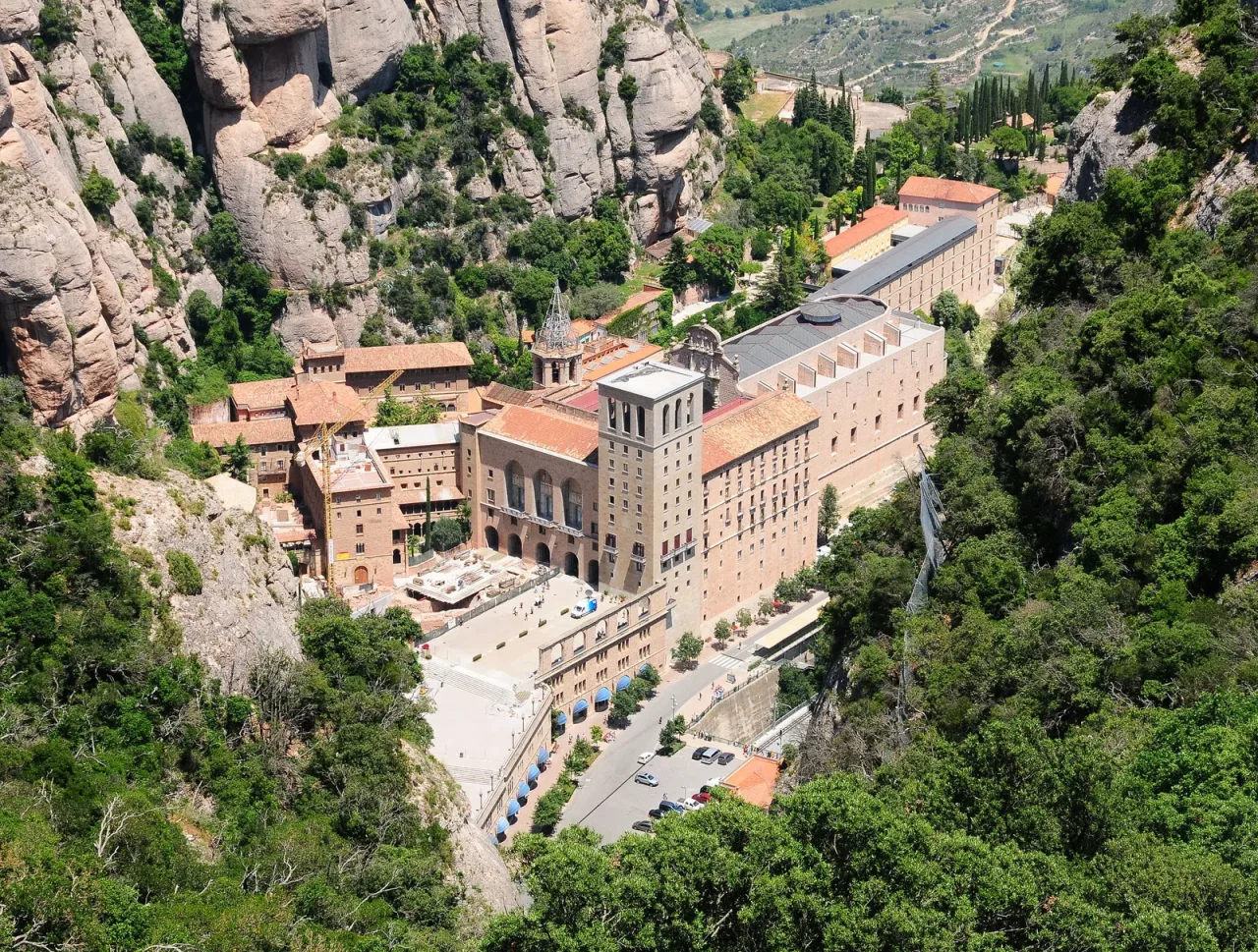
Montserrat
Where Ignatius kept vigil and left his sword before the Black Madonna in 1522. The Ignatian story begins on that mountain and ends at this tomb.
-
Papal archbasilica
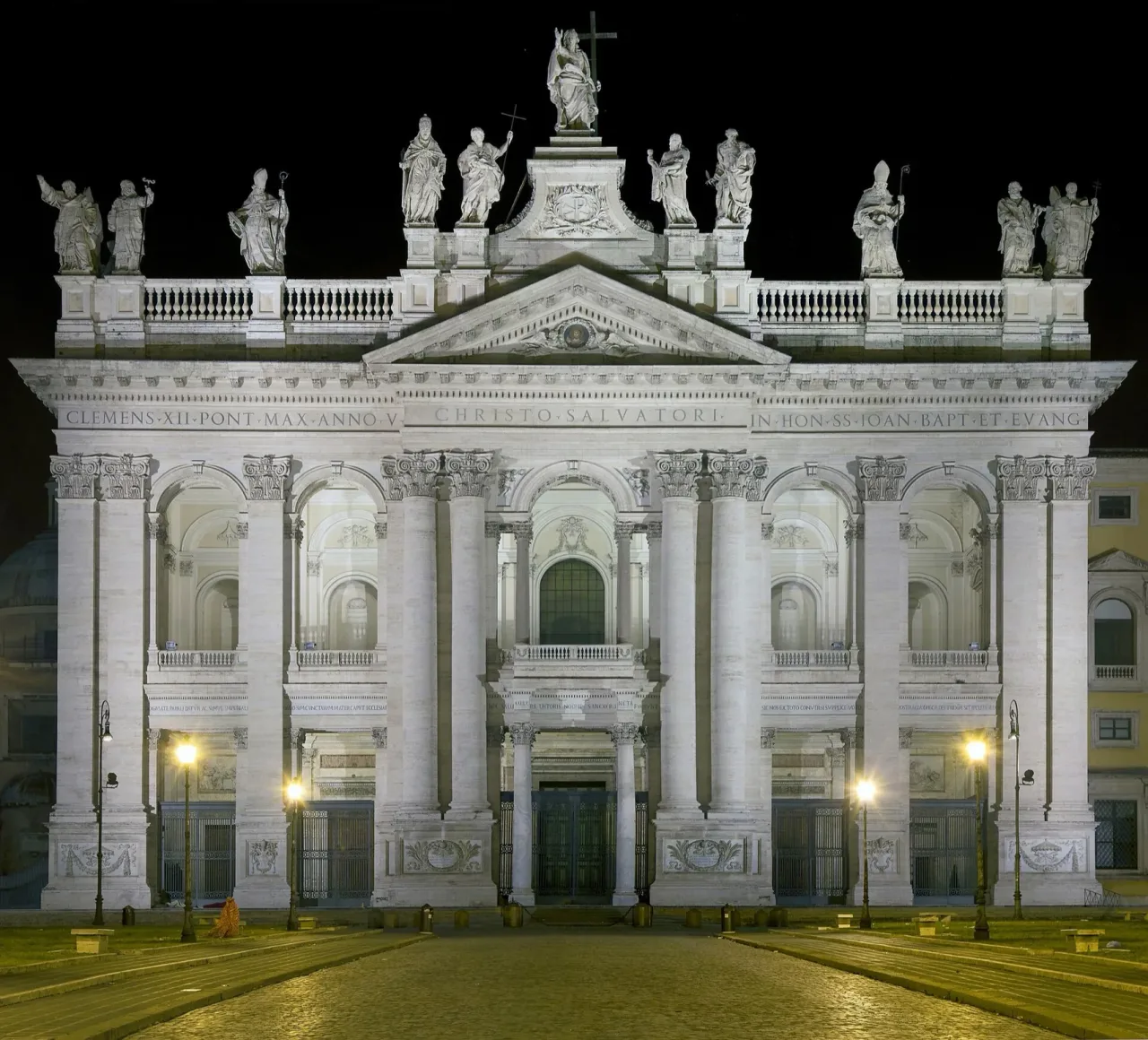
Basilica of Saint John Lateran
The cathedral of Rome, and part of any wider Roman pilgrimage built around the Seven Churches.
Plan your visit.
Written against the Jesuit rectory's own pages for the Chapel of Saint Ignatius and the Madonna della Strada. Mass times, church opening intervals and the hours of the rooms of Saint Ignatius are published separately and change; check the church's site before travelling.
August 12, 2026
Photo credits
- Hero. Luistxo / Wikimedia Commons (CC BY-SA 4.0). Source. CC BY-SA 4.0.
- The room the Baroque was built to make. Finoskov / Wikimedia Commons. Source. CC BY-SA 4.0.