
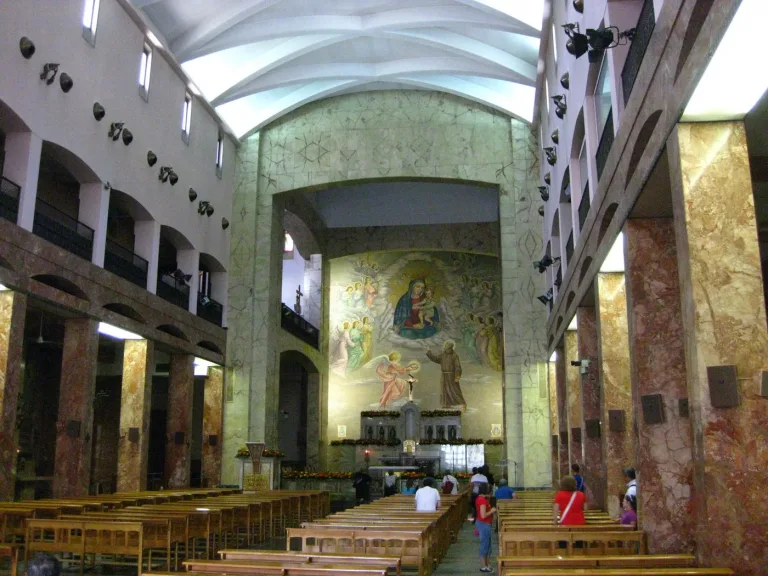
Sanctuary of Saint Pio, San Giovanni Rotondo
A sanctuary best understood through the sacrament of reconciliation and care for the sick: the friary where Padre Pio lived, the church where he prayed, and the tomb where pilgrims now ask his intercession.
- Location
- San Giovanni Rotondo, Italy 41.7065° N · 15.7277° E
- Type
- Catholic Capuchin sanctuary, friary, pilgrimage church, and saint tomb Historic friary church, mid-century sanctuary, and contemporary pilgrimage church
- Dedication
- Our Lady of Grace and Saint Pio of Pietrelcina
- Time Needed
- 2 hours to half a day
Begin where the friar actually lived
San Giovanni Rotondo can feel immense because Padre Pio's cult outgrew the small friary. The right order restores the person: begin with the older church, choir, and confessional ministry; continue to the tomb; then look toward the hospital he founded for suffering people.
A hidden friary becomes a world pilgrimage center
Padre Pio arrived at the Capuchin friary in 1916 and remained until his death in 1968. Pilgrims came for Mass and especially confession. The sanctuary expanded as crowds grew, and the newer Church of Saint Pio was built beside the historic complex. His body was exhumed in 2008 and later placed for public veneration in the crypt under Church and Capuchin oversight.
The complex is deliberately layered. The older friary spaces are modest and historically close to Padre Pio. The later churches answer the scale of modern pilgrimage. Do not let architectural size reverse their spiritual order.
The older church and friary should be visited before the monumental pilgrimage church
The tomb is documented; claims of complete incorruption are not made
The Casa Sollievo hospital keeps his practical work of mercy visible
The place is not principally a theater of extraordinary phenomena. Padre Pio's daily work was priestly: Mass, confession, spiritual direction, prayer, obedience, and the hospital built for the sick.
What to notice.
-
The older friary church
Begin with the scale of Padre Pio's actual life before entering the spaces built for later crowds.
-
The confessionals and choir
Let the sacramental ministry interpret the extraordinary claims, not the other way around.
-
The tomb
Pray for reconciliation, endurance, and the sick; avoid sensational claims about the body's condition.
-
Casa Sollievo della Sofferenza
See the hospital as part of his legacy of concrete mercy, not merely a nearby institution.
- The contrast between the modest friary and the immense later pilgrimage church
- How Confession gives the sanctuary its deepest continuity
- The hospital as a work of mercy that outlived its founder
How much time, and what to do with it.
-
Older church, friary context, tomb, and newer church.
-
The recommended rhythm, adding liturgy or Confession and Casa Sollievo.
Entering as a pilgrim, not a tourist.
Check the official sanctuary site for current Masses, Confession, access routes, group reservations, and seasonal notices. Large feast crowds can change every practical assumption.
- Daily Mass and Confession according to current sanctuary schedules
- Prayer at Saint Pio's tomb
- Major pilgrim observances around September 23
Let the sanctuary set the day's rhythm.
Liturgy, Confession, access, reservations, and pilgrim routes vary by season and feast. Verify them at the official source.
What pilgrims come to venerate here.
Tomb and Burial
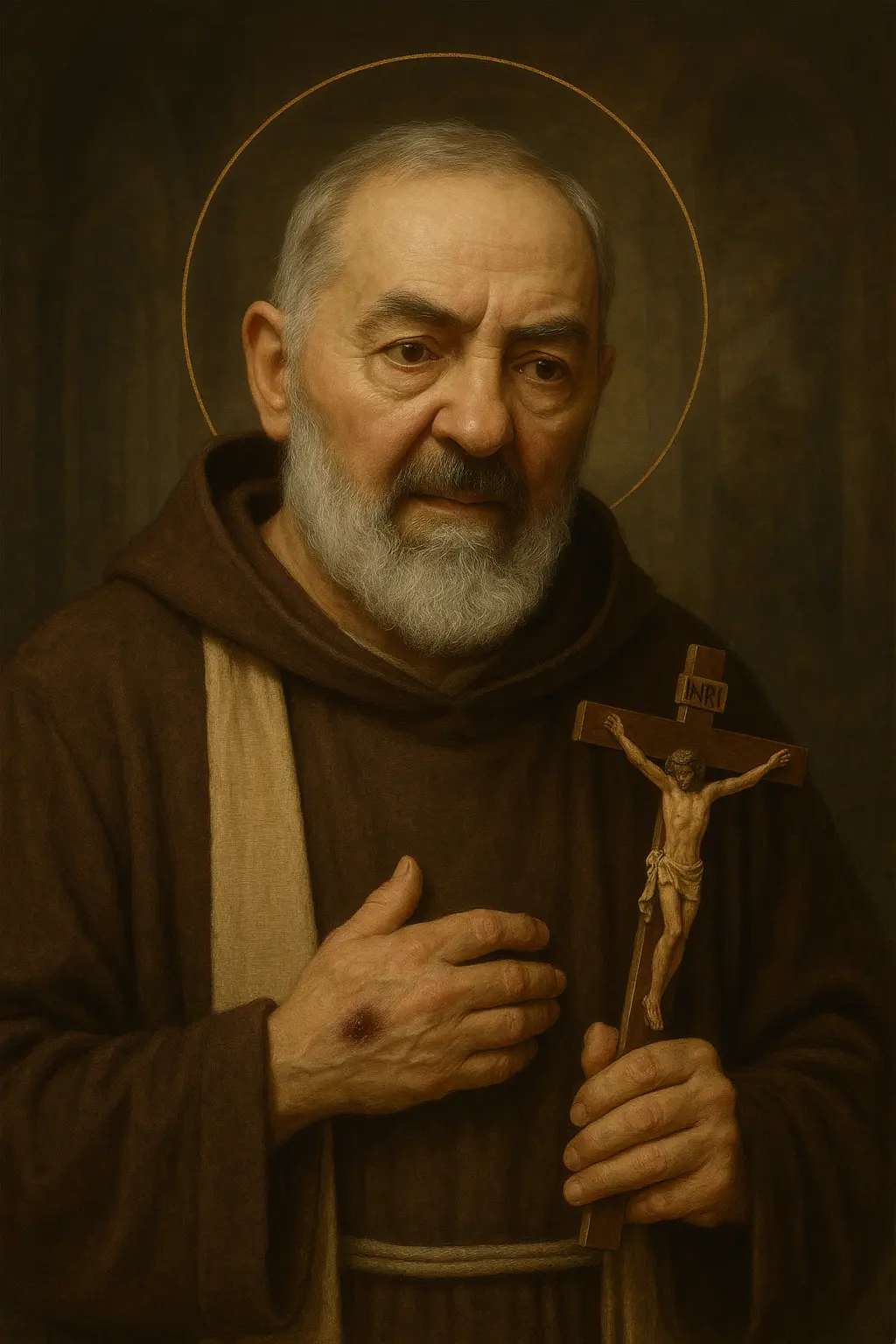
- Saint Pio of Pietrelcina
Relics and Sacred Tradition
- The body of Saint Pio, venerated in the crypt of the pilgrimage church under Capuchin custody
Sacred Objects
- The older friary church where Padre Pio celebrated Mass
- The choir and crucifix associated with the 1918 stigmata
- The confessionals associated with his long sacramental ministry
How this place gathers the saints.
Within walking distance.
-
Catholic hospital
Casa Sollievo della Sofferenza
The hospital Padre Pio founded, opened in 1956 as a practical work for those who suffer.
-
Birthplace pilgrimage
Pietrelcina
Padre Pio's family and early priestly landscape, best treated as a separate day or onward journey.
Plan around this place.
The page uses the Vatican for Padre Pio's biography and canonization, the Capuchin sanctuary for current pilgrim access, and Opera Padre Pio for the hospital. The tomb is documented; complete-incorruption claims are not made.
August 1, 2026
Photo credits
- Hero. Lino M / Wikimedia Commons (CC BY-SA 2.0). Source. CC BY-SA 2.0.