
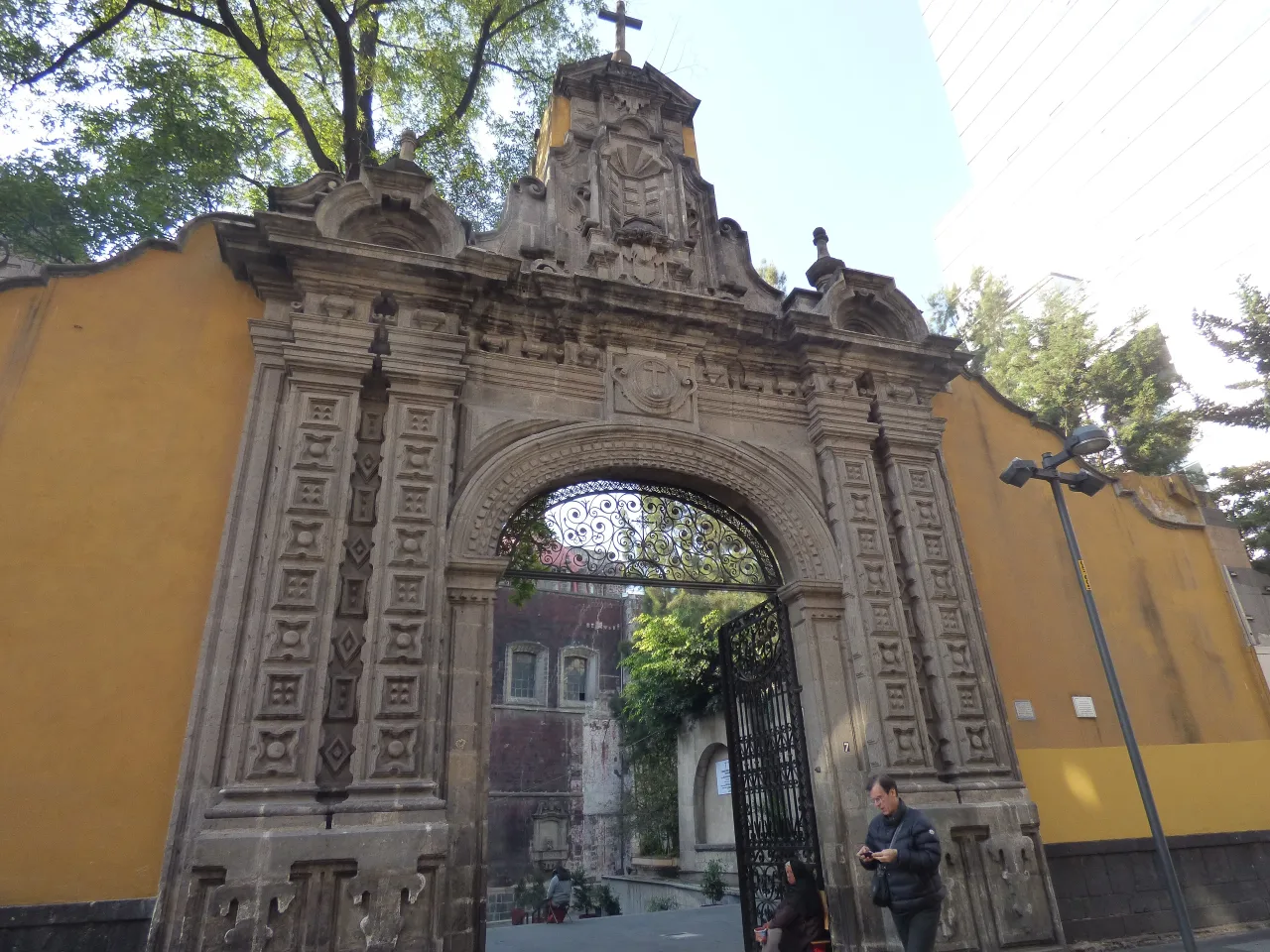
Templo de San Francisco
San Francisco was the first Franciscan convent in Mexico City and for three centuries the largest religious house in New Spain. Nineteenth-century suppression removed almost all of it. What remains is one church on Calle Madero, entered through a carved gateway and down into a sunken atrium.
- Location
- Mexico City, Mexico 19.4344° N · 99.1394° W
- Type
- Church Largely rebuilt in 1716, with an eighteenth-century churrigueresque portal on Calle Madero
- Dedication
- Saint Francis of Assisi
- Time Needed
- 30 minutes to 1 hour
The First Franciscan House
This is the best short lesson in the historic centre on what the city has lost and how far it has sunk. The Franciscans were the first order sent to New Spain, and their house here was the largest in the territory. Today you step off a busy shopping street, through an eighteenth-century carved gate, and down into an atrium that sits well below the pavement. The church itself is fine; the point is the gap between the founding and what survives.
From Thirty Thousand Square Metres to One Church
The Franciscans were the first of the mendicant orders sent to the newly conquered territory, and a group of twelve friars under Martín de Valencia arrived in 1524 to begin the mission. Land on the western edge of the rebuilt city was granted for their house, and the convent that grew there became the largest in New Spain, still covering more than thirty thousand square metres in the nineteenth century. It held cloisters, chapels, schools and gardens, and it was the base from which the order worked across central Mexico. That work was carried out inside a colonial system of conquest and forced labour, and honest accounts of it hold both the mission and its setting together. The present church is largely the rebuilding of 1716, and the carved portal on Calle Madero dates from later in that century. In the nineteenth century the complex was suppressed, broken up and partly demolished, streets were cut through the grounds, and the church itself passed out of Catholic use for a period before being restored to it. Calle Madero now runs across ground that was once inside the walls.
What to notice.
-
The Balvanera portal
The churrigueresque gateway on Calle Madero, carved in the eighteenth century and now the entrance to the atrium. It is the finest thing about the exterior and it is set into an otherwise plain wall.
-
The sunken atrium
The courtyard sits noticeably below the modern street. Mexico City has subsided several metres since the lake was drained, and here you can walk down into the difference.
-
The main retablo
The high altarpiece, associated with Jerónimo Antonio Gil, reconstructed in the twentieth century after the church's long period of dispossession.
- This was the first and largest Franciscan house in New Spain, founded on land granted in the 1520s, and in the nineteenth century it still covered more than thirty thousand square metres. What you can visit now is one church.
- The house received the group of twelve Franciscan friars who arrived in 1524 under Martín de Valencia, sent to begin the mission to the peoples of the newly conquered territory. That mission was carried out alongside conquest and forced labour, and its history is not a simple one.
- The present church is largely the rebuilding of 1716. Almost nothing aboveground is as old as the foundation.
- In the nineteenth century the complex was broken up, sold and partly demolished, and for a time the church passed out of Catholic hands entirely before being returned.
How much time, and what to do with it.
-
The gate and the sunken atrium
3 ordered stopsA short stop that reads the church through what is missing around it.
- The carved gateway on Calle Madero
- The sunken atrium below street level
- The church and its main retablo
What pilgrims come to venerate here.
Tomb and Burial
- This is not a burial church of saints.
Relics and Sacred Tradition
- No major relic is presented here as a reason for pilgrimage.
Sacred Objects
- The churrigueresque Balvanera portal on Calle Madero.
- The main retablo associated with Jerónimo Antonio Gil.
On the same street, and ten minutes north
-
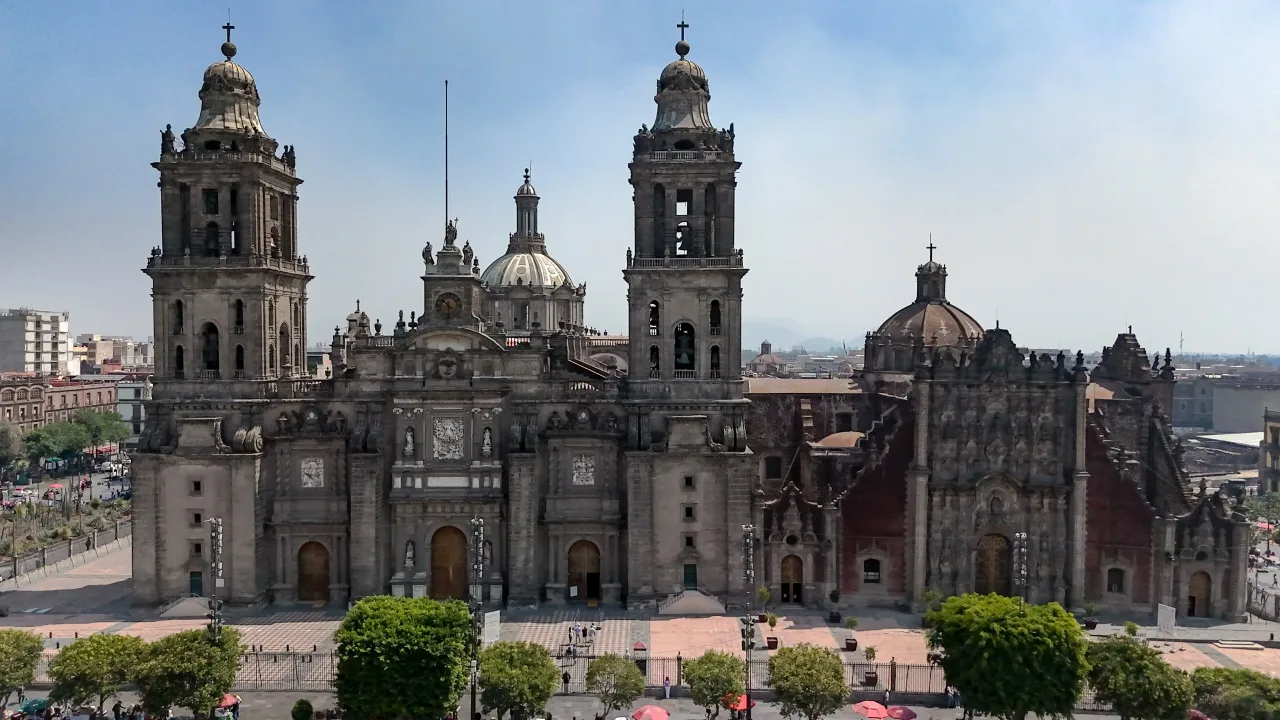
Cathedral
Metropolitan Cathedral
Ten minutes east along Calle Madero, at the end of the street.
-
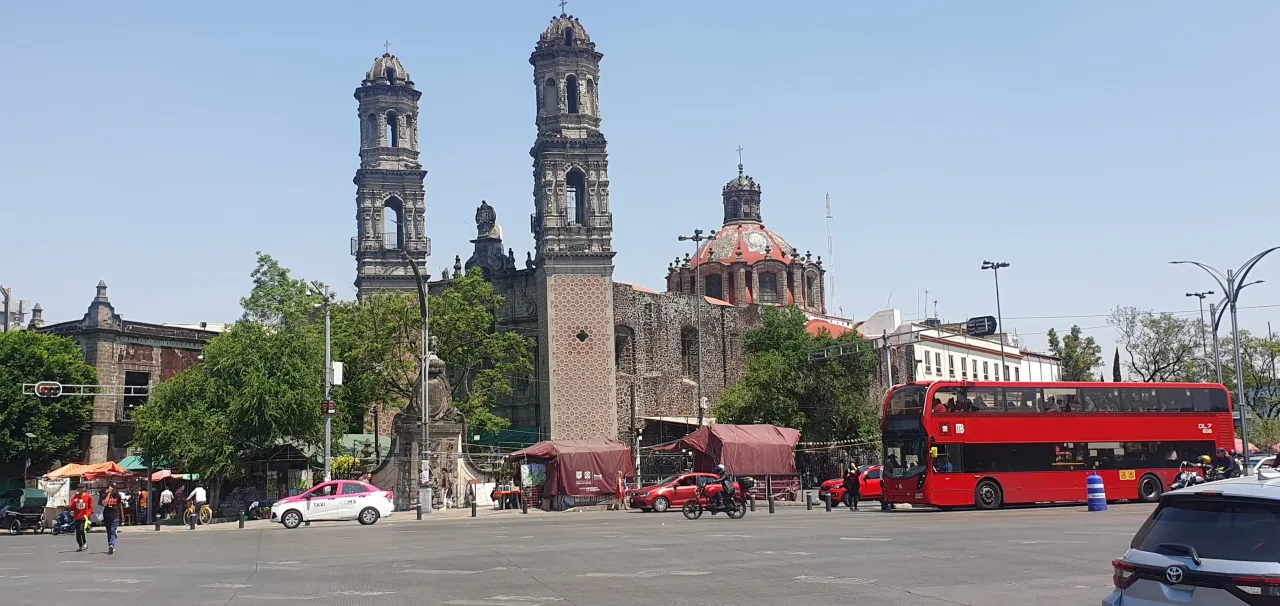
Church
Templo de San Hipólito
Fifteen minutes north-west along the edge of the Alameda, the city's great popular devotional church.
Plan around this place.
Edited from published architectural and institutional histories of the Franciscan house, the Archdiocese of Mexico, and Eternal Roam destination records. The scale of the lost convent is given from documented accounts rather than estimated. Confirm opening and Mass times before visiting.
August 4, 2026
Photo credits
- Hero. Photo: Luis Alvaz, CC BY-SA 4.0, via Wikimedia Commons. Source. CC BY-SA 4.0.