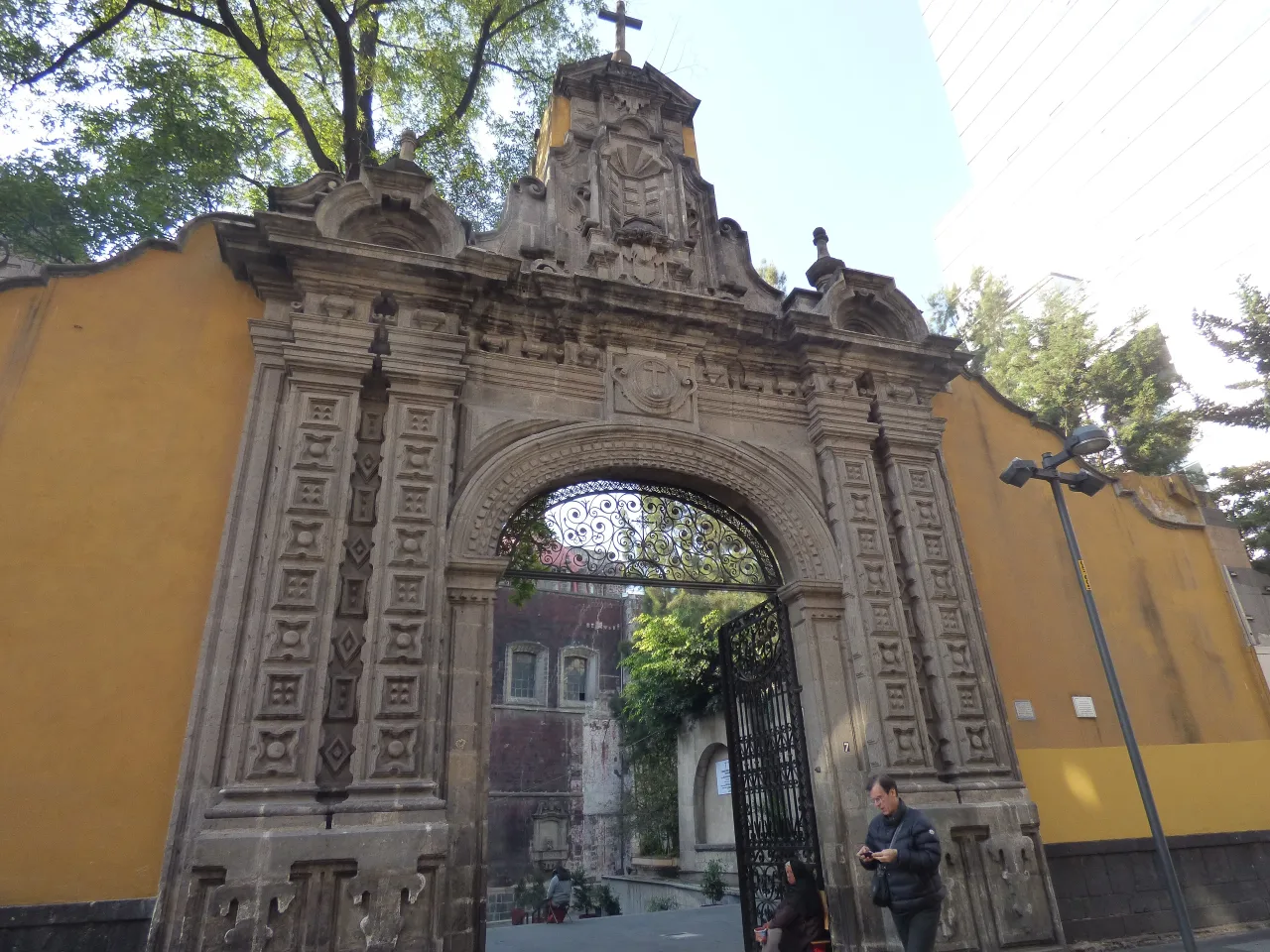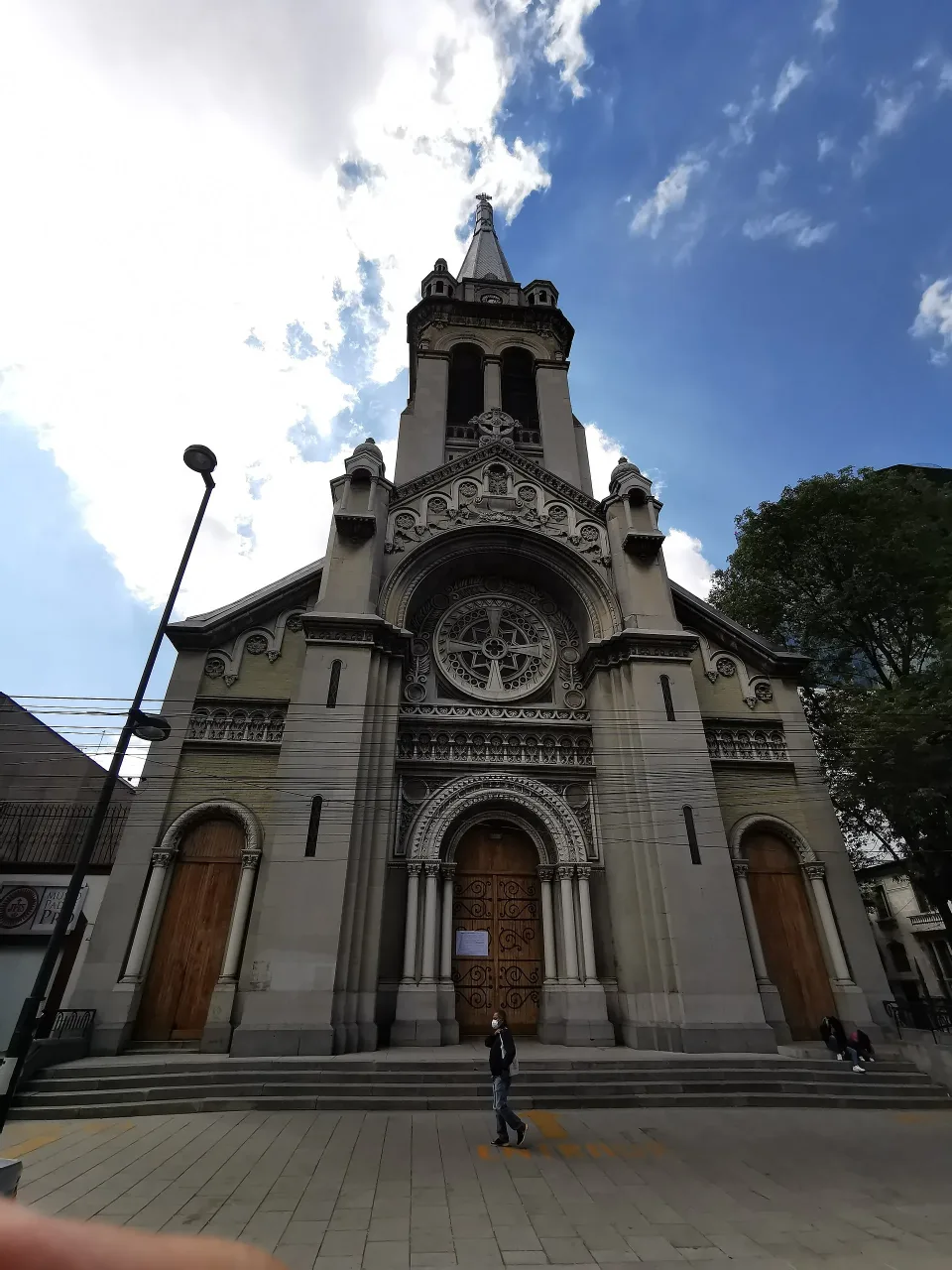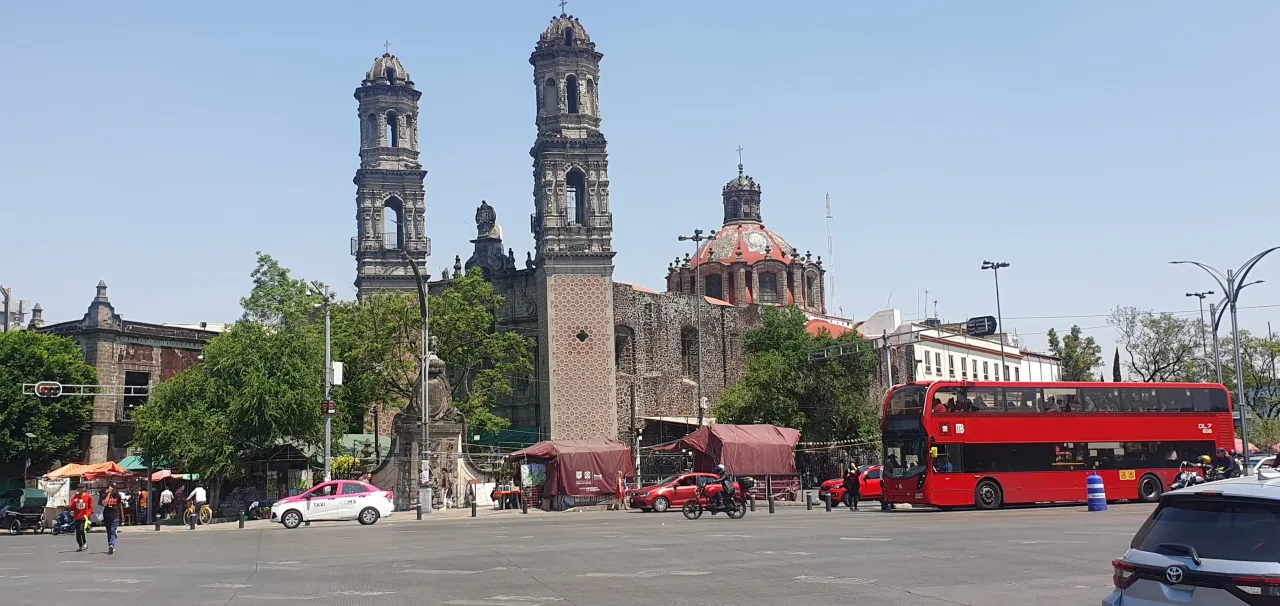
The venerated image of San Judas Tadeo
Devotional imageYes, at the main altar
Archdiocese of Mexico; published histories of the churchSan Hipólito stands on the corner of Paseo de la Reforma and Avenida Hidalgo. Its foundation belongs to the aftermath of the conquest, but it is known now as the centre of devotion to San Judas Tadeo in Mexico, drawing very large crowds on the twenty-eighth of every month.
If you want to see how Catholicism is actually practised in this city, come here rather than to a finer building. On the twenty-eighth of every month the streets around San Hipólito fill with people, most of them young, carrying statues of Saint Jude to be blessed and queueing for hours to reach his image. It is the second great popular devotion of Mexico City after Guadalupe, and it is entirely modern.
The church's origin lies in 1521. After the fall of Tenochtitlan a hermitage was founded near this spot in memory of the Spanish soldiers killed during the forced retreat from the city the previous year, an event that fell on the feast of Saint Hippolytus. For most of the colonial period the day was marked here with a civic procession. That foundation is a conquest memorial, built on ground that had belonged to the Mexica city, and it should be named as such. The present church is a seventeenth and eighteenth-century building on the same site. Its modern life began much later and quite separately: a chapel dedicated to Saint Jude Thaddaeus was added in the 1950s, his image was given the central place at the main altar in 1982, and devotion to him grew from there into one of the largest recurring gatherings in the Americas. Saint Jude is invoked in Catholic tradition as the patron of desperate and lost causes, and the people who come here on the twenty-eighth are, very often, people in difficulty.
The focus of the devotion, given the central place at the main altar since 1982. A chapel dedicated to the saint was added in the 1950s, and the devotion has grown steadily since.
Devotees come in very large numbers on the twenty-eighth, and above all on 28 October, the feast of Saint Jude. The crowds close the surrounding streets and Masses run through the day. It is one of the largest recurring popular devotions in the Americas.
The seventeenth and eighteenth-century building is a good example of the centre's dark volcanic stone, with a tiled dome that reads clearly from the Alameda side.
The building, the image and the history, on a day when you can actually move around inside.
Come for the devotion rather than the building. Expect queues, closed streets and a long slow procession of people towards the image.
Yes, at the main altar
Archdiocese of Mexico; published histories of the churchSource note Traditional attributions are presented as tradition, with documentation named where it exists.
Fifteen minutes south-east along the Alameda and into Calle Madero.
A short ride south to Colonia Roma, where Blessed Miguel Pro is buried.
Edited from the Archdiocese of Mexico, published histories of the church and its devotion, and Eternal Roam destination records. The sixteenth-century foundation and the modern devotion are described separately, and the crowd conditions on the twenty-eighth are given as they are reported rather than as a schedule. Confirm current arrangements before visiting on a devotion day.
August 4, 2026
Use this for corrections, broken links, missing places, and planning ideas.