Relics venerated as the manger of Bethlehem
Relic of traditionYes, at the Confessio beneath the high altar
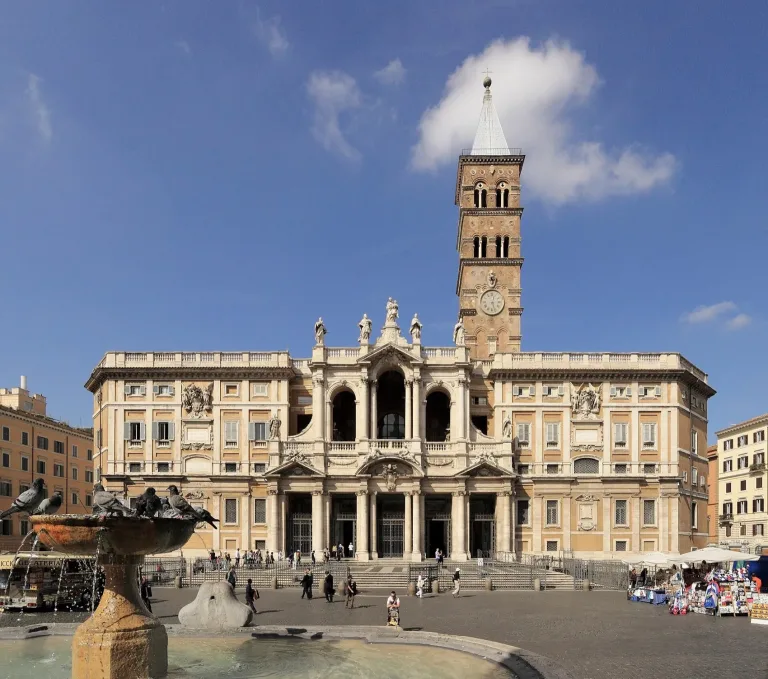
Basilica traditionThe great Marian basilica of Rome on the Esquiline Hill: a papal basilica that keeps its fifth-century fabric and mosaics, the venerated Salus Populi Romani, and the relics traditionally honoured as the manger of Bethlehem.
Come here for the principal Marian church of Rome and one of its four papal basilicas. Santa Maria Maggiore keeps the plan and the mosaics of the fifth-century basilica raised in the years after the Council of Ephesus proclaimed Mary the Mother of God. In the Confessio beneath the high altar pilgrims venerate the relics traditionally honoured as the manger of Bethlehem, and in the Pauline Chapel they pray before the Salus Populi Romani, among the most beloved Marian images of the city. It is best entered as a place of prayer before it is read as a museum.
According to long-standing Roman tradition, the Blessed Virgin marked the Esquiline Hill with snow in August. The basilica that stands today was raised by Pope Sixtus III between 432 and 440, in the years after the Council of Ephesus proclaimed Mary the Mother of God. Its nave mosaics and triumphal arch belong to that age. Later centuries added the campanile, apse mosaic, gilded ceiling, Sistine and Pauline chapels, Fuga's facade, and in 2025 the tomb of Pope Francis near the Salus Populi Romani.
The basilica keeps the form of an Early Christian church more clearly than the other major papal basilicas. The long nave, colonnade, fifth-century mosaics, and triumphal arch form the ancient core. Around it the medieval, Renaissance, and Baroque layers gather without erasing the original Marian witness.
Santa Maria Maggiore is Rome's principal Marian basilica and one of the four major papal basilicas.
Its fifth-century nave and mosaics belong to the age after the Council of Ephesus proclaimed Mary the Mother of God.
The Confessio, Salus Populi Romani, and later papal tombs keep the basilica a living Marian shrine, not only an Early Christian monument.
What gives the basilica its weight is the place it holds in the Marian devotion of Rome. It was raised as the city's witness to the Mother of God in the age of Ephesus, and it has remained the great Marian church of the city ever since. The Confessio with the relics of the Crib makes it a goal of Christmas pilgrimage, so that it has been called the Bethlehem of the West. The Salus Populi Romani in the Pauline Chapel has been carried through the streets in times of plague and danger and is still the image before which Roman Christians bring the needs of the city. A Catholic visit reads the basilica inward, from the mosaics of the nave to the relics of the Crib and the icon, and gives time to prayer before it gives time to art.
Descend to the Confessio beneath the high altar, where the kneeling statue of Pope Pius IX faces the reliquary venerated by long-standing tradition as fragments of the manger of Bethlehem. This is the devotional centre of the basilica.
In the Pauline Chapel, pray before the icon of the Mother and Child long venerated in Rome and traditionally attributed to Saint Luke. The chapel is reserved for prayer; keep silence.
Look up to the mosaic panels above the nave colonnade and to the triumphal arch at the head of the nave. These belong to the basilica of Sixtus III and are among the oldest Christian mosaics in Rome.
Signed by Jacopo Torriti in 1296, the apse mosaic shows Christ crowning his Mother within a starred medallion on a field of gold. Read it as the summit of the basilica's Marian witness.
In the Sistine Chapel of Sixtus V, across the right aisle, the body of the pope of the Council of Trent is venerated in a reliquary beneath the altar.
The nave under the fifth-century mosaics and the coffered ceiling, the triumphal arch and apse mosaic, the Confessio with the relics of the Crib, and the Salus Populi Romani in the Pauline Chapel.
As above, with an unhurried turn through the Sistine Chapel of Sixtus V and the tomb of Pope Saint Pius V, the Cosmatesque pavement, and time for prayer before the icon.
Pair the basilica with the nearby mosaic churches of Santa Prassede and Santa Pudenziana, or read it with Saint John Lateran along the spine of the papal basilicas.
Santa Maria Maggiore rewards a prayerful visit more than a hurried one. Enter from the piazza and walk the nave under the fifth-century mosaics and the gilded ceiling toward the triumphal arch and the apse. Pause at the Confessio before the relics traditionally venerated as the manger of Bethlehem, and pray in the Pauline Chapel before the Salus Populi Romani. Visit the Sistine Chapel and the tomb of Pope Saint Pius V before you leave. If a Mass is offered while you are there, join it; the basilica is first of all a place of Marian prayer.
Entry to the basilica is free for prayer year-round, and pilgrim access to the Confessio and the Pauline Chapel is open during normal opening hours. The upper loggia with the mosaics of Filippo Rusuti, the Bernini stair, and the basilica museum are ticketed and visited with a guide. Confirm current opening days, ticket arrangements, Mass times, and liturgical schedule on the official basilica site before planning around the visit. The basilica is a short walk from Termini station and combines naturally with the nearby churches of Santa Prassede and Santa Pudenziana.
Yes, at the Confessio beneath the high altar
Basilica traditionYes, in the Pauline Chapel
Basilica traditionVisible along the nave and at the head of the nave
Basilica documentationVisible in the apse above the high altar
Basilica documentationYes, in the Sistine Chapel
Basilica documentationSource note Traditional attributions are presented as tradition, with documentation named where it exists.
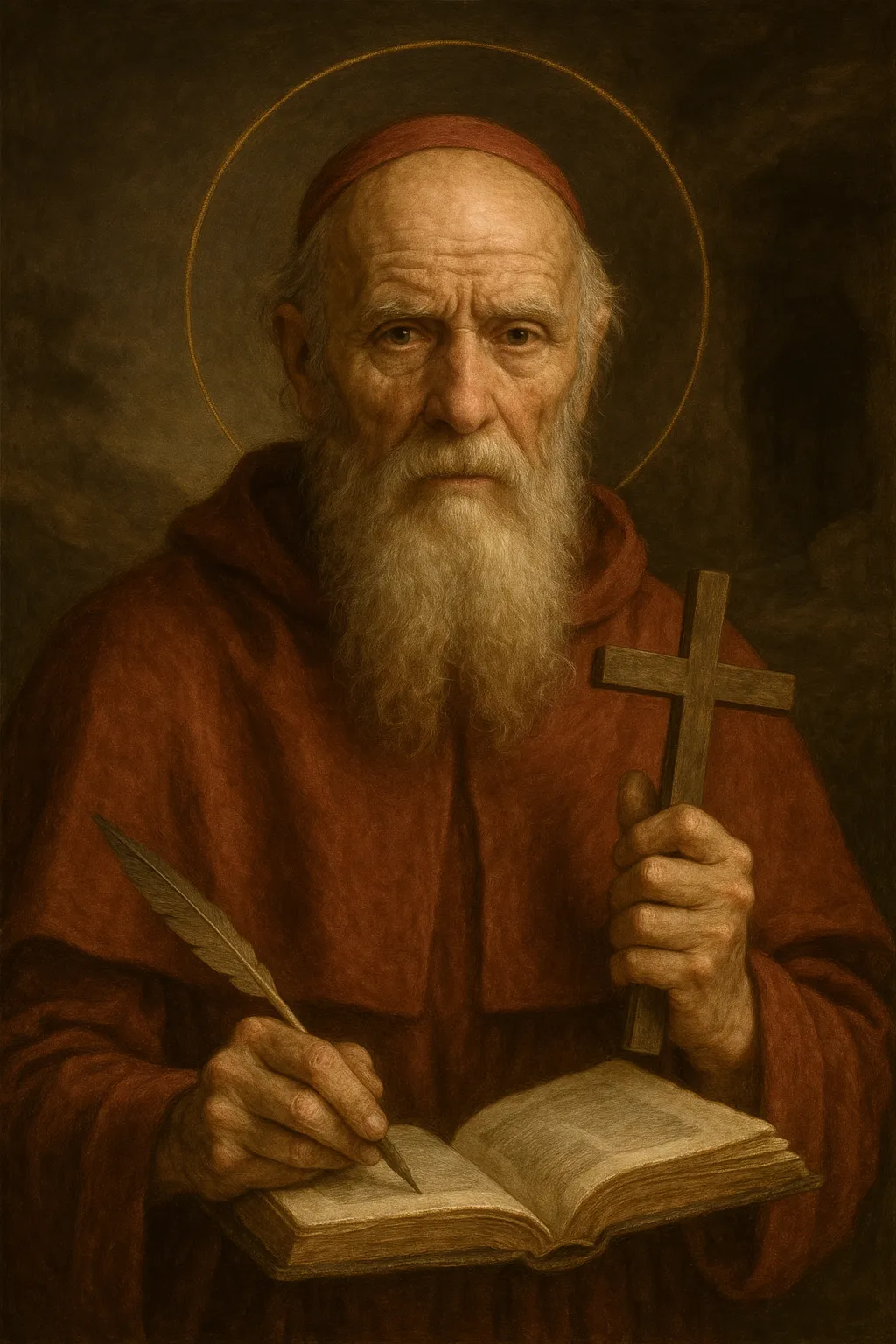
These figures are connected to the basilica in different ways. The basilica is dedicated to the Blessed Virgin Mary and was raised as Rome's witness to her divine motherhood. Pope Saint Pius V is buried here, relics traditionally venerated as those of Saint Jerome are honoured near the relics of the Crib, and the basilica preserves the memory of the popes who built and enriched it.
A short walk down the Esquiline, the ninth-century basilica of Santa Prassede preserves some of the most luminous Byzantine-style mosaics in Rome in the Chapel of Saint Zeno.
One of the oldest churches in Rome, preserving a fourth-century apse mosaic of Christ enthroned among the Apostles. A natural companion to Santa Maria Maggiore for pilgrims reading the early mosaic churches of the Esquiline.
Rome's great Marian basilica belongs to the pilgrimage of the four papal basilicas that gather the memory of the city.
Move south toward the Lateran, the cathedral of the Bishop of Rome and the mother church of the churches of the city.
The four papal basilicas hold Rome's apostolic, cathedral, and Marian memory in a single pilgrimage through the city.
Connections are curated from Eternal Roam's saint, place, relic, route, and Rome records. Traditional attributions are identified in context.
Santa Maria Maggiore is a papal basilica administered by the Holy See and is the great Marian basilica of Rome. Entry is free for prayer; the loggia, Bernini stair, and museum are ticketed. The relics venerated in the Confessio are honoured by long-standing tradition as fragments of the manger of Bethlehem, and the icon known as the Salus Populi Romani is attributed by tradition to Saint Luke while the surviving panel is generally dated by scholars to the early medieval period; both are presented here as objects of veneration, not as verified historical artefacts. The tradition of the snowfall on the Esquiline is given as a long-standing devotional memory, not as documented history; the present basilica is the work of Pope Sixtus III. Pope Francis was buried in the basilica in 2025.
July 9, 2026
Use this for corrections, broken links, missing places, and planning ideas.