
Tomb and Relics of St. Cecilia
The tomb of Cecilia beneath the high altar of the Trastevere basilica, where her relics were brought by Pope Paschal I in the ninth century. The famous sculpture above it is Stefano Maderno's work of 1600, not the body, and this page keeps the two apart.
Why pilgrims come
The most famous body in Rome is a piece of marble.
Under the high altar of a quiet Trastevere basilica lies a white figure of a young woman on her side, turned away, her face toward the ground, a wound at her neck. Visitors lower their voices in front of it, and a great many of them leave believing they have looked at Cecilia's body. They have looked at a sculpture. Stefano Maderno carved it in 1600, when he was about twenty three, and he was commissioned to do it precisely because the body itself was going back into the ground.
What happened is worth telling accurately, because the accurate version is not less remarkable. Cecilia was buried in the catacombs of San Callisto. In the early ninth century Pope Paschal I rebuilt this basilica over the ground tradition gave as her house and brought her relics here, with those of Valerian and his companions, to rest beneath the altar. Then in October 1599, during a restoration before the Jubilee year, Cardinal Sfondrati had the tomb opened. Antonio Bosio, the scholar who first mapped subterranean Rome, was standing there. He recorded a cypress casket preserved inside the marble, and bodies that appeared to those present to be incorrupt. Sfondrati set Maderno to record the sight in stone, and the tomb was closed again.
So the sculpture is not a portrait of a saint. It is a witness statement, in marble, about one morning in 1599. That is a stranger and better thing to stand in front of.
What is venerated here
Four things sit within a few metres of each other here and are constantly confused. The distinction between the second and the third is the reason this page exists.
Cecilia's relics, brought here from the catacombs of San Callisto by Pope Paschal I in the ninth century and resting beneath the high altar with those of Valerian and his companions. The tomb was closed again after 1599 and the remains are not visible.
The white figure beneath the altar, carved by Stefano Maderno. His own inscription attests that it shows the posture in which the body was found. It is a sculpture, and it is not the saint.
When Sfondrati opened the tomb in October 1599, Antonio Bosio was present and recorded the finding, including a cypress casket preserved within the marble sarcophagus and bodies that appeared incorrupt to those who saw them. That is a reported historical account, and this page carries it as one.
Below the basilica are the excavated remains of Roman buildings that tradition identifies with Cecilia's house, and the decorated crypt built around them. This is the ground the whole church is an argument about.
Pietro Cavallini's fresco survives in the nuns' choir above the nave, reached separately and at its own hours. It is not a relic, but it is the other thing pilgrims regret missing.
What a pilgrim can actually see
Stated honestly, with access caveats. Nothing here promises more than the shrine ordinarily offers.
The confessio and the sculpture
Open hoursThe sunken space before the high altar, with Maderno's figure in its niche. This is the image everyone comes for and it is freely visible from the nave.
·The relics themselves are not exposed. What is visible is the sculpture and the altar above the tomb.
The crypt and the archaeological area
Own hours, small chargeStairs lead down to the excavated Roman rooms and the crypt built among them. It is compact, and it explains the church better than the church does.
The Cavallini frescoes
Limited hours, via the monasteryThe Last Judgement in the nuns' choir is reached through the monastery and shown only at limited times.
·This is an enclosed Benedictine community. Access is on their terms and their published hours, which are narrow. Check before building a visit around it.
The sung Office
Liturgical timesThe Benedictine nuns sing the Office in the basilica. Pilgrims who arrive at the right hour find the church doing what it was built to do rather than being looked at.
How to visit
A short, practical posture. The shrine will guide you the rest of the way.
Know what you are looking at
The figure under the altar is marble. Standing in front of it knowing that is not a lesser experience than standing in front of it mistaken; it is a different and better one, because what Maderno made is a record of a moment rather than a relic.
Go below
Most visitors photograph the sculpture and leave. The crypt and the excavated Roman rooms are the reason the basilica stands on this spot, and they take twenty minutes.
The frescoes need planning
Cavallini's Last Judgement is shown at narrow hours through the enclosed monastery. If it matters to you, build the day around its opening rather than hoping.
Trastevere rewards the walk
The basilica sits in a quiet corner a short walk from Santa Maria in Trastevere. It is one of the calmest saint churches in Rome and is best taken slowly, early.
Check hours at the source
The basilica, the archaeological area and the frescoes keep different hours, published by the Benedictine community. Their site is the authority. Access details on this page were last reviewed on 11 August 2026.
Connected saints & places
Every relic belongs to a saint, a church, and a city. Follow the connections outward: each one names its relationship to what is kept here.

Nearby sacred places
Each carries an honest travel cost. "Nearby" means reachable on the same pilgrimage, not merely thematically linked.
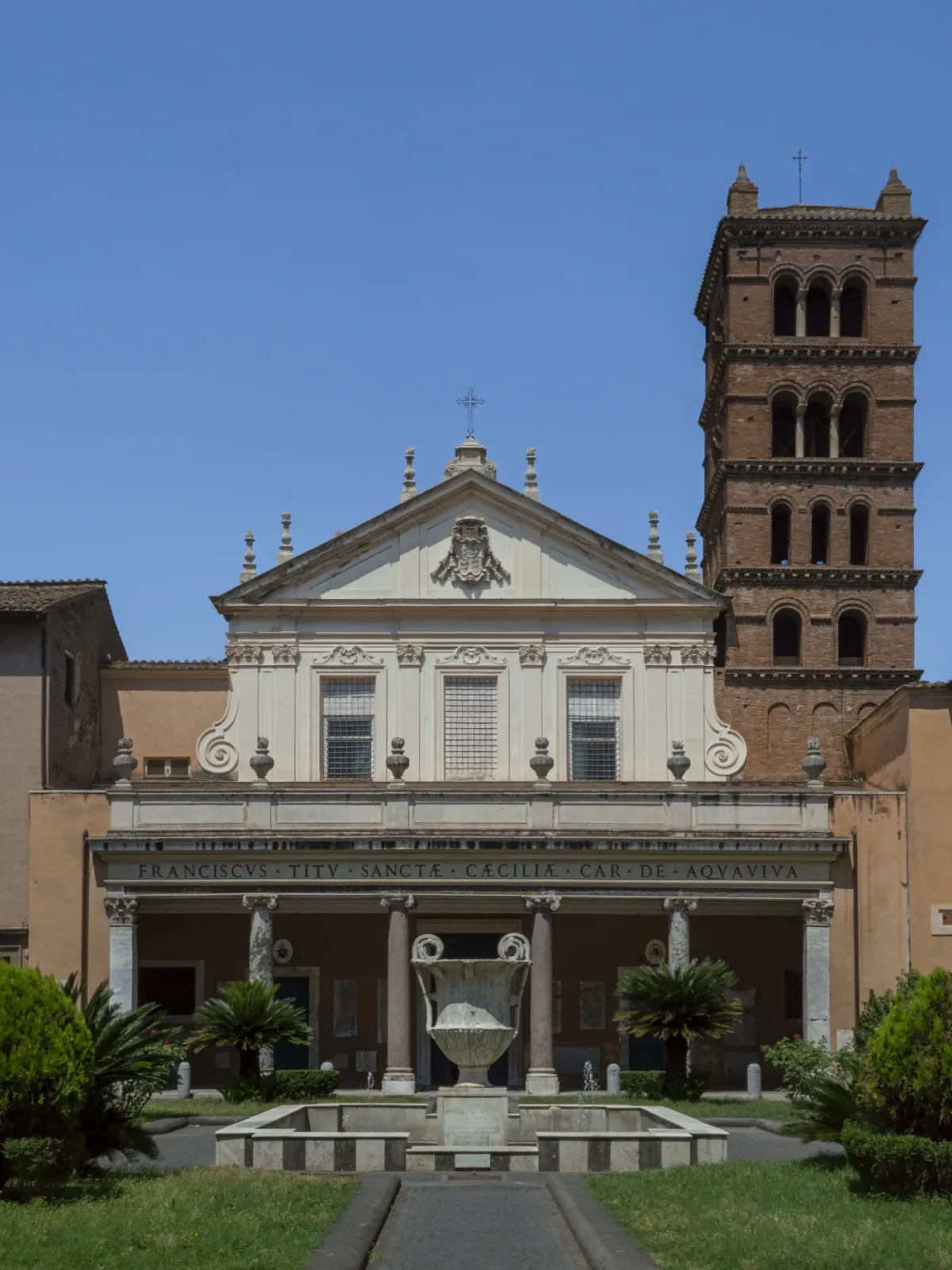
Santa Cecilia in Trastevere
The basilica itself, with its apse mosaic, its courtyard and the Benedictine community that keeps it and sings the Office in it.
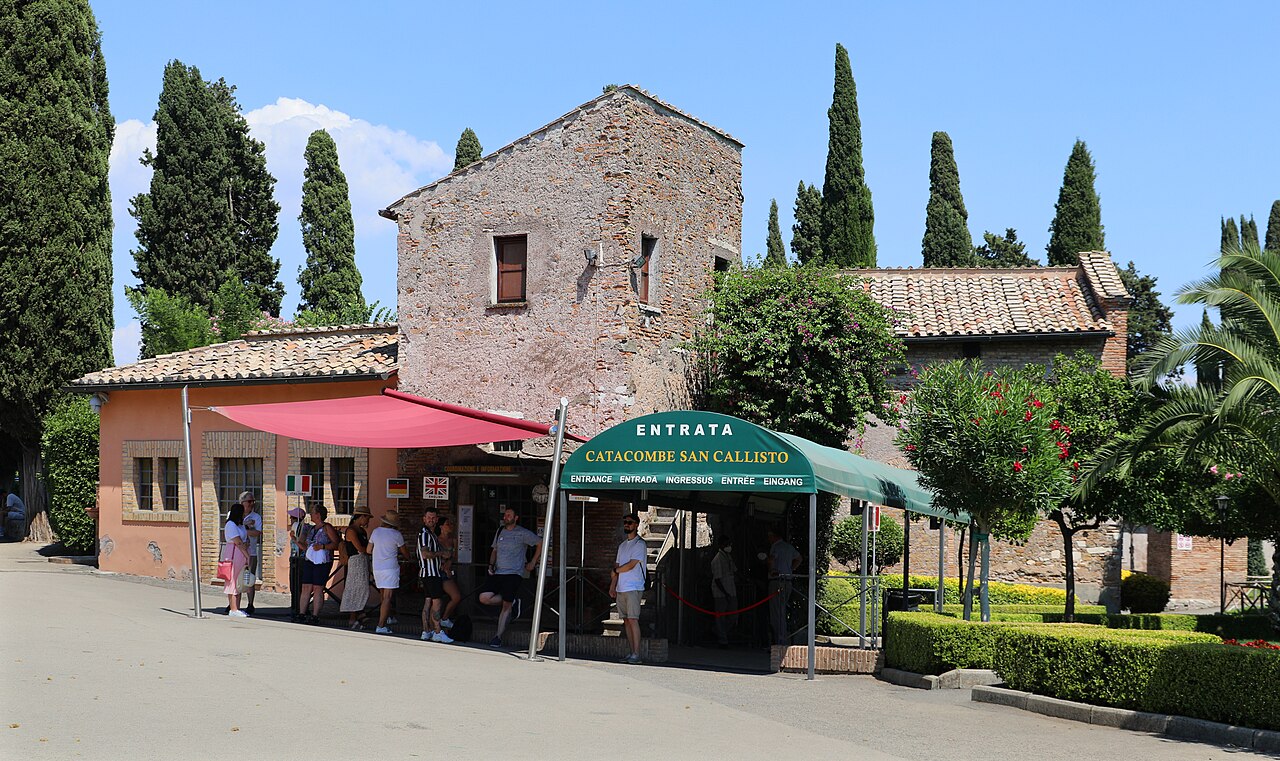
Catacombs of San Callisto
The catacomb where Cecilia was first buried, and where the empty niche of her original grave is shown on the visitor route.
How we hold this record
The custody is not in question and neither is the tomb. What needs care is a single sentence that four centuries of retelling have compressed out of shape: that Cecilia lies incorrupt beneath the altar and that you can see her. Two of the steps behind that sentence are attributed reports, and the last step is simply not true, because what is visible is marble.
- Official The Benedictine nuns of Santa Cecilia, who keep the basilica and publish visiting for the church, the archaeological area and the Cavallini frescoes. Linked below.
- Tradition Christian tradition places Cecilia's house and martyrdom on this ground in Trastevere.
- Historical Cecilia was buried in the catacombs of San Callisto. In the early ninth century Pope Paschal I rebuilt the basilica here and brought her relics, with those of Valerian and his companions, to rest beneath the altar.
- Historical During the restoration made by Cardinal Paolo Emilio Sfondrati before the Jubilee of 1600, the tomb was opened in October 1599. Antonio Bosio was present and recorded the finding, including a cypress casket preserved within the marble sarcophagus.
- Historical The witnesses who recorded the opening of 1599 reported that the bodies appeared incorrupt. That is the extent of what the account establishes.
- Historical The figure beneath the altar is Stefano Maderno's sculpture of 1600. Maderno's own inscription attests that he showed the posture in which the body was found, and scholars differ on how literally to read that attestation. The tomb was closed again and the relics are not visible.
- Careful note Sourcing here is thinner than elsewhere in this batch. The custodian confirms custody and visiting but does not narrate 1599, so the historical items rest on the named seventeenth century witness rather than on the custodian. Last reviewed 11 August 2026.
No claim is made here about the present condition of the remains, which have not been exposed since 1599.
Public access varies with liturgy, security, and (where noted) reservation requirements. The official sources above should be consulted for current access before planning around it.